I meant to review the original Game Boy game back when I still pretended this blog had a future, but, well, life happened. I hope this makes up for it.
This review represents a shift of direction for my writing career: from now on, you can expect reviews of newer Nintendo games to exclusively feature on Hey Poor Player. Aside from huge games in the vein of Zelda: Breath of the Wild or Super Smash Bros. Ultimate, I wanted to evaluate new releases some time after release for two reasons:
1) To accommodate DLC updates in gameplay additions and polishing; therefore, I'd analyze the game in its final, truest vision.
2) To allow my opinion to settle and percolate after launch, letting it evolve past the honeymoon phase.
With my recent decision to scale back reviews here, however, I've recognized this is the most vital step into blossoming as a proper game journalist. For far too long I've neglected to cover newer releases as I've silently pursued ambitious goals for the sake of writing for myself. I simply work far more diligently under journalistic obligations, and with the evidence lying within my Hey Poor Player output, I'd like to think things can only go up from here.
And yes, this means the Nintendo pages in my reviews sections here will be updated accordingly. I'll be working on that over the next month, so stay tuned.
Notice: Unfortunately, there wasn't time to access my SD-card saved screenshots for this review, so aside from my Miiverse archives, you may witness press screenshots of varying sizes. An error in formatting also excised most of the music links. Please excuse the inconsistency for now.
Again, the same disclaimer found within my Super Smash Bros. for 3DS review applies here: namely, any and all analysis on Super Smash Bros. for Wii U's
worth as a competitive fighter shan't be present here. This is not a
matter of passive-aggression, but merely one of disinterest, as I simply
don't approach fighting games in that manner. Truth be told, however,
the "casual" moniker is one I've soured on, as it doesn't accurately
convey my relationship with Smash Bros. in the slightest; indeed, as both these reviews prove, my Smash
intimacy demands I grant them in-depth evaluations as functioning
video games, be it how much I delight in smashing things or the quality of
alternative play provided.
And given director Masahiro
Sakurai's God-given design philosophies -- "always consider the
beginner player" and "make every game as it were your last" -- there
is certainly no shortage of that to go around.Like every Smash Bros. before it,Super Smash Bros. for Wii U is my kingdom -- one divided alongside its 3DS cousin, with which it shares the same gameplay engine and massive character roster. Common sense would entail I enjoy this version just as much -- if not more so -- but with an expanded empire such as this, its imperfections become far more prominent. As a self-proclaimed Nintendo fanboy, I am not blind to these faults -- much as I desire for Wii U to be a masterpiece, it only just misses the cut, and that wounds me just as much as I deeply adore it.
Being that I have elaborated on my love for Super Smash Bros. countless times on this blog without having penned a single review, it's imperative I open this essay with an admonition: namely, I do not possess any interest in a fighting's game competitive depth. This is not a passive-aggressive jab against others' personal tastes -- I've long since stopped begrudging those for their preferences, as I was one of those who conflated vitriolic attacks on post-Melee iterations/series director Masahiro Sakurai with the competitive fanbase at large -- but the point is, whether or not the latest iteration of Smash Bros., Street Fighter, a Dragon Ball game or even a debut in last year's ARMS presents offensive or defensive playstyles or sufficient movement options are matters beneath my notice. This is not a matter of willful ignorance; they're simply not things I have an eye for.
Nay, my occupation with fighting games lies in three factors: a) whether it's fun hitting things, b) whether they maintain -- at least on a base level -- a functioning combat system, and c) if they possess enough content otherwise to keep me interested. Admittedly, this isn't always upheld across the board -- the Smash Bros. apologist in me can admit even now that tripping in Super Smash Bros. Brawl was a fundamentally bad concept, even if I don't personally care about it -- but the point is, not much of that is very different from what the general gaming media typically elaborates upon in fighting games; in other words, if you're looking for a systematic breakdown of Super Smash Bros. for Wii U and 3DS as fighting games, I suggest you look elsewhere.
With Sonic the Hedgehog finally embedding the Sega Genesis into the mainstream -- enough to overtake Nintendo's own Super NES for the 1991 holiday season -- only one logical conclusion was inevitable: the need for a sequel. If momentum was to be achieved, being bigger, prettier and faster wouldn't be enough enough: nay, it must be better. If it must be prettier, than its pre-rendered 3D graphics musn't merely
be for show, but instead highlight specially-earned sections of play.If it's to be faster, it must cut down on the momentum-killing puzzles and gimmicks from the first game to encourage more flow, upgrade the controls accommodate this venture, and then go a step beyond by the accompaniment a CPU-followable character that could be controlled via a second player. If it must be bigger, than everything just mentioned must play into every facet of its design.
What results is Sonic the Hedgehog 2, a game implicitly more confident than its progenitor. With the design lessons learned from the first title, the game could satisfyingly combine flashiness with enthralling gameplay, and so we have a game that is, for the most part, absolutely solid. It is a game of sufficient length (over ten zones -- just enough time for the practiced player to finish before supper), engaging feedback (the Spin Dash mechanic), and dense, captivating level design from beginning to end (not a single stinker in its zones, and all brilliantly capitalize on the original's multi-tiered design). No longer is Sonic a game meant to defeat Mario, but a game that can stand tall withMario.
Long before Star Fox disappointed again and again with genre shifts and half-baked game design, before Star Fox 64 solidified its position as a recurring Nintendo franchise, and before even Donkey Kong Country stunned the world with pre-rendered CGI, the original Star Fox captivated the gaming populace with polygonal graphics. The gameplay was great too, mind, but as this was the first Nintendo game to primarily utilize polygons, the tease we previously witnessed with Zelda: A Link to the Past's opening Triforce had been realized as a living dream. We had taken our first step into the future, so to speak, and the proof lied in the 3D Arwing gracefully operating by our very own hands.
Of course, as always with the passage of time, what was once cutting-edge is now primitive, and so Star Fox must now rely on its actual gameplay to preserve its legacy. Not that I particularly mind the presentation losing its luster -- Star Fox apparently has a dreadful framerate, and let it be known here and now that is, without fail, always something beneath my notice -- but as the following generation of Nintendo 64 and PlayStation games are mocked for their graphical degradation, how could a 3D SNES game hope to survive? Quite well, actually. Not that it has a patch on Star Fox 64 or anything, but it remains a close second if only for its laser-focused mission: being a competent space shoot'-em-up. With how all the post-Star Fox 64 games reinvent the wheel to not-so-great success (arguably, anyway -- I have a soft spot for Assault), this is a blessing. In addition to being a revolutionary landmark title thanks to its graphics, you get a simple, no-strings-attached rail shooter.
I love, more than anything, dumb absurdist humor. Much as I've elaborated on here about my cherished qualities of meditation and reflection, I am an absurdly silly human being, and take pride in my humor. As a child, randomness was a championed quality of mine not merely in making others laugh, but my channeling said randomness into the written word was how I discovered my destiny as a writer. It is how I still recognize the earlier seasons of SpongeBob Squarepants as some of the finest examples of animation ever crafted, the Canada episodes of South Park as proof Trey Parker and Matt Stone have the greatest jobs in the world, and perceive the impending arrival of Invader Zim: Enter the Florpus as nothing more than divine intervention for the sake of today's youth.
When considering all that, Nintendo throwing me a bone with WarioWare, Inc.: Mega Microgames! in the midst of those halcyon days is nothing more than fate. It is extraordinarily, gut-bustingly funny, combining absurdist Japanese humor with the grossness of Nintendo's crudest mascot. It is only sensible Wario would be responsible for this madness: Mario's twisted doppelganger has always elicited a sense of self-centered absurdity, and so it is his natural duty to present the inner mechanizations of him and his buddies, be they for greed or the expression of art. Mostly greed, yes, but I'd like to think there is an inherent art in picking your nose.
In retrospect, perhaps Donkey Kong didn't
have it that bad following Rare's departure from Nintendo. An observation that
may be heresy to some, but as I recall, the following output was hardly
disposable: Donkey Kong: Jungle Beat
was the stellar (2D!) debut of Nintendo's famous Tokyo branch, Mario vs. Donkey Kong was born in this
era (although it had admittedly grown tired), the Donkey
Konga games were entertaining spin-offs in their own right -- that they remain the only Nintendo-published products you'll ever hear Rock Lobster and songs from Bobobo-bo Bo-bobo surely counts for something -- and supposedly
Paon's handheld action games were pleasant enough. On the downside, you had
technically-inferior Game Boy Advance ports of the original Donkey Kong Country trilogy (albeit
developed by Rare with new features), although only Donkey Kong: Barrel Blast drew particularly harsh ire; admittedly,
having only been subjected to the abominable character designs from Super Smash Bros. Brawl's trophies, I
suppose it was enough to taint the series’ image.
Regardless, fans demanded a true spiritual successor to the Donkey Kong Country trilogy, and our
prayers were answered through a most unexpected savior: Retro Studios. Having
wrapped up their own Metroid Prime
Trilogy, transitioning from a series of highly-ambitious first-person
shooters -- I'm sorry, first-person adventures – to a mere sidescroller
may have seemed like a stepdown for some; true, Donkey Kong Country Returns is as much of a revival as Metroid Prime before it, but we had
previously witnessed an unknown studio masterfully revive one of gaming’s most
beloved franchises into practically another genre – certainly, a 2D Donkey Kong game would be beneath
Retro’s talents, yes?
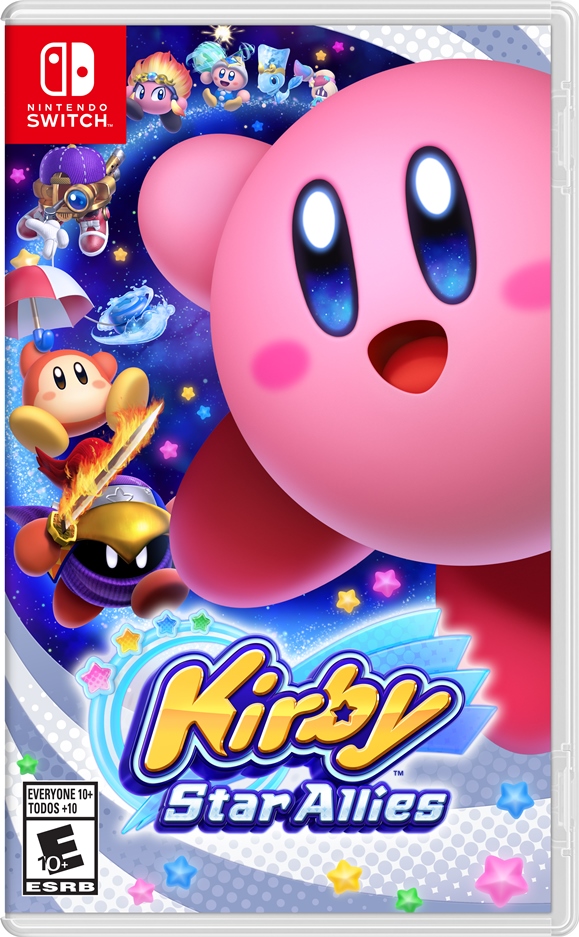
I don't even know what else to say; I'm spent. Admittedly, I do find some enjoyment in the thought of Kirby adopting a "DESTROY THEM ALL!" glee within his shiny new mecha, but a smiling Angry Kirby brings horrid memories of 2011's Mass Attack, and that cover is never a pleasant thing to remember. Besides, why harp on it when Nintendo/HAL have just put the brakes on their terrible plans for homogenization and came to their senses with this joyous cover for Star Allies? Sure, maybe Angry Kirby will be back to his old tricks someday, but his cynical countenance has been repelled, and that is good enough cause for celebration.
And what better way to commend this occasion by talking about how great Kirby: Planet Robobot is? Actually, calling Planet Robobot "great" is doing it a disservice, for I daresay this is one of the finest Kirby adventures hitherto. None of the familiarity found in the otherwise excellent Triple Deluxe or even Return to Dream Land is present, which is all the more shocking considering this is the third consecutive Kirby sharing the same engine. After situating themselves on the 3DS via Triple Deluxe, HAL wisely took the next step by evolving the series in both gameplay and technical craft, resulting in a title just as ambitious as Return to Dream Land.
In other words, Planet Robobot fires on all cylinders from the very beginning, and that's mostly thanks to the Robobot Armor. Leftover mechs from a mechanical fleet's takeover of Popstar, Kirby's new rides imbue Copy Abilities and morph accordingly into radical transformations: Cutter equips massive sawblades, Bomb spawns miniature explosive robots, Mike produces amplified speakers, and Wheel upgrades into Kirby's own personal fortified motorbike.
It goes without saying they're massively fun to unleash, be it plowing through crowds of mechanized Dream Landers or wrecking the massive hazards (giant 8-balls!) that impede Kirby's path, but that's Unlike Return to Dream Land's Super Abilities and Triple Deluxe's Hypernova, the Robobots are constant forces in nearly every level as opposed to being reserved for the climax. No longer are we required to stop and witness the majesty of Kirby's newfound superpowers, either: as Kirby must obviously ride them, his robotic rampages actively engage both the players and the actual levels themselves.
Not that Super Abilities weren't immensely fun, either, but this means the levels continually incorporate Robobots within their actual design: we use them in everything from solving puzzles, engaging in shmup sections, and taking on mini-bosses echoing the grandeur of a Platinum Studios game, and it's never not thrilling. We witnessed Triple Deluxe tackle unique end-of-level mini-bosses as well, but I can't think of anything that was more exciting than the early-game Gigavolt fight, a giant robot flailing its springy arms about as you systemically unscrew its appendages. The Robobots aren't just exciting; they feel natural and organic.
Naturally, this sets the stage for experimentation -- we observe, for instance, the lead-ups to the lab levels involve a dynamic camera we haven't seen since Kirby 64, wrapping about their stairwells to successfully craft tension before reaching the labs' depths. Meanwhile, certain bosses shift the camera about to present pseudo-3D planes, also borrowing from Kirby 64 bosses (albeit pulling more creative tricks -- much as Whispy Woods reinvented his traditional battle there, the two iterations of Clanky Woods awes as much as Triple Deluxe's Flowery Woods in their early-game spectacle). When considering the presence of the Blowout Blast mini-game, it's clear HAL is inching ever-towards the idea of a 3D Kirby. We've been accustomed to Kirby's 2D-only adventures for so long that such an idea seemed like sacrilege, yet HAL's teases are growing ever more enticing...
Meanwhile, collectable stickers -- be they recycled Kirby artwork, crayon-scribbled characters, or even Kanji -- can be adorned upon Robobots. This is yet another evolution from Triple Deluxe, albeit yet in a "wow I never knew I wanted this" kinda way -- yes, chilling to the ever-swaying keychains was a hypnotic endeavor, but did we ever think to take them with us? While sadly the resolution of the 3DS screen obscures their presence a bit, it's still a delightful little touch; personally, I think Kirby would like to draw on the Robobots, so that's why I always went for the scribbles.
Copy Abilities are also largely winners this round. Jet and Mirror return for the first time since Kirby Super Star, and while Mirror more or less feels the same (which is welcome!), there's something about Jet that feels far more intuitive. Easily one of the wonkier abilities in Super Star, its movements feel snappier and more precise, be it the repeatable midair Jet Headbutts or the somersault spectacle of Rocket Dive. While not supplied with all sorts of new tricks in the vein of Stone or Needle, it's always humbling to witness an ancient ability upgraded for more convenient use.
As for new abilities, considering my affinity with EarthBound, it's only natural I jump into ESP first. As the main combos revolve around teleportation and a PK Flash-inspired projectile, it's something that takes time in getting used to (particularly in gauging your teleportation distance), so it's not the most handy Copy Ability for just plowing through. When you just want to wreak havoc, however, you feel like a God as you zap about with your newfound psychic powers, particularly in dodging and countering with PK Insight's massive energy outburst. Given that it's the only new ability that has a Robobot form, it's clearly meant to be the highlight of the three, and is easily the funnest once you get the hang of it.
As expected, Doctor is adorable with its head mirror and glasses, and its inspired duality of the physical (clipboard attack!) and personalized tactics (Science Lab, which can unleash various effects) made me come back to it again and again. Meanwhile, Poison is the easiest to use, yet it's disappointing a number of moves are directly lifted from Return to Dream Land's Water, a Copy Ability cut from the 3DS games. Thankfully there's enough moves to differentiate it -- I enjoy the poison puddles that mini-bosses are so susceptible to -- but I wish it stood out more on its own.
But even if the new copy abilities aren't the most impressive bit about Planet Robobot, the Robobot abilities can certainly make that case, which brings me to the endgame: what begins as a mouth-dropping set-piece of fanservice jet-starts what is by far the most gripping, heart-pounding final boss in all of Kirby. I dare not spoil any of its callbacks or cinematics involved, so I can only claim it is everything Kirby and the Amazing Mirror's half-baked finale desired to be: framing the gameplay in a way that not only plays well, but fuels the narrative context in what may very well be the 3DS's finest technical showpiece.
Enjoy that final boss while you can, though: 100% completion is another matter, for I daresay Planet Robobot is only surpassed by Mass Attack in difficulty for that matter. Searching for all the stickers is no small feat, and I actually can't recall if I ever found the elusive HAL rooms containing the exclusive Smash ability. Still, even those are a cakewalk relative to the wrath of The True Arena: in itself, this may very well be the most difficult endeavor in Kirby history, as never before have spacing, dodging, when to attack have been more cutthroat. It is hair-raisingly difficult, right down to the surprise 1-hit KO of the final encounter, unleashing a never-before-seen string of swears from yours truly. So demoralizing was my experience that I had to write a guide to spare others of my fate, and that it actually aided players gives me great joy.
Thankfully, the rest of the modes aren't as burdening, although not without their own trials. Meta Knightmare Returns comes back as the "what if?" take on the main adventure -- a form of nebulous canon I've adored since its Nightmare in Dream Land debut -- and is home to much of the The True Arena's more aggravating bosses. Perhaps most impressive is how HAL took careful care in applying Meta Knight in what's originally a Robobot-focused campaign: puzzles being skipped or activated via a swing of his sword are nothing new, but that bosses are retooled and that he can still unleash similarly satisfying destruction via his Meta Point abilities perhaps renders it his most successful conquest yet.
Meanwhile, Kirby 3D Rumble ditches the 3D experimentation and alright plops Kirby in 3D as he Star-Spits across isometric environments (which perhaps echoes this cancelled version of what would eventually become Return to Dream Land). While not easy to 100%, its emphasis on combos instill an addictive desire to perfectly plow enemies with Blaster Bullets. Its relative brevity is all too bittersweet, but thankfully Kirby's Blowout Blast is a downloadable thing that exists.
It's only Team Kirby Clash, a take on Japan's beloved Monster Hunter, that may not be so difficult at all, and that's okay: whereas 3D Rumble has to prove its miniature worth through dedicated practice, the meatier of the two focuses on empowering the player through level-ups. Dividing Kirbys into four roles (Sword Hero, Hammer Lord, Doctor Healmore, and Beam Mage), it emphasizes progression through mission-taking: more Kirbys join your party upon reaching levels, and earlier missions. can be replayed for EXP. Obtaining Level 10's ultimate level of strength means the replay value is low, but that's the job of 3D Rumble; here, it's reaching the end of the journey (and, well, there's nothing stopping you from making another file to replay it, or you can just purchase Team Kirby Clash Deluxe, which still keeps me busy even today).
And now we come to the soundtrack, which lies within an...interesting predicament. It's not that series Jun Ishikawa or Hirokazu Ando lost their spark or anything, and yet, despite having
recently obtained the official soundtrack, I have difficulty recalling too much of it. I suspect in their complementing Planet Robobot's central machine theme via techno and chiptunes and all sorts of "mechanical"
sounds, it all kinda blurs together and consequently, it's difficult to mentally sift through individual tracks as standing out. (Canvas Curse took a similar approach as well, but I imagine that game's emphasis on remixes made it easier to remember)
It's a damned shame, too, because what we do have here is nearly just as excellent as Return to Dream Land and Triple Deluxe prior. The subdued adrenaline of the Robobot Armor theme successfully serves as a rousing introduction to its destructive debut (although I'm more fond of the guitar version that plays in the final battle), whereas the various takes on techno and whatnot forge new ground for Kirby: White Office March ominously treads within the inner recesses of Haltmann Company HQ, whereas familiar Kirby themes are retooled for the laboratory levels (the Float Islands remix being by far the best, echoing a desperate pursuit I can't say I've ever encountered in Kirby).
Of course, this is Kirby, so Ando and Ishikawa are careful in channeling Kirby's innocent and playful nature throughout. This is most evident in Lovely Yellow Va-Va-Vrooms, an actively gentle little theme accompanying a city constructed of juice cartons (with sippy straws as their chimpanzees) and Waddle Dees driving about. Meanwhile, the soothing Underwater Quarter accompanies some what's perhaps Planet Robobot's most stunning setpiece in underwater cities and chandeliers resting alongside glass bottle landmarks.
The Haltmann Company Theme -- the in-game main theme for the intergalactic company threatening to take over Pop Star -- is probably Planet Robobot's most well-known song in that it's Kirby's first vocal theme -- although as it's mostly synthesized gibberish, perhaps "sing-along" would be a more fitting take. Regardless, the presence of lyrics such as "Pay and ergonomic seating, give us favors such as these!" give me great joy, and I can't help but wonder if we'll be seeing more such songs for the future.
And that we even ask that is Planet Robobot's greatest strength: any missteps in homogenized music or level pacing don't discourage its identity as not a quick n' dirty title meant to capatalize upon the closing years of 3DS, but one that legitimately pushes Kirby forward in organic level design, technical achievement (seriously, look at the CGI below; Kirby looks like vinyl!), and even world. On top of that, it's the outright funnest title I played in 2016, and as far as Kirby goes, I can't ask for anything more than that.
In
achieving borderline perfection in gameplay, sound design and possibly
the most charming, captivating artstyle of the 16-bit generation, Yoshi's Island is easily one of the greatest games ever made, although you'd hardly know it from its successors. When considering Yoshi's Story's dubious quality and "made-for-kids" identity, the forgotten gimmicks of Yoshi Touch & Go,
and how the awfully lethargic efforts by Artoon/Arzest are best not
spoken about, it was more than a little frustrating Nintendo couldn't
figure out how to forge a proper sequel.
Note the past tense: it's been over two years since Yoshi's Woolly World first graced our Wii Us courtesy of Kirby's Epic Yarn
developer Good-Feel and I can still scarcely believe its success. Not
that I didn't think it wouldn't be a worthy spiritual successor to their
Kirby effort, of course, but that it actually achieves throwing distance within Yoshi's Island's glory is a testament to Good-Feel's talent as a developer. Yes, to say Yoshi's Woolly World is superior to Yoshi's Island would be silly, but it is the first Yoshi sequel
to understand what it means to take that step: Yoshi's saddle does not
need Baby Mario glued 24/7, but it does not need any babyish concessions
ala Yoshi's Story to stand out as an individual entry.
I feel as if I've been confessing my inexperience with certain genres a little too much recently, but regardless, I can't say I particularly care for shooters. It's not because I'm squeamish or don't even find them fun, but they feel, more than anything, absolutely tired. The assembly-line identity of Call of Duty and its ilk certainly contribute to that, but that's not even getting how many frame themselves within wars, zombies or alien invasions. The claim that they're creatively bankrupt feels a little unfair when considering recent hits like Overwatch, but it cannot be stressed enough that a) I am really goddamn sick of zombies and b) I wish that maybe shooters would step out of their comfort zone a little.
Perhaps this is why for the past two years I have been absolutely taken with Nintendo's own attempt in Splatoon, which as the game itself would say is absolutely "fresh" in every way that matters. That I'm "taken" with it probably won't last much longer, seeing as how Splatoon 2 came out just the other day, but it's not hard to see how it made such a splash: while turf war and paintball games and the like have been around for some time, none reach the inspired heights of Splatoon's
"kids who turn into squids" concept, married to a 90's-inspired dwelling in downtown Shibuya where the kids ("Inklings") splatter each other with Nickelodeon-esque ink, follow idols and dress themselves in "fresh" clothing.
Look, let's be real here: the Wii U may have been a complete, utter sales bomb, but that did not stop it from possessing the highest concentration of quality Nintendo games since Super Nintendo. Pikmin 3 and The Legend of Zelda: Breath of the Wild rank among some of the greatest Nintendo games ever created, Splatoon and Super Mario Maker debuted to worldwide acclaim, and many would argue the likes of Super Smash Bros. for Wii U, Donkey Kong Country: Tropical Freeze and Yoshi's Woolly World represent the pinnacle of their respective franchises.
Even Super Mario 3D World, my own reservations aside, isn't exempt from these accolades, what with the insane level of polish and love put into its design. However, this is the second instance in Nintendo history I can think of where a Mario spin-off surpassed mainline entries on a home console; just as how Paper Mario: The Thousand Year Door eclipsed Super Mario Sunshine way back on GameCube, Mario Kart 8 speeds past 3D World, Super Mario Maker and New Super Mario Bros. U to become what I consider to be the finest Mario experience on Nintendo's ill-fated system.
On the contrary, this is not what my previous 8/10 review for the long-deceased Gaming Grunts would imply; there, I argued that as excellent as Mario Kart 8 was, it fell just short of being a racing masterpiece due to the obvious cut corners Nintendo took with the title. Let us make no mistake: said cut corners do limit Mario Kart 8's overall potential as a complete package, but a year's worth of DLC more than made up for it in the area that matters most: the actual racing.
I mean, forget Mario Kart; has there ever been such a wondrous relationship between course design and control? I'm not by any means a racing game connoisseur, yet I imagine many such fans would be hard-pressed to cite any viable contenders. Driving alone has never felt so smooth, and when combined with the awe-inspiring heights reached by the anti-gravity feature and the mechanics re/introduced from Mario Kart 7 (gliding and collectible coins), the game proves itself beyond the visual spectacle and continues to enthrall as a compelling racer. It's the perfect hook for those previously burnt-out on the franchise: come for the dazzling new concept, stay for just how great everything feels
"Feeling," of course, is just one element of gameplay; there's a lot going on in how the game operates: for example, the way tracks curve up the wall or into the skiesis captivating, but it's just subtle enough to never distract the player and learns to fade from our concentration. Of course, the game is smart enough not to implement anti-gravity and the like in every track, lest we grow tired of visual gimmicks; after all, there's nothing wrong with a familiar, grounded test of racing skill (this is mainly the job of the Retro Cups, although as we'll discuss later, they're not afraid to reinvent the wheel).
Meanwhile, coins continue to layer a new form of strategy to preserve our top speed. Scattered across the tracks, these speed-boosting coins are enticingly placed so as to improve our racing game, be it curves instinctively requiring power-sliding or hanging just above an aerial shortcut. Mario Kart 8 not only trains us to follow the Super Mario Bros. rule in collecting coins, but builds upon it: we don't collect coins just because because they're shiny and gold, but in how they're vital to success. When losing coins upon getting smacked with a Red Shell or falling off Rainbow Road, we're driven to get them back. It turns Mario Kart's chaotic racing into a rhythmic process.
Combined with the mix-and-match nature of kart customization (karts, wheels and gliders), and it goes without saying there's quite some depth in all the frenzy. Truth be told, while I do pay attention to kart statistics and the like, I'm more of a "get in there and race!" kinda guy, so the exact specifics between, say, Sponge Tires for Light and Heavy racers is lost on me; typically, I just fashion everything with Slick/Cyber Wheels thanks to their guaranteed sweet spot in speed/handling. I also confess that just like in Mario Kart
Wii, I never quite got the hang of bikes; the inward drifting always felt off to me. Maybe when the Switch version rolls around this Friday...
But never mind that, as we still haven't discussed the courses themselves! Possibly the best Mario Kart tracks in series history, we're wowed from the get-go with how Mario Kart Stadium and Thwomp Ruins bookend the Mushroom Cup with their respective dizzying senses of height and flight. It's a thrill surpassed again and again by the likes of Toad Harbor and Cloudtop Cruise, and even well into the DLC tracks (namely Wild Woods and Dragon Driftway, although the latter focuses more on intense, close-knit loop-de-loops). As mentioned earlier, it's careful not to let anti-gravity be the only star; to my mind, this game's iteration of Bowser's Castle remains my favorite solely for the giant, lava-powered Bowser statue ready to crush anything invading its dual-track home.
Retro courses are also stunning; whereas previous entries either provided 1:1 replicas or stripped-down versions for handhelds, here they're revamped in accordance to their respective roles. For example, the familiar Super Mario World-inspired fields of Donut Plains 3 doesn't require any anti-gravity to still be interesting, as a grounded, rough-n'-tumble race retains Mario Kart's roots and provides a nice breather from all the flashy new mechanics. Meanwhile, the completely reinvented likes of Ribbon Road (Mario Kart: Super Circuit) or Toad's Turnpike (Mario Kart 64) awe in just how much new there is; Toad's Turnpike is a particular stunner thanks to flying off cars and driving on walls. Even setting the aesthetics aside, it's almost a completely different course from the sleepy Nintendo 64 highway.
Mario Kart 8 was easily the best looking game on Wii U at the time of its release, and I'd actually argue that may still be the case. There's none of the low-res leftovers from Pikmin 3 or Super Smash Bros. for Wii U, nor the intrusive slowdowns and the like from Zelda: Breath of the Wild; Mario Kart 8,however, is consistent with its own look and performance (the infamous 59 FPS glitch aside, and I'll be rather honest in saying I've never noticed it), and is always so vivid, clean and just plain delightful to look at.
Look no further than the game's visual stunner: N64 Rainbow Road. A literal explosion of colors, what was originally a nebulous, dreamy raceway decorated with neon-lights is now granted a definite setting that plays into Mario Kart 8's festive atmosphere with fireworks and soaring trains. It must, however, also channel the dreamy nostalgia of the original: the music and the firework callbacks contribute to this, but it's impossible not to be absorbed into the hypnotic nightlights of the city below.
Hailing from an era where 3D World's speck of context and Paper Mario: Sticker Star's homogenization didn't spark our imaginations, it's delightful how there's a real sense of world to everything. The aforementioned reimagination of retro tracks is great enough, but take a look at the signs hinting at world lore: did you know Yoshi Wild Sanctuaries are a thing? According to N64 Yoshi Valley, they do. I never thought of Morton Koopa as being the manager type, so I'd like to see how Morton Construction operates. Maybe he's just the mascot? Even the spectators delight: I've never entertained the thought of Gingerbread People dwelling in the world of Mario, but thanks to Sweet Sweet Canyon, I desire to see a mainline Mario game traverse through their realm. I sure hope they don't run into any, uh, "hunger" issues with what appear to be local Yoshis.
This isn't even going into the actual courses themselves; for example, did you ever stop to think about the familiar geography behind Cloudtop Cruise? And don't get distracted by the bonanza of references in Ribbon Road, as each segment follows a certain theme. Let us not forget the wondrous character animation, either; to tell the truth, I'm actually rather saddened the related memes came and went, because I engage with the highlight reels far more than I care to admit just to watch characters expressions (mainly how they slowwwwly turn their heads when they pass by each other). Angry Luigi is the oft-cited king, but I'm more fond of Donkey Kong's totem-pole expressions and Toad's gleefully murderous joy. (And let us not forget the game's greatest item: Piranha Plant, who comes equipped with its own anti-gravity wheels)
(This is, by the way, the first non-arcade Mario Kart to feature crossover content in the form of Zelda/Animal Crossing characters and courses, alongside familiar locations from F-Zero and Excitebike. Seeing Link interact with the world of Mario is certainly a delightful absurdity, although the elusive context behind Mute City/Big Blue still makes me wonder how it all works. It's certainly more cartoonish than F-Zero, but just out of reach of Mario. Truly, I am gripped in the throes of deepest lore.)
If pressed, however, I would argue Mario Kart 8's greatest asset lies not in how it plays, but in how sounds. The combination of synth and live big-band performances provides the greatest aural Mario Kart experience ever made; be it freestyle brass or track transition, it's the ultimate key to the festive, jubilant atmosphere that complementsMario Kart like never before. The live arrangements are what steal the show: Mario Kart has always lent itself to a fun score that, true to its goal, never grows old, and while Mario Kart 8 certainly represents the best of that, its the aforementioned track transitions that still awe me. Not that Mario Kart hadn't applied music dynamics for progression before, but absolutely none of the previous efforts match the stunning euphoria that is Dolphin Shoals. What starts as a subdued, synthesized underwater theme transforms into a full-blown jazz session when the racers emerge from the depths, instilling an exhilarating, climatic thrill unlike anything else. I could credit the live performers for this little slice of Nirvana, but as the composer was behind Pikmin 3, all that goes to her.
Other songs like Mario Kart Stadium and Mount Wario play well within the Mario Kart-esque archetypes, yet I'm most blown away by the orchestral tracks; Thwomp Ruins and Wild Woods are unlike anything we've heard before in Mario Kart, introducing the likes of Celtic instruments and chorus to the series. They're a touch more active than the dreamier songs we've previously in Mario Kart, and it's a perfect fit for their respective enchanted environments and the "world" they create.
Of course, the retro remixes must be up to par. Rainbow Road 64 is once again the star, the familiar flute seguing us into a new festive jazz version (alongside the aforementioned aesthetic, this is why I consider it to be the game's *real* Rainbow Road). GBA Mario Circuit and Royal Raceway (Mario Kart 64) are great fun callbacks, and I actually happen to prefer the former and its new intro to the somewhat forgettable intro. Meanwhile, SNES Donut Plains 3 and its electric piano emulates its non-amibitous nature, choosing to instead kick back with acoustic and bass guitars.
That this is the first time Zelda and Animal Crossing have been treated to big band music--in the context of video games, anyway -- is a delightful bonus; just listen to how the Animal Crossing track alternates between all four seasonal versions! Can you say, GameCube theme? And as for the F-Zero themes...well, their godly arrangements speak for themselves.
To round things off quality-wise, Mario Kart 8 is perhaps Nintendo's one of Nintendo's finer online experiences, although we must remember that Nintendo being what they are, Mario Kart 8 isn't without it's "Nintenisms" regarding online activity. The lack of friend invites is often cited as one, alongside having to exit games to switch characters and vehicles. Otherwise, the presence of friend rooms and tourneys are, like Mario Kart 7 before it, a great step above Nintendo's normally-passive online efforts; in particular, the flexibility offered in custom rules makes for even more intense races than playing solo, and I found myself turning to NeoGAF rooms rather than improving my VR score. I do imagine, however, online traffic will decrease upon Mario Kart 8 Deluxe's release.
All this would be enough to dethrone Mario Kart DS as the series masterpiece, but alas, those dang cut corners are what get in the way. Case in point: the battle mode. Whereas previous iterations offered specialized arenas for duking it out, Mario Kart 8 simply opts for reusing the racing courses. While there can still be fun mined from it, having to brake and turn around in such confined spaces quickly grows repetitive, and the alternative option (simply lapping around the courses and attacking whoever passes by) makes one feel like on autopilot. They're simply not designed at all for balloon battles, and it makes for the weakest Battle Mode since 2003's Double Dash!!.
The common defense for this is "well, Battle Mode was never good, anyway." Yes, perhaps...for you, which does not represent the Mario Kart population that disagrees. Furthermore, it's simply a shocking detriment when considering just how polished rest of the game is. Even when considering the DLC, it's what contributed to the unfortunate "bare-bones" label, as there's not much else for the game to fall back upon. It's thoroughly a rushed afterthought, and it shows.
Said rushed quality is noticeable in other areas: while the addition of the dastardly Koopalings is fantastic (Iggy fan, here!), they don't leave a lot of room for other newcomers, and Nintendo didn't exactly tap into their imaginations when it came to rounding out rest of the roster (Pink Gold Peach? Seriously?). Meanwhile, the lack of Expert Time Trials means we're stuck with the default time trials, and outside of a couple DLC outliers, hardly any put up a decent challenge.
There are other missteps it makes on its own: the Coin item continues to be a mistake, as it punishes the winning player by leaving them defenseless, especially if they've already filled their coin meter. 200cc is a delightful experiment courtesy of DLC, yet I can't help but feel certain tracks weren't designed with it in mind (*cough* Dragon Driftway *cough*). Also, obligatory "derp the gamepad only has a horn feature" complaint here, but I suppose it's best GamePad wackiness didn't end up interfering with the core game.
And despite all that, what a core game it is. Like Pikmin 3 before it, Mario Kart 8 is a delicious rush of feel-good magic akin to guzzling the finest of fruit juice. Even with my own preferences of Pikmin and Smash aside, this is perhaps the best-playing out of all of Nintendo's Wii U offerings: it's an insanely-polished feast that backs up its ambitions not only by being a pure joy to play, but what's possibly the funnest sense of atmosphere and flavor the company has ever produced.
And now, with Mario Kart 8 Deluxe for Switch ready to fix all of its flaws, we'll finally see its full potential ready to be unleashed upon the world. It's been a long three years; go take the crown, buddy.
Have you ever stopped to think about the name Final Fantasy? It's something so highly prestigious that the game would have to be as grand as the name implies--and make no mistake; for its time, it certainly was--but it hardly makes a lick of sense when regarding the actual context. The answer lies within its development: as developer Square was in the throes of near-bankruptcy, creator Hironobu Sakaguchi wanted a title that would not only close the book on the company, but on the seemingly-inevitable end of his game-making career.
As history would have it, that wasn't the case. Final Fantasy has since gone on to produce over 15 beloved titles (not to mention countless spin-offs and ports/remakes) and became the worldwide representation--perhaps even standard--for the Japanese RPG. The "Gil" currency, the famous victory fanfare and the Chocobo/Moogle mascots have become synonymous with the genre, and continue to be associated with the series to this day.
However, not all of the them debut in the series' first game, which is often cited alongside the original Dragon Quest as kickstarting JRPGs. There is a distinct difference between the two games, however: Dragon Quest is, more or less, a grindfest for its entire duration. Final Fantasy is not.
That's not to say there isn't any level-grinding within Square's debut RPG, but there's more of a leniency in its pacing. Over a year had passed since Dragon Quest, so it only makes sense they'd arrange for the necessary improvements. The interface is simpler and less clunky; no "stairs" button in sight. There's an active, ongoing story-arc that, while not deep, breaks free of the "save the princess!" model. Western RPG tropes are brought in to enhance the battle system, such as enemy weaknesses (fire beats ice, duh)
The end result is a game still approachable today. You will grind, but there's enough player conveniences and innovations to keep thing interesting. JRPG conventions like overworld vehicles got their start here, but they weren't just 80's visual stunners; the thrilling swiftness of the Airship is just as much of a marvel as it is an effective tool for speedy progress.
Yet what's perhaps most impressive is the Class System. As opposed to the Final Fantasy games of today, you create your four-man party out of six different classes (Warrior, Thief, Black Belt, Red Mage, White Mage and Black Mage), each with their own strengths and weaknesses. White Mages don't really engage in physical combat, for instance, but are invaluable for any team thanks to their healing magic.
It's a wonderful, flexible system that ensures no two playthroughs will be the same: that there's over 60 spells to master ensures a deep, flexible variety within each party member's moveset. Citing a personal example, I initially thought I made a mistake in choosing a Thief class as my 2nd physical class(Warrior was my first, main choice), as he died quickly and possessed the strength of a mewling kitten. It wasn't until his eventual promoted to a full-blown Ninja that his usefulness was discovered: not only could he actually deal damage, but Black Magic was now at his disposal, so he'd be able to back up my Black Mage.
Moreover, it's just fresh, which is saying a lot for a game that came out in 1987.Having been acquainted with set parties in JRPGs for such a long time, it's amazing to me a game celebrating its 30th anniversary can deliver such a customization experience. Right from the beginning, Final Fantasy encourages you to forge your adventures rather than the one explicitly set by the developers, and I find it rather special that uniqueness has only grown over the years.
The class system alone should render it accessible to most, but Final Fantasy's unusual magic system is what often drives today's players away. As opposed to the multi-digit Magic Points commonly found today, spells are deducted by a single-digit "charge" system. This renders their use in dungeons and the like incredibly precious; the only method of restoration are overworld-exclusive tents, so the balance between offense and defense is vital.
One's mileage will vary; personally, I adored it for the different sort of challenge it brought. Old JRPGs often involve being trapped in dungeons and the like, so this brings a different level of challenge in choosing your battles. There's always the option of running away, of course, but the frustrating JRPG penalty for escape failure (free damage courtesy of monsters!) is a constant, lurking risk, so you'll only want to pick that as a last resort.
Needless to say, Final Fantasy is pretty hard, but that doesn't mean it's not fun. The battle system itself mostly works; whereas Dragon Quest relied on imagination, Final Fantasy displays your party and all their spell-casting glory. This is especially vital since it highlights your chosen party members, so their eventual transformation when promoted feels like much more of an accomplishment. It's even great to see Square taking advantage regarding attention to detail, as your weapon visually changes every time you switch equipment. Like every other pre-SNES RPG, unfortunately, it does fall into the archaic lack of auto-target (as in, you'll miss an attack if the enemy's already defeated, as opposed to simply switching targets).
There are other flaws common in 80's JRPGS. For all the improvements upon Dragon Quest, Square didn't take the time to adjust NPC antics and not have them block doors and counters. An endearing flaw, yes, but not all a practical one. And yes, you will receive vague directions and be at the mercy of townspeople hints, so don't feel guilty about using an online guide like I did.
There are, however, no flaws in the score. Series composer Nobuo Uematsu made his big break as an industry icon thanks to Final Fantasy, and know we're in for something special when the 8-bit harp introduces the famous Prelude opening. Soon to grace the prologues of future Final Fantasy titles, it instills a deep mystique that successfully frames the games as the otherworldly fantasies they're intended be.
Meanwhile, the Overworld Theme takes on not a somber tune, but of an upbeat one emphasizing adventure. Fitting quite well within the familiarly cheesy 8-bit range of the NES, as grand as the aforementioned "somber" themes we'd see in later Final Fantasy titles are, I find this sort of brightness to be far more welcoming. You could argue it may undermine its' serious attempt to tell a story, but let us not pretend it is a deep story by any measure; what matters it motivates us to keep going in the face of random encounters, rather than discouraging us by feeling isolated and alone (which in itself would betray the concept of a multi-man party).
Not that any "undermining" takes place considering the presence of the battle theme; while also an exercise of activity, it's a more serious one that expertly remembers the 8-bit rule of being infectiously catchy. It instantly recalls the wickedness of the fiends and monsters we slay not merely in appearance, but their rage-inducing usage of Paralysis.
I've had the pleasure of completing three NES RPGs over the past two years (EarthBound Beginnings, Dragon Quest, and this), and out of that trio, Final Fantasy is probably the best. This is especially shocking to me given my intense love for the EarthBound (Mother) franchise, yet Final Fantasy is perhaps the best realized JRPG of the 80's. There's no awkward skips in the scenario nor an overt emphasis on endless grinding; it is competently paced, living up to every one of its grand ambitions alongside a rigid difficulty set to be tackled any which way by the player.
It's the class system that keeps it alive thirty years later. I know it's not the last Final Fantasy to use them, but there's a distinct appeal in the first entry employing such depth in its design. And with the number of remakes and ports out there, I have plenty of excuses to take another go and shake up my selection. Final Fantasy is the rare NES game that matches up to Nintendo's own efforts like The Legend of Zelda and Metroid not merely in quality, but in successfully still channeling that engaging sense of hugeness, an even rarer 80's value I cherish as evidence of fine craftsmanship. It is not the complete masterpiece I imagine its SNES and PS1 successors are claimed to be, but such an accomplishment renders it a timeless classic all the same.
Our final retrospective brings us to a turbulent 2012. While 3DS never gained its predecessor's sales momentum, its constant, ample support from Nintendo and web of third-parties kept players invested. Masahiro Sakurai's Kid Icarus: Uprising wasn't without its critics, but its dense cohesion, witty script and loving reiminaging of a cult classic rendered it another Sakurai masterpiece. Meanwhile, Fire Emblem: Awakening's Japanese release would set the seeds for the cult-favorite strategy series to finally emerge as a landmark Nintendo franchise; seeds that wouldn't fully blossom until its Western release a year later, but the series' vindication would finally arrive after nearly twenty years and thirteen entries.
But to the surprise of no one who'd been following Nintendo home consoles for the past twenty years, Wii was left in the dust in the advent of Wii U. Stragglers like Rhythm Heaven Fever and Mario Party 9 could only do so much to slow the console's death, and had it not been for the late localizations of Xenoblade Chronicles and The Last Story, America may've shared the even direr release drought of Japan.
Cue the ensuing E3 frustration: yet again, Nintendo fumbled on their Wii U presentation. It had all the trappings of a boring conference: the lack of any attention-grabbing surprises, forced comedy and banter, dreadfully dull, prolonged multiplayer sessions that undermined the title on display (Nintendo Land), and one or two interesting titles quickly swept under the rug (the long-awaited Pikmin 3, which came and went right as the show began). It was an omen of things to come: the Wii U would massively underperform in its November launch, all thanks to poor marketing, the lack of compelling software, and the presence of a screen controller...thing that no one, not even Nintendo themselves, knew what to do with.
But even before that failure became reality, Nintendo had already recognized the detriments of their awkward conferences and began taking countermeasures nearly a year prior. Launched in late 2011 were digital presentations dubbed "Nintendo Directs," designed to present concise information for upcoming releases with none of the fat and potential screw-ups common in live presentations. And what better representative to reach out to the people than the president of Nintendo himself: Satoru Iwata.
The Directs gradually caught on: the exclusive announcements guaranteed fans would tune in, but there was something humbling in how a company president dedicated himself for broadcast, all for the sake of consumers. Watching Iwata's affable, eccentric demeanor introduce and interact with the likes of Shigeru Miyamoto, Reggie Fils-Aim, Bill Trinen and even a bunch of bananas won the hearts of viewers.
One particular antic was a cryptic announcement: in April 2012, Iwata was spotted carrying Kirby plushies and beanbags. Initially considered a hint for a new Kirby game, it wasn't until that month's Direct that the meaning would be unveiled...
It was Kirby's 20th anniversary.
------
To speak about Kirby's Dream Collection: Special Edition without any sort of bias would be impossible; granted, personal subjectivity is the whole point of reviewing, but never before had a game touched my heart this way before its release, and it's vital I bring that into the open
The whole reason I'd started Ten Years of Kirby was to celebrate my own anniversary with the franchise: a series designed so anyone could clear it, but just deep enough that even the most hardened of gamers can enjoy its adventures. Having grown up with 3D platformers, the likes of Super Mario Bros. and Sonic the Hedgehog werefar too difficult for me, great as they were. As opposed to the free-roam nature of three-dimensional movement, their flat planes required precision and accuracy I lacked.
And yet as a series entirely framed within two-dimensional play, Kirby felt custom-made just for me. Never was it patronizing, but instead just demanding and compelling enough for a player learning the ropes: leaps of faith were rendered null due to Kirby's infinite floatiness, and it was never not interesting in seeing what Copy Ability I would command next. As a budding player, I was empowered by how much it respected me; as a young romantic, I was driven to reverie by dreamy visuals and music.
In what I can't assume to be anything but the designs of the cosmos, Kirby's Dream Collection, created to celebrate Kirby's 20th anniversary, was released on my own tenth year with the franchise (2012). An anniversary within an anniversary! It was nothing less than a dream come true, and so what better way to hold my own celebration by reviewing the entire series?
When regarding all that, reviewing the six games contained within Dream Collection--the Kirby's Dream Land trilogy, Kirby's Adventure, Kirby Super Star and Kirby 64: The Crystal Shards-- would prove insufficient; all six games have been reviewed extensively, and I see little value in repeating my opinions here. It's far more imperative that I evaluate Dream Collection on its own merits -- how is the package as a whole? How are the games preserved? Does it pay proper tribute to Kirby? Would a first-time Kirby player feel at home with its offerings?
All reasonable queries, but there is nothing to fear, for Kirby'sDream Collection is one of the very best compilation/re-release packages Nintendo ever produced. Perish the thought of this being anything like the insanely lazy Super Mario All-Stars Limited Edition; HAL decided if this is going to be an anniversary package of Kirby, then it won't just feature the old; after all, the philosophy of jamming Kirby games with content must stand, so new content shall supplement their legacy. This is an anniversary of what rose HAL to stardom, after all, so there's no choice but to celebrate it with the utmost prestige.
Packaged with an anniversary booklet and soundtrack, Kirby's Dream Collection itself is divided into three modes: naturally, the Classic Titles are front and center, but complementing them are Challenge Stages, based off the addictive time trials found in Return to Dream Land just the year prior, and Kirby's History, which takes an interactive tour over the past twenty years of Kirby.
Borrowing the look and feel of 2011's Kirby Return to Dream Land (with a touch of Kirby's Adventure sprites), Kirby's Dream Collection is as plush and delectable as can be. A compilation of this caliber must enforce nostalgia at every corner, and so the luxurious graphics must be accompanied by sound cut from the same cloth.
Hence the intense euphoria greeting our ears upon reaching the menu. Series regulars Jun Ishikawa, Hirokazu Ando and Shogo Sakai contribute to several new tracks across Dream Collection, their highest point being an arrangement of Bubbly Clouds. A veritable lullaby, it is as sugary sweet as the earliest of childhood memories, and I was especially moved they took this much effort to cozy ourselves into our nostalgia. It's impossible not to melt, and they ensure that by seguing it over to the Classic Titles menu.
Diving into six legacy titles is as magical as can be, but a similar effect is found within Kirby's History. Echoing that of a dignified museum, a moderate take on Castle Lololo plays before unexpectedly shifting into the grand Cloudy Park from Kirby's Dream Land 2. A slower reader who isn't clicking on everything in sight may easily stumble upon this, but that it arrives after no less than three loops renders it something of an easter egg. Just like the original song, it envelops you in the awe-encompassing majesty of its setting.
(As a brief aside, it was particularly mystifying as someone who wasn't intimately familiar with Dream Land 2; I knew I recognized it from somewhere, but I couldn't figure it out no matter how hard I racked my brain. While I'd discover its origin shortly afterwards, it turned out the answer lied in a remix from a Kirby doujin album I purchased over a year earlier.)
Kirby's History takes an unexpected direction with how it chronicles our favorite marshmallow. As opposed to just limiting the relevant timeframe within Kirby or even just Nintendo, real-world events are cited alongside the release of Kirby games. Did you ever stop to think about how Kirby's Dream Land came out the same year as Bill Clinton's inauguration into office? How about the world's population reaching six billion the same year Kirby entered Super Smash Bros.? Granted, I'm not sure how my childhood self would've dealt with not one but two Harry Potter references--he had an irrational hatred for the boy wizard, you see--but it's not like the two entities hadn't crossed paths before.
But apparently even Kirby can't let go of an old grudge, as seen above by desecrating this poor Meta Knight statue. One day, we'll move past this hurdle. Someday.
Regardless, Kirby games naturally get top billing. Each makes an appearance through special menus, trailers and 3D models of their respective box art, although the game list varies upon region: for instance, it only makes sense you won't spot the JP-only Kirby Super Star Stacker in the NA release. A shame, but we Americans (and Europeans!) can solace in the fact we have an exclusive spin-of of our own: the Puyo Puyo-inspired Kirby's Avalanche. (Squishy!)
Even peripheral media like the the 2001 anime makes an appearance in its localized Right Back at Ya! state; coincidentally, Dream Collection arrived on the 10th anniversary of that particular adaption. While full thoughts on the anime will be saved for a later date, viewers can witness 4Kids' amateur dubbing practices in all three episodes, not the least which are the embarrassing theme song and clumsy voice editing for Kirby himself. (Sadly, none of the previews for the three manga adaptions made it into the American release. While understandable since they were never localized, it brings back bitter memories of Viz's cancelled license for Hirokazu Hikawa's version.)
.
Kirby's penchant for orchestral performances isn't forgotten, either: at the end of the tour lies behind-the-scenes look for the Gourmet Race to Green Greens chamber orchestral, present on the accompanying soundtrack. Can you spot which of Dream Collection's three composers makes a cameo? The hint lies in how he was involved with orchestras before signing on with HAL...
All delicious, educational treats for even the most diehard of Kirby fans, but how about some actual game? It'd be a waste to simply borrow Return to Dream Land's engine just for a compilation, so why not expand on an addictive component everyone loved? The Challenge Stages return with an even wider variety than before; dare I say they're even harder than what's found in Return to Dream Land?
And perhaps even better? It's the variety that sells it: not only are there different Copy Abilities from last time, but HAL devised new types of Challenge Stages as well: the Magolor Races, which pits Kirby in a time trial against the cloaked troublemaker, and Smash Combat Chambers, where the Smash Ability is unleashed at enemy hordes.
It's the latter that proves HAL's dedication for this compilation. While the rest of the Challenge Stages feature abilities already developed for Return to Dream Land, Smash was built from the ground-up just for an extra mode (complete with its own pause menu instructions: we learn that Kirby's neutral aerial attack--an adorable spinning maneuver--is given the fitting name of "Twinkle Star"). Super Smash Bros. is an extremely vital piece of Kirby's history, so it's only fitting such a tribute was forged.
But as exciting as new content is, the main attraction for the young and the nostalgic are the Classic Titles. The selection is particularly interesting not just for being the first six mainline Kirby titles, but that two directors were responsible for three of each: creator Masahiro Sakurai and level designer Shinichi Shimomura. While Sakurai's efforts are undoubtedly superior, newcomers should delight in highlighting their respective differences: Sakurai's fast-paced, action-packed sugar rushes and Shimomura's slower, leisurely jaunts.
As expected, Dream Collection's games are based on the Virtual Console versions. While switching between the games and Dream Collection is a tad unorthodox (you have to pause and click on Reset), that they include save states--barring Kirby 64--is a blessing.
Games are presented accordingly to match their original size ratio: for instance, the two Game Boy games (Dream Land and Dream Land 2) only take up maybe half the screen, being perfectly squared. Meanwhile, the console games naturally take up a a wider space. While the Kirby's Adventure sprite frames can be turned off, the Game Boy games must have them attached. A fair trade, though they're hardly imposing at all.
Kirby's Dream Land 3 and Kirby 64 (pictured above) are perhaps the best preserved. There's no loss of color in sight, and the size ratio doesn't tamper the display. Both games, alongside Super Star, are particular marvels in that the Wii Remote was incompatible with their downloadable versions, and yet here they fit like a glove.
Dream Land and Dream Land 2 are interesting cases: as mentioned earlier, special care was taken to ensure they match their original, tiny Game Boy displays as closely as possible, so their display is hardly as large as the other games. It's impossible to fully translate a handheld experience into a home console one, so any slight blurs and blown-up sprites and the like are easily forgiven. (Besides, it was the first time Dream Land 2 was officially emulated for American audiences!)
Alas, Kirby's Adventure and Kirby Super Star suffer the most. The nasty darkened filters installed into their Virtual Console versions remain present, and while they're hardly game-ruining, the games' trademark brightness renders their taint a bad aftertaste. Furthermore, they expose Dream Collection's one mark of sloppiness: the preview videos found in Kirby's History are in their original, brightened versions.
For better effect, above is a comparison between the original Kirby's Adventure and its Virtual Console counterpart. They speak for themselves; there's just no getting around the original version serving the game's world infinitely better. Adhering to today's epilepsy measures is a noble cause, but that it's at the cost of game quality leaves a bittersweet taste. When considering they're easily the best games in the package, it's a shame such blemishes left a black mark on not just two of Masahiro Sakurai's masterpieces, but on a glorious celebration of Kirby.
While disappointing, it's hardly enough to dismiss the compilation. And why should it, when it comes with such delightful supplements? The 45-page Collectible Book alone is an amazing treasure trove of concept art, historical context and creator commentary for every Kirby game. Not every title is given the same amount of coverage, but there's enough background development detail to keep things interesting.
With it taking a playful, informal tone throughout, it's an especially fun read. Can you believe that ribbon at the bottom is a game in itself? I consider myself a Kirby superfan, but even some of the trivia questions threw me for a loop, and that's not even considering my shock at some of the cut game content (how about Kirby almost driving a tank in Dream Land 2?). Waddle Dee fans take note: there's a page practically worshiping Nintendo's most adorable goon, and a mention of his ill-fated attempt as a playable character in Kirby 64.
Rounding it out is a beautiful soundtrack comprised of famous songs throughout the series. Much of the selection is expertly picked: Epic Yarn's Green Greens arrangement and Nightmare in Dream Land's Rainbow Resort make for immensely nostalgic choices, while the fan-favorite final boss themes are much appreciated. Only the super-short boss themes stand out as odd choices, although given quantity of songs alongside their lack of loops, it's possible they wanted to conserve space and decided to round things out.
It appears these songs were ripped straight from the source, so as warned in the booklet, the quality varies. While the post-NES console games sound flawless, the 8-bit and handheld games have some audible static fuzziness. Some are better than others: you can hardly detect any air in the Kirby's Adventure tracks, while the muffled filter of Super Star Ultra's Helper's Rest is rather head-scratching when no such thing was present in that game's official soundtrack.
Still, they hardly matter when it comes to the three unique arrangements rounding out the soundtrack. While Gourmet Race to Green Greens once again showcases Kirby's innate talent for orchestra, Dream a New Dream for Tomorrow's piano/recorder medley of ending themes is so profoundly heartfelt, so gently nostalgic you cannot listen to it without a dry eye. With how its rendition of Kirby's Adventure's ending prods at our heartstrings, I cannot think of it as anything but intentional.
The amount of love put into Kirby's Dream Collection renders it one of the most dedicated, genuine titles to be ever released by Nintendo. It's not without its missteps, but that it has not a cynical bone in its body instills it only the purest of joy into the player. It's by no means rushed for that quick buck, but instead an authentic celebration meant for both that longtime fan and that fledgling gamer.
Such a work cannot be produced by anything by developers who not just adore crafting Kirby, but who eagerly wish to share their passion with the world. As Nintendo's final game for Wii, that is the utmost honor.