Note: Merely discussing the content of this game -- or even just looking at the below cover -- paves way for some early spoilers regarding Kingdom Hearts II. If you're planning on going into the series blind, you'd best skip ahead.
And so begins not just Kingdom Hearts further wedging itself into the realm of indecipherable names, but spawning what remains its biggest folly: an endless line of "bridge" games consisting of side-stories, prequels, and pseudo-sequels, all for the purpose of either divulging a particular interim between certain games or setting the stage for Kingdom Hearts III. Be it the fault of a developer (Square-Enix) caring only to capitalize upon a successful brand or the burgeoning over-ambition of a short-sighted director (Tetsuya Nomura), it's vital to discuss why, exactly, this direction was problematic, beginning with the most obvious reason: it's been eleven years since the first three spin-off games (358/2 Days, Birth by Sleep, and Re:coded) were announced, and we're only just getting Kingdom Hearts III this year. Whoops.
This past decade's worth of wasted time and frustration is more than enough for fans to jump ship, especially when factoring in cost: over the next six years, engaging in the full Kingdom Hearts experience required the purchase of a Sony PlayStation 2, a Nintendo DS, a Sony PSP and a Nintendo 3DS. Being an episodic series, this is not like Final Fantasy's individualized entries where one can simply pass, say, Final Fantasy IX on PlayStation and pick up Final Fantasy X on PlayStation 2 without missing any context; nay, you must at the very least engage in Birth by Sleep and Dream Drop Distance to make any sense of the series hereafter, and for the most dedicated of Kingdom Hearts fans, that potentially means shelling out cash for systems you don't particularly want (or, in my example, you're lucky enough to know someone at college who's willing to let you borrow their PSP and copy of Birth by Sleep).
Not even one game later, and we arrive at the embryonic stage of Kingdom Hearts'
ultimate folly: "bridge" games released across multiple platforms. The
Disney/Square-Enix saga was not to continue just through numbered
mainline entries, but through what series director Tetsuya Nomura
described as games that would "bridge" -- or rather, set the stage for
-- said numbered entries together. Kooky executive antics and Nomura's
own over-ambition would eventually drive this direction out of control,
as evidenced by the fact it's been twelve years since Kingdom Hearts II first launched in Japan and we've only just recently received a tentative date for the long-awaited third entry.
But we'll get to that mess when it comes. Really, what I want to talk about is how undeserving Kingdom Hearts: Chain of Memories
-- the first of these bridge games, which arrived on Game Boy Advance
in 2004 -- is of this blame, for I daresay it is perhaps the very finest
title under the Kingdom Hearts banner. Not because it possesses
the very highest highs of the series -- although quite a few are present
here -- but rather in how it is the most consistent: what we
have here is a game that not only recognizes its purpose, but is aware
of its limitations and tries its damnedest to work around them to
provide one of the most compelling JRPGs on the platform.
Hey, all! With Sonic the Hedgehog, Worldly Weekend has finally reached its tenth installment, and with that goal comes some changes. Those who frequent The Archives may've noticed Worldly Weekend -- as in, all the non-Nintendo reviews -- doesn't have its own dedicated section/page, instead being laid out with a simple list of reviews. Obviously, I can't keep that going forever, so I've decided it's finally time to divide it into its own pages!
This will work much like the pages for my Nintendo reviews in that they'll separated via System, Chronology, and Series. The first two will operate identically to the Nintendo version, although with how many one-off games there are out there, I can't just separate, say, J-Stars Victory Vs+ underneath its own series logo, so I'll be coming up with ways to divide such games for the Series section.
(Oh, wait, Nintendo has many titles like that too, don't they? I'll think of something for that when the times comes...)
In any case, you can expect the new pages to arrive throughout the week. Watch this space for further updates!
September 2nd Update: All finished! Busy week, so it took a little longer than I expected. Enjoy!
Imagine, if you will, blast processing. Not that any sane individual would be able to define what exactly it meant -- for the uninformed, it was a tacky marketing buzzword to describe the speedy processing of Sega Genesis -- but doesn't it just sound cool as all hell? To the young consumers of the 16-bit era, it was a nebulous term that exuded an impressionable coolness, undoubtedly due to how it rolled off the tongue and was an easy referral to why the Genesis' graphics were so good. Or how its games were so fast. Or whatever. Naturally, the poster boy for this gimmick would also match said coolness; hence Sonic the Hedgehog, featuring a cocky animal mascot of the same name, an acidic blend of colors and backgrounds and, most of all, an emphasis on speed. Billed as the fastest thing alive, Sonic the Hedgehog was designed to surpass Super Mario through lightning-fast running, setting the portly plumber's meticulous platforming to shame via eye-catching movement. On a surface level, the concept is, in retrospect, something only designed to impress a 90's audience through the 90's philosophy of "too cool for school" appeal to kids through eye-bleeding use of 90's aesthetics and character design.
Have you ever stopped to think about the name Final Fantasy? It's something so highly prestigious that the game would have to be as grand as the name implies--and make no mistake; for its time, it certainly was--but it hardly makes a lick of sense when regarding the actual context. The answer lies within its development: as developer Square was in the throes of near-bankruptcy, creator Hironobu Sakaguchi wanted a title that would not only close the book on the company, but on the seemingly-inevitable end of his game-making career.
As history would have it, that wasn't the case. Final Fantasy has since gone on to produce over 15 beloved titles (not to mention countless spin-offs and ports/remakes) and became the worldwide representation--perhaps even standard--for the Japanese RPG. The "Gil" currency, the famous victory fanfare and the Chocobo/Moogle mascots have become synonymous with the genre, and continue to be associated with the series to this day.
However, not all of the them debut in the series' first game, which is often cited alongside the original Dragon Quest as kickstarting JRPGs. There is a distinct difference between the two games, however: Dragon Quest is, more or less, a grindfest for its entire duration. Final Fantasy is not.
That's not to say there isn't any level-grinding within Square's debut RPG, but there's more of a leniency in its pacing. Over a year had passed since Dragon Quest, so it only makes sense they'd arrange for the necessary improvements. The interface is simpler and less clunky; no "stairs" button in sight. There's an active, ongoing story-arc that, while not deep, breaks free of the "save the princess!" model. Western RPG tropes are brought in to enhance the battle system, such as enemy weaknesses (fire beats ice, duh)
The end result is a game still approachable today. You will grind, but there's enough player conveniences and innovations to keep thing interesting. JRPG conventions like overworld vehicles got their start here, but they weren't just 80's visual stunners; the thrilling swiftness of the Airship is just as much of a marvel as it is an effective tool for speedy progress.
Yet what's perhaps most impressive is the Class System. As opposed to the Final Fantasy games of today, you create your four-man party out of six different classes (Warrior, Thief, Black Belt, Red Mage, White Mage and Black Mage), each with their own strengths and weaknesses. White Mages don't really engage in physical combat, for instance, but are invaluable for any team thanks to their healing magic.
It's a wonderful, flexible system that ensures no two playthroughs will be the same: that there's over 60 spells to master ensures a deep, flexible variety within each party member's moveset. Citing a personal example, I initially thought I made a mistake in choosing a Thief class as my 2nd physical class(Warrior was my first, main choice), as he died quickly and possessed the strength of a mewling kitten. It wasn't until his eventual promoted to a full-blown Ninja that his usefulness was discovered: not only could he actually deal damage, but Black Magic was now at his disposal, so he'd be able to back up my Black Mage.
Moreover, it's just fresh, which is saying a lot for a game that came out in 1987.Having been acquainted with set parties in JRPGs for such a long time, it's amazing to me a game celebrating its 30th anniversary can deliver such a customization experience. Right from the beginning, Final Fantasy encourages you to forge your adventures rather than the one explicitly set by the developers, and I find it rather special that uniqueness has only grown over the years.
The class system alone should render it accessible to most, but Final Fantasy's unusual magic system is what often drives today's players away. As opposed to the multi-digit Magic Points commonly found today, spells are deducted by a single-digit "charge" system. This renders their use in dungeons and the like incredibly precious; the only method of restoration are overworld-exclusive tents, so the balance between offense and defense is vital.
One's mileage will vary; personally, I adored it for the different sort of challenge it brought. Old JRPGs often involve being trapped in dungeons and the like, so this brings a different level of challenge in choosing your battles. There's always the option of running away, of course, but the frustrating JRPG penalty for escape failure (free damage courtesy of monsters!) is a constant, lurking risk, so you'll only want to pick that as a last resort.
Needless to say, Final Fantasy is pretty hard, but that doesn't mean it's not fun. The battle system itself mostly works; whereas Dragon Quest relied on imagination, Final Fantasy displays your party and all their spell-casting glory. This is especially vital since it highlights your chosen party members, so their eventual transformation when promoted feels like much more of an accomplishment. It's even great to see Square taking advantage regarding attention to detail, as your weapon visually changes every time you switch equipment. Like every other pre-SNES RPG, unfortunately, it does fall into the archaic lack of auto-target (as in, you'll miss an attack if the enemy's already defeated, as opposed to simply switching targets).
There are other flaws common in 80's JRPGS. For all the improvements upon Dragon Quest, Square didn't take the time to adjust NPC antics and not have them block doors and counters. An endearing flaw, yes, but not all a practical one. And yes, you will receive vague directions and be at the mercy of townspeople hints, so don't feel guilty about using an online guide like I did.
There are, however, no flaws in the score. Series composer Nobuo Uematsu made his big break as an industry icon thanks to Final Fantasy, and know we're in for something special when the 8-bit harp introduces the famous Prelude opening. Soon to grace the prologues of future Final Fantasy titles, it instills a deep mystique that successfully frames the games as the otherworldly fantasies they're intended be.
Meanwhile, the Overworld Theme takes on not a somber tune, but of an upbeat one emphasizing adventure. Fitting quite well within the familiarly cheesy 8-bit range of the NES, as grand as the aforementioned "somber" themes we'd see in later Final Fantasy titles are, I find this sort of brightness to be far more welcoming. You could argue it may undermine its' serious attempt to tell a story, but let us not pretend it is a deep story by any measure; what matters it motivates us to keep going in the face of random encounters, rather than discouraging us by feeling isolated and alone (which in itself would betray the concept of a multi-man party).
Not that any "undermining" takes place considering the presence of the battle theme; while also an exercise of activity, it's a more serious one that expertly remembers the 8-bit rule of being infectiously catchy. It instantly recalls the wickedness of the fiends and monsters we slay not merely in appearance, but their rage-inducing usage of Paralysis.
I've had the pleasure of completing three NES RPGs over the past two years (EarthBound Beginnings, Dragon Quest, and this), and out of that trio, Final Fantasy is probably the best. This is especially shocking to me given my intense love for the EarthBound (Mother) franchise, yet Final Fantasy is perhaps the best realized JRPG of the 80's. There's no awkward skips in the scenario nor an overt emphasis on endless grinding; it is competently paced, living up to every one of its grand ambitions alongside a rigid difficulty set to be tackled any which way by the player.
It's the class system that keeps it alive thirty years later. I know it's not the last Final Fantasy to use them, but there's a distinct appeal in the first entry employing such depth in its design. And with the number of remakes and ports out there, I have plenty of excuses to take another go and shake up my selection. Final Fantasy is the rare NES game that matches up to Nintendo's own efforts like The Legend of Zelda and Metroid not merely in quality, but in successfully still channeling that engaging sense of hugeness, an even rarer 80's value I cherish as evidence of fine craftsmanship. It is not the complete masterpiece I imagine its SNES and PS1 successors are claimed to be, but such an accomplishment renders it a timeless classic all the same.
After three prolonged years, Ten Years of Kirby has finally come to an end. Can you believe it? Even now, I can hardly believe it's over...
That it took this long is something of a mixed blessing. On one hand, it lasted far longer than it had any right to and highlighted my struggles with a consistent writing output. Even the name continued to taunt me as the years went by; heck, considering when it started, it should be ElevenYears of Kirby. For those who struggled with my inconsistent productivity, you have my deepest apologies.
And yet somehow...this might be a bit rude considering what I just said, but I'm actually glad things turned out this way. Ten Years of Kirby in itself has served as a fascinating outlook of how my abilities have grown over the past three years. Just comparing my Kirby's Dream Land and Kirby's Dream Collection reviews display a wealth of growth, so in that sense, I'm grateful it took this longer to improve at my passion.
So now I'm finally free from Kirby's shackles--boy, that's a scary image in itself---what's next for Leave Luck to Heaven? Well, for one thing, our favorite puffball isn't going anywhere. Check out my plans below:
-Kirby: Triple Deluxe, Kirby and the Rainbow Curse, and Kirby: Planet Robobot will be reviewed, although as I'll be taking a break from Kirby reviews for the rest of the year, I can't say when. As mentioned on Twitter, I'll be refraining from releasing my writing schedule, so I won't promise an exact date.
As a bonus, Kirby Fighters Deluxe and Dedede's Drum Dash Deluxe will also get reviews. Truth be told, I actually held off on those until I finished the column, so it's been a two-year long wait for me! Needless to say, I can't wait to dive in.
-Upon revisiting my earlier work, the reviews for Kirby's Dream Land and Kirby's Dream Land 2 don't meet my current standards. Both will be subject to new drafts in the future, although again, I can't promise exactly when. Currently, I'm embarking on a 100% Kirby run in reverse and plan on returning to those two after that's complete, and obviously I don't know when that'll be complete.
Don't fret, however: this won't be a common practice for Leave Luck to Heaven. While there are some other games I plan on re-reviewing, I'm largely content with my output since 2014 and I don't foresee that changing anytime soon.
-Kirby Air Ride was something I had to do for the column, but the rest of the spin-offs missed out on the fun. Currently, I'm thinking of getting to those after the aforementioned 100% run, but it's not set in stone. Think of it as a surprise!
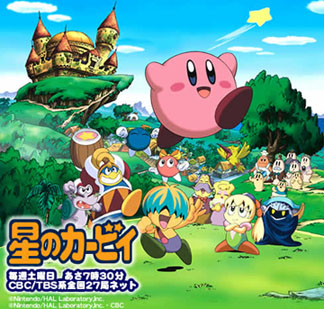
-The anime adaption, Kirby of the Stars,was originally scheduled for Ten Years of Kirby, but sadly had to be cut for time purposes. I'd already watched half the series in both Japanese and English all the while taking relevant notes, so rest assured, it's still in the cards!
So there's definitely plenty of Kirby in the pipeline, but what about everything else? Well, I'm already planning on visiting two of Nintendo's most famous franchises in the near future. I'll leave what they are to your imagination, but know that one has been especially overdue for Leave Luck to Heaven!
Furthermore, I've been teasing Worldly Weekend's heavy workout on Twitter, and while that may take a little while to put into action (more on that below), I can say the next four reviews will feature Square-Enix RPGs! Dragon Quest was just the beginning...
But yes, it may take a little while for all that to happen: for starters, I'm attending a cousin's wedding tomorrow and next week I'll be heading down to New York City for my birthday weekend. Naturally, you can expect me to once again share my Nintendo/manga haul, so stay tuned!
So while you'll have to wait for all that, I'd like to make a small announcement: Leave Luck to Heaven now features tags! Over the past month, I've been gradually adding labels and the like to posts from the past year and will continue working on that this fall/winter. For fun, I've added some tags to this very post, so why don't you experiment a little?
A new era of Leave Luck to Heaven is dawning, so I hope you'll bask in it all with me. See you soon!
I'm sorry, I know the hilarious travesty of Mega Man's American box art is probably the most infamous example of packaging in video game history, but Leave Luck to Heaven represents games with NA covers whenever possible, right down to the "Angry Kirby" nonsense. Even so, just look at the contemptible thing: the indistinguishable geography, the structural disaster that is the building on the left (what's with the stairs? The random stone well?), and last but certainly not least, the mess of proportions, colors and physicality that is Mega Man himself. It's the prime example of 80's game boxarts attempting to make their respective games look way more badass than they actually were, and with how Mega Man underperformed in sales, it backfired miserably here. For shame, Capcom!
Not that Japan wasn't guilty of the same practice, you understand, but its respective cover for Mega Man--I'm sorry, Rock Man--was far more in-line with the game's aesthetic: the plush, wide-eyed animation style commonly found in 80's anime. It's clear from the very moment one lays eyes on the select screen line-up of Robot Masters that this isn't a game meant to channel any sort of realism, but the more light-hearted antics of Super Mario Bros. and Pac-Man.
Could it also be said that Mega Man matches the quality of those classics? Capcom's Mega Man games are only challenged by Konami's Castlevania in how they are the most celebrated NES action titles not associated with the Nintendo name, and that's being fairly generous considering Mega Man himself is a more recognizable 8-bit icon than Simon Belmont, what with his blinking doe eyes and squat one-inch stature. Yes, they are classics, although to what extent is debatable considering how much Capcom unabashedly milked the games (of the original series' ten entries, six are on NES).
Many agree the first three are the cream of the NES crop, and I'm included in their ranks. It's funny how all six games are homogenized around the same gameplay and aesthetics, yet it's those first three games that stick in everyone's memory. In this sense, the original we're reviewing today is a curious delight -- to my mind, it doesn't reach the heights of Mega Man 2 (the series masterpiece) or Mega Man 3 (the runner-up), yet it's such a genuinely strong first effort that I consider it a near-crime the former overshadowed its place in gaming history.
Forging the design that would soldier on in countless sequels and spin-offs, Mega Man revolves around six levels that culminate into their respective "Robot Master" bosses. Each is defined by a singular trait (Fire Man, for example, wielding the power of, well, fire) that also houses a weakness. as defeating any one Robot Master absorbs their power into Mega Man's own (which lets player experiment with Robot Master weaknesses). Each Robot Master can be tackled in any order, and once all are defeated, you head to the castle of dastardly Dr. Wily to halt his evil schemes.
Needless to say, it's a non-linear action take on rock-paper-scissors. As opposed to the physics-bound goofiness of Super Mario Bros., Mega Man relies on a level of strategy and planning not commonly found in action platformers. While thankfully this doesn't seep into the actual gameplay, it allows for nearly every run as divergent as you want it to be; for instance, do you proceed in the order of Robot Master weaknesses, or just go about any which route you wish?
As mentioned earlier, this level progression system hardly renders the original unique in retrospect, but its superiority lies in that very same retrospection. Yes, it lacks the fanciful features including Rush the robot dog and the Mega Buster and the like, but that it's forged only around three mechanics --Mega Man's arm cannon, the Robot Master abilities and good ol' fashioned jumping--ensures it's not bloated with unnecessarily flashy features, instead relying on pure grit to overcome its trials.
Which means that as fun as it is shoot things, it's also undeniably difficult. Like any other 8-bit action game, Mega Man is actively punishing in its damage-sponge robots, leaps of faith, touch of death hazards (watch out for spikes!) and grueling boss patterns. The Robot Masters in particular give Super Mario Bros. games a run for their money in that their toughness matches the rest of the level, and even memorizing their attack patterns and weaknesses won't ensure you'll make it out alive (as seen with the countless close shaves endured with Ice Man).
Could it perhaps be too difficult? Some Robot Master weaknesses aren't very apparent, so the game has to rely on certain context clues within the levels; for example, Cut Man is weak to Guts Man's Super Arm, used to pick up heavy blocks littered across the former's stage and boss room. There is some decent balance across the board, my favorite example being how anyone can memorize Ice Man's disappearing rock platforms with some careful observation.
It falls apart in other places; the game's non-linearity comes to a halt with Elec Man, who hides the vital Magnet Beam necessary for Wily's Castle. This tool can only be uncovered with the aforementioned Super Arm, and this only becomes apparent more than halfway through the level. Mega Man simply isn't the game for this kind of foreshadowing, and with the Magnet Beam being the only way to fully circumvent certain obstacles (such as Ice Man's flying Foot Holders, which by themselves are a tad too random in their placement and tend to frustrate with their mid-air laser blasting), it's a problem.
By and large though, there's hardly any missteps in foe placement and the like; in fact, the game takes steps for the player to navigate around the stage's intricacies. Take the spiky Gabyoalls (try saying that three times fast!), which patrol about on platforms and attempt to shove off Mega Man when he intrudes upon their territory. They rank among the game's most annoying enemies, but they're momentarily paralyzed by a single shot, so they're easily neutralized.
And if you have the Rolling Cutter, all the better: they're destroyed immediately. The fun of Mega Man lies in its replayability and figuring out how the game works. While the Elec Man/Magnet Beam thing limits the potential for experimentation, it's impressive how many quirks and enemy weaknesses can be perceived and utilized through the Robot Master powers. This is further perfected in Mega Man 2 and 3, but that the first title can be this experimental in spite of its flaws is worth noting.
All the better that it's so pleasing to look at. As mentioned previously, the graphics are overtly clean with a bright aesthetic. It's as much of a sci-fi adventure as it is the home of a Saturday Morning Cartoon; not too goofy, but with enough light-heartedness to win anyone over with the likes of beady-eyed blue robots and flying robot penguins.
Hammering this balance down is the wondrous music by Manami Matsumae, which is the perfect complement for such a world. Level themes dip into either motif in accordance to not merely the Robot Masters involved, but the overall motif for their respective stages. With the Cut Man Stage often being the first stage players tackle, it's only natural its theme would thrust us into action. Like the majority of the soundtrack, it's 8-bit catchiness at its finest.
On the other side of the spectrum lies the Elec Man Stage music. Apparently designed with electricity in mind, it's another song that accompanies not the character, but of the level itself. The stage is constructed vertically, with tricky ladders, vigilant Gabyoalls and electric currents seeking to knock you down. The ensuing frustration is only natural, so an upbeat theme is necessary for encouragement.
None of which we find in Wily's Castle. For the record, this is not the beloved action masterpiece found in Mega Man 2, and yet I consider this a distinctive runner-up. Ominous and foreboding, it compels us further down Wily's lair and overcome his traps one by one. Only the Guts Man Stage rivals this theme in their apprehension, which are executed not with darkness but a building degree of menace.
Any and all praising of Mega Man's sound design typically revolves around the music--and deservedly so!--but there is one sound effect I must elaborate upon. Every time Mega Man lands after jumping, a distinguished "plink!" noise always greets his impact. It is absolutely, unabashedly sci-fi; the one detail that defines Mega Man's character as a robot. That we, as the players, are the ones initiating the sound further links us into the game, and furthermore its world. Being a recurring theme throughout the series, I can't help but imagine it as the primary source of Mega Man nostalgia.
Mega Man is not a clumsy, forgotten progenitor, but is instead the treasured 8-bit example of how to initiate a long-running series. It stumbles into traps common of the era, but they're never anything fatal; not anything to the extent of how Capcom dragged the series into tedium, anyway. It's an overtly-solid action game that entertains with its creative non-linearity and thrills with its engaging Wily Castle set pieces/big boss sequences, all foreshadowing what was to come with its famous sequel.
The gradual decline of Tales over the past decade has been heavily disputed, with its journey into HD at the heart of the matter. Any potential brought forward by Vesperia was quickly snuffed in favor of rushed products and randomly adapting to AAA-standards. Namco clearly didn't have the budget to elevate Tales to Final Fantasy production values, and it showed in the mediocrity that were the Xillia games, what with the banal fields that stretched on forever and various cut corners (not the least of which were the limitless assets reuse; how many identical, music-less port towns were in the game, again?). Aimless stories and Motoi Sakuraba's homogenized score only cemented the notion that Tales games had grown creatively bankrupt.
When I reviewedTales of Xillia 2, I dismissed the game as being the latest in a series of JRPG junk food because, really, that's what the series had become: an assembly line of fast food that barely scratch that RPG itch. That analogy is inapplicable as of Tales of Zestiria, a complete failure in everything from level design, pacing and progression, modern graphical standards and proper storytelling. I can't claim to have played every Tales game of the past nine years, but I remain confident in stating it's the absolute worst since the abominable Tales of Symphonia: Dawn of the New World (and what a coincidence that they're from the same series; I can't think of any game I've hated as much since).
I mean, Jesus Christ. I knew during pre-release the game was likely to continue the series stagnation, as the previews showed little evidence of Namco learning from Xillia's missteps. It's not that I believed such a tone-deaf game would reinvigorate the series (not to mention the controversy surrounding the Alisha character, which signaled alarm bells rivaling that of Xillia 2's debt system), so I walked into Zestiria thinking it'd be the latest batch of sub-par takeout that I'd maybe write about.
Boy, oh boy, was I not ready. I wish I could say the game's return to swords and sorcery was as base as its overall presentation; in particular, the latter is just a stunning display of laziness and inadequacy. I mean, where do I even begin? The inconsistent character framerate? The empty dungeon design? The terrible facial animation? The pathetic pop-in and draw distance? The pixelated tree shadows? The sound glitches that plagued the PC release? That one scene where two characters not only talked over
each other when they were clearly not supposed to, but the dialogue
didn't even match the subtitles? How some of the anime cutscenes output sound with all the glory of a 240p stream video, including the very first one you see?
Needless to say, I'm beyond shocked production values have fallen below even that of the Xillia games. The framerate particularly caught my attention; it's not like Zestiria looks even that different from those games, but apparently Namco spent a couple years developing a new graphics engine that can't produce 60 FPS for an overworld monster unless you're standing less than five feet away from it. With how ghastly their movements carry even into battle, I wonder if 30 FPS would be pushing it.
Not even the in-game cutscenes are exempt from this, as it's not rare for characters to fluctuate in frame animation and slowdown from the most minor of movement. On top of how the rocky character animation itself, you can hardly take them seriously regardless of context. Above is an example of the blank facial animation: here, the character is supposed to be shellshocked at a betrayal, but the way her mouth morphs into a near-smile renders the scene almost comical. Oh, and just to clarify, that GIF is from the Playstation 4 version. Let that sink in for a moment.
To top it off even further, Xillia's dry color scheme and static field designs are alive and well. I mean, the former was at least kinda acceptable before considering the new setting, but there's just no excuse for the latter anymore. The Tales team is clearly ill-equipped in adapting the series to an "open-world" environment and it shows in everything from the needlessly broad overworld maps to the boring mazes. It's gotten to the point where I have to ask what's the point in suddenly pretending Tales an AAA effort when all the obvious cut corners immediately dispel such fantasy.
The dungeons are the perfect example here. No matter how bombastic Go Shiina's music may be, the level design never lives up to any such standard no matter how much the context wills it to be. Rooms are designed with bare minimum effort, devoid of any aesthetic value or interesting features besides enemy/treasure chest placement and whatever half-baked gimmick each respective dungeon decides to throw at you (the most torturous of all being the water dungeon, a convoluted maze which zaps you back to the entrance whenever you come across a sentry's line of sight.)
So how on earth did Zestiria end up being this cheap? With the Tales Studio being laid-off/absorbed into Namco and other huge internal projects developed within the same timeframe (notably Super Smash Bros. for 3DS and Wii U, which borrowed a portion of Tales staff), Namco had no choice but to rely on heavy outsourcing; more than any Tales game before, in fact. While it's unfair to say outsourcing is solely for conserving money, that the game required such a ridiculous extent and still looked this terrible proves just how limited the game's budget was (the convoluted web of external assets likely contributed to the mess).
And what was it all for, really? It only serves as a detriment to the actual gameplay, as already seen in the worthless dungeon and field design, but what about the combat? For the first time in Tales, Zestiria opts for seguing battles into the overworld rather than transitioning to specialized battlefields. See, there's a neat idea for evolving the series...had the overworld been competently designed and the characters/battle camera didn't get stuck behind walls and pillars (seriously, just watch this).
It's actually pretty funny how much it falls into the pitfalls as Xillia 2. Just like Xillia 2, the impact of attacking monsters feels as dull as pounding on a wet paper bag. And just like Xillia 2, it's only worth using the characters gifted with super cool awesome Plot Powers (in this case, Sorey and Rose's Armatization, where they combine with one of their element-coded Seraph friends). And hey, just like Xillia 2, they try to make you work for those via combos, but unlike Xillia 2, there's no limit or penalty to how long you can use Armatization. Consequently, battles just boil down to pounding down on enemy weaknesses, and the inclusion of Graces' CC combo system does little to ease the tedium.
The second point is particularly interesting, considering how just like Xillia 2, the whole game is a vehicle for a plot not worth a damn. Of course, that's how JRPGs work, but everything from the overworld to the combat just renders Zestiria a slow, terrible slog to wade through, one that not even the fast travel option can fix (something you actually have to pay Gald for!). That, and...well, JUST LIKE XILLIA 2, it decides to piss me off with horrible, horrible padding. I was not at all happy to discover I was being gated off from continuing at one point until I gathered all the Iris Gems, which magically project the disposable backstory of the generic villain.
Rare is the Tales game that actually has a well-rounded story (that would be Tales of the Abyss), but it's especially bad here since in recent years, Tales has fallen into a bad rut with goody
two-shoes protagonists and characters who join your party just because. Not once am I given a reason to care about Sorey (who falls squarely into the "Chosen One" trope right down to pulling the generic sword from the generic stone) and his band of Seraphs and squires, as Zestiria frequently screws around with natural foreshadowing and player expectations.
Just take the character Edna. The diminutive, snarky Seraph only joins Sorey's gang in the faint hopes of reverting her brother back from being a dragon, yet apparently the developers had the bright idea of relegating that subplot to a sidequest. As far as the main plot is concerned, not once do Sorey's idealistic dreams of curing dragons from malevolence ever become important, and not once does Edna ever embark on a character arc, remaining static in her snarky ways of harassing party members. Other party members fall in similar traps, but she's the most striking example.
On top of out-of-whack story beats and base "twists", there is no reason for investment in anything that goes on. A character turns into a monster? That other one betrays me? Someone dies? I don't care because the game won't let me care, because it refuses to properly foreshadow, engage in proper pacing or, y'know, develop its characters. As to why, a good chunk of this can be chalked up to the elephant in the room: a shift in party members so nonsensical in concept I'm beyond baffled it was actually executed.
I'm talking, of course, about the Alisha bait-and-switch. Yes, we can bring up her gradual absence in pre-release material or producer Hideo Baba claiming they never said she was the heroine despite her being the very first female character they introduced, but how it happens in-game is ultimately what's important. There's just no getting around how jarring it is, as the character is the catalyst for Sorey leaving his village of Seraphim and fulfilling his destiny of becoming The Shepard. While there's nothing particularly nuanced about her character, her role as Sorey's squire sets one of the game's few fathomable themes in stone: two people with entirely separate backgrounds helping the world in ways the other cannot (in this case, an idealistic country orphan and a troubled princess knight).
That is, until said role randomly causes Sorey to temporarily grow blind and she decides to up and leave six, maybe seven hours in. It's as random as it sounds, and what makes it even worse is that her replacement (Rose) is later thrust into the role despite being casually introduced as a NPC (some have defended this saying it plays into the revelation of her spoiler-related job, but, well, she's right on the box. Every other Tales party member has had an elaborate introduction).
I'll refrain from citing any of the vague *conspiracy theories regarding the situation, but regardless, it's just so easy to frame the contextual reason as "well, Alisha wasn't working out for whatever reason, so here's another character that works better just because!" It's not even as if Rose brings anything to the party that Alisha couldn't aside from having a foul mouth and her relationship with Dezel, a Seraph whose endearing traits are being reclusive and getting pissed off at everybody. (This isn't even getting into how poorly Rose takes over Alisha's role; heck, her fellow guildmates don't even acknowledge her absence!)
In attempting to have Alisha take care of Zestiria's events by holding the fort back at her kingdom, all it does is invalidate her character. Rather than sharing a dual role, any appearances from then on are fleeting, and she possesses absolutely zero involvement with the climax. As it is, it's the biggest screw-up in an indecisive tale right down to the context of the "surprised" GIF: a delayed reaction to a twist we already knew and don't care about since she's become superfluous; at that point, we've gotten so used to Rose cementing over her role that Alisha may as well have been that background character.
Can I say anything positive about Zestiria? It has a solid localization with solid voice acting (despite that aforementioned "speaking over each other" goof-up), and there's some sidequest meat to chew on. Sidequests I chose not to partake, but they exist in case you enjoy the contemptible thing. Oh, and being able to customize flair and costumes for characters. Having Sorey wearing giant sunglasses and Mikleo being stalked by a floating Yuri Lowell doll was the only thing that dulled my pain (aside from South Park episodes playing on my tablet. "Suck my b-b-balls, PC Principal!").
Is that it? I don't know, and honestly, I don't care anymore. Between this, the fiasco that was the Tales of Symphonia Steam port (and to a lesser extent, its PS3 "remaster"), a separate Namco development team being unable to tell who Zestiria's main heroine is (look up the controversy surrounding the Tales of Asteria mobile game), and the upcoming Tales of Berseria being a prequel to this game, I've given up hope Namco and the Tales team can provide a quality experience for the series in this age. They're clearly unable to manage quality control across the board, and so any aspirations for evolving a niche RPG series remain futile.
The days of relatable characters and fun battle systems are over. Tales is dead.
*Which reminds me, there's nothing in the main plot that even remotely
hints at a homosexual relationship between Sorey and his BFF Mikleo.
Sorry, Fanfiction.net!