Showing posts with label game boy advance. Show all posts

Tuesday, July 31, 2018

WarioWare, Inc.: Mega Microgames!


I love, more than anything, dumb absurdist humor. Much as I've elaborated on here about my cherished qualities of meditation and reflection, I am an absurdly silly human being, and take pride in my humor. As a child, randomness was a championed quality of mine not merely in making others laugh, but my channeling said randomness into the written word was how I discovered my destiny as a writer. It is how I still recognize the earlier seasons of SpongeBob Squarepants as some of the finest examples of animation ever crafted, the Canada episodes of South Park as proof Trey Parker and Matt Stone have the greatest jobs in the world, and perceive the impending arrival of Invader Zim: Enter the Florpus as nothing more than divine intervention for the sake of today's youth.

When considering all that, Nintendo throwing me a bone with WarioWare, Inc.: Mega Microgames! in the midst of those halcyon days is nothing more than fate. It is extraordinarily, gut-bustingly funny, combining absurdist Japanese humor with the grossness of Nintendo's crudest mascot. It is only sensible Wario would be responsible for this madness: Mario's twisted doppelganger has always elicited a sense of self-centered absurdity, and so it is his natural duty to present the inner mechanizations of him and his buddies, be they for greed or the expression of art. Mostly greed, yes, but I'd like to think there is an inherent art in picking your nose.

Thursday, March 29, 2018

Mario & Luigi: Superstar Saga


In retrospect, it's hard to believe we've gone fifteen years without a single new take on the Mario RPG formula. Mario & Luigi: Superstar Saga, developed by Super Mario RPG alumni at AlphaDream and the game we are reviewing today, was the last new concept introduced and that was way back in 2003's GameCube/Game Boy Advance era. Since then, Mario & Luigi has ballooned with five consecutive sequels (including Superstar Saga's 3DS remake just last fall), Paper Mario only had one more RPG (2004's The Thousand-Year Door) before bumbling into a hitherto unfinished run of tone-deaf platforming/action hybrids, and despite what dubious rumors may tell you, Nintendo, Square-Enix and AlphaDream's aforementioned alumni remain uninterested in a Super Mario RPG sequel.

In other words, for maybe the past decade we've been offered Mario RPGs/non-RPGs people are either sick of or don't want, and whereas Nintendo may strangely be complacent with this state, I can only imagine a reboot of some sort would ease our depressed fatigue. My current adoration of Mario & Luigi: Superstar Saga + Bowser's Minions aside, Mario & Luigi's over-saturation is mostly imposed by the series' mixed quality: Superstar Saga and DS's Bowser's Inside Story are generally regarded as the best, with the rest either considered mediocre (Partners in Time), well-meaning but tutorial/content-bloated (Dream Team) or just wasted potential (Paper Jam). When the series works, its offerings are among the most delightful Mario spin-offs around; when it doesn't, it feels draining and monotonous.

Friday, December 29, 2017

Worldly Weekend: Kingdom Hearts: Chain of Memories (GBA)


Not even one game later, and we arrive at the embryonic stage of Kingdom Hearts' ultimate folly: "bridge" games released across multiple platforms. The Disney/Square-Enix saga was not to continue just through numbered mainline entries, but through what series director Tetsuya Nomura described as games that would "bridge" -- or rather, set the stage for -- said numbered entries together. Kooky executive antics and Nomura's own over-ambition would eventually drive this direction out of control, as evidenced by the fact it's been twelve years since Kingdom Hearts II first launched in Japan and we've only just recently received a tentative date for the long-awaited third entry.

But we'll get to that mess when it comes. Really, what I want to talk about is how undeserving Kingdom Hearts: Chain of Memories -- the first of these bridge games, which arrived on Game Boy Advance in 2004 -- is of this blame, for I daresay it is perhaps the very finest title under the Kingdom Hearts banner. Not because it possesses the very highest highs of the series -- although quite a few are present here -- but rather in how it is the most consistent: what we have here is a game that not only recognizes its purpose, but is aware of its limitations and tries its damnedest to work around them to provide one of the most compelling JRPGs on the platform.

Saturday, April 30, 2016

Mother 3

Note: While I try to be as vague as possible, spoilers can be easily gleaned throughout the review. Playing the game isn't required to enjoy the review, but reader discretion is advised.


When copywriter Shigesato Itoi developed the original Mother--EarthBound Beginnings--he wanted to make a title that would break the mold of RPGs. It wouldn't be a tale of swords and sorcery, but instead children in 80's America fighting aliens and collecting melodies of love. It was an ambitious deconstruction of gameplay, tropes and story all in one Famicom (NES) cartridge, but while it captivated a Japanese audience, it wasn't immune to criticism: maps were too broad, the random encounters were too difficult, and maybe it deconstructed things a little too much, what with its lack of bosses and awkward story beats.

In that sense, Mother 2--EarthBound--is what he set out to accomplish all along. Both games revolved around similar plots, starred a mute boy wearing a red cap, and deconstructed RPG tropes and American culture in a comedic context. The 16-bit console was the perfect template for the series' minimalist vision, but it was no easy task: EarthBound's labored development took five years, with it gradually climbing up the megabit ladder (8 to 24--a huge leap for those days), implementing the overworld's oblique projection was gruelingly difficult, and the game was on the verge of cancellation numerous times...until the late Nintendo president Satoru Iwata--then a top programmer for HAL Laboratory--approached Itoi and offered two choices: he could fix the game as it was now, or reboot it and make it even better.

That Itoi chose the latter was undeniably a difficult decision, but thankfully, it was also the correct one: where Beginnings was something of an enchanting rough draft, EarthBound ended up being the Super Nintendo's masterpiece. One of many for that particular console, you understand, yet the game's nebulous quality spoke to fans in a way Yoshi's Island, Chrono Trigger or Super Metroid did not. Every other top-shelf work on the system excelled in their gameplay, yet EarthBound invited the player in and encouraged them to interpret its world as they saw fit. It was a video game that celebrated the player's interaction, with its themes of memories, nostalgia and even weirdness permeating themselves into what's probably gaming's most devoted, loudest fanbase.

But though he finally accomplished his vision on the Super Nintendo, Mr. Itoi wasn't done just yet. So excited was he on the concept of a third Mother game that he'd already begun brainstorming on Mother 3 before EarthBound was even finished (much to the chagrin of his co-workers, who blankly told him to focus on the game he was still working on). And yet, in the eleven-year span it took from its ill-fated inception on the Nintendo 64 to its 2006 release on Game Boy Advance, there was something clearly different about this final entry. Whereas the first two games focused on parodying America and embracing the nostalgia of youth, Mother 3 features cowboys, dinosaurs, an army of pig-garbed soldiers, and a nature vs. technology narrative.


This is not to say Mother 3 is for the worse for this sudden thematic shift; in fact, it's the only possible way it could compete with EarthBound. If the outsider's perfect vision had already been achieved, why iterate upon it again? The only way to match up people's expectations would be to go against conventions lest it be too familiar, and so what we have here is a finale that takes place in something entirely different: a backwater town on conjoined islands in the middle of nowhere (hence the name "Nowhere Islands").

Bear in mind that Mother 3 does not strip itself entirely of Mother conventions: the game is still framed within Itoi's trademark absurdist humor, JRPG deconstruction, minimalist character design/ battle encounters, and heartfelt messages. But that is where the similarities end. The game is not a grand, globetrotting narrative, but an episodic one divided into eight chapters, most of which center around the gradual transformation of an idealistic, yet naive village. There is no eye-catching oblique projection, but instead the standard top-down perspective commonly found in retro RPGs. There are no chosen children guided by fate, but people of all ages and even animals brought together by tragic circumstance.


And therein lies the biggest shift of all: if EarthBound was a game about crafting and cherishing memories, Mother 3 is a grounded reality. The tale of Lucas, the younger of twin brothers whose family is torn apart, is perhaps the most heartbreaking story ever told in the video game medium. It's not actively harrowing, and there's still plenty of supernatural elements to go around, but the game's themes of love, loss and change are so achingly genuine and sincere you cannot play through it with a dry eye.

There's so many reasons for why it tugs at our heartstrings, be it the evolution of the series' trademark minimalist aesthetic or Shogo Sakai's beautifully fluent score (which, as of ten years later, remains his masterpiece), but I personally cannot get enough of how Mother 3 is a deconstruction of Mother itself. We see this right from the excellent transition from the prologue to Chapter 1. There may not be any America-inspired towns around, but Lucas's last day of vacation at his grandfather's still feels like home. Just like in EarthBound, there's animals with quippy inner dialogue, a sudden encounter with a talking bug, and slice-of-life moments with his mother and sibling.

Cue Chapter 1: things are not so well back in the village of Tazmily, with the surrounding forest mysteriously erupting into flames, and the native animals emerging as freak hybrids and cyborgs. Lucas's father, Flint, takes it upon himself to solve the crisis, but a sudden rainfall arrives with the most chilling of news: his family never returned home.

We're approaching spoiler territory, but the following scene is infamous for hooking players into Mother 3's world. The first of many tragedies is revealed from the blacksmith Bronson, who drops the news in the most tactless way possible: "I've got good news and bad news."


If the Game Boy Advance was tethered to any limitations relative to the Super Nintendo, you wouldn't be able to tell from Mother 3's character animation. The minimalist Mother designs are now fluid in expression, with the campfire scene being the cream of the crop. Everyone suddenly reeling back in shock, Flint hopelessly pounding the ground in despair, and the act of rage you see above. I'm hard-pressed to think of any other example of sprite animation expressing such raw anger (and bear in mind, this is only the first half: how it ends depicts fear and violence just as intense).

I could go on peeling layers form this one scene. How Shogo Sakai's song of choice, a heartrending piano piece, is aptly named Confusion. What were the exact circumstances as to what made Bronson blurt out what he said (we see this later with Flint's in-law Alec, who despite sharing the same grief and is racing against the clock to help Flint save his grandson, decides now is the time to cheer up his son-in-law with wildly inappropriate fart jokes). How the repercussions of Flint's actions begin to unravel Tazmily at the seams, beginning with his prestigious honor of being the first person locked up in Tazmily Jail.

However, the most important takeaway from this scene is that these are real people. Whereas we were free to inject ourselves into the protagonists of the first two games, these are defined characters with active thoughts and development that reflect human nature in the real world. Hardly a first for video games, and it's not like there weren't already great characters in EarthBound's world, but Mother 3's wonderful balance in presenting this cast can't be stated enough. So much of this has to do with the denizens of Tazmily, who are introduced as a money-less, carefree society where no one knows the concept of sadness.


But when the likes of Yokuba and the Pig Mask Army instill the values of capitalism and vague conceptions of "happiness," we begin to wonder if their varied transformations would be right at home in EarthBound's modern-day world. Abbot and Abbey, once a sweet, young couple, selfishly believe the other villagers are jealous of their newfound happiness and fear what lies beyond the borders of their town. Jonel, a nature-loving man who worships in the nearby Sanctuary, comforts Flint with the reminder that he has friends...only to distance himself when he and Lucas refuse to adhere to the town's new regulations, informing the latter that his father is "awkward." (I imagine that his Tyrolean hat hides a pair of hair-formed devil horns is no coincidence) His wife, Brenda, descends into full-on nastiness towards the ostracized Lucas: "Your father is still looking for your brother in the mountains? You should tell him it's hopeless and give up."

Even before Tazmily's transformation, we begin to realize it's not the utopia it appears, as seen when the outsider Nana ponders about why hardly any of Tazmily's relatives resemble each other. Their naivete is just as tragic as their brainwashing, and the journey of Lucas and his band of outcasts becomes ever more poignant as you recognize you're not just taking on an invading dictatorship: you're against the only world you've ever known.

Needless to say, it's an emotionally heavy game, but never one that's overtly sappy or constantly fishing for your tear ducts. It's more somber than the other two Mother games, but what's amazing is like how EarthBound wasn't cynical in deconstructing the JRPG model, Mother 3 isn't necessarily cynical in the journey its characters embark. True to the game's tagline ("Funny, strange, heartrending"), there are just as many dark moments as there are lighthearted. It is every bit a sad story as it is an empowering tale about growing up. It may not be a globetrotting adventure, but it is one that changes the world itself.


As mentioned before, this is still a game framed within Mother's most valued conventions. If this is a world that must possesses nasty characters, then there must be characters that stay pleasant through it all. (Hey, isn't that like real life?) And if there is such pleasantness to parallel sad moments, then there must be moments that render you a convulsing, laughing mess on the floor. Itoi's writing is as wonderfully charismatic as ever, be it moments that ape series tropes (the animals' inner dialogue, including a pig who wants to see a pig seeing the ocean) or ripping on RPG conventions (there are two dungeons that consist of, respectively, a mole cricket society and a toilet/restroom maze. Do I dare spoil the enemy of choice for the latter?). 

However, Mother 3's emphasis on character animation brings a new sort of humor that Mother was largely unable to capitalize upon before. This is not to diminish the quality of the humourous writing (you don't see the best of the DCMC band outside of their dialogue, for example), but there's a far bigger emphasis of such writing working in tandem with aesthetics. Fans would be quick to point out the infamous dance sequence, but I'm particularly fond of the measures Lucas takes to sneak his dog Boney into Club Titiboo.


And yet despite being so vivid in animation, it's amazing how Mother 3 continues to channel the series' most compelling asset: letting the player fill in the blanks. The minimalist approach to sprite design and battle encounters are just as integral as they were before. For example, how exactly does Duster kick in battle despite his limping leg? You can tell right from his sprite model that he has a bad hip--quite inconvenient for an aspiring thief-who-doesn't-steal-anything--and yet he deals some mighty damage; in fact, he's built as a primarily offensive character. Itoi offers some suggestions in this Nintendo Dream interview, but since the game borrows EarthBound's minimalist battle system (more on that later), he leaves it up to the player's imagination.

Even the actual story works into this. We had this in the first two games, too, but the active symbolism and character motivations grip at us long after the game's completion. What makes Yokuba such a despicable, evil man despite his late-game revelation? What's the deal with the doorknob we hear whispers of? Is the Negative Man really just a joke enemy? Can we even begin to fathom the depths of the tragic villain, whose callous, childish disregard for all life gradually unveils itself throughout the story's progression? Their roles and more are so tantalizing, beating just underneath the surface, that we can't help but speculate. To cite Shigesatoi Itoi himself:

"My personal feelings steer me to want to affirm everything the player thinks about the game. I wanted to make Mother 3 like a mirror. One that reflects the heart of the player off of the screen...Mother 3 is a playground with plenty of room for your imagination to run free. The more you think about it, the greater Mother 3 will become. The more you feel it, the deeper it will become. The more fun you have, the more you'll grow."

Ah yes, that reminds me: this is also a game! Despite being more linear than the first two, there's quite a bit more "game" here. I could go upon about how are more sequences resembling sidequests--particularly with hidden enemies and bosses in places you wouldn't normally think to look--but remember how EarthBound was a game past its time with elements like onscreen enemies and a rolling HP meter. Mother 3 doesn't necessarily introduce ground-breaking in that regard, but chooses to instead build upon where its predecessor left off. Where previous protagonists may've moved a tad too slow, there's now a run button. Whereas inventory may've been a tad too confining and cumbersome to manage before, there's plenty of space now that there's a separate pocket for important items.

And then there's the rhythm combos. The sole strength of Mother's combat was that it let you be the star: how the parties of Ness and Ninten fought off Giygas's forces was entirely up to you. Well-suited for players seeking immersive gaming, mind, but not particularly compelling for those looking for deep battle systems. As mentioned previously, this immersion is alive and well in Mother 3, but it decides to include a combo system to make things more interesting. Tap the A button to the rhythm of the battle music, and you can perform up to a 16-hit attack. Considering how there's over fifty battle themes in the game courtesy of Shogo Sakai, it's a lot harder than it sounds. Some are repeats, but those throw in off-tempo beats calculated just perfectly to trip you up. Of course, you don't have to master it if you don't want to--you can win any and all fights just fine without them; after all, most of the additional hits largely deal minuscule damage. Those hits can rack up, however, and the feeling accomplished combo unleashes a deserved audience cheer can't be understated. Think of it as an "every little bit helps" sort of thing.


And you can certainly think of it as capitalizing upon some of the best battle themes in JRPG history. Above is one of my favorite boss themes, Unfounded Revenge. It's a fast-paced, trumpet-heavy frenzy that will test your button-tapping reflexes not just in memorizing the beat, but in that the related battles themselves are notoriously difficult (so don't neglect your HP meter in favor of keeping with the beat). Since it's reserved for repeat encounters, it doesn't just pave the road for off-tempo screw-ups: it serves as the game's theme for rivalry.


However, there will be times where rhythm combos will be the least of your concern, for the story's themes certainly work their way into certain battles. Fight Against Mecha Drago, which concludes the the first chapter, is the beginning of the end of the initial Mother deconstruction. Previous Mother games had never sounded this raw barring maybe their respective final battles, yet here early on we're treated to a track so dangerous it immediately removes any sense of security that things will turn okay. Without going into the details, they don't, and it's superseded by the heartbreaking Long Shadow closer only brings this point home.


But let us not forget how wonderful the music outside the battle system. It really is amazing how much Shogo Sakai gets the story's themes (and he should, considering he even contributed to how certain scenes unfolded), as seen for the shifting music themes of Tazmily. What's interesting is that while they're all based on the same song, we can never pinpoint which one is its "real" theme. The very first time we hear it, Sorrowful Tazmily, plays when the town is in mourning, and we know it can't define what was the town was before.  Happy Town?, the version above, is probably the closest to an actual main theme, but the title raises a good point: is this industrialized renovation of the town really the right direction?


I'm also a fan of how Sakai handles the supernatural. The Magypsies are some of the game's most flamboyant characters, but they're embedded deep into the game's mythology, and so their homes are granted the above theme of mystery and reflection. The like of aliens are nowhere to be found, but how Mother 3 instead focuses on the world's history makes it seem that much more real. Speaking of ancient history, perhaps their shell-shaped homes recall the series' one other instance of magic and mystery...


I mentioned the presence of a nature vs. technology/modernism narrative. This isn't to say the game full-out promotes tree-hugging or the like, but you can easily point to themes representing each. For the latter, the march of the Pig Masks you can hear above was actually the original main theme for Mother 3, and it seeps into numerous facets of the game. At times a comedic fanfare and others a majestic song of triumph, the way the ultimately childish His Highness's Theme bookends the game is nothing sort of genius.


Which renders the background behind the Mother 3 Love Theme all the more a miracle. It's a song that wasn't composed until the very final stretches of development, and despite being just as simple and short as both iterations of Eight Melodies, for it to turn out so poignant, so beautiful and full of hope in its accompanying themes of family, acceptance and moving on is just flawless. (It's highly implied in the aforementioned Itoi interview he already had the song thought up before he was even asked; perhaps it being the basis of the early Mom's Hometown theme was the inspiration...?) If neither of the two versions here can make you cry, the haunting chorus found in the final battle will.


I could cheap out and just say something cliche like how it's the greatest song Shogo Sakai ever composed (which is true!), but it's something that means so much to me on a personal level. The game's own tragedies very much mirror the ones I had to personally overcome, and while the song itself always has me on the verge of tears. the lessons I continue to derive from it give me the strength every day to pursue my dreams, live on for the memory of those who've departed from my life, and to continue loving and appreciating everyone I hold dear. For that alone, I'm eternally grateful for the series to have touched my life.

Despite what the provided screenshots have implied, Mother 3 is a Japan-only game. There's a variety of factors to why it never came out westward: it came out too late in the Game Boy Advance's life cycle to justify localization costs, the underwhelming sales for EarthBound, and the story themes were probably too problematic for a 2006 America. (The poor Magypsies!) We do, however, have access to a wonderful fan translation courtesy of Clyde Mandelin and several other Mother superfans. It reads with all the flow of a legitimate game localization (and it should, considering Mr. Mandelin has localized quite a number of games and anime himself), and has been celebrated as one of the most polished fan efforts in the game industry.

As a Mother superfan myself, I own the original Japanese cartridge. (And by the way, I'm not ashamed to admit I still pull it out just to listen to the Sound Player) What Reid Young pointed out in the Do-It-Yourself Devotion project announcement is true: you won't be able to perceive every story detail and character interaction if you're Japanese-illiterate, but most of what you really need to know is conveyed through the masterful context of sprite animation and the like. It's eerie just how far they went to do this: you almost always know where to go and every single item has a little graphic next to its description.

Will the game ever come out in America? If the recent deluge of inside rumors saying it finally will this year, it might. Us Mother fans are notorious for our resilient optimism, and if it took right up to the game's 10th anniversary for us to be right (and right off the heels of the original Mother's surprise launch last year, no less!), then that makes it all the more magical.

Maybe I could cite moments where Mother 3 falters in going through the motions, and maybe its advances in minimalist design just miss the heights of how EarthBound came full circle for me, but such trivialities mean little in the fact that it's one of gaming's greatest treasures. As a self-contained narrative, it's thought-provoking and powerful. As the finale to a beloved trilogy, it's cathartic and even hopeful. It's the Game Boy Advance's masterwork swan song, and ten years later, I'm still hearing it.


Sunday, February 7, 2016

WarioWare, Inc.: Mega Microgames! (Gaming Grunts Review Repost)

Note: This review was originally published in 2014 for Gaming Grunts, which went under some time ago. Having recently salvaged most of my articles on there, I've decided to give them a new home here for archival purposes. Please bear in mind they differ in structure from this blog's reviews, and be sure to join me at the end for a bonus reflection!


Released back in 2003 for the Game Boy Advance, the original WarioWare captured the hearts of Nintendo fans everywhere with its quick-fire gameplay and absurd, off-the-wall humor. Starring Wario—Mario’s greedy doppelganger of sorts—and his band of misfits in yet another money-grubbing scheme, WarioWare Inc.: Mega Microgame$ immediately distanced itself from other mini-game collections (such as Mario Party) in hosting over 200 “microgames,” of which stack onto one another in five-second bursts. Ridiculous in both concept and execution, yet bursting with inspiration: the addiction of WarioWare still remains one of the most innovative, original handheld experiences to date

Story

Wario was spending his day in his mountaintop Diamond City home idly picking his nose and watching TV when a sudden news report informs him of a best-selling video game. Sensing another opportunity for cash, he speeds off on his motorcycle to purchase a laptop so he can make a popular game of his own! Then he discovers programming video games is really, really hard. Just as he’s about to give up, an idea hops to mind: he’ll just establish his own company and hire a bunch of schmucks-er, his friends, to make games for him! His new employees include Jimmy T., an afro-sporting disco dancer; Mona, an ice-cream serving girl; 9-Volt, an elementary Nintendo nerd; Dribble and Spitz, a pair of anthromorphic taxi cabbies (a dog and a cat, respectively); Kat and Ana, a pair of kindergartener ninja twins; Dr. Crygor, a cyborg scientist, and Orbulon, an alien dude. The products of their sweat and tears are now yours, the player, to discover.

Gameplay

The aforementioned “microgames” were what rendered WarioWare so original: as opposed to the minute-long sessions of Mario Party’s mini-games, WarioWare layers a bunch of five-second concepts—whether they be jumping over wheeled potatoes, picking noses, or controlling a burlesque Mario in some sort of weird Street Fighter knock-off—onto each other, gradually increasing the pressure as the games increase in both speed and inanity. It becomes readily evident that WarioWare is a game that awards success via reaction time and quick thinking, and given the right sense of humor from the player, an addiction will quickly be born.


It cannot be stressed enough how perfectly WarioWare takes advantage of this newfound addiction, such as how Wario and his friends divide the microgames into themed packs. For example, Mona represents strangeness (Pick noses! Twirl spaghetti! Now chicken pinch!), 9-Volt presents a loving library of retro Nintendo-themed games (Balloon Fight, Donkey Kong, and the Famicom keyboard? Oh my), and Kat & Ana focus on nature (“Raaarrrggghh!!!”). Every pack is just as fresh and creative as the last and players will want to keep diving back to not just achieve a high score, but to unlock every last microgame for individual play.

Aesthetics and Humor

Through the magic of 2D sprite animation, WarioWare’s visuals successfully capture zany Japanese humor. Anyone who’s not well-versed in said Japanese humor will be in for some culture shock, as the microgames’ aesthetics change on a dime, such as a retro anime-styled woman sniffing up a loogie, extreme forms of minimalistic artwork, and fun takes on obvious photo-captures. The character of Wario was no stranger to weirdness beforehand, but this game takes it to another level entirely.

However, with humor being an acquired taste as it is, it may be the breaking point for certain folks who don’t find WarioWare’s brand of insanity to be their cup of tea. This is not in any way a knock against the game’s actual graphics and animation (although a couple of character cutscenes haven’t aged too well), but if a particular player finds themselves scarred by the sight of potato facials and all that, there’s nothing that can be done.

Sound

But just what is the secret ingredient to WarioWare’s humor? It all lies in the game’s use of sound, as while WarioWare does not boast an incredible soundtrack of any sort, but it doesn’t need to. What it really excels in is masterfully applying sound effects in every facet of the game. Take Jimmy T.’s basketball microgame, which consists of a shadowy man preparing himself to take a shot at the basket. Its minimalist visuals are malleable to any sort of sound direction, and so we take witness of jazzy saxophone music in the background as the basketball player’s hops are accompanied by spring noises. Every microgame is full of hysterical touches like this to the point where I’m always shaking my head in amusement.

Of course, simply dismissing the overall soundtrack would be a mistake. While it mostly serves as a backdrop to all the zaniness going on, there are some brilliant pieces here and there. Players will probably take note of the beautiful, super serious Japanese vocal song that plays throughout Kat and Ana’s section, even when you’re snapping a photo of a flying squirrel.

Replay Value

The real magic of WarioWare lies in its flexibility of playtime. Need to cram a quick three-minute session before class starts? Don’t worry, you’ve got your fix. Got nothing to do for an hour? Your high score in Orbulon’s I.Q. section is waiting to be felled. It’s a prime example of a pick-up-and-play video game, suited for just about any idle moment to snag your attention for however long you need it. With how every individual micro-game can be accessed for high score play and an array of full-length mini-games to unlock (including a strangely familiar puzzle parody involving doctors and viruses), the fun never ends with Wario and company.

Pros

  • One of the funniest games ever made
  • Innovative and original in every fabric of its being
  • Addictive gameplay
  • 9-Volt!
  • Unlockable features and mini-games are a blast
  • Hilarious use of sound effects and music
  • Infinite, flexible replayability

Cons

  • Might be too weird for some
  • Occasional dated visuals

Summary
Is WarioWare crazy? Beyond a doubt. Too crazy? Maybe, but WarioWare has no patience for those unwilling to get some fingers dirty digging for gold. Regardless of your personal taste in humor, its relentlessly wild direction is still one of the most creative, joyous products in Nintendo's handheld history. Whether you're in the market for used GBA cartridges, scrolling through the Wii U Virtual Console catalog, or were one of the lucky 3DS Ambassadors, WarioWare, Inc.: Mega Microgame$ is the perfect choice for a pick-me-up.

9/10
Reflection: This is definitely the odd duck of my Gaming Grunts reviews. Their subject matter were all quite recent, yet here we have a game that's well over a decade old. Thing is, the site actually encouraged us to discuss retro games ("they're proving popular with collectors," I was told), and so I figured why not write about a game I'd been revisiting at the time? One I still happened to love, at that.
Regardless, I was really happy with how it came out. The first three WarioWare games are nothing less than classics, and I can't wait to fully discuss them later this year.

Wednesday, March 18, 2015

Biweekly Music Wednesday! No. 23 ~Butch and the Villagers~ (Mother 3)


Origin: Mother 3 (GBA)
Plays In: The end of Chapter 2
Status: Original Composition
Composer: Shogo Sakai

Shogo Sakai's work on Mother 3 possesses the most heart-wrenching music ever inputted into video games. That the title deliberately stands in stark contrast with its predecessor (Earthbound) is one of its biggest strengths, and one needs only to compare their individual soundtracks to see why. Earthbound is composed of rich, multi-fledged nostalgia -- be it the familiar old scent of Twoson, the music box-esque tunes that rest at the sanctuaries, or the mellow choir of Ness's home, such songs serve to celebrate childhood innocence and adventure.

Mother 3 borrows this template only to highlight the exact opposite: the crippling reality of adulthood. In the context of Butch and the Villagers, Tazmily Village's awkward reception to the deaths and disappearance of certain characters was disconcerting enough, but the town's moral fabric begins to truly unravel through the staged theft of a new, foreign concept: money. Bear in mind only a day or two had passed since the aforementioned tragedies, yet the destruction of a family and a missing person report is quickly forgotten in the face of greed. At this point, Mother 3's exact setting and timeframe relative to the two previous games are unknown, but the former's fragility is already hard at work in providing one of the game's most powerful statements.

Butch and the Villagers is perhaps one of the game's more underrated tracks, yet the way it complements the above scene can't be lauded enough. Mother 3's script already functions as something of a play, and I can't imagine that the way the song channels the basic beats of a closing act is no coincidence. But what's even more powerful is the defeated plucks of a guitar, the one that signals the song's other, more heartbreaking message: "there's no going back."

From now on, the peace-celebrating utopia of Tazmily begins to be no more. One family's tragedy in a formally close-knit village is quickly forgotten in the advent of capitalism and modernism. A grandfather can only cope through his special brand of fart jokes as the world changes around him, the townsfolk roll their eyes as a father spends three years in a hopeless routine of prayer and searching, and a lone boy can only clutch tighter to his dog in the depths of the night.

I listened to this song one night on Mother 3's sound player maybe a month or two after Michael's death, and that one message repeated firmly in my skull. I couldn't go back -- not to the private forum I left after I'd grown disillusioned with its gradual insensitivity, or to the safe childhood I'd taken for granted, or the warmth of my brother's embrace as he went goodbye.

There's no going back...so the only place to go is forward. But you don't know that in despair.

Final Thoughts: Even now I'm choking back tears. Damn you, Itoi!

---

What a downer! Hopefully Kirby can make it up to us...been making some real progress on that, so expect that and a Nintendojo article soon!

Tuesday, February 10, 2015

Ten Years of Kirby ~Reverie 10~ Kirby and the Amazing Mirror


2004. The new year greeted Nintendo fans with the hush-hush PR announcement of a new handheld: the two-screen Nintendo DS, complete with a touch screen and stylus. The wild concept threw fans for a loop, and no one was sure what to make of it. Photoshops illustrating the plummeting of Nintendo's stock and comparisons to the doomed Virtual Boy begged the question: had the company fallen off its rocker? Had the years of backwards hardware and nonsense peripherals finally caught up to them? Much skepticism surrounded the new handheld, and with the Gamecube's fall schedule devoid of anything but sequels (Metroid Prime, Pikmin, and Paper Mario--all of them 2s, might I add), things were looking bleak...


...until Nintendo proceeded to open a can of whoop-ass at that year's E3. The new Zelda reveal for the Gamecube flung series fans into euphoria, but the explosion of game announcements for the DS completely turned heads around. With the likes of a Metroid Prime spin-off, the first true Animal Crossing sequel, a reimagining of Super Mario 64, and the first new side-scrolling Mario in thirteen years, opinions of the new handheld instantly shifted from indifference to uncontrollable hype.

While Nintendo initially marketed the new handheld as a "third pillar" to accompany the Gamecube and Game Boy Advance, it was only a matter of time until the latter began to be phased out. WarioWare; Twisted!Pokémon Emerald and the long-awaited Mother 3 were still in the wings, but stiff competition from both its DS successor and the Sony PSP--all with their shiny 3D graphics and fancy screens and casual appeal--put a sudden halt to its growth. Too soon? Perhaps, but a new era was dawning for the Big N, and it soon became apparent the Game Boy Advance had no use in Nintendo's bid for the expanded market or in competing against the Sony PlayStation Portable..


Alas, our dear friend Kirby couldn't slow the GBA's descent into irrelevancy; if anything, the puffball was all set for his DS debut via Kirby: Canvas Curse, while his second and last GBA title stumbled into existence. Co-developed by Dimps Corporation and Capcom subsidiary Flagship, massive game-breaking bugs were discovered only weeks before the spring Japanese release of Kirby and The Great Mirror Labyrinth, and the game had to be pulled for another month despite advertisements and reported manufacturing of cartridges.

It goes without saying that Kirby and The Great Mirror Labyrinth is a badass title--one that doesn't quite roll off the tongue of American children, and one that's certainly not present in this blog post's title. Indeed, it was the rebranding into the bland, nonsensically joyous Kirby and the Amazing Mirror that directed fans' attention to the existence of not just the "Angry Kirby" phenomenon, but of some downright bizarre localization choices, be they blatant mistranslations or renaming longtime characters.

Do these translation fumbles permeate the entire game? Does Kirby bid his farewell to the Game Boy Advance on a good note? The answer might not be what you expect...

-----


Kirby and the Amazing Mirror is a weird game. When considering how the context of Kirby games are only a tad stranger (and perhaps just as tonally familiar) than your average Super Mario game, that's one hell of a statement. Forget approaching by itself; as a Kirby title, it's vastly unintuitive and unfamiliar to the point of potential alienation. As Kirby games are meant to be easy gateways for anyone to get into, Amazing Mirror doesn't make for a great first impression.

Now, is this wholly a bad thing? Not quite. Despite its missteps in presentation, Amazing Mirror is still a solid game. It doesn't require the mountain of patience from Kirby Air Ride, as the traditional gameplay of swallowing and copying remains intact. So what's the problem? It's the change in framework; a shift in context, if you will. For as eager as Amazing Mirror is to embark into uncharted territory, it neglects in properly introducing its new persona to the player.

And what sort of identity does the first post-Sakurai Kirby brand itself as? Metroidvania.


Wait, what?

That's right. After witnessing Meta Knight's retcon into the side of justice, being split into four by his not-so-justice doppelganger, and having an off-screen falling-out with the classic "run-straight-to-the-right" model of sidescrolling play, Kirby traverses the Mirror World as if he was spelunking deep within the crevices of Brinstar and Tallon IV.  However, unlike Metroid lead Samus Aran, he's accompanied by his color-coded copies as they tackle one realm after the other, solving puzzles and ganging up on bosses.

Here's where Amazing Mirror slips up: the context of the four Kirbies--such as their origin and rallying them via cell phone--are shown and explained. The Metroidvania exploration is not.


Needless to say, those not expecting the initial transition from Rainbow Route to Moonlight Mansion are in for a rather unorthodox surprise. Instead of simply ending the level, Amazing Mirror grants the player free reign over traversing the game's worlds until they stumble across one of the designated goal sectors. Upon entering its doorway or defeating its assigned boss, Kirby warps back to the central hub with the treasure he hoarded during his trek.

This concept of spelunking for treasure should instantly bring to mind that of The Great Cave Offensive from Kirby Super Star, but it's ultimately difficult to draw parallels between it and Amazing Mirror. Whereas The Great Cave Offensive encourages completion in a more confined design, the Mirror World is of a loose complexity. Within Amazing Mirror's biggest stumble is its greatest asset revealed: much like its source of inspiration, it's entirely possible to forge ahead in ways discordant to natural progression.

As Metroid and Castlevania before it, Amazing Mirror's greatest strength come forward in simply exploring this new world unfamiliar to us. We've crossed similarly unfamiliar realms with Kirby before, but never have we traversed such one in such a manner, and so we long-time fans are all the more intrigued by its implementation, however clumsy it's introduction. Just like the original Metroid, I'm compelled to turn on the game and trek deep into the unknown.


For the sake of exploration, Amazing Mirror does work on an inquisitive level. That it fumbles in introducing this new system no doubt implies there's other screw-ups awaiting us, but it's still interesting enough to hold our interest. For one thing, there's enough landmarks to grab our attention: just what are those star-marked stones lying around on Rainbow Route? Why are some of the Mirror Doors alive, and how can I outwit them so I can progress? What's that switch do, and where does this cranny lead?

It also helps that it's interesting to look at. New development team aside, this is still Nightmare in Dream Land's engine through and through, right down to aesthetics and music instrumentation. In regards to the former, the backgrounds don't dive as deeply into realistic fantasy, but thankfully Flagship recognized the importance of maintaining that delicate balance between children's fantasy and dark mystery.


These three backgrounds--Rainbow Route and two from Peppermint Palace, respectively--consist of a different vein of fantasy from the Dream Land we're familiar with. Rainbow Route's set pieces would be right at home with your typical outdoor oil painting, but I'm particularly a fan of Peppermint Palace; there are some vague resemblances to icy structures and mountains and the like, but they blend in so well the gorgeous weather patterns that they may as well be one and the same. I've always thought of the latter as a gentle cluster of sparkling azure blankets.


And here we take a dive into the dark unknown via Carrot Castle and Cabbage Cavern. The former's ballroom scenery provides a grand sense of scale for a handheld screen. A dim setting never before explored in Kirby, its fleeting yet imposing appearances are easily the world's highlight, and I dearly wish to have seen more of it. Thankfully, the overgrown flora of Cabbage Cavern provide not just a similar sense of scale but the perfect setting for Kirby's first foray into Metroidvania: an untouched cavern only intruded by stray rays of sunshine, its spoils ready for the taking.


When married to the set-up and action of the foreground, Amazing Mirror does succeed in providing something of a visually compelling world. This above shot of Candy Constellation proves this with yet another series first: traversing just above a planet's orbit (Kirby Super Star technically did this first, but the actual planet wasn't reflected in the background; just a cluster of equally dazzling stars). It's a wonderfully satisfying setting for the final level, as it comes complete with a phenomenal Smash Bros. reference (of several!) in a boss and a thundering, starry score.

Ah, yes, the music. The HAL Laboratory veterans are absent (no doubt busy with the upcoming Canvas Curse), but we have two new composers to pick up the slack: Hironobu Inagaki and Atsuyoshi Isemura, both co-workers from the Sonic Advance era. I'd be lying if I said I was perfectly content with their work -- the title screen theme is nothing more than a repetitive jingle while the final boss theme perfectly complements its disappointing nature (more on that later), but the actual level themes do a splendid job in building a new realm for Kirby.


We witness this nearly right away when Rainbow Route wholly hits the notes of "the first level". This one's always captured me in how it gently defies the signature Kirby opener: it's still upbeat, but what we have here touches upon an adventurous panorama, brimming with cavort at every corner. The song's of a short length and is prone to looping, but as it induces a desire for adventure into the player, it never grates the ears. With how Rainbow Route serves as the all-encompassing hub, it's a delightful introduction.
Meanwhile, Olive Ocean represents the finest of the game's sense of, as it comes packaged with all the urgency found in your typical claustrophobic water levels. While not necessarily eerie, that it conjures up recollections of other similar urgency via Super Star's Revenge of Meta Knight and Kirby 64's Dark Star renders it a soundtrack highlight. It's granted a scale that swallows the player into the chilling depths of a bottomless ocean, its pounding pressure pushing us deeper and deeper into the unknown.
The aforementioned Candy Constellation rounds out the game with a stellar astral motif, opening with an explosive rocket launch fanfare before segueing into its dreamy main theme. It's sprightly and whimsical all the same, and I love how its intro both complements and contrasts the actual song--it bursts with all the importance of a finale that the starry peppiness thoroughly conveys, yet I can't help but feel it channels the jubilance found in most Kirby openings (as opposed to Rainbow Route). I wonder if it's just coincidental.


Bringing our musical tour to a close are the themes for the Rainbow Route hub and the intro/collection room, of which share the same motif and excel in illustrating an unknown, mystical realm just outside the boundaries of Kirby's world. Both reside in opposite ends of the repose spectrum: the former possesses a tad of urgency, whereas the collection room's contents are rendered all the more sacred thanks to the meditative pace.

If only such care was lavished upon the new Copy Abilities. There's only five of them, but Amazing Mirror's repertoire fluctuates so unevenly in quality and utilization that it's a wonder the later Squeak Squad barely edges it out for the title of "Worst New Abilities in a Kirby Game." It's that dire.


My heart continues to be broken by Cupid Kirby, for instance. The sight of Kirby gently flittering about the sky with the aid of itty-bitty angel wings, beady eyes and halo and all, is so innately adorable that you wonder why it hadn't been done before. And they screwed it up. It's simply too slow and clunky and just plain weak to derive any enjoyment from, and believe me, I tried. I tried so hard. I am still legitimately depressed by this; Kirby was made for that copy ability, and they screwed it up!


Meanwhile, Magic and Mini only serve as gimmicky one-trick-ponies, the former for a worthless reward-granting roulette wheel and the latter only useful for scampering about in tiny pathways. The former is just simply baffling; it's only use is for providing some extra 1-ups or food or y'know, stuff that's probably already lying in the room you're in. It's easily the most useless ability in the entire series, and as we'll learn in Squeak Squad the staff hadn't learned from their mistake in the Bubble ability. There's also the problem of Mini's unorthodox usage, but we'll get into that later.


Only Missile and Smash pick up the slack in providing some enjoyment. Of course, the latter would have to be fun given its source of inspiration (the hint is in the name!), but thankfully Flagship understood that missiles are speedy agents of death and so it's the Copy Ability of choice to slaughter Mirror World denizens and bosses alike. Yay.

To the game's credit, it is much appreciated that it returns to Super Star's multi-fledged ability system. While it's not as robust, most powers aren't restricted to a single action anymore and there's even some new twists (Street Fighter fans should get a kick out of Kirby's "charge" move). Despite Flagship's insistence on remolding the Kirby formula, this proves they at least researched what made the series' most popular game so successful (or could we chalk this up to Sakurai's credit as a "Special Advisor"...?).


But that's as far as they got. Amazing Mirror, for all its aspirations and dreams, falls well below the quality threshold of Kirby games. It's goal to combine Kirby gameplay with Metroid-style progression already raises eyebrows, but it's bogged down by Such sloppiness highlights the one true problem of Amazing Mirror: a lack of not just context, but cohesion.

There's the localization, for starters. To criticize a Kirby game for it's localization--which may come across as the ultimate nitpick-- is nothing new. It's astounding as to how games aren't exactly verbose, and yet we've had major translation blunders since the days of Kirby Super Star, with a notorious error regarding the villain Marx's motives ("The sun and moon are fighting. Go find Nova.") and barely-decipherable checklist missions in Kirby Air Ride.

Amazing Mirror continues this "tradition" alongside some woeful renaming. Okay, maybe we can forgive changing Mirror Labyrinth into Mirror World and Angel Kirby into Cupid; after all, names undergo changes all the time in the American industry for the sake of simplification and religious sensitivity, so why call out Amazing Mirror for that?


The real problem lies in name changes that didn't need to be changed; case in point: Crackity Hack. Crackity Hack, a mini-game starring the four Kirbies adorned in badass headgear and contesting to decide who can rupture the earth's crust the most via their destructive stubby arms. Needlessly to say, the name is horrendously embarrassing on all levels, be it not making any sense (there is no "hacking" going on!), cheapening the context into pandering kids' fluff, or that they actually chose it over  the original Japanese "Gigaton Punch" title--a homage to the Megaton Punch mini-game from Super Star.


Speaking of name continuity, the most egregious error lies in a brain-dead renaming. Any Kirby fan should recognize the walrus-y fellow Mr. Frosty, yet a closer look at his name-branded health bar reveals a new name: Mr. Flosty. Yes, Mr. Flosty.  Forget how "flost" isn't even a real word, it's an obvious bastardization of the Japanese phonetic rules regarding the L/R letters (there are many cases where the letters are interchangeable in the Japanese dictionary, and some translators strictly perceive it as "L"). When considering how one of the game's translators (Bill Trinen) had worked on previous Kirby titles that included the character, it reveals a shocking display of disinterest.


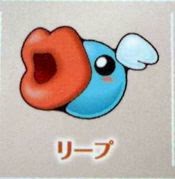
And general translation sense, too. We witness this with yet another enemy: a pair of flying giant lips being renamed from "Lip" to "Leap". My command of the Japanese language is only that of a fledgling quality, but even I know the romanji of the original name ("Ripu") only translates to "lip", and it's even dumber when you realize the English verb "leap" automatically disassociates itself to characters who are flying. Apologies to the super-awesome Mr. Trinen (and to Mr. Richard Amtower; another Treehouse veteran), but this is easily some of the worst localization work ever put out by NOA. Also, please tell Angry Kirby to go away; we don't take kindly to his presence.

The actual gameplay, too, suffers from inexplicable missteps. For all the fun parallels the Shadow Kirby character provides, his sudden encounters prove only to be confusing. Why exactly does he appear with zero context, and why are his battles so short-lived and easy? Why exactly does the last phase for the final boss suddenly turn into a scrolling shooter? Why did they randomly shoehorn the credits immediately upon his defeat?


Even the starring four Kirby mechanic keeps us asking. While it's a neat novelty to have the CPU wander off on their own, the AI is too poor to serve as reliable comrades and so they often end up being sent back to the Rainbow Route hub upon dying. There is little coordination or interaction between the clones, and only come to life when positioned next to a puzzle (such as, say, using all four Kirbies' Inhale ability to move a giant boulder)

And here we arrive at the crux of the matter: Kirby and the Amazing Mirror wants to be Metroidvania, but cannot be Metroidvania. The whole fun of those games is to slowly amass an assortment of gear to not only increase your chances of surviving in an unknown world, but to overcome previously insurmountable paths and obstacles. You gradually became one with the game's world as you traverse its nooks and crannies again and again, pumping fists in triumph when discovering Samus's newly acquired missiles can blast open those annoying pink doors from earlier.

The fundamental mechanics of Kirby games prevent Amazing Mirror from accomplishing this. With Kirby only being able to possess one Copy Ability at a time, the Mirror World instantly loses any chance it had in thriving as a fully organic map. For whatever interesting landmarks dot the landscape, most attempts at puzzle-solving typically revolve around whatever Copy Ability happens to be lying around (or not, which results in some annoying backtracking).


The aforementioned Mini Kirby is the perfect example. We can think of it as a homage to Samus's Morph Ball, which can also fit through tiny tunnels, but Mini Kirby serves little purpose in comparison. It's only purpose is for entering obviously inaccessible rooms, whereas the Morph Ball's multi-purpose design naturally compels the player to prod around the alien world via bombing, boosting, and rail grinding. In contrast, Mini is absolutely useless outside of mandatory exploration, and we are left to mourn the potential loss of any innovation it could've brought.

Being so harsh on Amazing Mirror brings me no pleasure -- I like getting lost within its maps, I'm rather fond of the color spray that can turn Kirby into different colors (why isn't that in more Kirby games?), and I do so enjoy gazing into its backgrounds. But such periphery pleasures only propels Amazing Mirror into simply being "good," and I'm rather bothered by how its core concept betrays the "newcomer" design mentality behind Kirby games.

I could perhaps go on with my criticism--mainly in that Flagship and Dimps tried to be too ambitious with a franchise they'd only just gotten their hands on, and how The Great Cave Offensive trumps it as an epic spelunking adventure--but what's the point? It still intrigues me on an experimental level despite it ill-fated lofty ambitions, and at the very least we can take pleasure in knowing that it ended up being better than Flagship's next Kirby effort. Much pleasure.


Wednesday, December 17, 2014

Biweekly Music Wednesday! No. 19 ~Lilycove City~ (Pokemon Ruby and Sapphire)


Origin: Pokemon Ruby and Sapphire
Plays In: Lilycove City
Status: Original Composition
Composers: Junichi Masuda

One of the greatest joys in playing through the Pokemon: Omega Ruby remake is being treated with fantastic rearrangements of the soundtrack. As expected from anyone who's read my Kirby: Nightmare in Dream Land review, my listening experience is something of a constant tug-of-war: as much as I'm enjoying the songs, the original songs still pull at my memory, asserting their superiority. Currently, it's about 50/50, but I suppose my full thoughts would be better suited for a review.

As I've only earned five gym badges at this point, there's quite a chunk of arrangements left for me to discover, such as the above Lilycove City. It's always been one of my favorite Ruby/Sapphire tracks in it's parallel: Hoenn emphasizes adventure in nearly route, and this is reflected in their appropriately grand/majestic tunes, yet the towns are so homely and soft in comparison. While this is nothing new for town themes, the boisterous adventure found outside their confines renders a warm, refreshing welcome to our ears after a tough day of monster grinding.

Being a prelude to the vast underwater trenches of Hoenn, the first new notes of Lilycove City perfectly capture the ocean air. It's something of a lovely waltz, and I can't help but think of the wonderful elders in my life whenever I hear it. It's fun to mentally prod around within the context of Pokémon too: an old man--a retired Pokémon Trainer, perhaps--out on another day with his wife, gazing at a flock of Wingulls circling above the sea as he quietly sips at his coffee.

I'm quite the reserved individual. I mean, sure, I'm a total goofball in social situations and within the anonymous expanses of internet message boards (Hi, NeoGAF), but I've come to recognize the former's only meant as a mask to cover my awkwardness; in truth, I'm much like an old man. I prefer silence, sit around a lot, and calmly reflect on the days of old. I'll likely be doing the same inactive routines ten years from now, and I'm quite content with that.

But as someone wishing to enter the game journalism industry, I don't think that's the image people have of those participating in it. I wonder if that'll be a problem?
Personal issues aside, I've yet to hear Omega Ruby's take on the song. Omega Ruby and Alpha Sapphire's arrangements aren't quite as laced with nostalgia in the same sense of Soul Silver/Heart Gold, but I'm looking forward to see if the song continues to make me feel old. Not that that's a bad thing.

Final Thoughts: maaannnn what they did with the mt. chimney theme was pretty lame though

Wednesday, September 17, 2014

Ten Years of Kirby ~Reverie 8~ Kirby: Nightmare in Dream Land


2002. The Nintendo Gamecube had launched in Asian/American territories within the past fall and would eventually reach European/Australian shores later that spring. Accompanied by the new Game Boy Advance handheld system, the purple duo arrived in a harsh climate for Nintendo. While the GBA had no problems flying off store shelves, the Gamecube shriveled up in an post-launch drought much like the Nintendo 64. The bitter mentality of Nintendo being "for kids" was at its strongest, and the "purple lunchbox" design turned off older audiences. Regardless of any mended relations with third-parties (most notably Sega and Squaresoft), short-sighted marketing decisions and bad press constantly impeded Nintendo's little console. Even the successful Game Boy Advance was not exempt from criticism, as fans vocalized disappointment at upcoming Mario and Zelda titles being just handheld ports of decade-old Super Nintendo titles. While Golden Sun and the introduction of the Advance Wars/Fire Emblem franchises in the West constantly provided new experiences, Nintendo was not the least bit subtle in turning their latest handheld into a breeding ground for ports and remakes.


Having just completed the labor-intensive development of Super Smash Bros. Melee, Kirby creator Masahiro Sakurai was well aware of these complaints. He elaborated on this issue in an interview following his soon-to-be departure from HAL Laboratory, citing not-so-discreet examples of tired sequelization and desperation from his parent companies.

"That's why you see places trying to stay alive by putting out tons of budget titles and re-releases. Every game company, no matter who they are, is desperate right now. So one possibility is that people will say 'I can't live off this anymore' and leave the game industry in droves. You see a lot of people use terms like 'console wars' and compare the whole thing to a fight for territory. You [the interviewer] and lots of other people in the game industry get termed 'Nintendo people' or 'Some other console's people' by someone you've never even met. But this is no time for that, I don't think."

Regardless of any likely festering doubts over the company he'd worked at for so long, Sakurai's idealism was no match for corporate. In an ironic twist, the man found himself the chief director of a Kirby remake: to be precise, a Game Boy Advance reimagining of the NES classic Kirby's Adventure.


If he bared any ill-will towards the project--however unlikely that may have been--it was surely left confined within the walls of HAL Laboratory. And why shouldn't it, when his pink puffball was set to become a marketing blockbuster? Japan began airing the anime adaption Kirby of the Stars the previous September, and the show was set to be repackaged as Kirby: Right Back at Ya! for North American audiences under the handling of licensing company 4Kids Entertainment (who were also responsible for dubbing the mega-hit Pokémon cartoon). Numerous marketing teams worked around the clock with a 10 million dollar budget to turn Kirby into a media sensation following the cartoon's American debut, with his visage to be pasted onto everything from fast-food licensing deals to merchandise of all sorts. Over six weeks were spent designing the following logo, which has since been associated with nearly all localized Kirby games to this day.


It is one of the few Kirby trademarks left from that time. In yet another misstep from Nintendo's string of marketing failures in that era, the plans to turn Kirby into another Pokémon-esque hit fizzled out. While the anime was a moderate success among young audiences tuning in to Fox's Saturday morning cartoon block, it never came close to matching Pokémon rating numbers and the promises of toy lines, pajamas and backpacks mysteriously fell through--as opposed to the troves of plush merchandise commonly imported from Japan and available for purchase at conventions and even the official Nintendo World Store. Meanwhile, longtime Kirby fans found themselves disinterested in the show's original cast and setting...if they weren't already turned off by the questionable voices attached to their favorite characters (most notably in the cases of King Dedede, Meta Knight and Rick the Hamster, who were given wildly inappropriate accents). While the show's dubbing treatment wouldn't reach the level of atrocities inflicted on Japan's famous One Piece property a couple years later (or most other 4Kids-licensed works, for that matter), the voice miscasting and the replacement of the game-inspired score render it not only inferior to the original Japanese airing, but simply as product.

If anything, Nintendo of America's localization of Kirby from 2002-2006 became something of a, well, joke. While the cartoon didn't set America on fire, any of its mistakes were a drop in the bucket compared to another hare-brained marketing blunder that would curse the series for years to come: the inception of "Angry Kirby". In what I can only imagine was a laughable attempt to quell the "Nintendo is kiddy" stereotype, nearly all Kirby titles beginning with and following Nightmare in Dream Land would have their front covers plastered with frowns and slanted eyebrows. Nightmare in Dream Land was branded with a particularly nasty localized box art, depicting Kirby performing a Copy Ability that's not in the game (Fighter) and implying that series anti-hero Meta Knight was the game's main villain.


Common sense should indicate that if you're trying to groom your pink puffball into the next Pikachu, you shouldn't decorate him with furrowed eyebrows. In any case, the terror of Angry Kirby wouldn't be fully known until soon after, as Nightmare in Dream Land was saddled with yet another marketing error. I mentioned Nintendo's trend of filling up the Game Boy Advance game calendar with ports and remakes, and seeing as how that was when Nintendo began to love appealing to nostalgia, it rendered the introduction of this title all the more...well, awkward. Believe it or not, Nightmare in Dream Land was the only Game Boy Advance remake to not be officially advertised as a remake. Not in press releases, not in trailers, not even the commercial. Only eagle-eyed fans who sifted through screenshots or purchased the early Japanese release found out the truth before its American launch.

In retrospect, aside from few, isolated GameFAQs board cries I'm actually amazed there was no major controversy over this. As far as I know, Japan had no issue since the remake beared the same name as the original (just with a "deluxe" added at the end), but Nintendo of America marketed it as an actual new game and just about no one noticed! I imagine Kirby's sleeper hit status contributed to this; can you imagine if the same thing happened with, say, Super Mario Bros. 3 or something? Somehow I doubt the initial batch of screenshots would've slipped by so easily.

But what's more important than anything else is that regardless of any possible misgivings Sakurai had over the project, no matter how many failed business deals or horrid Spanish accents impeded the pink's ball path, Kirby was given justice in the most important area of all: a great game. Nightmare in Dream Land is not the perfect remake; at the very least, I would not place it in the same league as Pokémon Soul Silver/Heart Gold or the later Kirby Super Star Ultra, but it remains one I constantly go back and forth on. What is better than the original? What does the original do better? Every time I play, I ask myself these questions, and I love nearly every moment.

-----

At last, we have arrived at my first review of a Nintendo remake. It's one of my favorite subjects within the company's legacy, and I never tire of comparing the shiny upgraded versions in contrast to their classic source material. I suppose it's necessary to get this warning out of the way: when it comes to their remakes, I am nitpicky as all hell. As fascinating as it is to study changes between versions, the slightest blunder or inefficiency in a new background or character animation or music track or what have you has the tendency to dock off major points from me.

It was my disappointment with Super Mario 64 DS that sparked this habit. Having discovered the masterpiece quality of the original only a year before its announcement, twelve-year-old me was hyped as all hell for its release. While it ended up being a decent remake, there were more than a few...shall we say, baffling decisions in its re-imagining..I did not care for how the hat powers were split between the four characters, and I did not like that Snowman's Land's awesome 3D ice maze was changed into, uh, some ice blocks for Yoshi to melt, and I certainly did not care for how they decided to throw in the original King Bob-omb battle for nostalgic shits and giggles despite already developing a perfectly upgraded replacement for the first visit into Bob-omb Battlefield. Ever since that day on, I've held Nintendo's remakes under the glass of a microscope: nitpicking, comparing, watching...

In retrospect, it's pretty funny how easily satisfied I was with Nightmare in Dream Land only two years earlier when considering the number of changes. Certain enemies and mini-bosses have been swapped in favor of new designs, the backgrounds and foregrounds have taken an entirely new art direction instead of simply upgrading the original sprites, and even the presence of certain disappointing level compromises to avert the NES's niftier uses of parallax scrolling. Yet even with whatever flaws I can identify today, I don't mind so much: Nightmare in Dream Land is something of a constant mental battle for me, one where it's likely waging a losing battle against Kirby's Adventure for superiority, but damn me if it doesn't put up one hell of a fight. The instant I spot something Adventure did better, something else quickly sprouts up in another point for NIDL.

So how to go about evaluating this remake? It's a difficult process: some Nintendo remakes have noticeable differences in their gameplay, while others may as well have replicated the original engine. How much were the graphics overhauled? The sound? Do the new properly complement the game, or does the game feel stripped down in comparison?

For this particular article, I will be evaluating Nightmare in Dream Land from an aesthetic and sound perspective, as well as the former's impact on gameplay immersion. Regardless of whatever minor changes the remake applies to the levels, for all intents and purposes Nightmare in Dream Land is practically identical to the original in terms of gameplay. The controls are virtually the same, the Copy Abilities function precisely as they had a decade before (excluding Backdrop, which has Kirby fully hands-on with his suplex moves), and there are no distinct differences regarding sense of control, speed, and gravity.

I do not intend to completely overshadow gameplay: there are some overhauls regarding the mini-games, for instance, as well as some exciting new features. But what I'm most interested in is how exactly do the "upgraded" visuals provide for the actual feel the game? Do they render the formally 8-bit world of Kirby's Adventure more immersive, or do they detract from the experience? Is the soundtrack faithfully reproduced, or do the chiptune sounds of yesteryear emerge triumphant? Does the remake capture even the slightest of the original's idiosyncrasies, or does it forge its own identity?

In short: does the remake do the original justice, let alone stand by itself?

Let's start with the games' respective opening sequences and title screens.


In comparing the two title screens, we can tell the general UI is far less colorful (to be specific, less pinker) than the original. Any fears of a grittier Kirby should be quickly quelled: despite the background overhaul (more on that later) the actual game provides enough color and flash to compensate; plus, the game comes with its own brand of charm and humor. While unfortunately the beloved "Draw a Circle" intro sequence was axed, we're instead treated to a barrage of Kirbys flooding the screen to give way to the title screen. Showcasing the GBA's graphical power, perhaps? I've always gotten a smile out of it, regardless.


But I think the story narration demo provides a better comparison. Take a look:


Despite the obvious changes in narration text (no doubt to compliment the smaller GBA screen), take a gander at the NIDL artwork. Kirby sports a seriously thick outline, a motif that will be carried out by just about every character sprite in the game. While the artwork pieces for this particular intro bear a watercolor/"painted" theme of sorts, the in-game application of outlines grants the sprites an animated look and feel. Nothing Disney-tier, of course, but it's such an interesting aesthetic that it warrants further investigation.

But before that, let's dive into the first major change: the menus. Refresh your memory with Adventure's for a moment, why don't you?

Being attached to the title screen, Kirby's Adventure's green menu doesn't need to overly embellish itself. Each save file displays a compact collection of both the main game and unlockables, such as mini-games, Extra Mode, and the boss rush. It gets the job done, although the sound test has a bizarre presentation (with an out-of-order soundtrack and not number-labeling the songs past tens. The latter may have been due to NES limitations, but the former makes for a rather unorthodox listening).


Nearly ten years later, Nightmare in Dream Land wisely chooses to include a full-fledged UI menu.  Sakurai fans should instantly recognize the style, having debuted in Super Smash Bros. Melee and designed by his future wife Michiko Takahashi. While it hasn't quite evolved to the point of visual aids as introduced in Kirby Air Ride and Super Smash Bros. Brawl, the resemblance is still clear; particularly in the below screen shot with its long, sexy buttons. The above shot is still notable for a certain visual gimmick: whenever you turn off the game, a visual pops next to the percentage bar depicting artwork of whatever world you left off in (in this particular instance, it's the sunset of Orange Ocean). Nice touch!

 But enough about menus! What does the actual game look like? Let's first take a step back in time.


Here's the starting point of Kirby's Adventure. Take aside the 8-bit graphics and the leftwards bar thingamajig (what are those things called, anyway?) and focus on the overall composition. Having been designed for home TV use, Kirby's Adventure comes equipped with a big ol' HUD display, which I imagine was necessary to highlight the particular Copy Abilities that Kirby could possess. Kirby's Adventure also boasts some pretty imaginative backgrounds for an NES game, albeit with a limited sense of scope. And of course, Kirby's Adventure is all about the bright colors.

Here's the respective location of Nightmare in Dream Land. The screen-size reduction brings about some major overhauls; for one thing, we no longer have a dedicated HUD display. Lives, health bar, and the score are all display over the bottom of the foreground, and the Copy Ability display/artwork only pops up when Kirby has one in his possession. The smaller screen also cuts down movement area somewhat, but that's to be expected for a complete GBA remake.

But mother of god, look at that background scope! This particular example is an excellent showcase of when the game successfully captures the look and feel of Dream Land. The wide verdant green, peculiar mountain shapes and even the the trademark "checkered" aesthetic--this time reimagined into dirt roads--immediately capture the eye and set the imagination soaring. Typically, Nightmare in Dream Land only utilizes the base background trope from the original (in the above case, a field and a lake) and then shoots off into its own direction, but here we can see it paying tribute via the foreground: the yellow landmarks of Adventure sticking out with a new gray look next to an adorable little fence.


And I'm really not kidding when Nightmare in Dream Land takes off with its background art direction. Look at its take on the forest level above and tell me that's not absolutely gorgeous. It's bursting with imagination, complete with neon weather patterns decorating the forest air and powered by cherry-like energy rods. The foreground's pretty rad too; granted, I'm pretty sure the red leaves are odds with the green trees, but whatever, it's pretty!


These are the best artistic moments of Nightmare in Dream Land: not for when it trumps Adventure, but when it leaps into the realm of absurdist fantasy of its own accord. The above scenery is the perfect example: what was once an ordinary desert is transformed into a wasteland populated by floating jellybeans. Such dreary scenery is instantly made fun by this simple, yet wild leap into fantasy.


Of course, Rainbow Resort is again the aesthetic star of the show. The Kirby vs King Dedede scenario in particular has been completely revamped, clearly inspired by the Fountain of Dreams stage in Super Smash Bros. Melee. The way the spring water melds with the rainbow-colored background is just sublime, and the battle is treated to a new Rainbow Resort weather pattern: strokes of suspended azure.While the dreamy theme park aesthetic has been shelved, this dazzling dreaminess is a fine substitute.


There are certainly locations where there's no contest in Nightmare in Dream Land's superiority. This mini-boss room had its background supplied by a wall, yet here we're treated to a panoramic shot of Dream Land. I could just float away.


Or take the above Grape Garden level, the original version of which I've always been rather confounded by. The hub artwork hints Kirby's about to enter another valley-themed stage, yet somehow he inexplicably finds himself inside an airship that suddenly segues into a forest. Huzzhwuh?


This sort of inexplicable transition can't really fly in 16-bit gaming--least of all in 2002--so thankfully, Nightmare in Dream Land comes up with a really neat alternative. It dumps the original airship interior concept outright and instead jumps straight into the forest, but not before crafting an entirely original section. On top of that, it's designed for players to figure out how to use the complicated Ball ability, and it gets that job done rather well with the tight spaces. Cool!

But for every graphical improvement Nightmare in Dream Land conjures up, there's always a misstep waiting just around the corner. I say this realizing the general inevitabilty of remakes: no matter how much they get right or unique spins they create on their own, they'll always flub up in ways that'll benefit no one. The good news is that while none of Nightmare in Dream Land's mistakes via aesthetics are game-ruining, there are some definite jarring moments even without the context of the original game.


Here's a particular area Nightmare in Dream Land struggles in: retaining platform density, as evidenced by the above opening sequence to Ice Cream Island. Adventure attaches platforms to a small island hill for the purpose of adding character, yet its remake strips the hill away and just leaves us with random shingling platforms. But why? These platforms aren't built for progression, and isolating them from the background renders them pointless and out of place. Ick.


...and then the game soon makes up for it by adding in a kickass mangrove. Agh!


In any case, this is exclusively a problem with floating platforms. While cutting background intersections with the foreground (such as the aforementioned island and the above cloud structure) could be acceptable compromises in transitioning to a new style, the problem is that many platforms come across as half-baked since they have nothing to offer on their own. While the above NIDL shot may be artistically representative of your typical Kirby game, the platforms don't bear enough solidity.


There are time where it's easier to overlook, such as the above take on Ice Cream Island's sky level. We can still witness traces of the original ruins littered about, but the tropical theme of the world shines through in a beautifully-rendered background. As the earlier example with the world's beginning was the most extreme example of the problem, this flaw can perhaps be forgiven.


...but man, I really do mean it when my mind can be changed on a dime here. Take the gorgeous shot above, where an aquatic section is provided by an absolutely stunning galactic setting...


...only for it to trip up later when Adventure's transition into an igloo is just reduced to a door. Argh!


And as much as I boasted about the game's art direction earlier, it trips up sometimes there as well. Butter Building is, alas, the most unfortunate casualty of this direction. Nightmare in Dream Land can get so wrapped up in its artistry that it forgets not to get too deep into realism, and so the once joyous, yellow tower finds itself in shambling ruins plopped into the middle of a dreary mountainscape. I also find it rather suspect the new pink motif doesn't quite gel with the name of Butter Building.


By far the most egregious offender is through its feeble handling of Adventure's most famous graphical showcase: the pseudo-3D parallax scrolling sections. While it's understandable the Game Boy Advance apparently couldn't pull that off, there's just no excuse for its replacement: you're forced to sit still in a stagnant room until the fog clears up and the Star Door opens. Considering they already replaced other rooms from the original with brand new ones, it's just a baffling design choice. Even poor Kirby is expressing disappointment!


Meanwhile, the interior goes for a dilapidated aesthetic that doesn't quite gel with the typical Kirby visuals. While the series is no stranger to dreary scenery, it's always done so with the proper shift in tone (sound choices, for example) and it just doesn't work here with the cheery Butter Building theme playing in the background. Take a look at the above visuals, depicting the first time Kirby squares off against the mini-boss Bugzzy: the Adventure version has the fight taking place in a sort of indoors garden, in which I always thought was something of a home to the nasty beetle. In Nightmare in Dream Land, it's just the ol' crumbled ruins background. The relative impact to the player's imagination is rather dismal.

But that's peanuts compared to one background redesign so foul, so undeniably rancid that it boggles the mind as to how this was approved for a Kirby game. Observe the following Adventure shot.


This is the beginning of a Yogurt Yard stage, throwing Kirby inside a mountain interior until he pops out and travels into a forest. The jaggy, puzzle-pieceish background, while nothing special, is one of the few depicted for cavern interiors and the like. It works, gets the job done, falls right in line with Kirby, etc. etc.

Now here's Nightmare in Dream Land's take on the level.

What the hell is this?

What's with the dark lighting? Why is there smoke? Erupting volcanoes? Good god, is that a lake of blood I'm looking at? Someone tell me it's magma. Actually, don't; I'm too scared to know. As if it's not bad enough, it sticks around for the entire duration of the level all the while one of the happiest, bounciest songs of the game delightfully flutters about as if there's not a wrong in the world.

Words fail me. I mean, I guess I can gloss over the mistakes made with Butter Building, but this shit is just...you can't look away. The alarming incongruity between this clusterfuck of a backdrop and the innocent jolliness of Kirby platforming can't be described through mere words. Just look at that picture. Just look at it.

People--and when I say "people" I mean embittered Smash Bros. fans--associate many negative nouns and adjectives with Sakurai. They'll tell you Sakurai was an idiot for including tripping in Smash Bros. Brawl or that he's some sort of evil conspiring marketer who intentionally made that game bad on purpose to spite people or w/e, but they're directing their anger at the wrong game. Just what exactly went through the mind of Sakurai when he approved this backdrop? Did he actually look at this and felt this was an adequate upgrade of the original game, or was he too busy stroking the heads of his cats, not knowing he had inadvertently approved Yogurt Yard's transformation into an apocalyptic wasteland?

I guess we can chalk that up to a careless failure on his part, as I have no recollection of this...colorful choice of art as a kid. Which lucky stars to thank, I wonder?

In any case, that's all there is in regards to the level aesthetics. Some other notes of interest include the following:


 -One should get used to seeing the above Kirby sprite for quite some time, as it becomes the norm for the next six years of traditional Kirby games. Not that I have a problem with that, as he's quite the charmer here. Just look at those adorable sparkling irises!

I mentioned earlier how the super thick outlines grant the characters an "animated" look. Obviosusly I'm not talking levels of, say, Rayman Legends or Wario Land: Shake It!, but under Sakurai's helm we witness characters reverting back to expressive countenances of joyous mannerisms and their horrific last moments before being swallowed/mauled by Kirby. This series' dark side is something else.


 -After a prolonged absence during the Shinichi Shimomura era, Kirby hats make their triumphant return! And they've never looked better, either; they're far more expressive and animated than their Super Star counterparts. In particular, the way the flames of Fire Kirby lash about during his every move are quite beautiful. Never fear, Kirby fans, for the hats are here to stay from now on.


Of course, some new outfits are thrown into the mix as well. If I'm not mistaken, the above one for Freeze reminds me of a certain duo contestant in Smash Bros...may they rest in peace.


-Nightmare in Dream Land has an interesting habit of introducing a wide palette of colors for the enemy characters. Adventure dabbled into this as well, but definitely not to the extent of its remake. Personally, I love the idea of a remake carrying on from where the original left off, and this peculiar execution is so bright and colorful that it renders the world of Dream Land all the more eye-popping.


By the way, I find these Coners' red shells rather delicious-looking.


-While Nightmare in Dream Land forges its own artistry for the levels, Adventure fans will enjoy some nice fanservice in the hub world designs. As shown by the above screen captures, the nostalgic NES designs are faithfully replicated for the GBA. How dazzling is Rainbow Resort?


-Most of the enemies return from Adventure except for the star-chuckin' Bounders and the above mini-boss, Rolling Turtle. Bounders are replaced by, uh, these chubby pig things with wings (Gips), while Rolling Turtle is swapped out for an elephant-themed character named Phan Phan. It's a 50/50 thing for me: the Gips are pretty ugly and don't have the wall-clinging charm of the Bounders, but I find Phan-Phan a lot cuter than Rolling Turtle. The exact reason for these changes are unknown, but here we are.

By the way, compare the sizes of the two mini-bosses. Notice how much bigger Phan-Phan is? We could simply chalk this up to the smaller GBA screen, but I'd wager it was Nintendo's philosophy of dumbing the difficulty in their ports/remakes at the time. Just about every boss is doubled in size and easier to hit, and so Nightmare in Dream Land is much more of a cakewalk than Adventure was. Kirby games are, of course, easier in general, which renders it all the more interesting to see Nintendo's hand-holding reach extend all the way here.


-We can also spot this doctrine in the dark rooms, which must be lit up by the Light ability. While said ability is still required to locate the hidden doors, the bottom NIDL shot proves you may as well not need it at all if you just want to clear the level. Sadly, NIDL couldn't come up with an appropriate visual complement to Adventure's awesome neon look.


-A neat character touch in Adventure is when every time you come across an Invincibility Candy, it's always thrown to you by a hidden Meta Knight, hinting the masked anti-hero has ulterior motives in continually testing Kirby. This is sadly removed in NIDL, where the lollipops simply fall from the heavens or are just lying in plain sight. In hindsight, given that Meta Knight's "good guy" status in the cartoon would eventually bleed over into the games, it's a rather bizarre change. Regardless, NIDL's version doesn't look that awkward, so I suppose I can let this one slide (plus, it's not as if Kirby established a continuity where Meta Knight spends his time plopping lollipops all over Dream Land, as funny as that would be).

That about wraps up the visuals. They're the classic definition of a mixed bag: some design choices work, others don't. And yet, I don't mind it so much. Yes, Butter Building and that one Yogurt Yard level are travesties and I wish more attention was paid to beefing up the platforms, but the sheer beauty of everything else far outweighs those major slip-ups. The moment I spot something I abhor, another favorable aesthetic suddenly steals me away to vertigo. I always have my breath taken away by Vegetable Valley or whenever I'm in the romantic clutches of Rainbow Resort, and I refuse to let even the most heinous of Butter Building's mistakes stop me from reveling in them.

But why am I being so forgiving in this regard? The great news is that regardless of any graphical missteps, Nightmare in Dream Land excels in just about everywhere else, both in its own accord and in staying true to Adventure.


The three mini-games from Adventure--Crane Fever, Egg Catcher, and Quick Draw--are all cut in favor of new ones. Whereas Adventure's mini-games were something akin to quick-time bonus segues, the ones in Nightmare in Dream Land's come across as more full-fledged and are better suited for your go-to addiction bursts.


Bomb Rally is something of a spiritual successor to Egg Catcher, although it's more in vein of a twisted Hot Potato involving frying pans and bombs. The four colored Kirbys smack the bombs around with their pans in hopes of blasting each other off, as evident in when they increase the tempo. My heart's always pumping at this.


And for this one, too! Samurai Kirby returns from Kirby Super Star, and much like Quick Draw, it's all in the player's skill with timing; precise timing, might I add. The moment swords, paper fans and hammers are drawn, you'd better have that thumb at the A button ready. Expect frustration and numerous attempts (top-knot Meta Knight is such a prick).


And then we have Air Grind, of which is in the running for my favorite Kirby mini-game. No doubt intended as a sort of dry run for the upcoming Kirby Air Ride, Air Grind has four different Kirbys engaging in some serious aerial racing, where the curvy twists and turns are navigated with the simple aid of the A button. Black-tainted rails pop up occasionally to spoil the fun, but so long as you remember to let go and press again at their tail-ends for a well-earned boost, you'll come through just fine. The satisfaction with said boost can't be stated enough.

The beloved co-op mode from Kirby Super Star also returns in a big way: for the first time in series history, four players can join the fun via link cable! Yours truly only ever played with one other gamer long ago, so unfortunately I never received the full experience. I wonder how well the levels would hold up with four players rampaging across at tiny screen? Should the opportunity ever arise, I'll update this post with further impressions.


The Extra Mode and the Boss Endurance both return with no major differences, aside from the inclusion of local multiplayer. Any relevant changes found in the main adventure and boss battles are still present, and so there remains little to be discussed. They still, however, provide suitable challenge for veteran players.

But why bother talking about those two modes when there's this slice of nirvana?


Yes, there's a mode where you play as Meta Knight. Meta Knight is playable for the first time, and as expected from that badass description (the denizens are Dream Land are cruelly subject to anything, it would seem), it's as amazing as one would expect. It's constructed as a time-attack mode so you can't save, but it's a worthy price to pay.


While Meta Knight is limited to his sword, he's given a wider variety of swordplay than his pink counterpart. Aside from a cooler dash and flying with his bat-inspired wings, he can unleash aerial attacks and is skilled in the art of anti-aerial pokes. To build upon the staple difficulty of Time Attack, Meta Knight has less vitality than Kirby, so the mode offers an appealing brand of toughness alongside its core novelty. Meta Knight's so cool that he doesn't even bother to play the mini-games, but I don't think anyone's in a rush to see him participate in a round of Bomb Rally.

So Nightmare in Dream Land might even surpass Adventures in features, but there's one last thing that ventures into the most divided realm of subjectivity: the sound.

This is perhaps the most difficult point to review yet. Speaking on a personal level, my nostalgia of Kirby's Adventure is so palpable that even hearing the sound effects can melt my heart into a gooey mess, so Nightmare in Dream Land would have a lot to live up to...if I hadn't grown up with both games within the same timeframe.

Much like the graphics, NIDL's sound is something I continually wrestle with. In regards to the sound effects, I use the term "mixed bag" with some hesitancy: take the Kirby-related sounds, for example. The high-volume vacuum screech of his whirlwind swallowing is instantly memorable, as are the always colorful Copy Ability jingles and Warp Stars. Yet while the Copy Ability noises are perfectly adequate, the charming 8-bit sounds of Adventure's respective powers are so distinctive that they pale in comparison. Is that fair? For the record, I also find it criminal the UFO enemies don't produce sound.

Then there's the music.


Sweet lord, the music.

I cannot speak highly enough of Hirokazu Ando and Jun Ishikawa's return to their source material, as just listening to the title screen theme alone screams of their excitement in returning to their first duo work. As limited as the GBA sound speakers were, every song's just laced with the scent of nostalgia and are as soft as your childhood pillow.


Listening to the updated take on Vegetable Valley really drives this point home. Even if the overall song is not as hyper as the 8-bit version of old, I've always perceived the new flute section at 0:27 as the game's way of saying, "Welcome Home." It adds so much more to the song despite just being a repeated melody, and I always look forward to it.


Adventure's enrapturing, dreamy songs are again the star of the show, with Rainbow Resort once more holding the title of the game's most beautiful piece. What was once a 8-bit lullaby is now fleshed out with chimes and an actual choir. No, really, listen up to 0:36 and revel in what is a slice of euphoria that rolls up the chill-inducing inspiration of auroras, fireworks, foggy childhood memories and the starry night sky all in a compact eight seconds. It stole my breath away as a child and I'm still dazzled by it.


New themes do pop up here and there, such as this peppy menu theme. Much like how the simple repetition of the Super Mario World map theme fits me in the shoes of my toddler days, I'm always transported back to the wintry excitement of 2002 whenever I hear it.


Recurring series songs appear as well, none the least of which is the "Fountain of Dreams" version of the Gourmet Race theme. Another inspiration from Melee, this replaces the standard boss battle theme in the King Dedede boss fight to stellar effect. The song's orchestral origins render this arrangement all the more amazing; just listen to how well it transitioned into the tinny GBA speakers!

I could rave on and on about the soundtrack--about how the Forest Theme still induces spontaneous headboppin' and how the gentle waves of the Orange Ocean Map theme woo me into the reverie of a sunset beach, but I wonder if I'll get too carried away. The point here is even when the soundtrack initiates orchestral cues or falls back into the familiar energy of music such as the Invincibility Candy theme, there's such a warm, pliable softness in every song that never fails rendering me into a syrupy, mushy mess.

And maybe that's why Nightmare in Dream Land, for me, succeeds.

Despite how cutthroat the ultimate battle between Nightmare in Dream Land and Kirby's Adventure may be, it falls short of being the masterpiece the latter is: for all its achievements in new features,  the ambitious aesthetics lack consistency and not every facet of the original game is treated fairly via upgrades and replacements. Of course, not every graphical quirk needs to be retained, but blemishes such as the Butter Building waiting rooms are indefensible. Even with NIDL's gift of new stage sections, Adventure's pacing flows better as a cohesive gameplay experience.
 
And yet even with its missteps, I can't help but admire its direction. No matter how bad that one Yogurt Yard level is, the common blend of fantasy and realism is so captivating that I always slack into its embrace. And even if certain segments aren't an exact good fit for the series, I find myself mentally scrubbing it over like a bad stain.

I credit this habit to the remake's greatest triumph: the score. I never stop to think about which version has the superior soundtrack--maybe I'm just scared of how difficult the comparison process would be, but I can't help but feel Ando and Ishikawa didn't set out to one-up the NES score. Much like Shota Kageyama and Junichi Masuda's approach to Pokemon Heart Gold and Soul Silver, the rearranged music is so obviously designed around embarking players into a heartfelt nostalgia trip and it works. Listening to it alone is soothing enough, but the context of actually playing the game alongside such dreamy sound seduces me into Dream Land.


How beautiful is it that a game centered on produce nostalgia provides nostalgia in itself? I still remember witnessing the above screenshot--my memory says May of 2002, but IGN claims it was August--and gaping upon realization what I was looking at. It was a remake; they were remaking Kirby's Adventure!!  I immediately confirmed my findings to the Starmen.net forums. No one believed me, but that was fine. Just like the reveries that Kirby Super Star's backgrounds instilled into me, it would be my own little secret.

I still remember, you know? Animal Crossing became the hot new Nintendo property overnight. I still played Super Smash Bros. Melee religiously. The fall/winter seasons of video games had everyone on Starmen.net and Smashboards in a frenzy. I was told the American broadcast of Dragon Ball Z was a sham, yet I continued watching anyway. Flash movies and sprite comics were common internet entertainment, and I even had a Geocities website.

And I remember being swamped in Kirby. The anime finally arrived in America with much fanfare on my part. I role-played with the character in Melee. I'd only first played Adventure a year before Nightmare in Dream Land's release, yet I greeted the remake's arrival not unlike that of an old friend. I clutched the Game Boy Advance to my chest as the galactic chorus of Rainbow Resort washed over my heart, letting myself slip away. When the ending narration informed me to fluff up my pillow, I did so. I even remember how I only ever saw that catchy commercial twice and instead had to sit through that stupid Zelda: A Link to the Past port one with the subway (I still <3 alttp="" you="">

  
Kirby's Adventure's heartbeat still trumpets in its core--a beginner's title with mechanics anyone can have fun with--but it's also Nightmare in Dream Land, a game that melts my worries away and lets me dream. At odds with its title, I know, but I get two sides of a valuable coin, and for that I'm quite thankful for Mr. Sakurai's final Kirby platformer.