I've wanted to discuss this game since forever! I originally planned on a review here, but I came up with exploiting a loophole for 8-Bit Chronicles and figured I could share my love for this niche masterpiece with a wider audience.
(But no, seriously: watch Game Center CX. If you're invested in gaming at all, you owe it to yourself.)
Note: Merely discussing the content of this game -- or even just looking at the below cover -- paves way for some early spoilers regarding Kingdom Hearts II. If you're planning on going into the series blind, you'd best skip ahead.
And so begins not just Kingdom Hearts further wedging itself into the realm of indecipherable names, but spawning what remains its biggest folly: an endless line of "bridge" games consisting of side-stories, prequels, and pseudo-sequels, all for the purpose of either divulging a particular interim between certain games or setting the stage for Kingdom Hearts III. Be it the fault of a developer (Square-Enix) caring only to capitalize upon a successful brand or the burgeoning over-ambition of a short-sighted director (Tetsuya Nomura), it's vital to discuss why, exactly, this direction was problematic, beginning with the most obvious reason: it's been eleven years since the first three spin-off games (358/2 Days, Birth by Sleep, and Re:coded) were announced, and we're only just getting Kingdom Hearts III this year. Whoops.
This past decade's worth of wasted time and frustration is more than enough for fans to jump ship, especially when factoring in cost: over the next six years, engaging in the full Kingdom Hearts experience required the purchase of a Sony PlayStation 2, a Nintendo DS, a Sony PSP and a Nintendo 3DS. Being an episodic series, this is not like Final Fantasy's individualized entries where one can simply pass, say, Final Fantasy IX on PlayStation and pick up Final Fantasy X on PlayStation 2 without missing any context; nay, you must at the very least engage in Birth by Sleep and Dream Drop Distance to make any sense of the series hereafter, and for the most dedicated of Kingdom Hearts fans, that potentially means shelling out cash for systems you don't particularly want (or, in my example, you're lucky enough to know someone at college who's willing to let you borrow their PSP and copy of Birth by Sleep).
Plays In: Various scenes Status: Original Composition Composed by: Yoko Shimomura
One of the joys of the Mario & Luigi games--and while I'm at it, Super Mario RPG--is affirming how much Yoko Shimomura gets the Mario universe. Her use of xylophones and the like don't just perfectly complement their respective games' playful, comedic nature: they bear the as Koji Kondo's original source material.
Bowser's Inside Story remains the pinnacle of the series, so it's no surprise its soundtrack remains Mario & Luigi's finest. Above is what's perhaps my favorite selection from the franchise: Have a Nice Talk, which is one of many names it's gone through no other apparent source but YouTube (aside from the fact that it's my personal favorite, we'll stick with that one for convenience). Often reserved for Bowser's overworld portions of the game, the Koopa overlord encounters a number of curious characters to this tune, not the least of which is Broque Monsieur and his horde of Blitties.
While short in length, this is probably my favorite Mario and Luigi song for more personal reasons. Back when Bowser's Inside Story landed in my hands during Christmas 2009, my life was in the dumps. My senior high school year was a bust in both social interaction and IEP management, my inability to speak up with my feelings set the course for a rather nasty online fallout, and the truth behind my disappearing video games would unravel an unspeakable betrayal...
My only solace, my one escape from the cruel world around me, was latest Mario & Luigi game and its antics.The return of Fawful meant NOA Treehouse's script-writing was at its finest, and the presence of Bowser --always the bratty showstopper in nearly every Mario RPG--was the icing on the cake. To this day, it still remains one of my favorite Nintendo localizations.
But it was Yoko Shimomura's score that captivated me most. From the treacherous winds of Cavi Cape to the funky Bowser's Insides rendition of Plack Beach, the music never failed to lift my spirits in the worst of times, even if it was only momentarily. Have a Nice Talk in particular was the most earwormy of the lot, and I was always turned to its respective YouTube uploads whenever I was sour. It was if it was saying "we know things with your brother are tough again, but Mario, Luigi and Bowser are still here to make you laugh, so please don't feel lonely."
To be fair, it took me a long time to believe that; overall, it took three different files in all to play through the game in its entirety, and it was soon only after my brother's death that I found the courage to complete it. It wasn't necessarily done in his memory, but rather as a means to once again escape from the pain (that fall's revisit of Mario Kart DS was far more relevant in regards to Michael). To my surprise, there was a finality to it all; for instance, I found the music's quality and message to be completely unfiltered, and not once were they ebbed away by imminent sadness.
It's undeniable that game music forges a strong, emotional people with gamers, but it never ceases to amaze me that even the tiniest of jingles resonate such evocative nostalgia. Much as people praise the final boss theme, the simple NPC conversation theme still remains my favorite. Not simply because it helped me through a dark time, but because now even now, I still have a future. Because even now, even when my social life is still in the gutter...
I'm still laughing.
Final Thoughts: Man, I can't wait to replay this next year!!
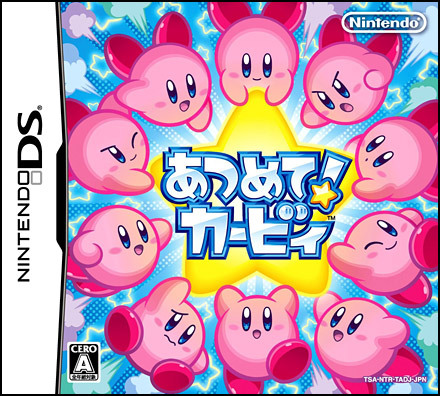
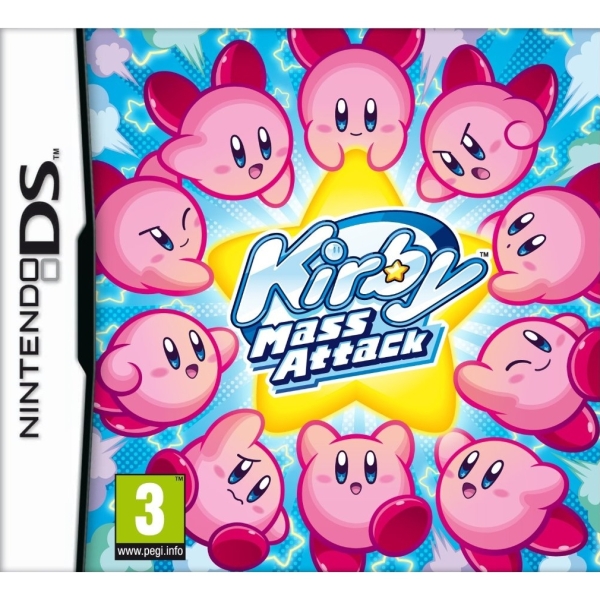
2011, where--No. NO. NOOOOOOOO. Oh, real funny NOA; way to build me up and knock me down with a dreadful one-two Angry Kirby combo. I mean, good god, this is easily the worst offender yet; just look at Kirby's uncharacteristic expression. I'd say this is one of this rare instances where the Japanese cover probably wouldn't gel with Western shelves, yet Europe seemed to deal just fine with it. Granted, they also got Freshly Picked Tingle's Rosy Rupeeland, so I suppose us Yanks have to deal with our violence-appealing culture and Kirby's attempts at the DreamWorks eyebrow.
But I digress. Anyway, 2011 brought the first of many problems that would plague Nintendo over the next half-decade: how to properly promote their new hardware. In this instance, the 3DS's March release was diluted by the annual iterations of the DS and DSi; unfortunately, this meant consumers couldn't tell it was actually a brand new console (that, and why would parents buy a new handheld when their kids received a DSi XL the previous Christmas?). Combined with how it was clearly rushed for launch--mainly with the weak launch line-up alongside the unavailability of the eShop--and the impending threat of mobile gaming, it was a rough start for the successor of the world's greatest-selling handheld.
Cue the following summer, which brought more confusing announcements in the form of Wii U and what is perhaps the quickest turnaround apology in video game history. Apologizing profusely for the 3DS's slow sales, president Satoru Iwata announced a price-cut that would not only halve his salary, but would offer twenty free downloadable games from NES and GBA libraries for those who had already bought the handheld. Alas, it would prove not to be the last of Iwata's miscalculations, and one thing was coming clear: Nintendo's dominance over the casual market was starting to wane.
Let it be known that while 3DS is undoubtedly yours truly's favorite handheld console of all time, the DS was in no rush to be replaced in early 2011. Pokémon Black and White was released just before the successor's release in all territories, and our favorite pink puffball wasn't ready to make the jump, either. The DS had served him quite well, and while HAL suggested otherwise, perhaps he felt it owed the handheld one last hurrah.
The ensuing title, Kirby Mass Attack, is something of an anomaly. It was the first mainline Kirby game to completely abandon the series' trademark Copy Ability in favor of an entirely new mechanic, one that transforms the game into something hardly resembling Kirby at all. We can trace elements of more offbeat entries like Epic Yarn and Canvas Curse back to the source material, but Mass Attack operates on a completely different scale barring its 2D gameplay. This, along with how more eyes were on Wii's Kirby's Return to Dream Land--which would release only a month later in most territories--led to Mass Attack having a muted launch...or did it?
As we'll learn in the next Reverie, fall 2011 was a jam-packed season for games, with The Legend of Zelda Skyward Sword and The Elder Scrolls V: Skyrim leading the pack. However, just like 2002's miraculous one-two Metroid revival, two back-to-back Kirby games somehow survived unscathed with a million copies under their respective belts. The new era of Kirby kickstarted by Super Star Ultra was about to transform again, and it would take one final push from this experimental title to launch it.
---
If you're not familiar with Kirby Mass Attack, you've probably guessed that the related horde of Kirbys running around is why the game functions so differently. After being split into ten bodies by the nefarious Necrodeus, only one escapes his wrath to stumble upon the star-shaped embodiment of the original Kirby's heart. The heart is what the player controls via stylus, as the Kirbys--who grow in number by collecting food--follow wherever it goes.
Needless to say, it's an innately adorable concept that gels perfectly with the cuddly-cute image of Kirby. The enigma of Kirby's sweetness cancelling out its basely horrifying concept--a pink blob swallowing everything in sight--is channeled properly here, as the ten Kirbys rampage about in their efforts to put themselves back together. Its execution brims with ideas, hardly any of them having much to do with Kirby's original concepts. Mechanics like the Copy Ability and Kirby's infinite floatiness were designed primarily to help anyone reach the goal, and with those stripped away, there's no crutch for beginners to rely on. It takes raw skill to overcome its trials.
The implications are clear in that Kirby Mass Attack is the hardest game in series history. We've had rough patches in outliers like Kirby's Dream Land 2, but none have demanded such constant focus and demand as managing up to ten separate Kirbys at once. Even the generous compensations it makes for the series' intended audience aren't easy hurdles; for instance, take the way it handles damage/revival. Each Kirby can take two hits before it floats up to the afterlife, but a carefully-aimed Kirby fling via touch screen will send the soul crashing down to earth fully revived.
A fair enough trade, but not one that's guaranteed. As the game progresses, the Kirbys will be inundated with projectiles, enemy hordes and moving screens of death to the extent where it's nearly impossible to multitask. That's not a mark on the game; after all, it's the only way the game can raise the stakes. Mass Attack is not overtly difficult by itself, but I can certainly imagine a child struggling with the concept far more than the likes of Kirby's Adventure or Kirby's Epic Yarn, and it's in an entirely different league should you aim for 100% completion. This should go against the very grain of the series--and as explained with the difficulty, it does--but it's actually quite fascinating to witness how far HAL's willing to stretch the series' goals and conventions via such an oddball concept.
Let us not mince words: much like the days of Shinichi Shimomura, Mass Attack is a B-Team effort made by HAL's B-Team. Unlike Mr. Shimomura's works, however, I struggle in pinpointing any specific design flaws in Mass Attack. I mean, I guess I could, but most of its drawbacks result from the more overt shortcomings of its producers than anything else. I say this with no offense whatsoever; I'm more than willing to be lenient with an experimental Kirby (I mean, it's hardly the first),and that I cannot pick apart specific flaws as a functioning game speaks to Mass Attack's quality.
Really, I guess what I'm trying to say is...well, let's just start with the gameplay. Naturally, the first question that arises from such a concept is that "Is it hard to control?". Not at all, and considering the disorderly Kirby horde I'm actually surprised the touch controls register so smoothly. Most, if not all, of the Kirbys were felled due to my error as a player, not from any misguided controls or slacking AI. They quickly react to the stylus and loyally follow the star wherever it goes.
That, and it's great fun. Copy Abilities may be sitting out again, but who cares when you have an army of Kirbys ready to swarm and piledrive everything in sight? Be it meticulously aiming for airborne enemies or simply swarming helpless Beanbons, Mass Attack operates with such vigorous, calculated chaos that could very well be the side-scrolling lovechild of Kirby and Pikmin. (In fact, I'd even say for fans of the latter like me, it leaves us wondering how a 2D Pikmin would operate...)
Adjectives like "meticulous" are interesting here since they provide such an intriguing contrast to Kirby's core. Make no mistake: this is just as much of a sugar-rush as the rest of the series, but that it's underscored by constant micromanagement provides not just a gripping challenge, but a different level of engagement we've never seen before from Kirby. For instance, levels are gated according to the number of Kirbys you possess, so letting KO'd Kirbys go or passing by food is not an option.
Furthermore, the concept demands objective-based level design, and Mass Attack delivers. As mentioned previously, where Mass Attack does succeed is its progressive ascension. Simply observe how the game is bookended: the opening levels have the Kirbys working together to pull out giant radishes to scrambling around an alien spaceship for blueprints of their extraterrestrial vehicle by the game's end. The latter concept is particularly inspired by how open-ended it is: you don't have to get all the blueprints if you don't want to, but you'll hardly have enough manpower for the inspired shoot-em'-up section at the end (not to mention your chances for earning medals).
Generally, Kirby Mass Attack is at its best when it foregoes sidescrolling conventions and does its own thing. Just take my favorite level courtesy of Sandy Canyon: 2-5, where the Kirbys ride in the Balloon Bobbleship--a basket hung by a plethora of balloons--as they dodge incoming spiky Gordos who threaten to pop the balloons. The vessel is sensitive to movement, as while it's steered from left to right by guiding the Kirby crowd from one side to the other, the rickety movement can send any one of them flying off without notice. It's exciting, heartpounding, and challenging all in one.
It's not that the instances of semi-regular sidescrolling greatly pale in comparison or anything, but the problem is that there's an awful lot of it. Levels tend to go on far longer than they should, and unless they break convention like the aforementioned UFO level, the game gets a little long in the tooth. This is especially troubling considering Mass Attack's abnormally large level-to-world ratio: each typically features 11 stages, and with only four worlds to venture--with a final one that's essentially a boss rush--the presentation of a confined, yet bloated context paves the way for some troubling flaws.
As already mentioned, the game does succeed in building upon ideas as it goes: Dedede Resort is a boon of mini-games and some great ice-related levels, and I dare not spoil the rest of Volcano Valley's surprises. No, Mass Attack's issues lie in how they're all framed. The "B-team" qualities are never stronger than they are in the accompanying visuals and sound, which rank among the lowest in the Kirby canon. They're hardly enough to cripple the game on its own terms, mind, but that they're this forgettable is a betrayal to the game's wondrous concept.
Case in point: the backgrounds. It's worth reminding 2D Kirby games have blended sprites and CGI in their backgrounds for a decade prior to Mass Attack. Here, the entirety of Mass Attack is sprite-based, with not a speck of pre-rendered models to be found. I can only imagine this was done in regards to the game's overabundance of sprites, hence the relative lack of detail.
The problem is that Mass Attack's world is that for all its color, it's uniformly boring. Whereas the likes of Nightmare in Dream Land, Squeak Squad and Super Star Ultra had their occasional misstep in aesthetic stinkers, nearly every one of Mass Attack's backgrounds lies in a safe model I have no use for. This is not the plush, dreamy reveries we've come to love from Kirby, but rather generic stock fantasy that you'd maybe spot on a Easter Bunny chocolate wrapper.
About the only inspired setpieces lie in the Dedede Resort, home to fun imagery consisting of pineapple islands and puzzle-piece domes. Not pictured are the Dedede-shaped funhouses, which always delight in their signalling of an upcoming mini-game (and further displaying the narcissistic ego of everyone's favorite royal penguin).
I must also call attention to the world map, which has never made an ounce of sense to me. For the uninitiated, Pop Star is supposed to be yellow, as stars typically are in children's properties; here, it's blue. I can only assume they're emphasizing the ocean surrounding the Popopo Islands, but it's rendered all the more bizarre since you witness Pop Star in all its yellow brightness during the ending.
For the record, I can't say I attribute Mass Attack's aesthetic issues entirely within its sprite-based confines; after all, the sprite animation works just fine (just watch the idle Kirbys!) with plush characters that easily fit within the world of Kirby. It's really more the art style that disappoints, as its limited detail cannot pick up the slack of the low world count. The game tries to subvert this by cramming numerous environmental tropes within each one, but even the likes of haunted graveyards and icy caverns beg the question if they didn't deserve worlds of their own.
Then there's the matter of music, which does break my heat a little. Look, let's be absolutely reasonable here: Shogo Sakai is not, in any way, a B-level composer, as attested by his work on Mother 3 (his masterpiece), Kirby Air Ride and the Smash Bros. series. Unfortunately, his first solitary Kirby work in Mass Attack is up there with his Squeak Squad collaboration as the weakest of his Nintendo output. While thankfully there's not a trace of GBA recycling to be found, the soundtrack's something of a mystifying mixed bag.
Which is all the more disappointing when considering how the game's main themes initially promise great things. Kirby Collecting is a joyously bombastic mix of percussion and vocals that greets the player at the title screen, instantly guaranteeing earworm hell over the ensuing week. The in-game variation, Meadow Breeze, carries the title's momentum with a lighter tone, as banjos and accordions come together to encapsulate the game's active energy.
An energy that, sadly, isn't consistently carried throughout the soundtrack. It's not so much terrible as it is forgettable; so forgettable, in fact, I struggle in highlighting any one weak track over the rest (and I have the game's Sound Player right in front of me!). It comes across as Sakai recognizing the concept calls for overtly-peppy, vigorous tracks that rouse the player into action, but fears of treading too much on that line in the event of carbo-loaded burnout.
This isn't to say there aren't such tracks in Mass Attack's repertoire, and as expected, they're the soundtrack's standouts. There are excellent Kirby Air Ride cameos, for one, but we must not lose focus of what's actually new. Snowy Zone and Ruins Ahead, the former as featured above, are genuinely spirited representations of their respective environments, and Fetching Fruit is undeniably the driving force of what makes its respective sections so fun.
The problem here lies in balance. Such fun bombast is far too few and between, and when that a) directly correlates with the theme behind the game and b) is drowned by tracks that don't stir much emotion at all (let alone evocative of Kirby), that's something of a shame.
But let us not be too harsh on Mass Attack. Any failures in visuals or sound cannot override its solid foundation in gameplay, and I ultimately forgive its missteps thanks to its one upholding of a certain Kirby creed: it remembers that Kirby games must be stuffed full of content; specifically, the mini-games. Mass Attack presents no less than six of the little buggers, and even then I pause at labeling them all as "little".
To the point, the volume of function and eye candy found in the likes of Kirby Brawlball (Kirby's second take at a pinball venture), Strato Patrol EOS (a multi-pronged shoot-em'-up) and Kirby Quest (a pseudo-RPG filled to the brim with fanservice) are particularly impressive. Much like how Kirby Triple Deluxe's sub-games would go on to be eShop purchases, it's very easy to see these three games polished up for digital release, and that's not even getting into how the latter two expertly weave the main game's ten Kirbys mechanic into their own domain.
This is not to sweep the other three mini-games under the rug; as a matter of fact, I appreciate Kirby Curtain Call's hilarious efforts to screw over the player (think about it: why does it have peaches mingling with the crowd?) as well as Field Frenzy's difficulty options offering a compelling crutch for its simple concept. It's an incredibly well-rounded selection of extras, enough to possibly render it the strongest mini-game collection in Kirby history.
No small feat for an experimental Kirby title, you understand, and perhaps that's where my forgiveness with Mass Attack's flubs stand. This is not a Kirby game that paves the way for the series' future, but is instead yet another attempt to see how far the series' elasticity can stretch. Some elements do not pick up the slack in doing so (the visuals and music), but everything else from the execution and creativity of its main campaign, its wonderful selection of mini-games and time-wasters and being the first and only Kirby game with an achievement system render it not only a success, but as one of the last great DS titles.
2008, otherwise known as the absolute worst time to be a Nintendo fan. The honeymoon period with the Wii had long since evaporated, fans already grown tired of motion controls and not at all accepting of Nintendo's "casual" focus. Third-parties, shell-shocked by the Wii's overnight success, quickly pumped out low budget mini-game collections and Wii Sports knock-offs. Dozens upon dozens of these cash-ins overflowed Wii store shelves, and were soon granted the not-too-kind, but all-too-fitting name of "shovelware".
Consequently, 2008 brought with it insanely-high expectations. Nintendo's overall scheduling looked bleak, but the hype for Sakurai's latest, Super Smash Bros. Brawl, had reached stratospheric levels. For the majority of 2007, the former Kirby director maintained the Smash Bros. DOJO!!, a daily blog dedicated to trickling out tantalizing info about the upcoming sequel to the insanely popular Melee. It proved to be the one of the most successful marketing campaigns in gaming history, sparking massive discussion threads, in-depth analyses and character wishlists across message boards and gaming outlets everywhere. After two painful delays, the beloved Nintendo crossover was set to embrace us in euphoric, nostalgic bliss...
But it was not to be, as the arrival of Brawl brought about the biggest fandom split in Nintendo history. Competitive Smash players who participated in Melee tournaments bemoaned the absence of advanced mechanics, and proceeded to vilify the game (and, in many instances, those who played it) with a vengeance not seen since the cel-shaded unveil of Zelda: The Wind Waker. Those who only played Smash as a party game and were completely alien to concepts like wavedashing were torn: did they defend the game on its own non-competitive merits, or did they contribute to the noise by complaining about those very elements?
Super Smash Bros., once a franchise wholly synonymous with the words "party," "nostalgia," and "celebration" was now tarnished by bitter flame wars and toxic fandom factions. Masahiro Sakurai, a famous former Nintendo developer, was now reviled by many as not merely one who supposedly spat in the face of competitive Smash fans, but as a sellout who pandered entirely to Nintendo's new audience. Amid all the chaos, it was a burgeoning accusation that grew beyond Sakurai, for the absolute worst was yet to come.
Enter E3 2008. The mass disappointment from Brawl and Mario Kart Wii shifted all eyes towards what Nintendo had lined up for the unknown future. All hopes were crushed in face of a show entirely dedicated to products solely for the aforementioned casual market. What should've been an exciting announcement for the Wii Motion Plus accessory was obscured by a patronizing PR woman going gaga over virtual dog frisbee, while the disastrous, ear-offending Wii Music performance was chosen as the show's closer (guest-starring Ravi Drums!). The closest thing "core" gamers could latch onto was the latest Animal Crossing, which later proved to be nothing more than a mere port of the DS iteration.
Pandemonium erupted. Fans everywhere cried that Nintendo abandoned them in favor of soccer moms and retirees that ate up Wii Sports pack-ins and Wii Fit Balance Boards. Much as Nintendo denied this notion, the damage was already done. While the Wii continued to break sales records across the globe, the anti-core stigma would surround both the console and Nintendo for the rest of the generation. Some fans immediately forsook their Nintendo love, selling their Wiis and moving on to greener Xbox/PlayStation pastures. Others simply gritted their teeth at Nintendo's newfound love for the casual audience, waiting not-so-patiently for the next Mario and Zelda. So occupied fans were with this "Wii has no games" stigma that many hadn't noticed third-parties finally figured out how to make good Wii games, but hardly a soul was around to purchase them (excluding the occasional outliers like Boom Blox and de Blob).
As fans cried helplessly at the advent of an empty Christmas season, a familiar figure stopped by crisp September morning and said "Hey, you guys wanna come back and dream with me for a while?" At the sound of his voice, fans remembered: a year ago, a remake of one of the greatest Nintendo sidescrollers ever made was announced for the DS. As they rose to follow, the clouds outside their window echoed a time long-since obscured by cynicism. The sky was even the same shade of blue.
Could the nostalgic euphoria they've been searching for finally be found in Kirby Super Star Ultra? Maybe some hadn't noticed, but a close look at the game's box art revealed something: it was the first time Kirby smiled on American shelves in over seven years.
-----
When revisiting Kirby Super Star Ultra last year, I shocked to realize my experience with the game matched exactly that of Nightmare in Dream Land. Both games weren't perfect, but any flaws were immediately obscured (let alone noticed) by the euphoria of "ohmygodohmygodohmygod THEY REMADE THE BEST KIRBY GAME AND IT'S SOOOO GOOOOD". But when the hype wears off, the remakes and the originals constantly strive for supremacy -- just when the remake trumps it's predecessor in one area, it drops the ball on something else in mere seconds.
It's absolutely eerie how Super Star Ultra mirrors Nightmare in Dream Land in certain aspects of this, but there's one big difference between the two remakes; namely, while Sakurai helmed the Kirby's Adventure remake, he had absolutely no involvement with this particular title. Indeed, he's not even listed in the credits.
A cause for concern, perhaps. We know little of Sakurai's design process for Super Star, but as mentioned long ago, it's the debuting title for his famous design philosophy: a cohesive, filled-to-the-brim presentation chock-full of options, knick-knacks and absurd, yet wonderfully addictive gameplay concepts. It's a model he continued to follow all the way up through his last HAL title (Kirby Air Ride), and even today one can turn to the latest Smash games and Kid Icarus: Uprising for delectably recent examples.
Without Sakurai, it was perfectly natural to be concerned if HAL could recapture the magic of the most beloved Kirby title, especially when considering their output by 2008. Yes, Canvas Curse was a near-masterpiece that captured even non-Kirby fans, but only because it was an oddball deviant from the standard formula. Squeak Squad and The Amazing Mirror were outsourced to ex-Capcom devs, and even under HAL's supervision they were greeted with a less-than-stellar reception. This isn't even mentioning how HAL's attempt to forge a Kirby Super Star successor--that is, the game that would eventually become Kirby's Return to Dream Land--was currently languishing in the depths of development hell.
As we've long since known, there's no cause for concern, since this remake is the best Kirby game since the original Super Star itself. That it's freakin' Super Star grants it an unfair advantage perhaps, but that it holds the title at all confirms the soul of the SNES original is alive and well on the DS. And that's no small feat: to successfully retrain what made the original--beloved by many as the single greatest Kirby game--all the while respectfully building upon where Sakurai left off speaks volumes about HAL's success.
So with that in mind, where DO we start? Reviewing the classic subgames' transition? The new games built upon those old games, gleefully expanding a product that advertised itself as being multiple games in one? How the orchestra-styled music sounds now? What the new music sounds like? How the wireless local multiplayer holds up?
The graphics it is, then. Whereas Adventure's 8-bit aesthetic had to be reinterpreted for the Game Boy Advance, Super Star's
plush, delectable sprites provide a perfect base for this remake to
build itself upon. While the conversion's not perfect, we're given a
great first impression through three steps. Remember: the top shot's the original, while the remake's the bottom one.
The opening that stole our hearts back in 1996--a gorgeous combination of pre-rendered models and the Mode 7 graphics--has now been reimagined into a fully 3D-animated sequence. In fact, all the sprite-based cutscenes from the original are now portrayed in 3D thanks to the ActImagine Video Codec. While a tad grainy, Ultra's initial display wows us with a far more picturesque display, complete with landmarks and scenery ripped straight from Super Star's backgrounds. Accompanied by the familiar bombastic opening score, we're already mired deep in nostalgia.
Kirby no longer dons his festive Beam hat for the title screen
logo, but he's still smiling, so that's okay. The CGI title hasn't
aged gracefully, so we're given a much more lush version via spritework.
Note the new file select: Japanese fans and Kirby fanatics like me are
treated to buttons made of Paulownia wood, which was the motif for Kirby
Super Star's Japanese box art (as anyone who's read the Kirby's Dream
Collection booklet knows, Japan uses Paulownia wood to store valuables).
The portraits still echo the last sub-game you played, but Kirby's
neutral, faded expressions portray a stunning nostalgic contrast to his
leftward expressive countenances. When accompanied by the ever-soothing
Save Hut music, its sentimental essence is multiplied twicefold.
The beloved cork board selection screen returns! It's not
completely identical; namely, Kirby's antics aren't plastered all over
the titles anymore, as HAL had to make room for all the new games.
Whether it's better or not is up to preference, but that they chose to
retain the cork board aesthetic is a great sign that HAL understood the
project. Besides, I find the yellow border a much better complement
than the original: an overly crassy green reminiscent of 90's
Nickelodeon slime. A nostalgic slime, but still slime nonetheless.
So the stage is set for a perfect remake, right? Well, not so fast. Let's observe the actual game through comparison:
Like Nightmare in Dream Land before it, Super Star Ultra makes a wonderful first impression in its first level. The background has been completely renovated, echoing the original scenery with familiar stars and stripes of all sorts. Meanwhile, the foreground has been spruced up with such lavish detail that the original looks quite bare by comparison. Finally, the sprites aren't quite as plush as they were on the SNES; rather, they're upgrades from the Nightmare in Dream Land sprites used over the game's respective decade. For instance, a comparison between Kirby himself from both remakes reveals that he still has the same beady, heart-melting look.
Also note the wonderful use of the HUD. While practically gutted and squashed in Nightmare in Dream Land for the tiny GBA screen, the DS's two screens know not the meaning of "limits", for HAL took the liberty to decorate the HUD for every substantial sub-game. All are wonderfully detailed, and quite a few of these expertly utilize the touchscreen (namely Milky Way Wishes, which provides instant access to all Copy Abilities).
Gosh, I could just talk all day about how beautiful Spring Breeze is now. Just look at Float Islands' transformation: stars are now all the rage in the tropics, with large, multi-colored stars decorating everything from the sea, shells, and even the islands themselves. This is how you reimagine a level: by breathing new life with a visual motif common to the series, we already feel right at home. I wonder if they glow in the dark.
Then Dynablade happens, and, well...see for yourself.
Yes, the distant lakes of of Peanut Plains has been nonsensically wiped in favor of a neverending blue, adorned with tacky spirals and amateur CGI ovals. Oh, wait, those are supposed to be clouds? Sorry, I was too distracted by how aesthetically dissonant this particular background is from the rest of the game. Quite possibly the worst background, it pops infrequently throughout the level and is just a nasty affront to my eyes.
It improves with just the next screen over, yet another incongruity arises. That awesome star cloud balloon is exactly what I'm looking for, yet the scenery just below is obscured by the level's foreground, presenting a jarring confliction. While I do so enjoy learning about Dream Land's breathtaking weather patterns, its beautiful landmarks are not to be neglected, either. For shame, HAL!
It goes without saying that, yes, Super Star Ultra can be just as aesthetically dissonant as Nightmare in Dream Land before it. In particular, Dynablade and The Great Cave Offensive are thebiggest offenders, the latter making the unforgivable sin of replacing the starry skies of the minecart rides with a generic cave background, zapping any and all magic out of them. Yes, it's a setting that makes sense, and it does echo the star theme through the stone formations, but Kirby games are not bound to geographical logic. These moments of magical incongruence were among the most stunning of the original game's locales, and to change into something so painfully generic comes across as surprisingly tone-deaf.
Of course, being a back-and-forth battle, it's home to some beautiful stuff as well. Do look at how the renovated the save hut interiors: construction only stopped halfway through, yet we're given a stunning panoramic view of the velvet jungle. Super Star's providing of a window gave us a peek into the forbidden, yet here we're invited to sit on the precipice and absorb the surrounding. I still wonder which one I like more.
And it's not like Dynablade doesn't do this, either. I mean, was anyone else compelled to bounce on those striped growths decorating the outside of Marshmallow Castle? The funnest of Kirby backgrounds lend themselves to deepest lore, which in this case involves Dream Landers bouncing about on said growths instead of attending mandated castle balls. If there's any reason to be jealous of Dream Land's idyllic lifestyle, let it be that.
In the end, however, the tug-of-war between the two games' backgrounds is rather...disappointing. Nightmare in Dream Land's dive into realistic fantasy was an experiment so fascinating that any flubs were mostly forgiven, yet I struggle to do the same here. Perhaps it's because Super Star Ultra's overall aesthetic hues closer to the source material that I feel such discomfort, and it's a shame it struck some of the more memorable setpieces. I mean, the aforementioned stars of the minecart ride...you just...you just can't toss that!
And that's a shame, because Super Star Ultra nails the aesthetics for just everything else. For starters, the animation is GREAT. Not to diminish the quality of Super Star's spritework, but there's so many little touches that simply eclipse the original. Kirby himself is a standout -- there's many new flourishes to his Copy Abilities, like how Ice Kirby skates along wherever he goes, as seen above.
I could nitpick if I wanted to; for instance, the position Kirby's partners relax themselves on Warp Stars are woefully uninspired compared to their original efforts (Poppy Bros. Jr being the most unfortunate casualty), yet it's when things actually move that I'm able to forgive any slight transgressions. Above is another favorite: yes, Parasol Waddle Dee indeed gained weight for his reprisal. Just look at how flabby he is whenever he, er, waddles about.
Anyway, if the actual levels couldn't perfectly replicate/build upon Super Star's aesthetic, there's another area that does: the aforementioned CGI cutscenes. Whereas Super Star utilized spritework, Ultra's 3D animation brings the plushness of the original to life in a way not seen since Super Smash Bros. Melee's Green Greens stage. The familiar hills and landmarks are there! The grass is checkered! I want to squeeze everything in sight!
I mentioned their grainy quality. This isn't so bad; after all, other DS games featuring similar animations had the same problem too (see the Professor Layton games), so I won't rag on changing the impossible. What does matter is that they respect the choreography of the original and they're charming as ever, my favorite in the whole game being Dedede plodding through the desert in a slump, slowly joined by his Waddle Dee comrades as they venture into the sunset.
But we have tarried enough on graphics: onto how the game actually plays! Any background quirks aside, it's not hyperbole when I say the older sub-games function, more or less, exactly as you remember them. You might find a tweak here or there in the level design, but nothing to the level of Butter Building's reconstruction in Nightmare in Dream Land. Kirby's attack on Meta Knight's Halberd, for instance, is structurally identical in everything from his first assault, him playing catch-up on the islands, and discovering Mace Knight's hidden horde of Maxim Tomatos. Needless to say, this is a good thing. A game of Kirby Super Star's length would've admittedly been too short by 2008's standards, but since this remake includes several new adventures, no overt changes to the sub-games were necessary. One could even say the pacing has improved: maybe the original ended too quickly, but here we have a thoroughly meaty package big enough to fill a month's play.
But that doesn't mean they don't throw surprises every now and then. New music pieces tend to accompany classic boss moments, such as Revenge of Meta Knight's Heavy Lobster. The rapid, repetitive percussion grants a new sense of urgency for the battle, undoubtedly a nod to the sub-game's ticking time limit. That it's a recurring boss fight means we can look forward to it again and again.
And here we have a self-reference within a self-reference. As evidenced by the title, this song is reserved for some of the game's bigger bosses (Dynablade and Wham Bam Rock), yet that it accompanies the former is what's interesting. Why, it's the arrangement of the Kirby Air Ride song when Dynablade wreaked havic in City Trial, which in itself was a remix of Kirby's Dream Land's Castle Lololo from the anime adaption! Needless to say, it works wonders both as a reference and by itself.
But how well did they retain the original music? Quite well for the most part, although there is a change in the sound team: Jun Ishikawa returns for arrangement, but the elusive Dan Miyakawa was replaced by sereis mainstay Hirokazu Ando. On the simple side of the spectrum, Green Greens nearly perfects the SNES sound library here. Many similar songs within the remake receive the same treatment, so while you may be able to carefully discern an instrumental difference here and there, they sound largely the same.
On the more bombastic side, we can hear signs of struggle. The weaker instruments used for Marx's Theme are obvious, but that it still succeeds in sounding like a grand nightmare is commendable. Where Ultra really flounders are the more booming, orchestral songs found in The Great Cave Offensive and Revenge of Meta Knight, as seen below.
It's really evident in these two pieces in particular, and while I imagine they tried just as hard as Yasunori Mitsuda did in retaining Chrono Trigger's sound for its respective port, it's clear some compensation had to be made. Thankfully, such examples are few and far between. While some tracks lose their bombastic quality, the majority of it sounds, more or less, like it did on the SNES. Another largely successful feat.
From here on, changes are more murky. The treasures of The Great Cave Offensive have shifted around to include newer Nintendo and Kirby references, yet they trim down the fun Weather Heart theme that concluded every area. The lovable Beginner's Show tutorials return, yet there's no interactivity. Whether or not these are for the better boils down to personal opinion, for most of these changes have their ups and downs.
Only one other alteration comes out as objectively better: the revamped translation. With a new localization team, any of the dry sentences or flat-out mistranslations that afflicted the original are nowhere to be seen. The sinister peanut gallery in Revenge of Meta Knight are more balanced in their respective qualities of campiness (namely Meta Knight, who's far more reserved), and no longer are the motives of a certain jester so poorly translated.
So with all these changes that'd only matter to eagle-eyed (and eared!) players like me, what's left is the main draw of the remake: the new modes. Reserved for the last stretch of the game, these sub-games have a lot to live up to. For one thing, they have to flow properly with the rest of the original material. The new level and boss design have to come across as though they were built by Sakurai's team, and the new music simply cannot be phoned in. Again, not easy.
HAL's solution is simpler than you expect: ape some classic moments of the original sub-games, build upon them, and then crank up the difficulty. Not nearly lazy as it sounds, what's amazing about these new sub-games is how despite having their roots within what the original game offered, they somehow manage bring their own originality to the fold. Take Revenge of the King: at it's core, it's basically, a tougher Spring Breeze. Dream Land's Extra Mode this isn't, but speak of the devil, all the forgotten foes that plagued you there make their terrifying comeback (along with the return of a certain boss, complete with gender confirmation!). With the level design fleshing itself out by retaining more of the source material, one could make the compelling argument that this is what the original Spring Breeze should've been like.
And that final level! Unleashing a boss gauntlet full of cameos and peppering dialogue between Dedede and his Waddle Dee cohort, Revenge of the King tops it off with what's easily the greatest fight against the penguin king. I'll dare not spoil the details here, but it's accompanied by an incredible battle track. Beginning with a touch of Melee's Fountain of Dreams, King Dedede's Theme has never been this deadly and frantic before.
But why stop at taking inspiration from Super Star when you could take a page from a fellow remake? Meta Knightmare Ultra once again has players in control of Meta Knight, yet what we have here is far more robust than Nightmare in Dream Land's respective mode. While Meta Knight must once again traverse the levels and sub-games Kirby already cleared, this time he's aided by a meter that accumulates points the more he slices up enemies. Fill up the meter, and options such as calling upon his knights or unleashing Mach Tornados become available. I'm still not quite sure why he decides to take down his own flying battleship, but it's best not to ponder on the context of Kirby games.
There is more I'd like to discuss. There's three new score-based minigames that blow the originals (Megaton Punch and Samurai Kirby) out of the water in replayability. There's two new Arena modes, not the least of which puts the helpers born from Kirby's Copy Abilities in the spotlight as playable characters. It's accompanied by what's probably the best new Kirby song of the '00s: a solemn arrangement of Kirby 64's Ripple Star map theme that now captures a sleepy autumn afternoon. Like Fountain of Dreams before it, it takes what was originally a fast-paced track (although in this case, not nearly as innocuous) and transforms it into something entirely, somberly new.
But once again, I dare not speak more. For the lows Ultra may occasionally have in restoring the games of old, the highs hit the same magical highs. All the proof you need is a new era of Kirby followed its template, right down to the plush aesthetics and multi-fledged Copy Abilities. Any flaws can be forgiven, for the heartbeat of Super Star successfully revived itself in the modern age, and so Kirby Super Star Ultra joins the ranks of Pokemon Soul Silver/Heart Gold and Super Mario All-Stars as the finest remakes Nintendo has under its repertoire.
Which reminds me: the first time I played it, I found a hidden path in Dynablade's Candy Mountain level, just under the waterfall. It was there in the original, but I never stopped to think about that peculiar arrow formation of food until that September evening. When replaying through for the blog, I discovered you can actually share food in mid-air. Both are minor details, but I never knew about them before. And I'll continue to discover more every time I sit down and play.
The magic is alive and well. I wonder how many kids over the past decade have looked out their window.
2006. A new age in gaming was--sweet Mother of Christ, what are those thingsthreatening to collapse upon Kirby's gorgeous eyes? Quick, someone call an ambul-oh, wait, are those furrowed eyebrows? Jeepers, Nintendo of America's marketing division, for a moment you had me worried for Kirby's physical well-being! But no, it's just another laughable attempt to prove Kirby's badassery by safeguarding his locked-away desserts from a gang of adorable anthropomorphic mice. You see now why this practice pisses everyone off?
But I digress. Now, where was I? Right, 2006. The transition into HD had just begun for the rest of the gaming industry, but Nintendo had other plans. Their E3 presentation of the Wii and its motion controls exploded with positive reception; so much, in fact, that it captured the attention of the general masses, even if they'd never so much as picked up a controller. The successful penetration into the casual sphere would spawn a new era in gaming, with developers everywhere scrambling to snag a piece of that motion control pie.
Gamers weren't yet sure what to make of the Wii. Some dismissed it as a fad, others called it Nintendo's final, fatal gamble. But what did capture everyone's attention was that The Legend of Zelda: Twilight Princess--still in development after that fateful E3 presentation two years earlier--had moved from the GameCube into the motion control realm of the Wii. While in retrospect it was obviously due to how there was no Nintendo-branded killer app for the system's launch (aside from Wii Sports, which proved to be a massive hit with casual audiences and held the title of best-selling video game for several years), but it was enough to wrap up Nintendo fans into fantasies of their beloved franchises adapting motion-based feats of wonder.
And Twilight Princess wasn't alone: the controversial Super Paper Mario and the ill-fated Donkey Kong: Barrel Blast jumped ship from the GameCube as well. As the purple cube's death was imminent, Kirby fans began to wonder if the same would happen with that unnamed title which all but disappeared following E3 2005. Announced shortly beforehand in Famitsu magazine, this new Kirby game would build upon the beloved partner mechanic from Super Star, although this time with up to three friends! Already a contender was being primed to dethrone Super Star...and yet we hadn't seen hide nor hair of it for a year.
Soon enough, "Kirby Wii" would be listed on Wii release charts. With motion control still igniting the imaginations of Nintendo fans everywhere, no one had a clue at how this game would utilize this new-fangled control scheme. But alas, Kirby's Wii affair was listed under TBD, so at the end of the year fans had to settle for a much less ambitious effort for DS, dubbed Kirby: Squeak Squad. Once again developed by Capcom subsidiary Flagship, previews indicated this game hadn't brought much to the table, which begged the question: had Flagship learned of their mistakes from Amazing Mirror? Perhaps going back to the basics would be a good idea, as they'd gain a much greater grasp on developing the series. Maybe they'd just pull it off...
Or not.
----
If there is one aspect I champion about Kirby, it's that even when the series is at its lowest, the games still manage to provide entertainment. For the disappointment the likes of Amazing Mirror and (to an extent) Kirby's Dream Land 2 bring, the presence of Kirby's copy abilities ensure fun times ahead. The concept of plowing through plushy creatures with Kirby's repertoire of superpowers is just too enjoyable to pass up no matter the context, and I'm not one to turn that down.
In that respect, Kirby: Squeak Squad is just bizarre. When approaching it with absolutely no expectations, it's mostly a harmless little affair that attempts to channel the objective behind Kirby's Dream Land -- a title where even the worst of gamers can reach the ending-- for a new generation. Nothing if not noble, I suppose, but Squeak Squad is plagued with such uneven lapses in quality for everything from level design, music, game mechanics, periphery features and even the goddamn sound effects that it automatically earns the spot of Worst Kirby Game.
And unlike my disappointment with Amazing Mirror, I feel no shame in stating that. Squeak Squad isn't bad by any means, but is instead largely the victim of an ill-equipped development team. The ambition Flagship reserved for Amazing Mirror is now in tatters, as this game is a mess of uninspired concepts that either never go anywhere, or, even worse, never live up to its elusive stroke of potential. When juxtaposed to the occasional good idea Squeak Squad manages to cough up, it's readily clear the game was birthed from just about any ol' idea the development team could toss in.
A disastrous combination, especially in an era where touchscreen control was shoehorned in nearly every DS title. And make no mistake, Squeak Squad is the victim of this practice as well; indeed, while its touch mechanic certainly isn't intrusive, it is most certainly undeveloped. See, the game's levels are populated with bubbles containing goodies as such food, Copy Abilities, extra lives, and what have you. When nabbed, these bubbles move on over into the endless abyss that is Kirby's stomach (as depicted on the DS's bottom screen), where players can mix and match whatever's inside to their liking.
A decent concept; in fact, I actually give Flagship props for granting some context to the often-discussed, but never-seen mystery of Kirby's stomach. Unfortunately, anyone expecting Kirby 64-levels of creativity will walk away greatly disappointed. The Copy Ability combo pool is woefully small, and only culls together base ideas in "elemental" versions of Sword and Bomb (Fire Sword and Thunder Bomb? Lame). Meanwhile, combining food grants...higher quality food.
It goes without saying hardly any thought was put into this. What's worse is that in failing to provide a proper hook, what we have here is a mechanic that simply cannot differentiate Squeak Squad from its predecessors. This might not be so bad if the actual game itself was competently designed, but this is where that infrequent juxtaposition of quality comes in to muck things up.
Just take the Copy Abilities. Squeak Squad more or less operates on the same engine as Amazing Mirror (which in turned was based off of Nightmare in Dream Land), so the powers borrowed from that game still function well. In particular, Magic's pointless debut has been redeemed, as it's now developed in a creative, full-fledged moveset involving pigeons, cards, and even a giant jack-in-the-box sprung from Kirby's magic hat (even cooler is that these attacks can change color according to whatever decorative Spray Paint you've used on Kirby. Rumor has it this actually isn't the only Copy Ability to do this...).
In comparison, the design behind the new abilities feels all over the place. Bubble is quite possibly the worst Copy Ability in Kirby history, its only purpose being to reduce enemies into the aforementioned goodie-filled bubbles. Kirby's stomach can only hold five bubbles at a time, so unless you're in the mood to constantly forge pointless combinations, it quickly renders itself useless. Given the wand attached the Copy Ability, it's a wonder why this wasn't an attack-based transformation. Meanwhile, Metal is just a useless version of Stone; despite being mobile, Kirby's slow movement and inability to fly only serve as hindrances. Yes, it's sensible for him to be that way, but it's not fun in the slightest.
Only Animal proves itself within the whole lot. Donning Kirby in some sort of feral werewolf suit has its appeal, especially with how he scampers about like a rabid raccoon (it's almost scary how wild he looks!) and his "scratching behind the ears" idle animation. It helps that it comes with some cool attacks, too, like mid-air claw spinning. Quite helpful for digging through dirt, you understand.
Which brings us to where pretty much everything goes wrong with Squeak Squad: level design. The concepts and ideas for progression could make even Kirby's Dream Land 2's first two worlds blush, as Squeak Squad's level design is a hodgepodge of unfocused material. See, the game brings back the collectible treasure concept from Amazing Mirror, but unlike that ambitious effort though, it's really not all that interesting here, for Squeak Squad makes the mistake of babying its audience right out of the gate. The second and fifth levels in the first world alone are nearly criminal, the former serving as just an obnoxious tutorial level that slaughters the initial pacing, while the fifth one spectacularly fails to build up the King Dedede boss fight by...having you just explore one room of his castle.
Anyone familiar with sidescrolling gaming at all should already gauge the game's quality by that point,, so like Dream Land 2, it's something of a miracle it picks up after that; unfortunately, unlike that game, Squeak Squad's almost always settled within the realm of neutrality. When it's not aping tropes we've seen a dozen times before (you could probably make a sandwich by the time you finish lighting your first cannon fuse), levels are generally uninspired and hardly ever make an effort to distinguish themselves. For every rare stroke of mild creativity (such as a forest maze in Nature Notch), there's a flood of apathy and dull familiarity waiting. Levels simply blend into a generic, homogenized state; it's bizarre how inspired one idea can be and then the next level is just a one-room affair.
It tries to spice things up through constant environmental interaction via the Copy Abilities (such as slicing through tall grass with Sword), but who cares? It's hardly ever used to locate treasures and typically only exists for the sake of existing. It really goes to show how boring the new powers are when the game only bothers to design sequences around Animal, which to its credit does involve some cool digging sequences. But aside from that, the only remotely interesting use is for Spark, which can conduct stray lightning currents on metallic surfaces and sport rides on thunder clouds, forming a plasma shield. Anyone who's played the game should note how involved and fun the latter can be, yet the former has no purpose aside from just killing enemies. It's a cool idea, but why not integrate more into the level design? What a waste!
The titular Squeak Squad pops up at the end of nearly every level to steal giant treasure chests, but alas, these new characters stumble in their introduction. Their sequences are designed as timed events get to or past the Squeaks before they return to their base, but what's the point when you just charge in and take back the treasure? Before, the general ease of Kirby bosses was never a problem, but that works against the game here, resulting in a waste of challenge.
Basically, there's just no excuse for all this. Typically I don't hold any strong feelings for games I dub mediocre, but Squeak Squad's mess of a design just infuriates me in regards to a team that's completely missed the point of Kirby. Yes, he's a great model for experimentation, but why bother when you can't pull it all together into a cohesive whole? Even falling back onto the music can't help: HAL's full sound team (Jun Ishikawa, Shogo Sakai, Hirokazu Ando and Tadashi Ikegami) is brought together in what's easily the laziest effort in the entire series. Half the soundtrack is recycled from Nightmare in Dream Land and Amazing Mirror with only minor tampering, further reducing the game into that bland, homogenized feel.
And what a shame it is, too, for some of the original stuff is actually pretty good. The thundering Vocal Volcano is a great example, its percussion-heavy beginning setting the stage for a kickass fire stage...that we never get, of course, and it remains woefully underused. And for all the recycling of familiar tunes, we're treated to this lovely combination of The Legendary Air Machine and the map from Revenge of Meta Knight.
I do wonder about who was responsible for this laziness, but I'm more interested in whoever thought the sound effects for Sword Kirby were okay. See, every time Kirby unleashes his swordplay combos, a nasty "SHING!" erupts at approximately 194 decibels, immediately piercing the eardrums of the unsuspecting player. It's seriously unpleasant, and I was not happy in the least that it was present within a series I've always associated with the softest, nostalgic sound effects. If memory serves, the same was the case for the claw swipes of Animal, too, which may've been why I didn't use it too much.
But I digress. In any case, we have boring new features, messy and incomplete level design, a lazy soundtrack, and one of the worst sound effects known to man. It's the perfect recipe for a bad game, but as hard as I've been on it, I can't quite call it that. As mentioned earlier, if approached as something of an afternoon appetizer, Squeak Squad is still largely functional and playable. Most of the Copy Abilities are still fun to play with, and I can't be too mad at the Kirby that brought back Meta Knight's Halberd, can I?
Unfortunately, disappointment wins out in the end...literally. Squeak Squad saves its best tricks at the end after outstaying its brief welcome, such as a hidden, spooky ability that allows Kirby to possess the enemies that wander around the game's worlds. A fun idea that could very well serve as its own game, but alas, no one wants to go through those boring levels again, so it only serves as a quick diversion. Meanwhile, there's a timed Extra Mode where you race through the game while picking up as many treasures as you can. Another decent venture, but one I decided not to partake in. If I didn't enjoy the game the first time around, why should I do it again?
And therein lies the whole problem with Squeak Squad. In attempting to emulate Dream Land's objective, it wrongly assumes to dumb down the game to the lowest denominator. Short as Dream Land was, its solid foundation proved as a great pick-up-and-play title for all ages, whereas Squeak Squad is a jubilant mess that's designed only to appeal to the youngest of Kirby's audience. All it takes to prove this is by visiting the three touch-operated mini-games, all insipidly simple affairs that won't capture the attention of anyone older than six (if you can figure out how to control Smash Ride, you're a stronger man than I).
While Squeak Squad isn't necessarily bad, it's the flawed, mediocre offering of a company that clearly didn't understand the property it was working with, and it shows in every sloppy decision made. Why do I lose the endgame Triple Star weapon if I die against the final boss? Why is the UFO copy ability awarded in a level full of destructible clouds, despite the fact it can't even though its awesome moveset proves it totally should? Why that goddamn sword sound effect?
Thankfully, this would be Flagship's last shot at Kirby, as the Capcom branch dissolved shortly thereafter, ensuring they'd never touch another Kirby game again, leaving HAL Laboratory to get the series back on track.