Hello, and welcome to my new Hey Poor Player column: 8-Bit Chronicles, wherein I analyze classic arcade-munchers of the 80's! Giving I already host another column (Sleeping With The Enemy), I'm certain this is rather left-field, so let's break down how this came to be and what it'll entail.
As readers may recall, I announced last fall I'd be coveringArcade/8-Bit video games after 2019's New Year. The reasoning was simple: given their brevity, they'd serve as excellent outlets for maintaining a consistent writing output. As opposed to the 1500-2000 word caps I typically uphold for Leave Luck to Heaven, these would gravitate towards 1000 words -- a reflection of their pick-up-and-play breadth, if you will.
Dear reader, should you be the gaming type--and I'm assuming you are, considering you're reading a video game blog-- let me ask you this: if you could, would you take on the impossible task of playing a game forever? Personally, there would be far too many earthly pleasures to give up for such a venture: while the luxuries of drinking Welch's White Grape Juice and stroking cats could simply be delivered to me, the simple pleasures of taking afternoon walks, watching cat videos and reading weathered One Piece and Eyeshield 21 volumes would simply be too much to give up.
And yet, a number of games pop readily to mind. I remain endlessly entertained by Super Smash Bros. for Wii U and 3DS, for example, and I've yet to grow boredof Splatoon even on the eve of its sequel. I've never tired of the cathartic seas found in The Legend of Zelda: The Wind Waker, and my fascination with Bubble Bobble on my beloved NES Classic Mini hasn't ceased. I've lost count of how many times I've completed Star Fox 64 and Tales of Symphonia; in fact, I'm at the tailend of a playthrough for the latter right now.
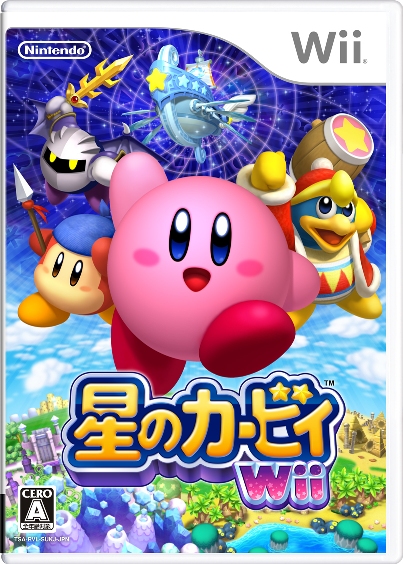
I can't. I just can't. Look at the Japanese box art for this game. Look at that glorious Nippon representation of Kirby, and then look upwards for we got for America. I've never felt more insulted by Angry Kirby, and yet I can't go on anymore. Is there any further point in discussing the fallacy of presenting your adorable pink marshmallow as a super bad-ass despite his being an adorable pink marshmallow instantly rendering him, uh, adorable? And that's not even mentioning how much time he spends in the game either smiling or using blank expressions, as he does roughly 70% of the time in nearly every one of his appearances. It's not fair, but I can't go on. I'm spent. Way to go, NOA.
Anyway, like the rest of the industry in Fall 2011, Nintendo was draining the wallets of hapless gamers with a populated release schedule. From the first semi-new Star Fox game in five years in Star Fox 64 3D to the still-popular Mario Kart 7, it was Nintendo's busiest holiday season in over half a decade...and their most acclaimed, at that.
Let us set aside any "real 3D Mario" arguments and my own dismissal of Zelda: Skyward Sword: every member of their holiday 2011 output was a million-seller, captivating the Nintendo gaming public at large, with Star Fox 64 3D paving the way for a series reboot, Mario Kart 7 set to emulate its DS predecessor's sales records, and Super Mario 3D Land and Skyward Sword sweeping perfect/near-perfect scores across the critical board.
Relative to its peers' praise, Kirby's Return to Dream Land sticks out like a sore thumb. As seen on its Metacritic page, the game was in no shortage of criticism directed its way. This came at the surprise of no one: deviations like Canvas Curse and Epic Yarn have always caught the attention of media and gamers alike, while traditional entries tend to be dismissed as safe, far-too-easy affairs regardless of whether or not they've succeeded in maintaining Masahiro Sakurai's original goal for the series: easy to play, hard to master.
In retrospect, it's a miracle Kirby's Return to Dream Land succeededat this as well as it did; after all, it'd been in development for roughly seven-to-eleven years. Indeed, Return to Dream Land was, more or less, the fabled Kirby GCN game that up and mysteriously disappeared back in 2005, having been relegated to development hell and renovated no less than three different times before HAL Laboratory doubled-down on the final product.
Whatever the reasons were for the games' cancellations (Kirby GCN was vaguely dismissed with an imbalance between solo/multiplayer play), the eleven-year wait for a true-to-form Kirby console game was well worth it, for Kirby's Return to Dream Land was arguably Nintendo's finest 2011 entry.
Such a claim appears heresy in the face of ambitious efforts like Zelda: Skyward Sword, Super Mario 3D Land or even the competition's Elder Scrolls VI: Skyrim, particularly since the game lacks any ambitions of its own.
But that's because it didn't need any, instead staying true to its name by returning to 1996.
-----------------
Let us bask in that title for a moment: Kirby's Return to Dream Land. Doesn't that feel so good? And it's not because it bears any context on the game's narrative; after all, that's just the name exclusive to American audiences. No, it's what it stands for the game itself that matters. For all the ups and downs Kirby had over the past decade, he's given the chance to properly return to his roots. Here, there are no more half-baked gimmicks and level design devaluing the brand, no--however successful--ambitious deviations from the tried-and-true formula, and no retreads on beloved adventures of days past.
In other words, it's a return to the Dream Land created so long ago by Mr. Sakurai. He may've not laid a finger on the game's design, but the philosophies from Kirby's Adventure and Kirby Super Star blossom from every design choice: plush aesthetics framed within dreamy fantasy, a plethora of multi-fledged copy abilities, numerous avenues for multiplayer play and content upon content upon content.
If you're paying attention, you'll recognize several of the aforementioned features were exclusive to either Adventure or Super Star. The beauty of Return to Dream Land is that it's not satisfied with just blending them together; it wants to surpass where Sakurai left off back in 1996. For all its new ideas and embracing of series history, at its core Return to Dream Land feels lifted right from the 90's.
In an era where New Super Mario Bros. Wii sought to bring audiences together and Donkey Kong Country Returns awed players with its level design, this could result as disappointingly safe, and yet it's something of a miracle Return to Dream Land is not that. It strikes a wondrous balance with the old and the new, all the while borrowing the ideas of its sidescrolling peers to translate the Kirby brand for Wii.
This isn't a dig against Kirby's Epic Yarn, by the way; if pressed between the two, I'd pick Good Feel's effort as being the stronger title. And yet, there's just no denying the gradual ascension of excitement that opens Return to Dream Land: we spot this firsthand when we're given control, when game starts out in a Kirby's Adventure-styled hub where players new and experienced can feel out the controls.
But by the first level's end, we're blown away by a whirlwind of new mechanics and design. By shaking the Wii Remote, Kirby's gusty inhale becomes a ferocious cyclone that swallows multiple enemies at once. The Super Abilities, amplified versions of certain Copy Abilities obtained through glowing enemies, rampage through levels in a ferocity never seen before in Kirby. At the end of Kirby's killing spree, we uncover dimensional warpholes that thrust our hero into a mad escape from an ominous anti-matter scrolling screen.
The momentum successfully carries throughout the rest of Cookie Country. For the first time since Kirby's Dream Land, items appear to aid Kirby and co. on their quest. Crackers shoot bombs while the Stomper Boots provide some addictive timing via bouncy acupuncture footwear. Entertaining as they are on their own, all are expertly designed around puzzles to nab the game's collectibles (Energy Spheres).
As opposed to an overhaul of the mechanics ala Epic Yarn, Return for Dream Land opts for building upon the core mechanics. That the showstopping likes of Super Abilities and Dimensional Holes compose the game's organics render it not a Squeak Squad misfire, but allow it to sit comfortably alongside the evolutionary achievements of Adventure and Super Star. Granted, that the game arrives after years of mixed efforts and remakes leaves a stronger impact, but that it's this good is what makes it go above and beyond.
In particular, the evolution of Copy Abilities are on a level not seen since Super Star. The new powers--Water, Leaf, Spear and Whip--all echo that game in their flexibility, be it the delightful excess of Spear/Whip maneuvers or going a step beyond with environmental effects (Water automatically surfs on, well, water). We've seen occasional winners in the years since Super Star-- notably Smash, Missile and Squeak Squad's version of Magic--yet hardly any scratch the depth and personality found here.
Meanwhile, one-trick ponies like Stone or limited efforts like Ninja always stood out in Super Star's plethora of powers, but you'd hardly recognize their transformations here. Stone, Needle, Hi-Jump and Tornado are now fully-fledged behemoths, whereas Ninja is complete with all sorts of ninja tropes. The lengths of HAL's polish know no bounds, for even 1-hit wonders like Mike and Crash or the adorably useless Sleep are supplied with new tricks (Mike being a animation standout solely for the visual of a headbanging Kirby--all the while sporting a 90's mohawk).
With such care given to the Copy Abilities, it's no surprise they don't forget to design the levels around Super Abilities. As fun as it is to scorch landscapes with Monster Flame and slice the opposition with Ultra Sword, the Wii Remote-shaking thrill of Grand Hammer and Snow Bowl render them the most involved, and therefore, the most exciting. The latter in particular recalls the best of the Giant Snowball from Kirby 64 in how it not only absorbs everyone in your path (the hapless Dream Landers!), but with the added bonuses of demolishing giant sandcastles and bowling pins.
This emphasis on environmental destruction breeds new territory for Kirby, one that would be expanded upon in Return to Dream Land's successors. On a thematic level, it places a humorous spotlight on the senseless devastation often sugarcoated by Kirby's dreamy sweetness; on a gameplay level, there's nothing funner, and the way it makes room for even the little things is impressive. The Star Spit, once Kirby's only attack, can be upgraded relative to the number of enemies that fall victim to the Super Inhale. The potential result is a massive star cluster that plows through baddies, blocks and bosses alike; in that sense, I guess they're not little things after all.
I mentioned earlier about Return to Dream Land being a blend of Super Star/Adventure design philosophies, which is best described as the game possessing Super Star gameplay with Adventure level design. While Super Star's gameplay dominates over Adventure, the latter's emphasis on a sole campaign allowed for a consistent level progression aimed for beginner/expert audiences (not that Super Star didn't appeal to the same audience, but the sub-games aren't exactly sequels to one another).
Return to Dream Land takes this design philosophy to heart, even so much as lifting sequences straight from the NES classic, all the while tuning it to the multiplayer experience. Super Star was the first Kirby game to feature multiplayer, but this takes more pages from GBA games, where different-colored Kirbys could join in on the fun. More parallels still can be drawn from its Nintendo Wii contemporaries, where players can hitch a ride via stacking, perhaps screw each other over via Super Inhale, and control unique characters in the form of King Dedede, Meta Knight, and Bandanna Waddle Dee (all of whom had me frothing at the mouth following E3 2011).
Kirby isn't as physics-bound as Super Mario, so it's something that cannot fully mimic the innate hijinks of New Super Mario Bros. Wii; however, that plays into its strengths. Kirby doesn't emphasize platforming perils ala NSMBWii and Donkey Kong Country Returns, so anyone can keep up with the action (and in rare case you can't, you can always count on stacking onto a good player). In addition, the presence of items can either emphasize teamwork or brew chaos depending on their properties.
It's certainly one of the finer examples of Wii's later emphasis on co-op play--the convenience of simply jumping in via Wii Remote puts it a step above most--and yet it doesn't reach the perfection of Super Star's two-player. The one oversight lies in what's carefully crafted for single-player play: Super Abilities. Their function requires one person doing all the work, while the others sit around reduced to trailing behind whoever's a superhero. I imagine mileage on this has varied; it never ruined my couch multiplayer sessions, yet I could feel my companions growing a tad listless as I razed hill after hill.
This isn't a problem with every power--Snow Bowl saves the day by also scooping up players--and Dedede, Meta Knight, and Waddle Dee at least alleviate the problem somewhat in how they perform certain moves that Kirby cannot with their respective weapons (Hammer, Sword, and Spear). So while every not player is treated as an equal, it still remains a great co-op romp; actually some may raise credible arugments that the importance placed upon player one--such as he or she burdening the team's lives--may be beneficial for newer players as well as further emphasizing teamwork to protect that player. To HAL's credit, they were also very open on their struggles with the multiplayer design.
Do the accompanying aesthetics and sound make any missteps of their own? At the very least, I cannot even begin imagining criticizing the former: Dream Land is as plush and delectable as it was in the 90's, with squat, expressive roly-polys hopping about in environments bursting with such delicious, mouth-watering color. Once again, I can safely say I would like to nibble on the world of Kirby.
But it's not all about eye candy. Backgrounds like the enigmatic ice ruins of White Wafers make us want to know more, while Nutty Noon's soaring ribbons and overhead views may be just as cathartic and calming as the best of Sakurai's Kirby. It's perhaps the last of Nintendo's Wii games that maintains not just a consistently vivid look, but builds a compelling world to house it all in.
Which is all the better that Return to Dream Land embraces series lore. It's not that Kirby hasn't ever relied on plot and the like, but this is the first time Dream Land has been granted this level of a "lived-in" world, let alone a canon (this is present in Epic Yarn, but much of it surrounds Patch Land). Be it the pause screen descriptions of bosses or cryptic conversations with the mysterious wayfarer Magolor, it functions not on the level of Zelda world-building, but on a Mario level of "Oh, that's how that works"(or, in the case of the latter, "they're referencing THAT?").
It answers questions, but leaves enough to the imagination for our minds to answer, right down to discovering Meta Knight's favorite past-time: appreciating literature on a fine sunny day. The obvious question is what he's reading, but I personally wonder about the logistics of a Dream Land printing press. Gosh, I sure hope minimum-wage labor is fair to all Waddle Dees, and that's assuming it even exists at all.
Naturally, a return to Dream Land requires the musical presence of Jun Ishikawa and Hirokazu Ando, the original composers who introduced the music of Kirby's dreams to the world. Putting aside their large rate of success here, even if Return to Dream Land wasn't actually designed as Kirby's return, I can't help but feel that theme's reflected through the soundtrack.
I mean, it can't be coincidence it's there right when the game starts, right? This joyous song immediately greets us at the title screen (and later as the hub theme for Cookie Country), while seguing to a parade of trumpets and chimes in The Adventure Begins. It all signals a grand return to the world of Kirby, and as I always take the time to observe game title screens, that this pulled me in straight away was a great sign (and if you don't laugh at Dedede making faces at Kirby...well, there's just no hope for you).
The aforementioned ascension of that first level is effective primarily because of the Super Ability theme: Bring On The Super Ability. An orchestral theme of passionate valor, the way it accompanies Kirby's wrath injects such intense invigoration that it's impossible not to smile when in control. Truly, it operates on a level of incitement never before seen in Kirby.
Which is vaguely echoed by Looming Darkness, which plays during our peek into the realm of the Sphere Doomers. It signals that of desperate survival, urging the player desperately onward with its otherworldly instruments and sounds. It's the perfect complement to the grayscale dimension, full of passing solar systems and constellations.
But let us not forget that Kirby is home to the wistful and the melancholy, and Return to Dream Land turns to those themes in its later stretches. Aurora Area concludes the chilly recesses of White Wafers, bringing a touch of mystery and awe at the ruins. While it may be populated with the likes of Galbos and Chillys, the cold, windy howls of its accompanying theme instill an ever-present lonely ambiance.
However, such melancholy does not hold a candle to the pure joy of my favorite song: Sky Waltz. A mix of recorders and violins greet Nutty Noon as players fly over Dream Land and witness a wondrous view of the landscape below. Borrowing a page from Epic Yarn, it purposely elicits a sense of nostalgia that easily meshes with our wonder, rendering its accompanying level the very best in the entire game (which, when considering it has no Super Abilities or dimensional rifts of any sort, is no small feat).
Really, there's so many strong songs that I feel guilty about not sharing, be it all the rousing boss themes or an especially dreamy take on a Kirby's Adventure song. The entirety of the game's soundtrack successfully hits all the best of what makes Kirby,well, Kirby: orchestral triumphs, techno rhythms and sweet, soft nostalgia.
...which renders it all the more bizarre whenever it misses the mark. There's a number of real average tracks that either border on the overt childishness that Kirby's supposed to avoid (Walking in the Sea, as well as, disappointingly, the level-ending version of the *Kirby Dance theme) or serve to undermine their scenic set-pieces (the Caving song above). These misfires aren't enough to knock the game down from the upper echelons of Kirby soundtracks--let alone diminish its incredible highs--but its lack of consistency makes it miss the very top.
If I must continue harping on flaws--much as it pains me to do so--the lack of Dedede, Meta Knight and Bandanna Waddle Dee in single-player may also be a missed opportunity. While I understand the levels are designed around Kirby, only having them playable in The Arena feels like a waste. I can't help but imagine it could've made for some fun 100% goal completion (a 2D precursor to Super Mario 3D World, perhaps?)
But my hopes for Return to Dream Land weren't about whether or not it could succeed Adventure or Super Star; it all hinged on whether or not it successfully revitalized and built upon the Sakurai-era Kirby games for a modern age. This review should speak to its achievements at doing so, but I cannot speak highly enough at what it does surpass: the multiplayer mini-games, most notably in how Scope Shot far surpasses most console Kirby efforts even on a solo level; the Extra Mode, absolutely the series' most complete, fulfilling and even unpredictable since Kirby's Dream Land; the balance of difficulty for players new and old, as I still haven't obtained all the Platinum Medals for the addictive, hair-raising Challenge Rooms.
As a whole, its cohesion isn't glued as tightly as two of the 90's finest sidescrollers, but its highs in emulating, building upon and sometimes even surpassing what came before deliver a title that, against all odds, mingled successfully in an era of HD-developed products and AAA names. It being a densely-packaged adventure certainly helped, but it proves that time-tested gameplay can continue winning over audiences so long as they stick to not merely to the conventions of a brand, but by daring to improve the design philosophies behind it.
Fellow Kirby megafanJim Sterling once said "video games simply do not get any more pure" than Kirby's Return to Dream Land. How delightful that in a sea of open-worlds and motion-control, HAL Laboratory found it necessary to give us a title that stood up and declared "I am from the 16-bit era." That it has since initiated and set the example for the current Golden Age of Kirby is of the highest honor.
*On the flipside, I should mention the boss version of the Kirby Dance theme more than makes up for the regular one if only because it's clearly based on the GBA games. Ah, the warm scent of 2002's holiday season!
2011, where--No. NO. NOOOOOOOO. Oh, real funny NOA; way to build me up and knock me down with a dreadful one-two Angry Kirby combo. I mean, good god, this is easily the worst offender yet; just look at Kirby's uncharacteristic expression. I'd say this is one of this rare instances where the Japanese cover probably wouldn't gel with Western shelves, yet Europe seemed to deal just fine with it. Granted, they also got Freshly Picked Tingle's Rosy Rupeeland, so I suppose us Yanks have to deal with our violence-appealing culture and Kirby's attempts at the DreamWorks eyebrow.
But I digress. Anyway, 2011 brought the first of many problems that would plague Nintendo over the next half-decade: how to properly promote their new hardware. In this instance, the 3DS's March release was diluted by the annual iterations of the DS and DSi; unfortunately, this meant consumers couldn't tell it was actually a brand new console (that, and why would parents buy a new handheld when their kids received a DSi XL the previous Christmas?). Combined with how it was clearly rushed for launch--mainly with the weak launch line-up alongside the unavailability of the eShop--and the impending threat of mobile gaming, it was a rough start for the successor of the world's greatest-selling handheld.
Cue the following summer, which brought more confusing announcements in the form of Wii U and what is perhaps the quickest turnaround apology in video game history. Apologizing profusely for the 3DS's slow sales, president Satoru Iwata announced a price-cut that would not only halve his salary, but would offer twenty free downloadable games from NES and GBA libraries for those who had already bought the handheld. Alas, it would prove not to be the last of Iwata's miscalculations, and one thing was coming clear: Nintendo's dominance over the casual market was starting to wane.
Let it be known that while 3DS is undoubtedly yours truly's favorite handheld console of all time, the DS was in no rush to be replaced in early 2011. Pokémon Black and White was released just before the successor's release in all territories, and our favorite pink puffball wasn't ready to make the jump, either. The DS had served him quite well, and while HAL suggested otherwise, perhaps he felt it owed the handheld one last hurrah.
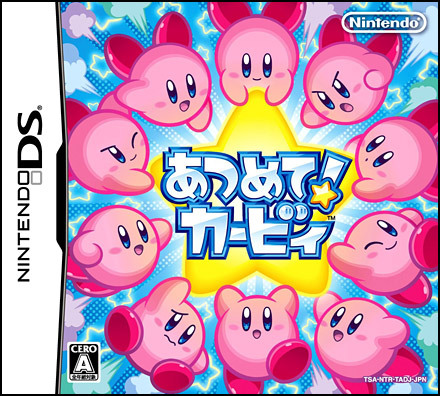
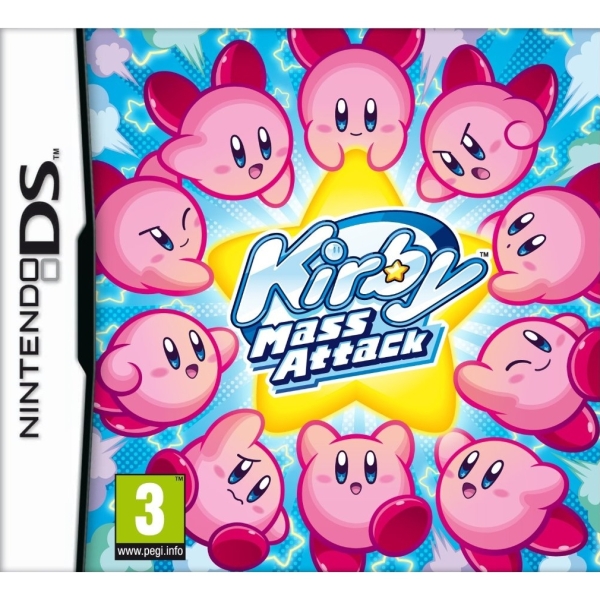
The ensuing title, Kirby Mass Attack, is something of an anomaly. It was the first mainline Kirby game to completely abandon the series' trademark Copy Ability in favor of an entirely new mechanic, one that transforms the game into something hardly resembling Kirby at all. We can trace elements of more offbeat entries like Epic Yarn and Canvas Curse back to the source material, but Mass Attack operates on a completely different scale barring its 2D gameplay. This, along with how more eyes were on Wii's Kirby's Return to Dream Land--which would release only a month later in most territories--led to Mass Attack having a muted launch...or did it?
As we'll learn in the next Reverie, fall 2011 was a jam-packed season for games, with The Legend of Zelda Skyward Sword and The Elder Scrolls V: Skyrim leading the pack. However, just like 2002's miraculous one-two Metroid revival, two back-to-back Kirby games somehow survived unscathed with a million copies under their respective belts. The new era of Kirby kickstarted by Super Star Ultra was about to transform again, and it would take one final push from this experimental title to launch it.
---
If you're not familiar with Kirby Mass Attack, you've probably guessed that the related horde of Kirbys running around is why the game functions so differently. After being split into ten bodies by the nefarious Necrodeus, only one escapes his wrath to stumble upon the star-shaped embodiment of the original Kirby's heart. The heart is what the player controls via stylus, as the Kirbys--who grow in number by collecting food--follow wherever it goes.
Needless to say, it's an innately adorable concept that gels perfectly with the cuddly-cute image of Kirby. The enigma of Kirby's sweetness cancelling out its basely horrifying concept--a pink blob swallowing everything in sight--is channeled properly here, as the ten Kirbys rampage about in their efforts to put themselves back together. Its execution brims with ideas, hardly any of them having much to do with Kirby's original concepts. Mechanics like the Copy Ability and Kirby's infinite floatiness were designed primarily to help anyone reach the goal, and with those stripped away, there's no crutch for beginners to rely on. It takes raw skill to overcome its trials.
The implications are clear in that Kirby Mass Attack is the hardest game in series history. We've had rough patches in outliers like Kirby's Dream Land 2, but none have demanded such constant focus and demand as managing up to ten separate Kirbys at once. Even the generous compensations it makes for the series' intended audience aren't easy hurdles; for instance, take the way it handles damage/revival. Each Kirby can take two hits before it floats up to the afterlife, but a carefully-aimed Kirby fling via touch screen will send the soul crashing down to earth fully revived.
A fair enough trade, but not one that's guaranteed. As the game progresses, the Kirbys will be inundated with projectiles, enemy hordes and moving screens of death to the extent where it's nearly impossible to multitask. That's not a mark on the game; after all, it's the only way the game can raise the stakes. Mass Attack is not overtly difficult by itself, but I can certainly imagine a child struggling with the concept far more than the likes of Kirby's Adventure or Kirby's Epic Yarn, and it's in an entirely different league should you aim for 100% completion. This should go against the very grain of the series--and as explained with the difficulty, it does--but it's actually quite fascinating to witness how far HAL's willing to stretch the series' goals and conventions via such an oddball concept.
Let us not mince words: much like the days of Shinichi Shimomura, Mass Attack is a B-Team effort made by HAL's B-Team. Unlike Mr. Shimomura's works, however, I struggle in pinpointing any specific design flaws in Mass Attack. I mean, I guess I could, but most of its drawbacks result from the more overt shortcomings of its producers than anything else. I say this with no offense whatsoever; I'm more than willing to be lenient with an experimental Kirby (I mean, it's hardly the first),and that I cannot pick apart specific flaws as a functioning game speaks to Mass Attack's quality.
Really, I guess what I'm trying to say is...well, let's just start with the gameplay. Naturally, the first question that arises from such a concept is that "Is it hard to control?". Not at all, and considering the disorderly Kirby horde I'm actually surprised the touch controls register so smoothly. Most, if not all, of the Kirbys were felled due to my error as a player, not from any misguided controls or slacking AI. They quickly react to the stylus and loyally follow the star wherever it goes.
That, and it's great fun. Copy Abilities may be sitting out again, but who cares when you have an army of Kirbys ready to swarm and piledrive everything in sight? Be it meticulously aiming for airborne enemies or simply swarming helpless Beanbons, Mass Attack operates with such vigorous, calculated chaos that could very well be the side-scrolling lovechild of Kirby and Pikmin. (In fact, I'd even say for fans of the latter like me, it leaves us wondering how a 2D Pikmin would operate...)
Adjectives like "meticulous" are interesting here since they provide such an intriguing contrast to Kirby's core. Make no mistake: this is just as much of a sugar-rush as the rest of the series, but that it's underscored by constant micromanagement provides not just a gripping challenge, but a different level of engagement we've never seen before from Kirby. For instance, levels are gated according to the number of Kirbys you possess, so letting KO'd Kirbys go or passing by food is not an option.
Furthermore, the concept demands objective-based level design, and Mass Attack delivers. As mentioned previously, where Mass Attack does succeed is its progressive ascension. Simply observe how the game is bookended: the opening levels have the Kirbys working together to pull out giant radishes to scrambling around an alien spaceship for blueprints of their extraterrestrial vehicle by the game's end. The latter concept is particularly inspired by how open-ended it is: you don't have to get all the blueprints if you don't want to, but you'll hardly have enough manpower for the inspired shoot-em'-up section at the end (not to mention your chances for earning medals).
Generally, Kirby Mass Attack is at its best when it foregoes sidescrolling conventions and does its own thing. Just take my favorite level courtesy of Sandy Canyon: 2-5, where the Kirbys ride in the Balloon Bobbleship--a basket hung by a plethora of balloons--as they dodge incoming spiky Gordos who threaten to pop the balloons. The vessel is sensitive to movement, as while it's steered from left to right by guiding the Kirby crowd from one side to the other, the rickety movement can send any one of them flying off without notice. It's exciting, heartpounding, and challenging all in one.
It's not that the instances of semi-regular sidescrolling greatly pale in comparison or anything, but the problem is that there's an awful lot of it. Levels tend to go on far longer than they should, and unless they break convention like the aforementioned UFO level, the game gets a little long in the tooth. This is especially troubling considering Mass Attack's abnormally large level-to-world ratio: each typically features 11 stages, and with only four worlds to venture--with a final one that's essentially a boss rush--the presentation of a confined, yet bloated context paves the way for some troubling flaws.
As already mentioned, the game does succeed in building upon ideas as it goes: Dedede Resort is a boon of mini-games and some great ice-related levels, and I dare not spoil the rest of Volcano Valley's surprises. No, Mass Attack's issues lie in how they're all framed. The "B-team" qualities are never stronger than they are in the accompanying visuals and sound, which rank among the lowest in the Kirby canon. They're hardly enough to cripple the game on its own terms, mind, but that they're this forgettable is a betrayal to the game's wondrous concept.
Case in point: the backgrounds. It's worth reminding 2D Kirby games have blended sprites and CGI in their backgrounds for a decade prior to Mass Attack. Here, the entirety of Mass Attack is sprite-based, with not a speck of pre-rendered models to be found. I can only imagine this was done in regards to the game's overabundance of sprites, hence the relative lack of detail.
The problem is that Mass Attack's world is that for all its color, it's uniformly boring. Whereas the likes of Nightmare in Dream Land, Squeak Squad and Super Star Ultra had their occasional misstep in aesthetic stinkers, nearly every one of Mass Attack's backgrounds lies in a safe model I have no use for. This is not the plush, dreamy reveries we've come to love from Kirby, but rather generic stock fantasy that you'd maybe spot on a Easter Bunny chocolate wrapper.
About the only inspired setpieces lie in the Dedede Resort, home to fun imagery consisting of pineapple islands and puzzle-piece domes. Not pictured are the Dedede-shaped funhouses, which always delight in their signalling of an upcoming mini-game (and further displaying the narcissistic ego of everyone's favorite royal penguin).
I must also call attention to the world map, which has never made an ounce of sense to me. For the uninitiated, Pop Star is supposed to be yellow, as stars typically are in children's properties; here, it's blue. I can only assume they're emphasizing the ocean surrounding the Popopo Islands, but it's rendered all the more bizarre since you witness Pop Star in all its yellow brightness during the ending.
For the record, I can't say I attribute Mass Attack's aesthetic issues entirely within its sprite-based confines; after all, the sprite animation works just fine (just watch the idle Kirbys!) with plush characters that easily fit within the world of Kirby. It's really more the art style that disappoints, as its limited detail cannot pick up the slack of the low world count. The game tries to subvert this by cramming numerous environmental tropes within each one, but even the likes of haunted graveyards and icy caverns beg the question if they didn't deserve worlds of their own.
Then there's the matter of music, which does break my heat a little. Look, let's be absolutely reasonable here: Shogo Sakai is not, in any way, a B-level composer, as attested by his work on Mother 3 (his masterpiece), Kirby Air Ride and the Smash Bros. series. Unfortunately, his first solitary Kirby work in Mass Attack is up there with his Squeak Squad collaboration as the weakest of his Nintendo output. While thankfully there's not a trace of GBA recycling to be found, the soundtrack's something of a mystifying mixed bag.
Which is all the more disappointing when considering how the game's main themes initially promise great things. Kirby Collecting is a joyously bombastic mix of percussion and vocals that greets the player at the title screen, instantly guaranteeing earworm hell over the ensuing week. The in-game variation, Meadow Breeze, carries the title's momentum with a lighter tone, as banjos and accordions come together to encapsulate the game's active energy.
An energy that, sadly, isn't consistently carried throughout the soundtrack. It's not so much terrible as it is forgettable; so forgettable, in fact, I struggle in highlighting any one weak track over the rest (and I have the game's Sound Player right in front of me!). It comes across as Sakai recognizing the concept calls for overtly-peppy, vigorous tracks that rouse the player into action, but fears of treading too much on that line in the event of carbo-loaded burnout.
This isn't to say there aren't such tracks in Mass Attack's repertoire, and as expected, they're the soundtrack's standouts. There are excellent Kirby Air Ride cameos, for one, but we must not lose focus of what's actually new. Snowy Zone and Ruins Ahead, the former as featured above, are genuinely spirited representations of their respective environments, and Fetching Fruit is undeniably the driving force of what makes its respective sections so fun.
The problem here lies in balance. Such fun bombast is far too few and between, and when that a) directly correlates with the theme behind the game and b) is drowned by tracks that don't stir much emotion at all (let alone evocative of Kirby), that's something of a shame.
But let us not be too harsh on Mass Attack. Any failures in visuals or sound cannot override its solid foundation in gameplay, and I ultimately forgive its missteps thanks to its one upholding of a certain Kirby creed: it remembers that Kirby games must be stuffed full of content; specifically, the mini-games. Mass Attack presents no less than six of the little buggers, and even then I pause at labeling them all as "little".
To the point, the volume of function and eye candy found in the likes of Kirby Brawlball (Kirby's second take at a pinball venture), Strato Patrol EOS (a multi-pronged shoot-em'-up) and Kirby Quest (a pseudo-RPG filled to the brim with fanservice) are particularly impressive. Much like how Kirby Triple Deluxe's sub-games would go on to be eShop purchases, it's very easy to see these three games polished up for digital release, and that's not even getting into how the latter two expertly weave the main game's ten Kirbys mechanic into their own domain.
This is not to sweep the other three mini-games under the rug; as a matter of fact, I appreciate Kirby Curtain Call's hilarious efforts to screw over the player (think about it: why does it have peaches mingling with the crowd?) as well as Field Frenzy's difficulty options offering a compelling crutch for its simple concept. It's an incredibly well-rounded selection of extras, enough to possibly render it the strongest mini-game collection in Kirby history.
No small feat for an experimental Kirby title, you understand, and perhaps that's where my forgiveness with Mass Attack's flubs stand. This is not a Kirby game that paves the way for the series' future, but is instead yet another attempt to see how far the series' elasticity can stretch. Some elements do not pick up the slack in doing so (the visuals and music), but everything else from the execution and creativity of its main campaign, its wonderful selection of mini-games and time-wasters and being the first and only Kirby game with an achievement system render it not only a success, but as one of the last great DS titles.
Since the barren wasteland of 2008, everyone that hadn't jumped ship more or less came to terms with Nintendo's new direction. As 2009 would entail, new releases for Punch-Out!! and New Super Mario Bros. were accompanied by Wii Sports and Wii Fit. Despite the release of the DSi handheld upgrade and an ever-growing trove of third-party gems, this juxtaposition of "casual" and "core" offerings continued to incite controversy. "Nintendo's too kiddy" may've been a thing of the past, but "Nintendo has no games" echoed everywhere from message boards to comment sections. Of course, that wasn't quite true, but this stigma continued well into the next year.
Up until the buzz of next year, anyway. Springtime of 2010 brought with it an unexpected announcement: the 3DS. Heads were scratched at the prospect of yet another DS, especially since it was just days before the DSi XL model was set for American release. However, Nintendo made it abundantly clear this was not a new iteration, but a successor. After six years, the time seemed ripe for a handheld newcomer to enter the stage, but not even the euphoria of Super Mario Galaxy 2 kept analysts and players alike from wondering how it could top the cultural penetration of DS.
The explosion of news at that year's E3 put those thoughts on hold. Storming right out the gate with a new Zelda, Nintendo's conference tore all heads away from rivals Microsoft and Sony's takes on motion control. Retro Studios was reviving Donkey Kong Country. The first 3DS game revealed was a Kid Icarus sequel courtesy of Masahiro Sakurai. Animal Crossing was set for a big overhaul on the system, and remakes of beloved N64 titles were on the way.
At one moment, NOA president Reggie Fils-Aime sauntered onto the stage and briefly reflected on the past collaborations of Sakurai and Nintendo president Satoru Iwata; in particular, the cuddly softness of Kirby. "Somehow, he's managed to work his way into the hearts of a lot of hardened games," he said as he pointed to his chest, "they know Kirby's got game."
After seven years, Kirby would be returning to home consoles! But what would it be? Thoughts immediately turned to that of the long-lost GameCube title, but as Reggie launched into a tirade of fabric-themed metaphors, hope seemed to slip away...
Entitled Kirby's Epic Yarn, the game would be the first Kirby title not to be developed by series developer HAL Laboratory. Good Feel, the folks behind Wario Land: Shake It!--a 2D platformer released for Wii just two years before--were to helm the title independently of Kirby's creators. With the drastic new changes to gameplay involving yarn whips, bead collecting, and the inability to die, many Kirby fans couldn't help but doubt the title's potential to live up to series standards. Could a Kirby game devoid of Copy Abilities feel like a Kirby game?
Soon after Kirby's Epic Yarn released, I described the game as something of a "relaxation simulator". Kirby's yarn immortality was the key factor -- everything from the backgrounds to the music to the Meta-Mortex transformations installed a languid calm into the player, and while the game was framed within your typical 2D-sidescroller progression (alongside the bead collection), the game's variety in apartment design, furniture/wallpaper collection, and tenant mini-games introduced a new style of play for the series. A younger, more ambitious Anthony Pelone claimed Kirby's Epic Yarn forged a new road for sidescrollers as we knew them, and looked forward to where the series would take this leisurely direction.
Obviously, that didn't happen. We mustn't forget Kirby's Epic Yarn was handled by a different developer, and while they were certainly given HAL's blessing, Good-Feel's philosophies in gameplay weren't going to overrun those of the original (particularly when Kirby's Return to Dream Land was soon to see the light of day).And yet while I was wrong, I've found it's actually made Epic Yarn's niche even stronger.
Make no mistake: this is easily the biggest Kirby departure barring Mass Attack, with level design and attack mechanics completely different from the works of HAL Laboratory. No longer does Kirby rampage through levels in a sugar rush frenzy, as the game aims to be softer and cuddlier than Dream Land 3. It wishes to be more inspired, however, and as it deviated from the series formula just as Canvas Curse before it, it remains one of the very few Kirby games to capture the gaming public's attention.
There are Kirby fans out there who do not like this game, and they'll likely tell you it's because Epic Yarn is not really a Kirby game. This is a valid opinion; indeed, there's no denying the game is firmly stitched to outlandish outskirts. You're still in control of Kirby and will meet familiar characters, but there's no Copy Abilities or lives or health-restoring food lying around. An argument can certainly be made that the game achieves the "easy to play, tough to 100%" mantra of Kirby games (more on that later), but how it ultimately played was enough to turn those fans off.
The key, then, is to approach it on its own terms. Maybe some couldn't do that, but if I have to raise any voice of objection, it's that I don't know how it's possible your heart cannot melt by the very first level. I daresay Epic Yarn is in possession of one of the best opening levels in 2D sidescrolling history: Fountain Gardens. Okay, maybe that's a little bold, but gosh, I can't express enough how happy it makes me! Be it watching your first enemy encounter (a Yarn Waddle Dee) stumble and fall in his tackle attempt, the bead-propelling waterspouts that have Kirby cheering in ecstasy, latching onto a tree button and having Kirby sway back and forth as a pendulum as he shakes off the tree's beads...
Because we've already done away with the cozy tutorial
level, we're left to experiment with Kirby's new Yarn Whip and
transformations in a level bursting with life, all accompanied by a
wonderful, wonderful music piece courtesy of Tomoya Tomita. Good-Feel's
composer helms most of the soundtrack and is a perfect fit for capturing the mellow side of Kirby, and as seen above he can fluctuate the score to a more active mood. It is as grand and joyous as you'd expect a yarn wonderland to be, and the effect it has on the level cannot be stated enough. Without fail, all of the level's set pieces immediately reduce the player into a childlike state of catharsis, and everything from stitching and stretching the landscape to watching Kirby weave his way into the background fabric all grant a genuine sense of wonder.
The tree shaking is the perfect example. Catching all the falling beads may be the only purpose, yet I'm always compelled to keep swinging long after the tree's run dry. Maybe it's the innocent smile Kirby holds all the while, or the feel of the swing being so satisfying all the while distorting his bell shape (look at how fat he gets!). Kirby turning into a giant yarn tank at the end is the level's showstopper, but this one moment captivates me above all else.
(Speaking of the irresistible, we cannot gloss over the game's one instance of openly embracing Kirby's dark side: Yarn Waddle Dees sleeping underneath a red bead-shaped heart, who are just begging to be squished under Kirby's weight pound. Rest assured, their romance always ends in tragedy under my watch)
Such moments keep building and building. Flower Fields' take on the gentle piano of the main theme sends me into nostalgic contemplation as I'm swinging on dandelions, swimming in the soft rain and abducting helpless yarn baddies as UFO Kirby. Rainbow Falls etches the biggest smile on my face with the most delightfully adorable music and having Kirby playing in rapids as a surfin' penguin. Big Bean Vine has me going up, up, and up as Yarn Waddle Dees sail on balloons to the chillest of songs.
So much of why Epic Yarn works isn't just because of the wonderful relationship between concept and music, but in that it's purely a joy to play. It wouldn't be as stretch to say the game has the best level design in Kirby history, as the absence of Copy Abilities means they have to flex their imaginative muscles; imagination, you understand, that has to prove these new mechanics have value. And they certainly do. There's the matter of beads, for instance. Since you can't die, the game has to rely on making this whole collection thing fun. Like how any good action platformer handle collectibles, beads are tantalizingly placed above pitfalls and near enemies and the like. By adhering to a medal system, Epic Yarn's difficulty lies in conserving your beads by the end of the level. It's not terribly hard, but it's a painful affront to our dignities when beads are dropped all over the place (especially the large star-shaped crystal beads, ouch!).
Yet it's hard to stay mad when the game's bursting with such imagination, with the Melody Town level being a perfect example in the relation between beads and level design. As the name implies, the level is strewn with instruments of all sorts, all of which reward beads through interactivity. Jumping on drums and cymbals unleashes beads in music notes, swinging on harp strings will nab the beads strewn across, and traveling through music staffs (played by trumpets!) requires careful precision to collect note beads.
It feels natural and organic; not once does the level feel forced in its gimmicks or unearned in its rewarding of beads, and it takes enough advantage of Kirby's yarn transformations (check out how the ground-embedded pianos react to Kirby's car dash). That and it's impossible not to smile with everything going on: Melody Town brims to life with Yarn Waddle Dees bouncing on cymbals, drums functioning as elevators, and the above music instilling nothing but joy.
Really, I can't express enough how much I love the Yarn Whip. The lasso doesn't reach the destructive thrills of the Copy Ability, but it doesn't try to be; it instead chooses to innovate and wow us. With the Yarn Whip controlling the very fabric of Patch Land, Kirby can do anything from fixing up crying teddy bears (who, in return, kindly let the pink ball use their outlines as platforms) to quell raging bead-spewing volcanoes.
And for those seeking Kirby's destructive prowess and aren't satisfied with untangling yarn enemies and throwing yarn drills (although I find much sick pleasure in doing so), you may find your wish in the Metamortex transformations. But while I do rather love the Tankbot and the UFO, my personal favorite lies in the Dolphin. Any concerns regarding swimming controls should be dispelled, for it swims like a dream and twirls with a surging force that rips through enemies (and hoops!) like butter.
This is all just a long way of saying by golly, how much do I love the overall presentation? Saying the yarn aesthetic is beautiful goes without saying, but the real triumph is how it weaves itself into the actual template of gameplay. Take the winter stretches of the Snow Land world: Snowy Fields, the opening level, portrays snowballs big and small as overstuffed balls of wool, and we cannot help but delight in not just how Kirby can ride on top of them, but at his misfortune at getting swallowed up in their paths (particularly at his already-minimalist shape is reduced to his facial features struggling to remove himself).
I am also quite fond of the hidden Evergreen Lift, which revolves around a Christmas tree elevator of sorts that Kirby has to constantly spin and maintain while dashing for Christmas-themed beads and collectibles and is under attack from wintry foes. It is not at all easy, yet we are too under the spell of the accompanying track to notice. Shared by the aforementioned Snowy Fields level, it is absolutely the most heartfelt song in the entire soundtrack and will prod at every one of your pleasant Christmas memories into a swirling vertigo of warm sentimentality. (Let us dismiss any similarities to the dismal Yoshi's Island DS theme as an uncanny coincidence).
In that sense, Epic Yarn's other area of success is how it siphons the number one creed of Kirby games: that they make you so goddamn happy just by playing them. That the fuzzy graphics recall just as much gooey nostalgia as Kirby's HAL best is merely a bonus; it's a game that wants to bend the rules of Kirby all the while recalling that creed for the purpose of relaxing the player (and with how a certain world (correctly!) takes inspiration from Kirby Super Star's godly aesthetic, you know Good-Feel had the series's best interests in mind).
And by "bend the rules", I'm especially referring to how this is a Kirby game with honest-to-god voiced cutscenes. No, none of the grating 4Kids accents from the anime dub are present, for the story is presented as a gentle storybook tale told by a warm grandfatherly voice. I'm told the Japanese version is performed by a young woman, but I cannot imagine it any other way, what with the English narrator performing deliberate intonations for all the characters involved (his take on King Dedede being a particular highlight). Regardless, even when the story focused on the idyllic mischief of Kirby and Prince Yarn, I enjoyed the sweet tale all the way to the end.
By the way, Kirby lives in an apartment in this game, one you can decorate with furniture and wallpaper and carpets and the like that you can purchase with beads. Upon first glance, it's a wholly pointless feature until you realize the game grants free reign over object placement and you can have Kirby snooze on any bed of your choosing. Oh, and there's pancakes. Needless to say, anyone who's sunk time into Animal Crossing will undoubtedly unleash their inner Feng Shui here. Be it guitars or rock gardens or dinosaur slides or sci-fi walls, anything and everything goes here alongside a bare minimum of interactivity (my room always features some sort of strumming guitar). I often find myself leaning towards cloud-based motifs, but in my last playthrough I attempted a sky pirate ship of sorts. What about you?
I may or may not have publicly expressed my desire for a similar feature in future Kirby title, a wish that did not come true. Kirby games have always been meaty in their accompanying sub-games and whatnot, but here we have a fun distraction that runs parallel to the main game. You could dismiss it as a worthless distraction, yet there's the presence of Kirby's flatmates, who require the presence of specific furniture for them to move in; that, and they visit Kirby's apartment and challenge him to various mini-games. All of these games are great, and I was surprised at not just how many there were, but how brutal they could get.
I found that in both instances of my post-game play, much of my time surrounded around the apartment building. You could say that's to be expected in achieving 100% completion, and yet both times I found myself completely absorbed in this trivial feature. Not that I didn't have fun revisiting and fully completing the game's levels, mind, but it became something of a pattern: start up the game, spend time rearranging my apartment, go earn beads in levels and whatever collectibles I missed, splurge on my earnings and then rearrange some more. (Actually, thanks to Kirby's dash animation turning him into a Yarn Car,
I always pretend he's going off to work to earn beads.)
When analyzing the fruits of my fabric-inspired labor, it's hard for me to handwave the apartment business as a simple distraction. It's an organic component of a game I can already lose myself in by itself, and I find it an adorable fit for the series. I'm not exactly sure how it could work within the main Copy Ability template, but my goodness, there is potential here for HAL to mine.
Much as I've sung the game's praises, I cannot label Epic Yarn as a complete masterpiece. As inventive as the boss battles are, they're the one instance where the inability to die comes across as rather jarring. Yes, the "don't get hit" objective has its challenge, yet that Kirby is placed in direct conflict with oversized enemies undermines his immortal status (barring the magician Squashini, whose clever magic tricks are enough to distract me). There are other missteps, like how the Train Metamortex attempts to channel Canvas Curse's draw direction, but ends up being a frustrating chore to control.
But such niggles hardly weigh down Epic Yarn's direction. To me, the game's crowning achievement lies in how much it channels and even celebrates the beating heart of what makes Kirby "Kirby" while trying not to be Kirby, and somehow we ended up with the best Kirby game that doesn't have the words "Adventure" or "Super Star" in its name. That this was accomplished by an outside developer that wasn't HAL only renders Epic Yarn even more magical in its status as one of the best Wii games.
On the title screen, I still see my childhood hero waving to me. Just as it was back in 2010, I'm transported without fail into another era; one far more innocent and defined by self-aware nostalgia. But now, there's another time mixed in, where I had to face one of the hardest tragedies imaginable, and didn't know where life would take me from then on. He was there ready to pick me back up soon after, and he's since never let go.
Super Mario 3D World is a game that should, by all means, be considered a masterpiece in my eyes. It's a labor of love, joy and good ol' fashioned game design that follows off the heels of its 3DS predecessor. Having thoroughly enjoyed Super Mario 3D Land, common sense should entail I'd love its sequel just as much.
And why shouldn't I? It's propped up by a live big band score,which is undoubtedly the funnest Nintendo soundtrack since Rhythm Heaven first visited our American shores. It's polished to oblivion, with secret coins, mushrooms and Luigi sprites hidden everywhere from the most unsuspecting of bushes to the tiniest of bonus stages. The warm, fuzzy nostalgia of Super Mario World aesthetics returns and is just as soft as you remember, with the familiar clean artstyle popping up everywhere in the form of Miiverse stickers and familiar cast members roaming the landscape (the Chargin' Chuck football guys!).
And it sheds the spotlight on cats. Cats! My status as a hardcore cat lover is beset by how all three of my cats treat me like I'm the Anti-Christ, dashing away the moment my lumbering presence enters their personal space and daring only to stare at me from the dark reaches of the stairtop (that, and I forbid myself to watch cat videos on YouTube in fear I'll waste hours watching Scottish Fold kittens). That Mario and Co. appealed to my rejected heart by dressing up in cat costumes and meowing up a storm is the best medicine I've received yet, and I dearly wish for the Cat Suit's appearance in more games.
Super Mario 3D World holds the highestMetacritic score of any game released this console generation. It's the first 3D Mario with full-blown multiplayer, complete with Princess Peach and Toad as playable characters. Nintendo fans far and wide have gleefully proclaimed it's the funnest game they've played in decades; not only that, but to many, 3D World represents Mario's true transition of the 2D formula into 3D. And I, the biggest Nintendo nerd I know, have spent the past year and a half coming to terms with the fact that I'm not in love with it. Let there be no miscommunication here: Super Mario 3D World is quality. It plays great and oozes personality and charm in everything it does, all the result of love being poured into every line of code. And how my heart aches that I don't appreciate all that as much as I should. As should soon be evident, it's a game I still wrestle my feelings with, as while there are certainly elements of it that I love, I can't fall in love with the package as a whole. I've often wondered if the problem lies within my own high expectations for 3D Mario,a series that essentially created, defined and revolutionized 3D platforming (and gaming, in general) over the span of five previous games. Whereas Mario 64 laid the foundation and the Galaxy series crafted such imaginative heights, 3D World is mainly concerned with just having fun (and one other factor, but we'll get into that shortly).
Not that there's anything wrong with that by itself, but such a goal immediately places 3D World at odds with the Wii U's GamePad controller, a device that Nintendo completely failed to prove its worth. Much like every Wii U title that isn't Nintendo Land, 3D World establishes, at best, periphery involvement with touch-screen control and the like. When considering the heights reached in design and control from 64, Galaxy and even Sunshine, that a potential new avenue of 3D gameplay was discarded in favor of designing a HD sequel to a handheld game remains a poignant disappointment.
However, like how not every Wii game needed motion control, not every Wii U game should be decried for not having touch controls, so despite the franchise's prestige, it wouldn't be entirely fair to single out 3D World for that mistake.But alas, it's within that very mistake that 3D World's biggest flaw is made apparent, one that renders it inferior to even its own predecessor.
It wouldn't be wrong to claim Super Mario 3D World is the culmination of the seeds first sprung in the Galaxy series,
where Mario's fantastical adventures in space were guided along in a
more linear fashion. While they were still designed around the
star-collecting missions from Mario 64 and Sunshine, their more open level design was tossed in consideration of those lost in three-dimensions (that the first two New Super Mario Bros. titles, which revived the 2D gameplay of old, sold significantly more than any 3D Mario title only seemed to prove Nintendo's point). The result: 3D Land's further distillation into a pure platforming experience (one
could even perceive that the "3D" portion of the title was a rebranding
of this particular Mario genre)
Like 3D Land before it, 3D World emphasizes the nostalgic bare-context of the 2D Mario games of yore. We spot this quality in its speck of a plot, bare minimum usage of text, the timer that inexplicably kills your character, and, as seen above, the flagpole signalling the end of every level. Alone, these aren't problems, but they do contribute to 3D World's biggest flaw: in it's rush to streamline 3D gameplay via 2D tropes, the game forgets to innovate and instead produces a homogenized product.
"Homogenized" as in it borrows too much from 2D Mario, I mean. This isn't to say 3D tropes we've seen before aren't present (as seen with how it unlocks progression via collecting Green Stars), nor am I saying it doesn't possess any new ideas, but then why do I grow so tired of it, then? That 3D World is a sequel to a handheld game to streamline 3D Mario gameplay means it has to juggle between retaining and building upon its tropes within an HD context all the while pointlessly reviving elements from 2D Mario, which naturally presents some problems.
Take the level design, for example. You could argue Galaxy and 3D Land of being homogenized as well, yet they're careful enough to frame their ambitions within their respective contexts. 3D Land is particularly interesting in how the level design is built around the hardware, with levels that go down, down, down or up, up, up appearing all the more imposing and inviting on a tiny handheld screen (when factoring in the 3D, the affect is all the more powerful). It's new, it's fresh, it's uncharted waters for our portly plumber.
And yet note how 3D World borrows some of these levels wholesale without a speck of difference. As expected of a sequel, you may say, but the levels that go up, up, up or present a Zelda-inspired top-down perspective simply don't possess the same magic on an HD level. Yes, the former plays well into the wall-climbing antics of the Cat Suit, but that we've already done this before adds a dull sense of familiarity within the first world.
It's no surprise then that the best levels are the ones built around Mario's new toys. The cloning Double Cherry, in particular, is the game's one true stroke of imagination and presents an unparalleled sense of precision and wonder everywhere it appears. Losing one of your clones to enemy fire or a mistimed jump is a common risk, and it takes some skill to, say, carefully navigate a block slide that, according to their color-coded design, disappear and reappear to the music beat. Something we've already done before, mind you, but points for difficulty.
There are other gadgets for Mario and Co. to fool around with, be it potted Piranha Plants to gobble up foes with and an oversized comfy Ice Skate to ride around in. But as expected, they're sparingly used so as to not grow old. This would okay since the clever "clear" warp pipe idea commonly picks up the slack, but that it's shackled
in bringing back 3D Land tropes and coming up with new ideas brings me to my next point.
Look at how bright and colorful that is! Indeed, the colors in 3D World pop with such vividness and festivity that they're often propped by distant fireworks and the like (seriously, try bopping on the innocent Sprixie folk; they shed actual confetti). Here's some more delectable shots below.
Here's one with some modern effects. 3D World's character models and setpieces are polished to the point where reflect the shiny smoothness of toys and action figures, highlighted in the above rainy sequence. Note the rain dripping down the screen.
And then there's setpieces where the game just explodes with color. The hidden Golden Express is pure mouth-watering gold (complete with the aforementioned fireworks to highlight the game's status as a hidden level), wherea lava levels alternate between molten-hot red and delicious, tantalizing blue (often accompanied by a certain music track showcased just a ways down).
Anyone who's played 3D Land should recognize how most of the examples provided above aren't present in the handheld title. What isn't shown are not-so-new levels that while necessary within the sequel context, don't bring much new on their own. For every exciting idea found in train levels (Cat bullet bills!) and
Japanese bath houses, you shouldn't expect to see them more than once or twice. Yes, it does a gorgeous job of bringing 3D Land level setpieces into HD, but we've seen these ghost houses
before, we've traversed these
dessert-themed landscapes before, we've crossed these poisonous swamps before,
we've ridden on a sea creature down
perilous rivers before. Are they framed in new contexts? Sure, but
chances are they've probably
originated from earlier Mario adventures (hello, flip switches).
Bosses are also disproportionate in imagination. On the highest end of the spectrum lies the above Motley Bossblob; of course, that it'd use the Double Cherry as the fight's basis guarantees it's success, but look at how inventive it is! The flashy fleshiness of his giant form! The choices of either gunning for his fleeing vulnerable form or hopping on his scattered blobs to reduce his size!
...then you have this Bowser boss, where he rides a sexy giant car to lob bombs at Mario. It's host to the slowest, most boring boss fight in the game in that you have to kick back the bombs while Bowser just chugs along in the car. Within games featuring conflict, cars are generally used to run over people; as this would prove problematic in Mario, it has no option but just to sit there looking pretty. Any other platform could've not only sufficed in hosting Bowser, but to build upon it for a more exciting fight.
World themes, too, face disproportion as like 3D Land, 3D World generally places levels wherever it feels like. This wasn't a problem in 3D Land since most, if not all, of world themes weren't so explicit, but this isn't the case in 3D World. We have explicit takes on ice worlds, deserts, and skies, yet 3D World's sense of progression is totally absent barring the necessary castle level.
Just take a look at the game's biggest thematic folly: World Bowser. Just look at this opening! It's a Bowser-themed carnival hosted by the King of Koopas himself. What an awesome idea! And hey, the first level gets it right: you're infiltrating the carnival via the towers in the outskirts complete with orchestra music! And what follows up is...
A desert slide and a dessert level. Wha?
Progressing through the carnival only brings more disappointment: 3D World introduces circus levels as it's most common recurring trope, yet not a single one of these is in sight! In fact, a good chunk of that amazing shit you see in the opening shot aren't used at all. Instead of being granted rollercoasters, we're treated to the same ol' level tropes that only vaguely relate to evil circus theme.
"What's the big deal," you may ask. It's what I've been arguing all along: the game is far too comfortable with borrowing 2D Mario's sense of bare context. While Mario games shouldn't be bloated with story and dialogue (see Sunshine), that 3D World largely uses familiar world tropes as only crutch as opposed to building upon them (or, y'know, expanding on it's original themes) is a disappointment. The circus does not build upon itself, nor the sky world, or even the ice world. You know there's a problem when a) Super Mario World and even the later NES Mario games excel at this and b) I'm questioning context in a series that's the very definition of "suspension of disbelief". As it is now, 3D World in it's entirety comes across as some sort of gaudy fever dream.
You could say "Well, the desert slide is still a great piece of game design", and so it is. To deny that 3D World isn't designed well is heresy, but that it restricts itself to 2D Mario tropes is what I take issue with. What place do entire levels based around the "race against the clock"
concept belong in a 3D platformer, particularly if they're insanely short? Why bother with quick n' dirty enemy blockades? Why include a giant open area in Sprawling Savannah when the ever-present timer naturally deters exploration? Alone, these are nitpicks, but that they keep building and building only serve to prove the game's homogenized nature. That they're included only for the sake of pandering to the 2D titles associates it far too closely with the games in question, and so we lose uniqueness.
So does this mean 3D World is a complete disappointment? Well, not exactly. Yes, 3D World
comes up short as an inventive, cohesive title, but that to deny it's
status as game designed around providing the player with as many fun scenarios as possible would be, well, rather ungrateful for one and would also undersell how well-designed its stages are. I can't say I agree with how they're fully framed, but these are still Mario levels through and through.
Take the above tribute to Super Mario Kart, for instance. That it takes place in the ice world makes no sense, but the brief time we're granted with it captures Mario Kart brilliantly thanks to the pervasive placement of Boost Pads. That it's combined with bouncy mushroom pads to regain momentum and slides ripped straight out of the Playskool playsets from your youth only seals the deal.
Meanwhile, Sunshine Seaside is absolutely the best beach level in the game due to how involved it is. Echoing some of the collection missions in earlier 3D Mario games, your character of choice has to nab five key coins hidden across the coast. Be it one of the many goodies hidden inside the giant sand statues or breaking up a Chargin' Chuck huddle, there's no stone left unturned. Once complete, you're rewarded with an amazing Plessie ride. Note what's quite possibly 3D World's greatest easter egg: riding around inside Koopa shells. How I'd love to endlessly surf across the stage without the impending ticking of that pesky timer.
And no one could possibly hate the adventures of Captain Toad! These fun breathers from the main adventure take the form of isometric puzzles where the world's most adorable treasure hunter has to hunt down five green stars. It's the one area of the game where the GamePad is put to good use, as the gyroscope is utilized as the camera to help the player navigate and decipher these puzzles. These actually do grow in difficulty and even complexity as the game progresses, and I was always delighted to partake in them.
And once again, my love for the Cat Suit must be elaborated. Say what will you about the actual adventure, but the new suit is undeniably the funnest the Mario gang's had in years. Everything from how the characters prance along to the exact movement of a cat, how they scratch frantically before futilely sliding down walls (leaving loooong claw marks), let out a celebratory meow upon completing a course (or in the case of Toad, the cute little "myew! of a kitten), or even how the developers just added a sneaking maneuver (complete with it's own pounce attack) for no reason other than to be cute just highlights how much fun they had in creating it. Also, Cat Goombas. And Cat Bullet Bills. And Cat Bo...nah, I'll let you find that one out for yourself.
I can't help but resist spoiling one little surprise though. One day I asked myself, "what would happen if I climbed up a clear pipe with Cat Mario?" The picturesque shot above is the result. It's not possible with every clear pipe, of course, and it doesn't even qualify as a shortcut, but it's one of the very few instances of "create your own fun" that 3D World allows. In fact, if you try this in the very first level, you may find a tiny secret hinting the developer knew about this all along.
In that sense, it's best to enjoy 3D World as a "turn your brain off" sorta deal. It might not blow your mind and it's certainly not Mario at his most ambitious, but during the entire time I've wrestled with my feelings over this game, I always ask myself if that really matters. So long as you don't expect anything from 3D World, it works. Maybe not entirely in a way I'd want it to, but even with it's missteps it's still fun and exciting to play.
What can really ease this process is the score. My god, the score. Truth be told, I am growing a little tired of the newer Mario themes borrowing Super Mario Bros. 3's motifs again and again, so I've instead decided to kick off by sharing the game's best boss theme. 3D World apes Big Band music, and Hisstocrat is where that hits its apex. An explosion of drums, trumpets and synth all contribute to the flurry and chaos of that particular boss battle.
While Mahito Yokota takes up the bulk of the soundtrack, veteran Koji Kondo picks up the slack with his new take on the customary Athletic theme (known as Chain Link Charge). As opposed to the typical high-strung energy found in those themes, Chain Link Charge goes for a slower, jazzier tone that I'd imagine wouldn't be too out-of-place in downtown New York. It's certainly the most grounded Athletic, a unique direction that I'd love to see continued in future Mario games.
But let us not downplay the efforts of Mr. Yokota, who's more than proven himself as a master game musician at this point. Fort Fire Bros. presents some of the finest Nintendo flute work in some time, presenting an exotic air alongside the foreboding beat. It works wonders within any of the lava levels it accompanies, but comes across as particularly chilling whenever it's around the shiny new blue ones.
Of course, my favorite has to be the one I've discussed before: Double Cherry Pass utilizes a pair of violins so bouncy and alive that it perfectly taps into that animated Mario zen, rendering any level it accompanies the manifestation of pure joy. That it accompanies the best level in the game (of the same name) is no coincidence, as it heightens the wondrous discovery of the wonderful Double Cherries.
Maybe, for me, it represents a song of forgiveness. I know that Super Mario 3D World is not perfect, and I know I will continue to wrestle with my feelings over it for some time. In an era where Nintendo had to prove the worth of their shiny new GamePad, that it chooses to overly restrict itself by 2D tropes is undeniably disappointing not matter how well it plays.
But whenever I hear this song, I can channel that elusive reverie that I, myself, have been chasing for so long. This may or may not have to do with the fact that the song plays in the level where I can have up to five Cat Marios dance in tune to the music, but that it compels me to forget that and simply do that despite the impending tick-tock of a timer is no small feat.
Perhaps one day, I could simply forget the game's flaws and just play it? In a time where Nintendo is no longer a stranger to HD and downplays wacky gadgets, that may be possible, but that fear of homogenization is a tad too strong now.
Regardless, the game plays well, looks well, sounds well, and, well, manages to make me smile. It may not be my favorite Mario game, but that last factor is a hallmark quality of Mario through and through. And I guess I should be grateful for that. Meow.
----
Sorry for the delay, folks! Got too caught up in polishing this before I was satisfied with it. Was I too indecisive? Please let me know!