Dear reader, should you be the gaming type--and I'm assuming you are, considering you're reading a video game blog-- let me ask you this: if you could, would you take on the impossible task of playing a game forever? Personally, there would be far too many earthly pleasures to give up for such a venture: while the luxuries of drinking Welch's White Grape Juice and stroking cats could simply be delivered to me, the simple pleasures of taking afternoon walks, watching cat videos and reading weathered One Piece and Eyeshield 21 volumes would simply be too much to give up.
And yet, a number of games pop readily to mind. I remain endlessly entertained by Super Smash Bros. for Wii U and 3DS, for example, and I've yet to grow boredof Splatoon even on the eve of its sequel. I've never tired of the cathartic seas found in The Legend of Zelda: The Wind Waker, and my fascination with Bubble Bobble on my beloved NES Classic Mini hasn't ceased. I've lost count of how many times I've completed Star Fox 64 and Tales of Symphonia; in fact, I'm at the tailend of a playthrough for the latter right now.
Origin: Super Mario 64 Plays In: Peach's Castle Status: Original Composition Composed By: Koji Kondo
A new Nintendo console is coming in just over a week! How's everyone handling the suspense?
For me, the anticipation for a new Nintendo console is unlike anything else; of course, other company consoles have come and gone with some great hype periods as well, but there's just something magical about your favorite home team ready to unleash five-years worth of untold adventures, dreams and memories to the public. Nostalgia will be cultivated in young one as us grown-ups revel in the magic that's kept us coming again and again for the past thirty decades. With how much Nintendo is banking on the Switch to last and the ever-changing expectations of the game industry, perhaps we'll enjoy all those and more in a longer cycle.
One of my favorite gaming memories is the time I surely first laid eyes on a Nintendo 64...we were in a Blockbuster (remember those?), and I couldn't stop staring at the demo station in the corner. It was playing Super Mario 64, and everything about it was a marvel: the new 3D graphics not found in my Super Mario World game at home, the way Mario hopped and swam about with precise ease, how the controller echoed to me that of Mario's gloved hands...everything about it was a mystifying magnet to six-year old me, one that screamed "play me!". It was then the seeds of my gaming passion were certainly born.;
Switch might not have a Mario 64 of its own; in fact, that it's launching with a Zelda game and a title introducing the system's controls (1-2 Switch) recalls more to that of the Wii, a system that captivated many because of how it played rather than the context and dynamics of the games themselves. Certainly, the Switch is set to sail a similar course: a system that captivates the public through one central gimmick. In this case, a hybrid that brings people together and encourages outdoor player is highly appealing.
And yet, I am always reminded of Super Mario 64 and its gardens and castle walls whenever a Nintendo system launches, no matter what the goals it sets for itself. The Wii's motion controls may've defined its respective generation, but Super Mario 64 changed everything on such fundamental levels that its heartbeat still lingers in every 3D title today. Even now, when we're about to be introduced to a Zelda designed to demolish everything we've associated with the series for the sake of a proper open-world experience, I can only think of how Super Mario 64 did the same for the purpose of revolutionizing gaming.
Well, that, and how it looks godly and it may very well be the game to finally surpass the N64 Zelda duo and A Link to the Past, but the point here is that while envisioning a new Super Mario 64-esque impact on the industry is near-impossible, I can't help but see its footsteps being followed here. Yes, Breath of the Wild was built as a Wii U game from the ground-up, but like Twilight Princess before it, it'll be largely associated with the new console. And that already renders it the most exciting Nintendo launch title in over a decade.
Next Friday will surely be something special.
Final Thoughts: Or, hey, maybe it's that Super Mario Odyssey is going back to the original 3D template for Mario? Easily the best thing to come out of last month's conference; I already can't wait to hop around for the heck of it!
Earlier, I praised The Legend of Zelda: Ocarina of Time not merely for representing gameplay and design at its purest, but for instigating an evocative revolution that caught on with people. The dungeons were at their finest, the moments of character beating underneath the surface captured us, and there was no cure for getting the Lost Woods theme out of our heads. It's something that made the market demand a direct sequel; more perfection iterating upon perfection, you may say.
And yet as Nintendo would say it, The Legend of Zelda: Majora's Mask upends the tea table in a matter that took everyone off-guard. Contextually, it's a sequel to Ocarina of Time -- it all begins with Link searching for his fairy companion Navi -- and yet everything barring asset reuse is as different as could possibly be. There are time limits circumvented only through your magical ocarina. Masks are equipped either for transforming purposes or to elicit response. It is fiendishly, grievously dark, openly playing with symbolism that'll zip over the non-attentive player.
It is not by any means accessible to the casual Zelda fan; indeed, while it's earned an adoring cult fanbase and sold moderately well, it never reached the legendary status of its N64 predecessor. Personally, I am of the opinion it is the very best Zelda has to offer, the approachable perfection of Ocarina of Time or A Link to the Past be damned. It's not the first or last formula-changing Zelda, yet for a game developed only in a year's time, it achieves a level of successful ambition that puts the other efforts to shame. All Majora's Mask has to do is be the inverse of Ocarina of Time: whereas that game embraced a perfect duality of pacing and player-to-character connection, Majora's Mask is a compact challenge that bears its own enigmatic heart.
Everything to do with this involves the Three-Day System. The land of Termina is under existential peril by the threat of a falling, sentient moon, and you only have three days to stop it. A task that would normally instill intense pressure, the good news is thanks to the Song of Time, the same three days can be repeated and again. Everything from clearing dungeons to NPC schedules are at the mercy of time, so your adventure must be planned accordingly.
The very presence of a time limit, no matter what the context, should destroy the freedom-stitched fabric of Zelda, yet Majora's Mask renders it as natural as breathing. The only possible negative is the bulking exposition at the game's beginning, and even that's so damn interesting that you can't help but be swept up in its presentation. The Skull Kid's curse in turning Link into a Deku Scrub (represented by a nightmare sequence of him being swarmed by said species), the grinning, phantom-like enigma that is the Happy Mask Salesman, the soothing churning of the Clock Tower and, of course, the ever-looming threat that is the moon itself.
It's starting out as a Deku Scrub that first sends the message you've hit rock bottom. From the very moment Deku Link steps into Clock Town, he's greeted by a dog that'll bully him relentlessly. There's no reason given; everything from your snout-like protrusion to your stubby little legs pisses it off, and it'll make every attempt to make your life hell. That it's half your size signals no one will take you seriously, right down to the guards refusing to let you venture outside of Clock Town.
And yet even in spite of this difficulty/time time, the heart of freedom and exploring beats wildly here: not only is time essentially unlimited, but you'd have to purposefully wait for the moon to crash. That you're given options to even slow down time presents an effective level micromanagement alongside your adventures in Termina: for instance, do you have enough time to clear the Great Bay Temple with only one day remaining, or would that be time better left tackling the beaver race sidequest?
Anyone who says the Three-Day System deters exploration has missed the point entirely: the inner workings and activities of Clock Town --nay, the entirety of Termina and its inhabitants-- is the exploration. Character schedules are intertwined, encouraging you to uncover every facet of their lives. Your successes and failures will have consequences; ones you can simply erase through time travel, but their effects ranging from both intriguing ("oh, wow, I can do that?") to the depressing (which we'll showcase later) display the organic constitution that is the world of Majora's Mask.
An organic world, mind, that expands twofold through the use of masks. It enthralls on both levels of gameplay and engagement: once his curse is lifted, Link can transform into a Deku Scrub, a Goron or Zora, utilizing their innate abilities (Gorons' super-strength/high-speed rolling or Zoras' supreme swimming) all the while. It works not merely as fanservice (who hasn't wanted to play as a jolly, rolly-polly Goron?) but as a unique mechanic that actually works; in particular, Zora Link is easily the highest example of 3D swimming in the N64/PS generation, with not a trace of clunky control in his dolphin-esque movements (just feel that jump!).
Being at the forefront of Majora's Mask, it's only natural they, too, embrace the game's thematic duality. Putting aside how the transformable masks takes on the past life of a departed soul (which is an incredible tragedy in itself, particularly when you're conversing with friends and family of the deceased), even the collectible masks echo their use in Ocarina of Time; you come for their intended uses--be they the Great Fairy Mask attracting fairies or the Kamaro Mask's hypnotizing dance--and stay for the reactions they draw from people, not the least of which is the surprise found in the dastardly Gorman Brothers. Dishonest milk thieves who prey upon the neighboring Romani Ranch, all it takes for their nastiness to collapse is the presence of a certain weeping mask. Moments like this can be stumbled completely on accident, compelling us to endlessly experiment. Could even the Bomb Mask elicit an emotional response? Probably not, and you're crazy for putting it on, but you can't help but try.
Which reminds me: it's Zelda not just at its most organic; it is poignantly gripping, more than any other entry. Compare to how Ocarina of Time handled its subtler themes: it didn't beat us over the head with character development, leaving it up to us to fill in the blanks regarding the tragedies of Mido and the carpenter family. Majora's Mask does this too, but only as a tantalizing sprinkle (and the occasional side-dish) upon effective character sequences that I cannot praise enough, be it the famous Anju/Kafei marriage or the faux courage of the Swordmaster, whose crumbling facade in the final hour has always spooked me.
These sobering episodes chill us right down to the bone; just look at the mayor's meeting, whose participants take all-too-real positions: the carpenters, denouncing the obvious threat looming above for the sake of monetary gain; the soldiers, who instantly perceived the danger and recommend immediate evacuation; the mayor, the one in power who's too cowardly to take action (or could it be he has something else on his mind? His son's been missing, after all...). Naturally, the aforementioned masks are vital in these events; did you know you can actually break up that meeting with a certain mask?
Even without masks, however, the NPCs are evocative on their own. The events at Romani's Ranch --whereupon aliens make their annual visit to abduct cattle--are another perfect example; this time, however, we witness Majora's Mask delivering a raw penalty in guilt. Romani, a young girl and the ranch's only denizen who realizes what's going on, recruits Link in fending off the ghastly extra-terrestrials. Succeed, and you earn a bottle of health-restoring milk. Fail, and you get this.
Caught up in the abduction, a brainwashed Romani spends the remainder of the days either aimlessly walking about the ranch or struggling to remember her identity. Her older sister, Cremia, weeps in the barn, regretting she never believed what she dismissed as an overactive imagination. It's a level of despair almost never before heard of in a Nintendo game, all because you didn't try hard enough.
Or is it because you didn't try at all? Since the game's default schedule is absolute, this happens every time you have to focus on other matters and ignore the quest. Through guilt and failure, Majora's Mask forces you to care to fully complete the game, lest you want broken families and ruined engagements to populate Termina. Even after you solve their woes, time travel will reset their trials and tribulations into motion; knowing that I have to move on breaks my heart (and that's not even getting into even if you succeed, and how the sisters prepare for the moon falling, which...well, I'll let you find out for yourself).
I mentioned earlier about the game's open-employment of symbolism, which is up there with Mother 3 as being Nintendo's finest in thematic storytelling. Anyone can pick up the relationship between time and the abundance of children at the game's center, but is it really coincidence that the shape of Majora's Mask itself provides an empty black heart on the back? And that's not even mentioning the moon itself: a grinning visage of death whose insides belie a stunning truth...
Even within the actual gameplay does the symbolism permeate the entire experience. Not once do you ever escape the countenance of the moon. The bone-chilling scream Link unleashes every time he equips an enchanted mask calls into question the relationship between host and soul; one perhaps answered within the haunting song-based gimmick of Stone Tower Temple, the game's best dungeon.
Not that any of Majora's Mask's themes would be half as effective without Koji Kondo's music. Taking the helm for the majority of the soundtrack, his absolute finest contribution lies in what may arguably be the game's theme: the Song of Healing. Premiering early on as the haunting, ethereal Clock Tower theme and thereon appearing in piano/ocarina motifs, the Song of Healing is a chilling piece accompanying even the most noble of Link's deeds not merely as a gloomy framework, but to represent the souls at peace.
I say Song of Healing is "arguably" the main theme since while I'd personally say it's more in-tune with the story, Clock Town is one you'll hear more often. While the melody is retained throughout the three days, the song shifts accordingly to each of their respective moods: bustling denial, sober melancholy and fragile, rapid uneasiness. Above is my favorite of the three: the second day, albeit not accompanied by the pitter-patter backdrop of rain.
While the game's theme for Termina's four main provinces echoes the world's melancholy--it's also worth noting Majora's Mask is the one 3D Zelda with the distinction of possessing the classic Zelda overworld theme--I've always been taken by the music for specific locations. In particular, half of what makes the Astral Observatory and the Stone Tower Temple two of Zelda's most evocative set-pieces have to do with their themes; the former the heavenly illumination of an elderly man's youthful neverland, the latter an eerie mix of chanting, tribal percussion and flutes forging the tower's bewitching identity.
As it happens, Majora's Mask is the first Nintendo game featuring mainstay composer Toru Minegishi. While his involvement is minimal, his works are anything but when considering they're all battle themes. Out of his contributions, I'm quite fond of the mid-boss theme: an urgent, tension-filled frenzy most effective when Skull Kid hastens the Moon's falling ("What'll I do?!? What'll I do?!?").
Let us not dismiss Kondo's status as being the star, however, for his attempt at doomsday would have to be the
soundtrack's most haunting. Spectral and imminent as it may be, not even
the above embedded video does it justice: hearing it accompanied by the
constant rumbles of earthquakes, the intensifying chimes of clock tower
bell --which echo across Termina no matter where you are-- and the neon
glow of the afflicted sky instill a deathly, awe-inspiring power I've
yet to see replicated anywhere else.
Which goes for much anything Majora's Mask does; seventeen years later, only perhaps Sony's Shadow of the Colossus has matched it in infusing such a grim blend of reality and guilt within the player's motivations. Not that Majora's Mask doesn't embrace Zelda's offbeat humor -- be it the debut of fairy-wannabe manchild Tingle or the hand that lives in the Stock Pot Inn's toilet -- but even such twisted humor goes hand-in-hand with that pressing imminence of darkness that renders it Zelda's most warped adventure (only 2006's Twilight Princess attempts to take that title, and that has more to do with its relatively-grimy color scheme).
And yet somehow it's perhaps its most replayable one. I suspect this has to do with, again, how flexible the Three-Day System is. There is urgency, yes, but not a constraining one forcing players to complete the game. By having us relive those three days again and again, tackling them any which way we want, that wonderful sense of discovery isn't just retained from Ocarina of Time; that game's own organic anatomy is perfected into a seemingly infinite state, be they the aforementioned mask reactions or simply marveling at how the Ocarina of Time transforms into a fishbone guitar via Zora Link.
It doesn't matter you're not Adult Link or that the game has a paltry four dungeons: it's a game we return to again and again because we want to explore this dark dimension, want to discover that one reaction, that one character moment that escaped us the first time. Or the second, and even the third. Majora's Mask entire system is a risk built not to capitalize on its famous N64 predecessor, but instead an attempt to craft a living, breathing video game that thoroughly pays off in capturing our attention.
The Legend of Zelda: Majora's Mask transcends the medium in that once-a-generation experience like EarthBound and Shadow of the Colossus before and after it. It is not merely Zelda's best game, Nintendo 64's finest, or even one of Nintendo's most outstanding: it is one of the greatest games ever created, and while perhaps the likes of Ocarina of Time, A Link to the Past and even the original Zelda may enjoy that accolade more -- however deservedly in themselves -- none of them grip our hearts as both player and guest as they do here.
Has there been any Nintendo game,nay, any video game as critically acclaimed as The Legend of Zelda: Ocarina of Time? As beloved, as revered, as worshiped? The likes of Super Mario Bros. and Pac-Man may have deeper permeation in popular culture, and it can be argued other 3D Nintendo masterworks like Super Mario Galaxy and Metroid Prime have long since usurped its throne, but Ocarina of Time's reverence is just a tad more special: that being, it hails from a period where the once-stunning transition from 2D-to-3D is now as dazzling as a two-week old moldy sandwich.
Make no mistake: Ocarina of Time is not infallible to the aging process -- even Zelda creator Shigeru Miyamoto believes it looks rather rough now -- but I dare any one of you to tell me its opening title screen still doesn't possess that awe-inspiring calm of late '98. The clomping of Epona's horsesteps greeting Hyrule Field's sunrise, the game's title slowly materializing into focus, the accompanied piano/flute rendition of the NES Zelda's Fairy Flute fanfare introducing Link's much-awaited transition into 3D are all still a feat of attention-grabbing magic in everything from camera direction, music and the sense of grandeur involved.
Let us dispel any doubts; nearly twenty (twenty!) years later, Ocarina of Time remains a stellar high-point for video games, for Nintendo's library, and, in the relevant constrains of this review, within its legendary source series. The extent of its perfection remains debatable; to my mind, it is surpassed by both its offbeat, poignant sequel Majora's Mask and SNES predecessor A Link to the Past, but Ocarina of Time surpasses its brethren in what perhaps matters most in any action-adventure game: rock-solid pacing.
Whereas future Zelda games got too caught up in constantly spoon-feeding context and mechanics, Ocarina of Time doesn't spare a moment in capturing our attention: we're introduced to a boy without a fairy, nightmares of runaway princesses and evil horsemen, prophecies of destiny, and a wondrous bird's-eye view cruise through the skies of the enchanted Kokiri Forest.
This is all done in less than five minutes. Yes, there is a quest ready to be started, but there's no overbearing NPCs or dumb mini-games stopping you from exploring the enchanted forest at your leisure. Haven't you ever noticed how the Lost Woods is just sitting at the back, begging to be explored? What about marveling at how you can chop up signs every which way? Okay, there's no point to that, but what's wrong with a little mayhem? Regardless, the way it's set up, you're actually encouraged to explore; you wouldn't be able to nab the Kokiri Sword and Shield, otherwise.
Right from the beginning, Ocarina of Time gives just enough breathing room to familiarize ourselves with the world, all the while taking care not to distract us with pointless trivialities. There's not the thrilling, if not slightly weary dungeon rush of A Link to the Past, nor the bloated in-between-dungeon antics of Twilight Princess or Skyward Sword; the game is supported by relevant setpieces to ease into the mechanics without being overbearing or coming across as pointless padding. Just look at how it's even sly enough to include mini-dungeons along the way; be it the Ice Cavern or the haunted well beneath Kakariko Village, we're continually discovering fascinating facets of Hyrule.
The true heart of Zelda--an open, personal garden to do whatever one wishes--beats harder here than any 3D Zelda hitherto thanks to its organic sense of discovery. Who hasn't messed around with playing the titular Ocarina? Experimented with masks from the Happy Mask Shop? Leapt off ledges and rooftops with Cuccoos to see where you'll land? Placed bombs in the most inconspicuous of places to find hidden caverns? Rolled into trees to see if a Gold Skulltula would fall out? Caught bugs in bottles and planted them anywhere just to see what would happen? Hyrule Field and its fellow provinces are designed not merely for exploration, but also of enticing experimentation (all of which expands two-fold with the game's second-act twist of time travel, but we'll get into that later).
Part of why this is so effective is the seamless camerawork: taking lessons from Super Mario 64's foray into 3D paved the way for Zelda's own transition, as simply flailing your sword about in third-person would be woefully awkward without some careful camera precision. In response, Z-targeting was devised to simultaneously shift the camera behind Link and any one targeted enemy. That it extends to beyond battle--NPCs, landmarks and even signs are applicable--awes in its simplistic intuitiveness; there are no barriers in engaging with the game's world, as you can efficiently "point" to any interactive target while still on the move. It's little wonder such a mechanic was carried over to future Zelda titles, even now.
There are many other elements I could cite, but any discussion of Ocarina of Time simply isn't complete without its immaculate dungeon design. Current series directer Eiji Aonuma made his Zelda debut in their design, yet you'd hardly be able to tell they were the work of a newcomer. The best Zelda dungeons enthrall not merely in their beautiful set-pieces or the creativity involved, but in how they echo organic quality of the overworld: by constantly traversing and retracing our steps within their depths and trying new things, we become as engaged as an actual explorer delving into ruins long lost.
This is best seen in the dungeons traversed as Adult Link; not that the Young Link dungeons aren't anything to sneeze at, but the adult ones are just on another level entirely. We're greeted one by one by what's probably the best series of dungeons in Zelda history, be it the Fire Temple's acrophobia-inducing catwalks or the Spirit Temple's excellent duality of Young/Adult Link segments. Even the oft-criticized Water Temple is a thing of beauty. Yes, there's lots of water-raising switches and Iron Boots to be equipped, but it's all a matter of patience as opposed to any actual flaws (that being the occasional obscure cue for progression, such as a certain pit). That it's Zelda's most mind-bending dungeon is a good thing: it demands our full concentration even when dealing with the game's trickiest bosses: Dark Link's mirroring movements within his ghostly, ethereal battleground and the twisting trickery of the water demon Morpha.
And yet even it hardly matches the euphoria of the Forest Temple: an abandoned mansion haunted by Poes and Stalfos. The Forest Temple represents the other side of the Zelda dungeon spectrum not in its game design --a ghost-hunting expedition, which is fantastic-- but that our senses are captivated from the moment we step in. It is hauntingly, mesmerizingly beautiful, with the outdoor gardens and vine-covered walls all tantalizing details leaving us wanting to know everything behind this unusual dungeon. Even from a technical perspective it still stuns, it being host to not one but two "how did they do that?" feats of music in twisting hallways and bosses galloping through paintings. It being the best dungeon in the game is not its highest honor; it is Zelda's finest without question.
The accompanying BGM is really what cinches it. From the very first wood-rattling, we're compelled to soak in every detail, right down to the Wallmasters preying upon Link's shadow. Its alternations between soothing flutes and ghostly vocals render it game music at its most hypnotic, successfully seeping us into the actual Forest Temple itself. Considering that Ocarina of Time is home to the best dungeon music in the series, it only makes sense the best temple has the best theme. (It's so good that I had no choice but to embed the 10-hour version I found on YouTube. Listen to it, dang you!)
Ah, speaking of music, Ocarina of Time just so happened to be Koji Kondo's last solo work for the company. While he'd gradually gravitate towards a supervisory role, Ocarina of Time is a near-flawless send-off to his solo career. The game may occasionally suffer from weak instrumentation, but you'd hardly know it from the aforementioned title theme: a gentle mix of piano and flutes slowly greets latest adventure with the upmost importance.
Just as the actual intro itself, the music wastes no time in captivating us. Kokiri Forest is perhaps one of the most nostalgic songs in Nintendo history; it embodies child-like wonder, as it should for an enchanted forest of eternal children and fairies. Its counterpart, Lost Woods, is rivaled only by the Song of Storms as the game's catchiest song. Its close proximity to Kokiri Forest demands a
childish, mischievous innocence that's echoed in the woods themselves, be it the presence of dancing Skull Kids or the skitterish, cowardly Deku Scrubs.
Limited as it may be now, the expanded repertoire of the N64 sound systems provides technically-impressive arrangements. Ocarina of Time Hyrule Field is notable for being the first dynamic-shifting song in Nintendo history: the song shifts accordingly to context, be it for enemy encounters or during sunset, so it's an excellent replacement for the main theme (which, in what is perhaps one of the game's few oversights, is strangely absent). Meanwhile, Temple
of Time still wows in how it sounds like an actual Gregorian choir. True to the
events that unfold within its hallowed hall, such a glorious sound
renders it as holy as an actual church.
Gerudo Valley, a fan-favorite, instantly sweeps us off our feet with Spanish-flavored guitars and clapping percussion; both are standouts, but the latter is especially notable for continually carrying both string and brass to craft a wild, perilous sense of danger. The canyons and deserts of the valley are hardly desolate, so it's vital the song conveys an active emotion.
(As an aside, Ocarina of Time is host to one of the very few instances of post-release music alterations inNintendo history. The Fire Temple was initially host to a chilling choir prayer containing Islamic chants, whereas future versions and ports removed said chanting and altered the melody to include a MIDI choir. Both are superb, but I think of the original Muslim chant as being more distinguished since it's so unlike anything Nintendo's ever done. It reaches a level of eerie darkness that Zelda has never tackled since, and it still reverberates at the back of my mind whenever I'm reading of history's dark moments).
Indeed, there are many things we can praise Ocarina of Time for...but is there really nothing we can critique? Perfect as its fans claim it to be, that still hasn't stopped many harsher players--or dare I say, non-fans!--from airing their grievances. It is the rushed nature of Ganon's Castle, they may say, or the Water Temple's fiasco of Iron Boots, which eludes me as much as complaints directed towards The Wind Waker's sailing. These aren't within my own gripes, yet if I were to give as spotlight on any one flaw, it would be most anything regarding text.
This isn't necessarily a dig against its script/scenario as more as how they're framed. For one thing, character dialogue is infrequent in its display speed, and it's never pleasant whenever the game churns out text to a slow, unskippable crawl. What's initially a minor quibble gradually becomes compounded with some mind-boggling decisions, and it can make for a frustrating, non-intuitive ordeal. Even when the game allows you to skip dialogue, it tends to warp instantly to end of what the character has to say as opposed to that particular text-box, so information can be accidentally skipped.
There are other niggles, like having "No" being the default option for Kaepora Gaebora's "Would you like to hear that again?" and Navi, Link's accompanying fairy, occasionally interrupting movement to blather about objectives and incoming danger. Ocarina of Time is relatively free of hand-holding otherwise, but it's in those two characters the embryos of chatterbox NPCs and helpers--soon to plague future Zelda games--are born.
Yet perhaps the deepest flaw of all lies in how Ocarina of Time is host to one of the weaker localizations released by NOA Treehouse. This isn't to say it's bad, but while there is some unique flair such as the Great Deku Tree's "ye olde" English dialect and the script is evocative when it needs to be (more on that later), there's a lot of rather plain, dry dialogue ("I should go to Lake Hylia! Many things float down the river and end up there!) and I actually cite this as the most aged aspect about the game. Characters even sometimes go OOC (Kaepora Gaebora, again: "Hoo hoo! Wait up, buddy!") and render the game more childish than it actually is.
But not even that can't smother the player's connection to Link. In the past, both Miyamoto and Aonuma have discussed how Ocarina of Time isn't necessarily "epic" in itself; rather, that feeling derives from the player's sense of accomplishment. Every puzzle we solve, every dungeon we master, every boss we overcome ingrains into us within our quest to save Hyrule.
Any video game can do this, you may say, and you'd be right. But yet again, Ocarina of Time is a step ahead: it doesn't endlessly chuck monsters and caverns to make us feel epic, thanks to its use of time travel, our actions as Link and those of other characters produce a blank, yet fatal period of history. Take Hyrule Castle Town: as Young Link, it was a bustling capital rich with activity and life. After a seven-year slumber, we are shocked at the changes wrought by Ganondorf's reign: pitch-black skies, crumbling ruins, withered trees and a population not of Hylians, but moaning hordes of ReDead zombies. Before, the town's existence was simply something we took for granted; now, its devastated state instills one goal: "I have to do something".
The game doesn't need to hammer us in the head with the characters' grief. My absolute favorite example is the Kokiri bully Mido, who obstructs and antagonizes Link at the game's beginning. Seven years later, we're provided not just with a stunning size difference--being a Kokiri, Mido is blessed with eternal youth--but a change of heart. Unable to recognize Link, he begs him to pass on a message: "Hey, you. If you see him somewhere, please let him know...[about Saria]. And also...I'm sorry for being mean to him. Tell him that, too."
Nothing more is needed. We're left to wonder how he spent seven years of regret and loss, of how much he missed someone he pretended to hate. Other characters such as the carpenter's son evoke similar emotions, as do locations like the aforementioned Castle Town. We're left to fill in the blanks of everything just out of reach, be it the legacy of the Forest Temple to the dying soldier found within the Castle Town's alleys.
It's an indescribable power that extends even beyond narrative. Hopping down into a cavern only to come face-to-face with a treasure chest we opened seven years ago. A nighttime ride on Epona in Lon Lon Ranch to the echoing, nostalgic tune of Malon's singing. In terms of Zelda, it's an intimate poignancy surpassed only by Majora's Mask and perhaps even Link's Awakening; a high bar most games can only dream of reaching.
Any issues regarding text and the occasional Eldritch Abomination found in the NPCs do not prevent the revolution brought on by Ocarina of Time. Majora's Mask would soon arrive to upend its successes by transcending the medium of gaming itself, but Zelda's first foray into 3D may very well still be sitting on its throne via duality: it is gaming at its most pure, but also evocative and alive. Even now, through time, we grow up with it.
(Also, it introduced Gorons, which are the best Zelda race because I said so. So chubby!)
Plays In: Shiver Snowfield Status: Original Composition Composed By: Yuka Tsujiyoko
Listen. Do you hear it? Do you hear the jingling bells down the street, echoing faintly in the night sky? Do you see the neon lights decorating your neighborhood, the snowmen lining up across the street? Do you taste the snow resting upon your tongue, smell the crisp winter air chilling your nose and cementing the warmest of winter memories?
'Tis the holiday season: be it Christmas, Hanukkah or Kwanzaa, families across the globe gather around to celebrate togetherness and holiday cheer. Children dream of Santa and his infinite stash of presents as the scent of cedar trees fill living rooms everywhere. Candles and carols are ubiquitous, as are the imagery of flying reindeer and wreathes.
For over the past nineteen years, my house has been the Christmas mecca for our family. Celebrating our Italian heritage with the Seven-Fish Dinner, family and friends come together to feast upon seafood and engage in joyous festivities. Due to my sensory issues, I've never so much as touched the fish, but I do get to feast on delicious Pillsbury Shape cookies. And bread rolls. And fried dough. Mmm.
It only makes sense it'd be my house, after all. Not that our relatives don't have party-built homes, but we have the biggest house, complete with a pool table and a game-filled basement. Now that I'm grown up, I wonder if it's a bit selfish, but everyone always seems to have a good time.
I'm still a big kid, so hardly anything thrills me more than the Christmas season. I always dictate what ornaments hang on the Christmas tree. I salivate at the thought of carb-filled snacks laid out in the dining room table. I can't help but dream of a White Christmas, and always cheer the presence of snow. And yes, even at 25 years old, my parents can't help but still leave presents under the tree.
Maybe it's that quality of mine that attracts kids' attention. At family gatherings, I'm always surrounded by nephews and nieces, all practically climbing over me to come play games, come watch cartoons, come laugh with us. All are still dreaming of Santa, still enraptured by the innocence of the Christmas spirit.
What courage and dedication it must take for us grown-ups to carry on that spirit for their sake. Tensions are still high across America, and I'm certain some family gatherings won't end so happily. Things certainly won't be perfect at mine: my aunt, despite her broken ankle, is dedicated to attending our Seven-Fish Dinner and I'm certain there'll be a cousin or two gloating about the US election, but I'll be focused on ensuring the kids have a Christmas to remember.
A Christmas to remember like mine: where the scent of cedar trees instantly bring to mind of sprite comics and Nintendo GameCube and SpongeBob Squarepants. Where maybe there'll be small tiffs between friends and siblings, but it's nothing fried dough can't cure. Where new toys and gifts become irreplaceable pieces of our lifetimes.
These are dark times. But so long as the laughter of children surround us, it's a sign we'll make it out okay.
Final Thoughts: I wonder how much holiday cheer has involved Paper Mario.
Plays In: Rainbow Road Status: Original Composition Composed by: Kenta Nagata
In the past, I've used the following imagery to describe early nostalgia:
"I remember the starry luminous skies of the Rainbow Resort in Kirby's Adventure eliciting memories of when I was very young, strapped in the car's backseat as I stared in silent wonder at the luminous neon lights passing by." While used to describe the ending levels in Kirby's Adventure, the imagery of cars and neon lights just as easily bring to mind Rainbow Road from any one Mario Kart. When it comes to my own nostalgia for that series, there's no other choice but Mario Kart 64, thevery first game I ever asked for at the age of 6. And I'm certainly not alone in my fond memories of the game; in particular, Mario Kart 64's Rainbow Road iteration elicits similar sentimentality to that aforementioned imagery: neon imagery of the game's roster up in the night sky, an endless guardrail of stars, that soothing music....
But can nostalgia speak for a game's actual quality? Diving deeper into Mario Kart 64 discussions will uncover many who feel that particular Rainbow Road far too long and boring; in fact, it often goes hand-in-hand with criticism of the game not aging too well. Even today, I wonder if that's true: whenever I'd briefly return to my first Mario Kart, it'd always feel so clunky and unfamiliar relative to the newer titles.
That should be decided through a Leave Luck to Heaven review, you may say, but there's another point I'd like to discuss for today: haven't you ever wanted to replay your favorite old games with the same exact sense of wonder you felt as a child? It's tough to admit, but there's certainly been many times I've prepped my game sessions like that, and they were often abandoned in misery; for example, for the longest time I had difficulty replaying Super Mario 64 because I would never relive that wonderful sense of discovery.
Knowing that I would never relive my childhood years was one of the most difficult realizations I've ever had to endure. In itself, that is not wrong: you have to grow up to recognize and tackle the trials and tribulations around not just yourself, but of the world. But do we recognize that burden when we're just entering our teenage years, when our bodies undergo changes and we grow fickle over every little thing? Perhaps, but that only validates our fears and declining perspective of the world. "That's how nostalgia gets to you. You're reminded of a familiar fragrance or feeling that perfectly mirrors how you felt during a certain period of your youth, and you desperately try in vain to contain it. You attempt to revel in it to make the feeling last a lifetime, and you think of everything that happened to you to contain it, whether it was your favorite cartoon or video game and all the friends you had. It's a several month, perhaps year-long experience all packed in a few seconds, and then it's gone."
Like it or not, cynicism takes over us as we grow older. It's why we grow so excited when A Link to the Past sequel is being made for 3DS, or grow misty-eyed at video game orchestras or when Super Smash Bros. arranges beloved EarthBound and Mega Man tunes, or simply stare in awe when Mario Kart 8 reimagines a fan-favorite course with an explosion of color. To us, it's as if developers are saying "we remember how you feel, too," and hold our halcyon-day memories to the highest regard.
In turn, their nostalgia introduced to a new generation, and the cycle continues. Mario Kart 64 is the furthest form of nostalgia as it the most mysterious. It was a time where I thought the N64 controller was loosely based off of Mario's gloves, where the 3D models on the character select screen felt larger than life and that half-finished wall painting of Mario down in the basement, which my mother never finished. How much of that can be replicated? Not much, unless I want to stare at unfinished paintings in the filthy, dirty backside of the basement.
Point is, we can never replicate exactly how we felt when first playing a game, as they'd require outside influences to be replicated again and again (that, and do I really want my mother to make incomplete paintings of Mario?) Maybe Mario Kart 64 isn't all that hot now, but having replayed Super Mario 64 over three times in the past three years, it's stunning to me how that game holds up today despite its rudimentary nature. Take the old in with the new, and forge on. Criticize the new and the new, and accept their quality as they are. As a writer, it is my duty to record such experiences. Final Thoughts: No, really, how does Mario Kart 64 hold up? Hmm...maybe it's time for a Mario Kart retrospective.
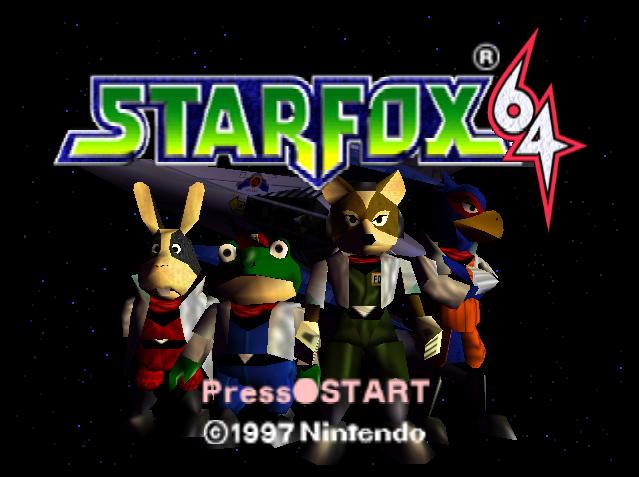
Star Fox 64 belongs to a genre I've hardly dabbled in, yet remain fascinated by: shoot-'em-ups. What was once a popular, omnipresent form of play has since been relegated to a niche following, overshadowed by the likes of AAA development and online gaming. Yet while people just aren't willing to put down money in the face of bigger, meatier experiences, shoot-'em-ups and rail shooters remain as intense as ever for those dedicated to the genre.
And yet despite my limited experience, would it be so bold if I were to claim Star Fox 64 is the greatest of them all? Perhaps it's just my bias speaking, and I'd be lying if the air-shooting sections in Kid Icarus: Uprising hadn't already surpassed it in both difficulty and design, but nearly twenty years of endlessly replaying this game will do that to you. It is, at the very least, one of the very best "pick up and play" games I have ever encountered: every run ends in less than a hour, I regularly shift routes in every playthrough, and I've practically memorized every line of dialogue, be it the cries of hapless wingmate Slippy Toad or the crusty train driver of Macbeth.
Even today, it has yet to grow old, but why? Like Super Mario 64 before it, Star Fox 64 is a full-fledged showcase of what the N64 can do. Oh, yes, I could point out the seams in the skyboxes, and maybe the Rumble Pak lacks the same thrilling punch it had back in 1997, but that the gameplay still holds up to this day is what matters. Beyond its bullet point of being the first Nintendo game to feature extensive voice acting, the likes of an elaborate scoring system that depends not just on your mastery of the shooting system's intricacies, but of the routes you embark on is endlessly fascinating to me. No longer are we limited to a route based our choice of difficulty (as per the original Star Fox for Super Nintendo), but we're encouraged to chart courses of mingling toughness.
This isn't done by the mere press of a button, either; you must work for it. Hidden trails and warps for your Arwing fighter to soar through are strewn across the planets of the Lylat System, and while they're not always thoroughly hidden, there's always a sense of accomplishment in that you, as a player, had successfully guided the Star Fox team into another course. For instance, the game doesn't always rely on extra passageways: if you fail to defend the bases at Katina or Fortuna, you can forget about heading to Solar.
You can, of course, retry, and while it prods at our egos that we do so, we're ever more grateful it allows such an option rather than committing an even worse sin: wasting our time. There's a delicious freedom to it all, and while it sadly lacks the option to replay any mission you'd like (a feature added to its 2011 3DS remake), it doesn't really matter when the entire game's great fun, or even that long. If anything, I find the anticipation of reaching certain planets only heightens their experiences. In particular, there's Macbeth, where you gradually destroy The Forever Train while piloting the Landmaster Tank; Zoness, a toxic ocean that requires swift destruction of incoming search lights, and Sector Y, an armada-filled battleground with shogun robots and one very obvious (but fun!) A New Hope reference. If the careful player plays their cards correctly, they can reach all three in one playthrough.
Naturally, there's more to Star Fox 64 than routes. For one, there's shooting. Lots of shooting. Good shoot-'em-ups provide countless options to rack up the highest score, and Star Fox 64 is no exception. Even now I juggle my split-second decisions in the opening level of Corneria: naturally, I know the hidden route achieved by flying under the stone arches leads to a higher score (and Sector Y, should I choose to go there), but what about everything else before then? Catching more than one enemy fighter in a charge shot acquires more points, so even now I aim my shots towards land-based units just as an air-bound one swoops down from the sky. It's harder than it sounds, but I know it's doable.
This is not to say Star Fox 64 is an overly difficult campaign in itself; really, any retro shoot-'em-up can give it a run for its money in that area, as I can practically storm through it on autopilot. It's how I choose to play that provides an enticing challenge, as I can either aim for a new total high score or improve a kill count for any single planet (and even then, there's an unlockable Extra Mode if I desire a tougher challenge. Venom is just nasty).
I could go on, such as how every enemy is expertly
telegraphed, the intensity of the Star Wolf dogfights and how much fun it is to bomb things, but it'd all just
feed into my ultimate point of how some of Nintendo's best games deeply
respect the creed of "easy to learn, hard to master", and Star Fox 64
is among their company. However, while I still to this day aim for
bigger and better scores, I am hardly any such example of said creed.
Really, I suspect that it's framed just perfectly enough within its
presentation that ultimately appeals to me. The story and world operate
like a distilled Star Wars (albeit with an anthromorphic
population), never intruding upon gameplay progression but instead as a
form of accompaniment. Being distilled Star Wars means it's presented with typical camp and cheese, yet it's never bloated to the point where I can't take it seriously.
Case
in point: the voice acting, which is largely comprised of local,
unknown talent. Not "bad" talent, mind, but mainly actors you'd see in
your downtown theater or whose voice talents are largely reserved for
radio, audiobooks and commercials. Perfect for the short, memorable
quips of Mario and his friends, but let it be known voice direction has
always been the NOA Treehouse's Achilles' heel, and that can prove to be
largely disastrous in dialogue-heavy games. Later examples like Metroid: Other M and Fire Emblem: Path of Radiance attest to this, but in what's nothing less than a miracle, you'd hardly know it from Star Fox 64.
See,
it'd be all too easy to cite nostalgia as the reason why, but it wasn't
until the game's 3DS remake that I realized the secret sauce: it's all
performed genuinely. This isn't a case of the directors and voice actors
obnoxiously doubling down on the camp present in the game's script, nor
is it a case of the latter coming in to deliver half-hearted
performances for what they--and perhaps the directors involved--
perceive to be another dinky children's computer game. No, this is the
result of a circle of individuals who came together to produce a living,
breathing sci-fi adventure, who understand that this is a world that
requires a delicate balance in tone; it's not nearly as raw as Metroid or Fire Emblem, but not nearly as squeaky clean as Super Mario or Kirby.
A world where a fox seeks to avenge his father, a falcon can be brash
and cocky, a hare gives sagely advice, and a frog can be endearingly
clumsy.
Fox McCloud (Mike West), the team leader, is
oddly the member with the least number of lines, but that's no excuse
for West to get sloppy; he's played as the youthful leader, but he's performed seriously enough so that lines like "Let's rock and roll!" don't come across as overly comic. Meanwhile, through some careful guidance from the Japanese development team, Falco Lombardi (Bill Johns) is successfully played as the Han Solo to Fox's Luke Skywalker: quick to bark at Fox for his mistakes, but sets his sass aside for moments of true camaraderie...even if it's bitter sarcasm ("Gee, I've been saved by Fox, how swell").
Of course, the real star is Rick May's Peppy Hare, and I'm not just saying that because his words of wisdom ("Do a barrel roll!")
have been repeated on internet forums everywhere since 1997. Even with a slight Southern accent, he's portrayed as the most grounded character (as it should be, considering he's the veteran who laid witness to Fox's father's death). I said earlier that Star Fox 64 never gets raw, yet it's amazing how his passionate cries for help tiptoe on that line; check out how he screams "What's taking you so long, Fox?!?" when chased by an enemy fighter.
The
villains are no slouch, either: the delicious British accents for Jock Blaney's Wolf and Jay Green's Leon are easily the highlight of the
opposing Star Wolf team, although I'm particularly fond of Pigma
Dengar's whiny jackassery. Meanwhile, the delicious cheese
of the various bosses are infinitely quotable in themselves,
particularly Sector Y's Shogun ("COCKY LITTLE FREAKS!") and the Macbeth train driver ("Step on da gas!"). There's also Andross (Rick May), the big bad whose synthesized voice continues to haunt me with one line: the echo of his thundering giggle that pervades the final battle.
The
only weak link I can spot is Lyssa Browne's Slippy Toad, and it's not
that she does the job poorly as it that she's, well, miscast. A recent all-cast interview reveals she was directed to channel the voice of a
boy, but that's clearly not what we have here: it's a voice very much
that of a woman, and it's caused no shortage of gender confusion (for
the record, Slippy is male). And yet, I cannot bring myself to hate her
performance. She's miscast, yes, but nostalgia be damned! Her performance is just as genuine as the rest, and it's become just as much a cherished part of Star Fox 64 as anything else.
Let's not forget the music, either. Legendary game composer Koji Kondo, who did sound effects for the original Star Fox,
promotes himself to composing the game's peripheral pieces (as in, the
opening/title themes, menu, game over, etc.). The main theme--a
recurring motif which became the series theme from hereon--is more of a
military march than the grand orchestra of Star Fox's SNES days.
While it's a song that's proven its compatibility for orchestra in
future appearances, that it hues closer to a Saturday Morning action
cartoon is what reigns in the game's tonal balance.
We
see the motif repeat in the ending theme, but though the (also great) Level Clear theme takes most of the spotlight, it's actually host to one of
my favorite Nintendo ending/credits sequences. Yes, the awkward dialogue between Fox and General Pepper is hilariously abrupt, but it never interrupts the catharsis of the final two scenes: the Star Fox Team triumphantly sprinting across rocky terrain as the Great Fox mothership slowly soars into the setting sun, ending the credits with a percussion-filled choir. Be for it for the purposes of a nostalgic revisit, the thrill of a high-score run or simply playing for pleasure, I'm hard-pressed to think of many game endings this rewarding. (As an aside, I've found it's grown ever more powerful since former Nintendo president Hiroshi Yamauchi, whose credit as Executive Producer covers the sun right as the choir kicks in, passed away in 2013).
This isn't necessarily a surprising direction, as such prestige rolls back to the Menu Theme, a favorite of mine which I've written about before. Echoing that of a museum, it's one of my favorite Nintendo menu themes in that it always compels me to sit down and reflect on a journey I've taken hundreds of times. Be it before I've even started a new campaign or when I'm entering a new score at the end, it successfully frames Star Fox 64 as the vindicated sci-fi tale it wants to be, as evidenced by how it segues into the "military briefing" style of the Prologue/Map theme.
But let us not heap all the praise on Kondo, for Hajime Wakai is the game's leading composer. His debut work for Nintendo, Wakai helms the game's levels to varying success. That's not to knock on his composition skills; everything from the Fortuna/Sector Z theme to the dream-like Warp zones expertly capture dogfight battlegrounds and the mystery of space. No, it's the sound quality where things tend to slip a little. I'm not sure why it's mainly just on Wakai's end while Kondo's pieces are stronger in this area (especially when Kondo had similar fumbles in Zelda: Ocarina of Time), but regardless, it's worth an analysis.
Corneria is a great example in showing Star Fox 64's instrumentation falters in one area: percussion. Not the booming ones from the aforementioned credits, but the lighter kind meant to accompany the main tune. It's pitifully tinny, and it's particularly dreadful when there's no actual tune to mask it. One can also spot this in the fast-paced Star Wolf theme.
Here's the good news, though: much of this weakness are in the beginning percussion, and you tend to forget about as the main tune kicks in. What's actually bizarre is that I hardly notice this when playing it, as it's drowned out by the Arwing engines and the superb voice work before I have a chance to notice. Here, examples like the theme for Sector Y and Solar, where the percussion briefly carries the opening segment, are obscured by the onscreen action.
Of course, this isn't a problem for themes like Venom where it springs out the gate with a different instrument. Percussion's vital here too, but the other instruments at work ensure the song--a nightmare-ish dive into the world that killed Fox's father--capture the player instantly. For the record, even though this plays in the route that leads to the false ending, this song alone is why I actually prefer this version of Venom to the hard path one.
Really, if
I must name one flaw from a design standpoint, it's the multiplayer.
There can be some fun mined from it, sure, but there's no getting around that it's woefully barebones. I could certainly envision a multiplayer mode with Star Fox 64's engine being a grand ol' time, but certainly not with only two stages and the barest of environmental interaction. Not even the novelty of opting to have your
character walk around with bazookas can salvage it from mediocrity.
But let us not tarry on such blemishes. Let it be known that while I enjoyed the divisive follow-ups to the Star Fox brand
(barring Rare's adventure-based turd), none of them have a patch on
what I, once again, personally deem to be the very finest of its genre.
There's no half-baked gimmicks jumbling out a mess of ideas; no
repetitive concepts overshadowing a tried-and-true gameplay model. It's
simply Star Fox 64: a game with lightning-fast pacing confined to an afternoon's delight. It remains not just one of the Nintendo 64's best, but an exemplary standard of the aerial combat fighter.
To the prudent eye, the name Paper Mario isn't completely accurate to the game's theme. Yes, all the characters and various portions of the world are rendered in flat 2D sprites, but all that hardly recalls paper. While the name rolls off the American tongue easier than its Japanese name, Mario Story, the watercolor backgrounds and cutesy character designs would rather evoke the bedtime storybooks of youth.
And that's exactly what this game is: a living children's storybook. It's bigger than most, it having eight chapters and all, but every one of those tales are so charming, so delightful in how they reimagine the world of Mario within not just a "My First RPG" framework but one of such self-parody and humor that it's impossible not to fall in love with it. Be it the 80's Nintendo veteran familiar with all the references or the eight-year-old that's likely as big a fan of Mario as the Goombario character, there's something for everyone no matter how old you are.
I mentioned reimagining Mario, which is funny considering Paper Mario's origins. The game started as something of a sequel to Super Mario RPG, which, as the very first Mario RPG, presented the dangerous risk of transitioning the series over to the RPG format. What ensued was something far more outlandish than Paper Mario: being developed by RPG legend SquareSoft, the game was stuffed with Final Fantasy-inspired tropes of all sorts. As a result, it was a Mushroom Kingdom the likes of which we'd never seen before; for instance, platforming was distilled into an isometric framework. Mario was still the silent protagonist, but now Toads and Koopas alike spoke on behalf of a cheeky script. There was an actual plot, one populated by dozens upon dozens of bizarre new characters that we'd never see again. And despite what the prologue might imply, Princess Peach does not remain the damsel in distress by the tale's end, nor does Bowser remain the antagonist; in fact, they both join Mario's party!
While Super Mario RPG was a masterpiece in it's own right, Paper Mario chose to dial back on the craziness. It eventually settled on being something of a spiritual successor, borrowing the most pivotal elements for a beginner's RPG format (the "timed" attack system) and for a Mario game (the aforementioned self-parody and humor). The result: a much more familiar Mushroom Kingdom -- there are new characters, yes, but here we witness settlements of not just Toads, but Goombas, Koopas, and Boos alike, some of who even join Mario on his adventure. Bowser starts as the villain and ends as the villain. The plot revolves around magical stars again, but they now possess countenance and even speech.
Whether or not this is actually better is up to preference, but the end result is so undeniably sweet-natured, so fun and bursting with life. Toads of every sort roam the streets of Toad Town, be it the guy screaming about current events, the little old lady who'll cook you treats, or the dude raisingmoney-grubbing piglets.When visiting home, Mario receives letters from all sorts, right down to the Ninja Turtle-ripoffs he trounced in Chapter 1 (and in return, you can deliver lost letters courtesy of Parakarry). And no matter who they are, your friend Goombario has the deets on every single NPC.
Because the game hews closer to home, we delight in witnessing the every day routines of supporting Mario characters. We smile at how Shy Guys, for instance, invade Toad Town with all the giddiness of prankster children (a prelude, you understand, to the bit where you have to infiltrate their lair: a Shy Guy Toybox). We shake our heads at how we're forced to explore a volcano with a zealous Koopa treasure hunter. We giggle when we discover Luigi's diary, chock-full of all his latent desires. And while Peach may be a prisoner in her own castle, her post-chapter escapades with an aspiring star child ensure not just her relevance, but an adorable tale of friendship.
I admit this Paper Mario doesn't have me rolling in hysterics like it's later sequels (The Thousand Year Door and Super); rather, I'm more prone to innocuous giggle fits. And that's really where Paper Mario's humor lies: whereas those two sequels delight in exploring the darker underbelly of the Mario
universe, there's not a single cynical bone within their predecessor.
It frames a good deal of its conflicts within light-hearted mischief,
which is why the game's "darkest" scenario--Mario being the prime
suspect of a penguin murder mystery--is also its most ridiculous.
Hence why the game's depiction of Bowser is Paper Mario's funnest character. The big softie in Super Mario RPG may be echoed in the cuddly design, but the Bowser here is a big bully who adores his title and revels in his newfound powers. He's also kind of an idiot, as we witness in one of the game's best scenes where he interrogates Peach on Mario's weaknesses. Here the aforementioned mischief theme comes into play: we could lie and say that Mario hates Mushrooms for a free snack, but it's far funner to pick, say, wimpy enemies and watch them cower in the face of Mario (my favorite being the shell-shocked Goomba: "feel my, uh...wrath, I guess!").
Which reminds me: let us not forget the efforts of NOA's localization. Indeed, it was Paper Mario that shifted the course for Treehouse translations. No more dry scripts or awkward translations of Japanese nouns (as seen in Zelda: Ocarina of Time and Zelda: A Link to the Past, respectively), for this was to be a fun localization! Lively characters everywhere! Liberties to be taken with the dialogue!
But what sparked this new direction? Were they attempting to emulate Ted Woosley's Super Mario RPG localization? Could it be how it was the very first localization project for now-famed Treehouse member Nate Bihldorff? Was it simply times and standards changing? All are viable guesses--indeed, that the previous fall's Majora's Mask was a significant improvement over OOT in this regard already proved changes were coming to Nintendo's localization practices, and boy do they deliver.
Note, for instance, how slang starts seeping into the English-speaking Mushroom Kingdom. Of course, the American localization team was already on this way back in the days of Super Mario World (via the special world stages; "Tubular", anyone?), but there was nothing as radical as, say, Kammy Koopa--Bowser's elderly Magikoopa assistant--referring to her king as"your Gnarliness". It's a word obviously not present in the Japanese version, but as she frequently varies her evil-themed appellations, even today I am amused at the thought that she meditates day and night coming up with new titles to address her king. So thank you for that imagery, Mr. Bihldorff.
And let us dispel the concern Paper Mario wasn't inherently funny in it's native Japanese language; after all, that would dismiss any of the aforementioned scenarios (particularly the Koopa Bros., undoubtedly birthed from Japan's fascination with Teenage Mutant Ninja Turtles). That's not even mentioning how the game pokes fun at RPG tropes, such as how Merlon's family elaborates on pretentious, useless backstories of their youth. You don't need the world's best game localization team to see the humor in that, although it certainly helps!
I mentioned earlier that Paper Mario is best described as a children's storybook. Obviously, that's not to say the games are only for kids, but I remain amazed at how in regards to actual play, it strikes a perfect balance for any audience to master. This is mainly regarding the battle system; at first glance, that attacks rarely venture into the realm of double-digit damage seems like a significant downgrade, but Paper Mario expands upon what made Super Mario RPG so fun to play: the "timed" hits. Note how every one of Mario's companions possess unique button commands -- we're encouraged to aim with the control stick, flick it back and forth, and even holding the A button for brief, intermittent periods. Through this process, we learn that they're not just immensely satisfying to pull off; when we slip up on a timed press, we're legitimately disappointed and strive to do better.
And that's not even bringing up the equippable badges, flexible to any player's tastes and needs as according to a limited point system. For instance, do I spend huge badge points on boosting Mario's HP and FP, or do I balance all three point upgrades for the level-up rewards? Do I stick with just one set of attack and defense-based badges for the entire adventure, or switch 'em around as I go? Be it solely for use of battle or even for convenience within battles or the overworld, there's an unlimited amount of combination for players to choose from.
Of course, the true star of Paper Mario's battles is the impossibly fun battle theme. Fire Emblem veteran Yuka Tsujiyoko, a master of the xylophone, draws out every ounce of that instrument to craft a lively cacophony I always look forward to. RPG battle themes have the reputation of growing old, but I daresay this song ranks alongside Mario & Luigi: Superstar Saga's as being the very best within Mario RPG canon.
Indeed, so much of Paper Mario's innocuous adorableness hails from its soundtrack. As seen above, it's no surprise Toad Town is the game at it's most idyllic (except for Chapter 4, anyway). Its accompanying song varies from location to location, but the core melody always establishes a warm sense of familiarity and home. Being the central hub of the game, it's undeniable this is the song that sparks nostalgia for longtime Paper Mario fans.
Speaking of which, as a children's storybook, Paper Mario never forgets that wistful scent of dreamy nostalgia. It pops up in spades near the game's climax, with its best example displayed above. Snow Road encapsulates so much of those misty, snowy December nights you might've spent gazing out the window as a child. It's the perfect segue into the village of the Star Children, who I imagine frolic about within those very same nights.
With all this lavish praise, would it be easy to deem Paper Mario the best Mario RPG? Perhaps, but the highs and lows in relation to it's GameCube successor, Paper Mario: The Thousand Year Door, grant me pause. In particular, the perfect cast of TTYD really shines a light on how bland most of the original's party members are even by themselves. Fun as they are in battle, there's a stark contrast regarding who's actually well-written and who's not. There's a world of difference between, say, Lady Bow and Bombette, as the former is a driving force for the plot whereas Bombette is, well, Bombette.
But let us not linger on any such imperfections. Paper Mario may not reach the highest of highs found in TTYD and even Super Mario RPG,
but that it possesses hardly any lows is a sign of fine craftsmanship.
It's a warm, feel-good adventure, one that embraces any audience and
certainly one I know I'll revisit whenever I'm down in the dumps as a
full-grown adult with very real responsibilities. Lord knows I need to
project my troubles into Jr. Troopa, another bully who decides his life mission is to stalk Mario and lay the beatdown on him. What a prick.
----
This is probably my shortest review yet! As I'm aiming for a five-to-seven day waiting period between reviews, more condensed pieces like this will be inevitable. At the very least, I hope I struck that balance of "less is more" with this one! Please let me know what you think.
Anyway, see you guys tomorrow with another Retro Scope courtesy of Nintendojo!