Showing posts with label action adventure. Show all posts

Tuesday, December 24, 2019

The Legend of Zelda: Link's Awakening Review (Hey Poor Player)


I meant to review the original Game Boy game back when I still pretended this blog had a future, but, well, life happened. I hope this makes up for it.

Sunday, May 12, 2019

Luigi's Mansion


The Nintendo GameCube -- alongside Sony's PlayStation 2 and Microsoft's Xbox -- wouldn't just represent the next generational shift in 3D gaming, but Nintendo finally stepping outside their comfort-zone. While their stubbornness towards online gaming would endure, their embracing of disk-based media allowed for seemingly countless new possibilities. A flagship game was necessary to prove its power, and with Super Mario Sunshine set to launch the year after, why not go with his overlooked brother?

Enter Luigi's Mansion: initially designed as a tech demo showing off the GameCube's capabilities, the decision to build upon that as a game would render it Luigi's first game -- well, the first one actually involving Nintendo, anyway -- wherein he'd search a haunted mansion for Mario and suck up ghosts with a modified vacuum cleaner. Unlike the 1993 mishap Mario is Missing!, however, Luigi's Mansion would not only deign it fit to put the poor plumber's name into the title, but have actual Nintendo designers, including Mario creator Shigeru Miyamoto himself, make it a reality. It would finally vindicate Luigi -- the second fiddle to Mario's spotlight; the eternal understudy to the first player.

Friday, April 19, 2019

Metroid II: Return of Samus


Back in the days of Super Smash Bros. Melee when I'd browse its lauded collection of lovingly-crafted trophies, I couldn't help but foster a burgeoning affinity towards one particular replica: Samus's Starship, hailing from Game Boy's Metroid II: Return of Samus. Not because I was experiencing Metroid nostalgia, you understand -- I wasn't yet a fan by Melee's release -- but more so in cultivating a touch of personal pride via its accompanying origin date of 11/91; in other words, my birth date. How vindicating is that? I've always held warm feelings towards Super Nintendo for similar reasons -- perhaps that's why it's my favorite console -- but it surely can't top that. A wonder, then, that Metroid hasn't ousted EarthBound, Kirby, and Smash Bros. from their seats as my all-time favorite Nintendo franchises.

Alas, perhaps it's that the stars only aligned for coincidence as opposed to birthing an outright classic, for Metroid II: Return of Samus never enjoyed the accolades of its successors (Super Metroid, Metroid Prime) or even its own NES progenitor. This isn't due to any untoward experimentation so commonly found in retro sequelization -- if anything, its goals breed potential finally realized in its incredible 3DS remake: Metroid: Samus Returns -- but rather that the Game Boy is ill-equipped to handle such direction; in other words, we're dealing with a game featuring familiar genre pratfalls found in its heyday. As you've likely guessed, the absence of a map system and woefully obtuse level design do little favors for Samus's Metroid-hunting expedition, but I confess my main problem lies within a particularly clumsy bait-and-switch in its music score. I cannot emphasize enough how the opening Tunnel Theme -- one I've written in the past as being a damn good tune -- instills us with urgency and drive, headlining our mission of eliminating SR388's Metroid hives.

Wednesday, September 26, 2018

The Legend of Zelda: A Link to the Past


How does one define perfection in video games? Is it recognizing how one game brilliantly executes its main goal? Is it simply returning to a childhood favorite again and again? Or, perhaps, is it something as broadly simple as doing everything right? In that case, it's difficult to imagine anything more perfect in the Zelda pantheon -- or perhaps even all of Nintendo's library --  than The Legend of Zelda: A Link to the Past. There are a variety of reasons for this, but more than anything, it's timeless in its accessibility. Consider this quality when when juxtaposed to Zelda's other masterworks: Majora's Mask -- which I still consider the the series apex -- demands an entirely different style of play that can be too stressful, Breath of the Wild and even this game's sequel in A Link Between Worlds may stray too far from the series formula for some, Ocarina of Time suffers from the same graphical degradation as the rest of its respective generation, and The Legend of Zelda is too archaic and impenetrable by today's standards.

Only Link's Awakening for Game Boy may match it here, and as masterful as that game's bittersweet balance of infectious light-heartedness and gradual melancholy is, A Link to the Past is instantly superior for presenting the greatest opening in series history -- as far as Nintendo games go, only Super Metroid and Metroid Prime may surpass it, and A Link to the Past may even trump those with its own title opener. After the Nintendo logo flickers on screen with the gentlest of harps, a majestic three-dimensional Triforce morphs into shape, embedding within the game's logo as the Master Sword pierces through, a triumphant score celebrating our arrival into the latest Zelda adventure.

Friday, August 31, 2018

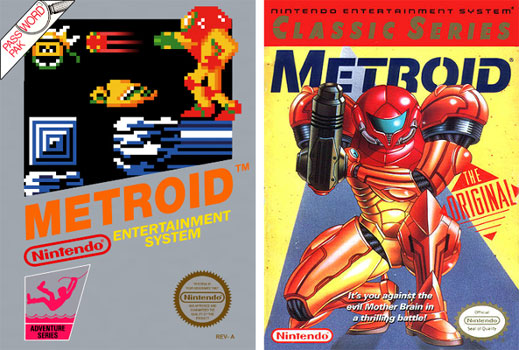
Metroid


To discuss these Nintendo progenitors is something of a difficult task: much as I adore the likes of Super Mario Bros. and The Legend of Zelda, for instance, they've certainly been outstripped not merely by modern standards but in their own successors. While Super Mario Bros.' immaculate design renders it just timeless enough to be accessible even to modern audiences, however, the same can't be said for The Legend of Zelda -- it certainly remains a masterpiece for those wishing to invest time into it, but barring one's possession of an NES Classic and its instant save states, its cycles of punishment and foraging fare quite poorly against the conveniences of today.

Much like The Legend of Zelda, Metroid is also often cited as an impenetrable classic -- the game is hard-as-nails difficult, thinking little to nothing of the player's morale. The overall "maze" design, while taking care to distinguish Planet Zebes's underground sectors from one another, does not establish the same philosophy with its room design and we're left with a homogeneous, indistinguishable look that's prone for disorientation. There are various reasons for this -- Metroid had a particularly troubled development, for starters, and the game as we know it today only came together in the final three months of development -- but let's be honest: it's not as if Metroid was the only 80's game that employed similar tactics, and I'd like to think the game still holds up regardless. Being a Nintendo historian, it's easier for fanboys like myself to overlook such flaws for the sake of research and personal amusement, and Samus Aran's first adventure is hardly an exception.

Tuesday, December 26, 2017

Blossom Tales: The Sleeping King Review (Hey Poor Player)


Question: was 4/5 too low? I come across as quite positive throughout the review, and I kept going back and forth on that and 4.5. I felt 4/5 was appropriate for a game of this caliber, but it just does so much right; actually, I'd say it's easily the best indie I've played all year.

Let me put it this way: if Zelda: A Link to the Past was your childhood jam, you'll love Blossom Tales. And you'll like it regardless. Play it!

Monday, November 20, 2017

The Legend of Zelda: Skyward Sword


As this review's been nearly six years in the making, it's only fair I cut to the chase: I still intend to bury The Legend of Zelda: Skyward Sword. Admittedly, I embark on this task with some trepidation: it is not a game that is outright terrible, as I have implied in the past. This is not the so-called sorcery of the previously-discussed Zelda Cycle; a carefully-evaluated 100% run does reveal it is a professionally-designed title with your typical Nintendo polish and all that, and like Twilight Princess before it, there are some good moments I dare not wish to minimize.

That does not, unfortunately, dissuade me from believing Skyward Sword is possibly the most underwhelming output from Nintendo's own studios in their entire history of game development. This is not to say it is the worst -- Donkey Kong Jr. Math and Urban Champion have endured three decades of mud-slinging for a reason -- and this excludes second-party efforts and third-party collaborations (Metroid: Other M, being worse in every way that matters, would obviously be the runaway winner).

Sunday, August 20, 2017

The Legend of Zelda: Twilight Princess (Wii)

Note: While this isn't the original version of Twilight Princess, since the Wii version was the one released first and remains the only one I've played, this will serve as the "main" review of the game for this blog. Reviews for the GameCube version and the Wii U remaster are scheduled for the future.


Within the bowels of the The Legend of Zelda fandom lies a little theory known as the "Zelda Cycle," a belief pushed by those who cannot comprehend anyone not liking the newest Zelda game. The theory goes in how people will unreasonably lob hate against the latest Zelda title, comparing its mishaps to the impeccable heights of the previous entry despite that game suffering from the same treatment at release. No one quite knows why this cycle of people magically changing their minds  takes place -- it may have to do with overzealous keyboard warriors unable to discern they're reading different opinions from different people over time -- but regardless, it's a rather pervasive theory, right down to being referenced by Nintendo's top brass themselves in an Iwata Asks installment.

If my biting sarcasm wasn't telling enough, I think the Zelda Cycle is a load of bollocks. The idea that Zelda games are prone to hosting some sort of nebulous hivemind is nothing less than fanboy drivel, and that aforementioned Iwata Asks thing is one of the more notable examples of second-hand Nintendo embarrassment. True, we could make an exception for The Wind Waker, but only in the case that people cooled on the controversial graphics switch over time; much as I love it, the game received plenty of legitimate criticism upon release.

And yet, I can't help but admit I've never been able to nail my feelings on 2006's Twilight Princess, the series' best-selling game despite being one of its more divided entries. Bear in mind this opinion has never fluctuated wildly, but...well, I'll let the evolution of my 11-year thought process speak for itself:

Upon Completion in 2006: "Well, that was pretty good, I suppose."

A Year Later: "...you know, actually, that was kinda disappointing."

Upon Replaying it in 2009: "Hmm, actually, this is better than I remember it being."

Upon a 100% Completion Replay Last Year:
"Eh, it's good, I guess."

So perhaps there is some mystical force responsible for my lukewarm feelings towards Twilight Princess, but regardless, that they exist at all is something I admit with the heaviest of hearts: can you imagine anything more soul-crushing than the game responsible for the greatest reaction in E3 history causing such a divided reaction? This is, after all, the Zelda game practically every Western fan wanted: a realistic Zelda echoing Lord of the Rings aesthetics and a brooding story, and for it to miss the mark still makes me feel...neutral? It's hard to describe.


Let us make this clear: any notions of Twilight Princess being "bad" should be immediately dispelled -- there is a considerable amount of things I enjoy about it, in fact, and I will absolutely call them to attention -- yet there are undeniably bad things in it that not only undermine what should be a legitimately spectacular game into merely a good one, but are largely embryonic in what would devolve into Zelda's worst habits. Much of Twilight Princess' strongest moments are isolated, surrounded by a sea of deafening bloat that smothers any ambitions it so rightly deserves.

There's really no better place to start than at the game's beginning, and it's here I ask the reader what comes to mind regarding Zelda's great opening sequences. Undoubtedly, you have the rainstorm prelude in A Link to the Past, the dreamy mystery of Link's Awakening, the giddy experimentation in Breath of the Wild, and Kokiri Forest's snappy introduction in Ocarina of Time. Majora's Mask and The Wind Waker likely wouldn't rank among said openings, as those were when Zelda began elongating intros for the sake of context, yet even those could be defended on the grounds that they're neither patronizing nor pointless.

Twilight Princess's opening is, sadly, both of those things, choosing to crank up its own beginning by forcing you to spend three days inside a sleepy little village and experience all of its mundane routines. It should be reminded that out of those three days, the first two bear little to no importance in how they force poor Link into herding cows, cat-searching, fishing, rescuing baby cradles, testing your new slingshot or solving monkey kidnappings.

Admittedly, not all of these are terrible -- herding cows while riding Epona makes for an entertaining mini-game, at least -- but they are only brief, faint flashes of enjoyment in a never-ending swamp of boringness. The duality of the cat-searching/fishing strikes as an immediate down-point: you have to fish for a cat to send it home, see, but the game neglects to mention you have to do this twice, and I still recall begging that cat to eat the greengill I'd just caught. As dedicated readers should know, if I am not enjoying anything involving cats, you are undoubtedly doing something wrong. (On a related note, as we're discussing the Wii version, this particular segment is compounded by awful, unintuitive fishing controls I still can't get the hang of a decade later, although thankfully it's the only time the motion controls reach such a nadir)


Needless to say, the Ordon Village segment is hardly anything more than a convoluted mess of errands and fetch quests -- would you believe the cat fishing thing concludes a particularly tangled order of events just to obtain a slingshot? -- and yet it's amazing how much of that seeps into the rest of the game. Even when stuff finally happens on the third day --  mainly Link's transformation into a wolf and the introductions of Midna and Princess Zelda -- it insists you partake on tedious bug hunts and the like.

Consequently, Twilight Princess' padding suffocates not merely the pacing but dulls the impact from what are incredibly effective moments. Take the meeting with Faron, the very first Spirit of Light you encounter: a chilling choir greets the Faron Woods' freedom from twilight, the camera panning over Link's granting of the iconic green garb we fell in love with all those years ago. Finally, we're about to dive into the sword-swinging action we've been craving since 2004...only to be deflated shortly afterwards when we enter the Forest Temple, which holds the honor of simultaneously being the first and worst dungeon in the game, largely not due to being anything more than hunting down monkeys.

The first entry into Hyrule Field also stumbles. While the kingdom is several times bigger than it was in Ocarina of Time, it cannot hope to emulate that awe-inducing feeling we felt back in 1998, as the grand scope is shortly cut off by another bug hunt, which I neglected to give context to before. See, much of Hyrule is drowned in Twilight thanks to the Twilight King's invasion, and only through destroying the Shadow Insects within can you obtain enough Tears of Light to dispel the shadowy fog plaguing Hyrule. A decent enough context, but it's married to gameplay not suited for Zelda: they're tedious, tiresome scavenger hunts that go on and on, and while Skyward Sword was the first Zelda advertised as having level-based progression zones and whatnot, these segments are embryonic of an overtly linear, railroaded system that doesn't match with Zelda's exploration at all (the worst being by far the one for the Lanaryu region; perhaps it's just me, but I've never been able to make sense of the interconnected mazes of rivers and lakes, and I always get lost).

To summarize, it's all blatant, exhaustive padding that not only deters replays but undermines the introductions of their respective locations (and not just because they're all drowned within a boring aesthetic, but we'll get to that later) . I won't deny there are highlights -- the grim sheltering of the survivors of Kakariko Village in twilight is appropriately chilling, and the Goron sumo-wrestling bits, sabotaged as they are by all the backtracking, are joyfully absurd to watch and engage in, not the least in how they come out of nowhere -- but that even awesome moments like the Bridge of Eldin duel are clumsily inserted within all this backtracking is just all the more frustrating.


The point isn't to say Twilight Princess isn't utterly blameless outside of its padding -- we'll get to its other mishaps as we go along -- but the deluge of tutorials and handholding and whatnot make it a lot harder to appreciate what it does do right. The swordplay, for one; while hardly a difficult game, I can think of few Zelda games on par with or surpass Twilight Princess in terms of quality sword control. There's a great heft to every slice, and that I say this despite the presence of Wii controls is something of a miracle. Not that I'm opposed to motion controls or anything, but a gyro-based control scheme from 2006 is hardly going to be as impressive in 2017, and make no mistake: it does feel a little clunky by today's standards (and the less we say about the "thank god I can turn this gimmicky shit off" in the form of Midna's cackling from the speakers, the happier I'll be), but the distinct pleasure of moving your arms around to initiate sword slicing and shielding is undeniable. Even the Navi pointer on-screen is surprisingly unobtrusive, and it too can be turned off.

Really, when you're not being bogged down by worthless drivel, Twilight Princess does feel great to play. Look no further than horseback riding: Twilight Princess's iteration of Epona remains the series highpoint, surpassing the acceptable clunkiness, Ocarina of Time and avoiding the surprising stiffness of Breath of the Wild. The controls are on point, the horse feeling substantially weighty and thrilling horseback sword battles abound. (I only just wish the Horse Call came far earlier than it did; as anyone who's played the game knows, relying on stray patches of Horse Grass to summon your horse is hardly ideal)

 
This also extends to the items, although the missteps are present here as well. Not because of any motion control mishaps, mind; if anything, I suspect the comparisons to Spider-Man via the Double Hookshots come from all the manual pointing and aiming. But as cool as new items like the Ball and Chain and the Spinner are, Twilight Princess makes the mistake of only utilizing them within their respective dungeons as opposed to rendering them as organic tools that continually complement the world around Link. Yes, there are quick puzzles decorating the overworld here and there, but they're more or less dumped after their respective dungeons.

But those dungeons! Those are where Twilight Princess is at its A-game. Forest Temple aside, much of the dungeons evoke the best of the organic Zelda dungeon design and "wow" moments, be they the gravity-defying magnetism of Goron Mines, the "oh, wait, this is a dungeon?" for a certain location in Snowpeak or the nostalgia-fueled setting behind the sixth dungeon. Most feel appropriately huge, and with how often these dungeons bank themselves on awe and surprise, it's wonderful how often it genuinely, honestly works.

One example from the sandy depths of Arbiter's Grounds readily comes to mind. Hailing from my first playthrough, I was navigating a room impeded by falling chandeliers, with one particular road obstructed by a chain-activated candelabrum. Pulling the chain to raise it up, I quickly dashed across the bridge before it fell down, but it was too late: I yelped as the rickety structure came crashing down...yet I wasn't dead. Spotting a small indent on the floor, I deduced that since it was too quick otherwise, the entire point was to let it fall around me. A more observant player might've figured that out ahead of time, but I can hardly recall any other puzzle that so quickly shifted fear into an "aha!" moment.

In terms of general engrossment, however, Lakebed Temple and City in the Sky are the obvious highlights, what with how they engage the player in gradually shifting their geography through waterslides and falling towers. All are initiated through the Clawshot, which have Link zipping across both dungeons and instill a true "hands-on" sense of satisfaction in altering your surroundings. And let us not forget their thrilling boss fights of giant eels and armored dragons, which have you riding for dear life within deep watery grottos and treacherous rainy skies.

It's a shame Twilight Princess only shines in segmented locafions, too, as I do like what this iteration of Hyrule is trying to do. Yes, it is rather empty, but let us not dismiss its more inspired concepts; namely, the labyrinths. Interconnected throughout Hyrule, these mazes are blindingly dark, haunted by Skulltulas and endless pits, and only through careful use of your lantern will you successfully navigate their depths. It's the one element of the overworld that comes across as an organic component, and I'd certainly would've liked to experience more challenging terrain akin to those.

And yet, I can't help but notice just how lame the civilizations are. I'm not going to sit here and pretend the likes of Goron City or Dragon Roost Island were accurate depictions of lived-in cities, but surely they were better than the one-room circles that house the Gorons and Zoras! This game's iterations of Kakariko Village and Hyrule Castle Town might provide better arguments here, but the former remains its most dismal iteration to date: a boring, dusty canyon town that, context aside, is utterly lifeless.


 There lies the source of Twilight Princess's sluggishness. I cannot claim it is entirely full of ugly sights -- the towering emptiness of Morpheel's lair after its' defeat, for one, or the gloomy melancholy of the Lost Woods -- but so much of the game's aesthetic lies within dull, washed out colors that often settle for hues of brown, and it's never very enthralling to look at. While it's understandable that bold colors wouldn't be emphasized within a realistic-driven title -- it's not as if Ocarina of Time or Majora's Mask were particularly colorful, either --- it's hard to get caught up visually when so much of it looks this inert, and I figure this is why the Twilight Realms feel as sluggish as they do.

The character designs also suffer in their attempt to carry over Zelda-esque figures. Consider how we've had some goofy-looking designs in the past (with occasional missteps; look no further than the portly women NPCs in Ocarina of Time), but they generally served the purposes of their respective artstyles; namely, Tingle in Majora's Mask and the snot-filled Zill in The Wind Waker. Twilight Princess forgets that if you just carry this on within a realistic direction without a hint of irony, you're going to have some real grotesque-looking figures.This isn't to say there aren't some inspired concepts -- that the Goron Elders house steaming miniature volcanoes on their backs is too cool -- but it's not that uncommon encountering characters which look like this:


or run across critters that I cannot imagine were created as anything but the most eye-burning of nightmare fuel, as evidenced by Link's expression at meeting Ooccoo.


Really, it's hard not to see where one's distaste with the artstyle would hail from. It wouldn't be until Breath of the Wild that Nintendo would find a nice middle ground between colorful fantasy and grounded character design, but alas, that took some eleven years...

Even the music is only memorable in fragmented occasions, and it kinds of breaks my heart to say that. Toru Minegishi heads the soundtrack with Asuka Ohta -- and the legendary Koji Kondo supervising -- and when they do nail it, they nail it: the utter despair of Midna's Theme/Midna's Lament, the chilling power of the Light Spirit theme, and the heartpounding finale of the Final Boss theme. (I'd also cite the sheer adventure of the Hyrule Field theme, but as evidenced by the Wii U remaster and Super Smash Bros. Brawl's rip, it was obviously constrained by system limitations)

But they're surrounded by songs that don't evoke much of anything. I have earlier praised atmospheric songs in Zelda, but the problem with Twilight Princess it focuses too much on that particular direction and not many of the songs stick to memory. One can see this in, say, the dungeons: the previous Zelda games interchangeably used atmospheric and songs with a stronger melody to create a stunning ear-grabbing blend of ambience. Compare the haunting hypnosis of Ocarina of Time's Forest Temple to Twilight Princess's iteration and note which one absorbs you more. Only City in the Sky matches this quality very late into the game, and it's disappointing nothing else even so much as echoes this quality.

It's all enough to make one walk away from Twilight Princess not feeling much of anything, even when considering all the good things it accomplishes. Running around in the wolf form is cool, for instance, and I like the attacks involved with it, but that so much of it is associated with the boring Twilight Realms renders it "eh". Even the story falls into this trap, as what should otherwise be a strong tale is imbalanced through the strength of its characters. I enjoy seeing Colin grow via his admiration for Link, for instance, but I struggle in recalling the names and personalities of the Resistance members. The yetis are adorably hilarious and absolutely make the fifth dungeon, but I care not for the Zora prince Ralis and his grief, which can be chalked up to his precious little screen time.


In particular, I can't help but note the balance between the two Twili. Anyone can agree Midna is a fiercely engaging sidekick to the extent one could even say she's the true protagonist of this Zelda, yet I cannot help but feel Zant is wasted as a villain. Unlike many, I'm actually rather fond of the personality shift in his last appearance, but only in concept; juxtaposed with the calm ruthlessness displayed beforehand, it's far too abrupt and I've never been convinced it was a facade all along. Had there been some effective foreshadowing beforehand, I'd likely think differently. (That he gets sidelined by a certain other villain is also unfortunate, but I'm already too deep in spoiler territory as it is)

There are other things I enjoy in isolation. Naturally, I enjoy the emphasis on cats being Hyrule's animal of choice this time around, and take great amusement in one particular sidequest involving a wild west showdown. Despite what I mentioned previously about the realistic style not meshing with more absurd Zelda character designs, Malo -- the shrewd toddler who discovers the joys of capitalism --  is the one delightful exception, and I can't help but notice how he expertly dodges sword swings should the player swing their sword in his vicinity. Seeing as how he opens his own market empire (complete with theme song!), perhaps he's the true villain of this tale. 

More than anything, however, Twilight Princess feels tired. While not without merit, even underneath all its successes lies a tired familiarity, a fatigue that makes one go "I've done this before." When married to bloated padding, dismal aesthetics and handholding and all, it culminates into this bizarre paradox of being too much Zelda and yet not very much like Zelda all. It certainly looks like Zelda, what with Link and Princess Zelda and the first three dungeons being forest, fire and water, and even before we groan at the same tired twists and formulas, the actual look for it is as tiring to watch as being reminded you've picked up a blue rupee every time you start up the game. Sad to say, any ambitions it has are quashed underneath this crushing misdirection, one that would come to erroneously define the next few years of Zelda.


Sunday, May 28, 2017

The Legend of Zelda


When Super Mario Bros. launched in 1985, it captivated a worldwide audience through subtle accessibility and an addicting idealism that made players say, "I can do that." It was a game that fed upon muscle memory via carefully crafted physics and manipulation of Mario's surrounding environment, all nuances anyone could enjoy thanks to its accessibility. It was a pick-up-and-play game of the best kind, with level design fine-tuned as subtle tutorials and music that manipulated us to try, try again.

In contrast, its wombmate The Legend of Zelda offers relatively fewer cues, doesn't involve as much exertion, and requires a dedicated commitment for full enjoyment, but it captivates us through a slightly different ideal: "I can do it this way." Its world of Hyrule entices us with an open world, one where we can explore anywhere and are rewarded for doing so. Much like Super Mario Bros. before it, it becomes "our game": Shigeru Miyamoto's personalized garden can be tackled any way we wish, even if it's not bound by a set order.


Thursday, March 2, 2017

The Legend of Zelda: The Wind Waker


In retrospect, that the initial reception to The Legend of Zelda: The Wind Waker -- once branded as "Celda" by embittered fans -- has all but evaporated is rather stunning. Witnessing the shift from the realistic Spaceworld 2000 demo into this brought upon much hellfire; I still remember several of my Zelda-loving friends hating the crap out of it and refusing to do anything with it (a promise that was eventually rescinded; personally, while I loved Majora's Mask and casually enjoyed Link's Awakening, I wasn't invested enough in Zelda to really care). While we could certainly chalk up the switch to poor foresight and communication on Nintendo's part, the shift into cartoonish cel-shaded graphics highlighted the number one complaint of the GameCube days: Nintendo was too childish, too alienating in their kid-oriented direction of Toon Links and the latest Mario game being dubbed Super Mario Sunshine.

Those days are now behind us, yet somehow in the fourteen-plus years since The Wind Waker's release, criticism remains intertwined with the game's identity. This isn't to say the game's not surrounded by a sizeable, adoring fanbase -- you'll find it commonly cited as a series favorite, in fact -- but it remained so dogged by harsh critique that would continue to split the fanbase not just in itself, but pave the road for future titles' division. It's too easy, perhaps too short, and the game's central mechanic of sailing took too long for many.

Most damnably of all, however, was the obvious evidence of it being rushed out to market: there are cut dungeons, abrupt sequences, and an infamous endgame fetch quest that amounts to nothing more than padding. One could even say said padding was the genesis for its plaguing future mainline entries, yet for as much as Twilight Princess and Skyward Sword would be inundated with handholding and bloat, neither possess this glaring, crippling flaw.


One that somehow flew over me when I first played it; it is a video game I have much reverence for, as The Wind Waker was the entry responsible for finally captivating me into the world of Zelda. It's one of my childhood favorites, in fact, taking the No. 4 spot in my "Holy Nintendo Five" alongside the likes of EarthBound, Super Smash Bros. Melee, Super Mario 64 and Kirby Super Star. For a child awakened to nostalgia, it was everything I looked for in a game: a vibrant world possessing that ever-so-rare euphoric warmth in its beauty, setting the imagination aflame of universes beyond our own. So gripping was its atmosphere that I envisioned myself as an explorer who seeped through dimensions, canvassing the musty depths of temples and seas alike.

These days, it's a little different. The Wind Waker is still something I'm very fond of, but time has rendered its flaws unavoidable; being such an ambitious project, those black marks of clumsy, shore-horned segments and stripped elements are only all the more apparent. And yet as I had once done on Nintendojo, even now I'm compelled to defend most of those same flaws. Yes, it is a game that misses opportunities and doesn't build upon them, but I adore so much of what it tries to do that I cannot help but raise an objection to those, well, objections.

Take the game's central context and mechanic: sailing on the wide open sea. The Wind Waker takes place in The Great Sea, divided into island-dotted sectors with all sorts of treasures, secrets and locals waiting for you. Grand as that may seem, many claim it to be a tedious exercise: even with the later aid of warping, sailing from one island to another takes an awful lot of time, and it's been accused of  exploiting that for padding purposes via fetch quests. I, for one, cannot get enough of it; you could point to certain stretches of emptiness, but witnessing the game's various weather patterns and hearing The King of Red Lions' soft rocking within silent nights provides a soothing catharsis not found anywhere else in Zelda; as a matter of fact, I've yet to spot any other vehicular transport emulate this level of calm anywhere else.


Much of this has to do with how it perfectly fits into the exploratory heart of Zelda. The gradual process of a distant speck morphing into an island isn't just met with anticipation; it's perhaps the first moment Zelda had an open world-esque inkling of "you can go there." Indeed, The Wind Waker was perhaps the most "open" 3D Zelda in this closing pre-Breath of the Wild era: you won't be choosing dungeons in any which order, but it's not too long until The Great Sea is yours to explore. And perhaps it's not so empty after all: the careful player will notice, for instance, that the treasure-filled Light Circles only appear in certain sectors at night.

Not that The Great Sea doesn't forget to include some thrills; even when you're being chased by carnivorous Gyorgs and the helicopter-sounding Peahats, haven't you ever decided to just climb up that watchtower and knock over some Bokoblins? For all its aforementioned catharsis, the adrenaline of combating maritime monsters and bombing enemy battleships within the confines of your tiny boat is just as satisfying (not the least of which are the Big Octos, one of my many water-based phobias in youth).

Which reminds me: the combat has also been derided for undeveloped concepts (you can pick up enemy weapons like spears and longswords, but there's not much to do with them) or overtly-lenient shortcuts (A-button parries against Darknuts, otherwise known as "press A-to-win!"). While there's certainly a case for the former, it's enough for me that I've always found hilarity in the juxtaposition between Toon Link and the oversized weapons, while the latter looks especially cool and has great feedback in control/weight. That they don't detract from the combat in itself is a blessing.

Not exactly the best defense, I know, but to this day, The Wind Waker still possesses my favorite sense of Zelda sword-slicing: a punchy, rhythmical force of impact that conveys not the distinct sword slices of the past two 3D Zeldas, but whaling an enemy in a manner not entirely unlike boxing. It feels wonderful to execute, heightened by "strike" beats in the accompanying music. This isn't even factoring in the other weapons: I can't be the only one who's unable to resist constantly bashing in Moblin heads with a boomerang, right?

I ask that because it's one one of the many, many reasons why the visuals remain The Wind Waker's finest achievement. As mentioned earlier, you'll barely find a trace of graphics complaints to be found, and that's because The Wind Waker's cel-shaded aesthetic is the definition of timeless: fourteen years later, you can hardly spot any limitations found in the animation, texture-work and graphics involved. It is a cartoon truly come to life, with the obvious Asian influences granting it a foreign mystique and enchantment not completely unlike Capcom's Okami.


It goes without saying it still has the most beautiful setpieces in all of Zelda, and while Breath of the Wild seems poised to dethrone it in this area, I can't imagine my breath ever ceasing to stop at some of The Wind Waker's best cases of art direction. Is there anything more beautiful on the GameCube than the Fairy Fountains, with their azure colors, nautical-based formations and luminescent walls providing the game's most soothing, jaw-dropping locale? Even the Great Fairies themselves are a mystifying visual treat; no longer are we treated to screeching, scantily-clad nymphs, but graceful multi-limbed deities comprised of petals and spiral cut paper.

When compounded upon by the chorus-filled heaven that is the Fairy Fountain theme -- said chorus being enough to render it the very best version of that classic theme -- they amount to nothing less than spellbinding scenery with an irresistible pull. Not one visit comes to mind where I hadn't just sat there and watched the crowd of ever-rising sprites ascend into the ether, and they're certainly not the only location with such a hypnosis.

So great are The Wind Waker's visuals that I'd even claim they come to aid anytime the gameplay may be lacking; some rag on the dungeons, for instance, for being too linear. The best Zelda dungeons provide an organic flavor of continually traversing across their depths, so perhaps there's a point there. But why should I care when the setpieces involved express the other very best factor of dungeons: making me feel like I'm really there? All five of the game's dungeons excel at this: even now, I cannot help but be pulled in by the chilling, shadowy haze of the Earth Temple or the crowds of spores and writhing, squirming plants in the Forbidden Woods.

The last three -- Tower of the Gods, Earth Temple and Wind Temple -- are probably the best in how appropriately huge they feel: intertwined with the plot, the trio must invoke a grand, majestic aura to convey themselves as appropriately sacred. The Tower of the Gods is my particular favorite, its holographic rainbow bridges and rising water levels expressing a prestigious air echoed by its placement in the game's plot: its ascendance from the ocean after centuries' worth of sleep provokes a musty, ancient feel.


Again, the music is imperative: Tower of the Gods with its powerful chorus is easily the best dungeon theme, but the Wind Temple evokes the more common usage of atmospheric sound: Pikmin-esque instruments introduce the temple (perhaps the biggest hint that Hajime Wakai, one of the game's four composers, was behind this song?) as they segue into a lone, melancholic guitar, perhaps reflecting the solitary slumber of the moss-filled temple itself.

Naturally, The Wind Waker wants to show all this off with clever manipulations of the camera. Bosses have never been this huge before in Zelda, for example, which gives ample excuse to draw the camera out during each and every battle. Every instance is meant to emphasize Toon Link's relative tininess to everything around him, be it the massive jaws of the sand serpent Molgera or the vast ocean surrounding each of the three Triangle Isles. It's a powerful effect adjusted to one's liking via C-stick, and even now, I can't help but be absorbed by how huge everything is.

And as expected for a game passing itself as a cartoon, the animation is wonderful; the dynamic expressions of Toon Link are commonly cited, but I'm especially taken with the game's horde of enemies. Watching the Moblin's antics (light their arses on fire!) or the armorless, weaponless Darknuts make do with their fists or stray Moblin spear lying around is greatly entertaining, and I've made it a hobby of mine to experiment with Toon Link's various weapons to gauge their reactions. Case in point: smacking Miniblins off the Forsaken Fortress's upper reaches with the Skull Hammer, as watching their puny little bodies launch into a watery grave is not unlike the awe of a soaring golf ball.


It's a good thing the character animation succeeds in its goals, as the story -- perhaps tied with Majora's Mask as being the strongest within Zelda's history -- wouldn't nearly be as good without them. Taking place as something of an alternate sequel to Ocarina of Time, its setting up of a mystery within an entirely new setting --- The Great Sea -- provides a fascinating juxtaposition: we desire to learn the fate of familiar kingdom we learn about in the intro -- a gripping sequence depicted in hieroglyph-esque woodblock prints -- but we're having too much fun with the new world's pirates and bird people and wood spirits for our curiosity to linger too long.

The Wind Waker is different from the previous two games in that strikes a mid-road: the themes and character moments involved aren't nearly as raw, but they ain't exactly subtle. The aforementioned "mystery" introduces a wealth of gravity and import to this new realm, yet even moments like Prince Komali's one-sided affection for Medli echo its biting themes of loss and moving on; in that respect, watching series villain Ganondorf earn his first touch of character is a thing of beauty, and remains the most tantalizing moment of humanization in Zelda history. As a grown man who's watched his cherished childhood slip away, it identifies with me more with each passing year.


So much of what makes this new setting so foreign is in the score: helmed by a four-man team (Kenta Negata, Hajime Wakai, Toru Minegishi and Koji Kondo in his first supervisory role), The Wind Waker brims with Celtic-influences and instruments, namely in the very first song we hear. Best described as the game's main theme, the playful Irish arrangement that is the Title Theme is reverberated throughout The Wind Waker as not just a clever recurring motif, but in tone: we find its whimsy shared in other compelling themes as well (namely the castanet-filled Dragon Roost Island). Personaly, I've always thought of it as a fairy-tale opening.


But it's not Zelda without the adventurous backdrops, which we find in the wonderful ocean theme. Both intrepid and marvelous, The Great Sea encapsulates the very essence of "adventure" in its entire duration, never failing to inspire the swelling need for discovery and the unknown. Everything from climbing Bokoblin watchtowers to watching seagulls fly alongside The King of Red Lions is heightened by this one song.


The Wind Waker is notable for being the first Zelda to establish unique theme for each boss, and while they are spectacular (Molgera and Helmaroc King being the standouts), the recurring mini-boss theme remains my favorite. Making a triumphant first impression through its chiming of bells, the way this valor is carried through the light-hearted whimsy of whistles is nothing less than infectious.

I should highlight one more positive while we're on the subject of sound: the conduction of the Wind Waker itself. I could elaborate on how much I cherish the game's sound effects, but it is one of the most ethereal moments of sound in Zelda, as even simply standing there graces our ears with a celestial air. This isn't even getting into the ascending chimes of the three conduction times, all accompanied by stunning choirs. The baton may not be as functionally deep as the Ocarina, but the sound reverie is enough to render it my favorite Zelda instrument.

All this and more is enough to propel The Wind Waker into the upper echelons of Zelda...but alas, for all its ambitions, it misses the very top. Everything to do with this relates to its rushed status: this is something not immediately apparent, but by end of the game's first act (roughly by the third dungeon), it becomes undeniably evident this ambitious title did not fully achieve its vision. Such a failure is not uncommon in the industry, but when it sinks to levels of wasting the player's time, it becomes a major detriment.


Case in point: the cut dungeons. After the game's opening stages, the story makes a point of collecting three magical pearls after completing the early dungeons. The first two are acquired in this matter without a hitch, but after a protracted dash to nab Nayru's Pearl, it's suddenly handed to you by the water spirit Jabun. The aforementioned Nintendojo article does have a defense for this -- that the "water" dungeon role may've been filled by the Tower of the Gods, which immediately follows -- but there's just no getting around how abrupt the Jabun sequence is.

One can't also help but wonder if the "mini-dungeons" -- Fire Mountain and Ice-Ring Isle, used to obtain certain equipment -- were the two cut dungeons, and yet they're so short even the term "mini-dungeon" does them a disservice (aside from a cool secret in the latter). This isn't to say they're terrible in themselves -- they actually fit relatively seamlessly into the progression -- but one also cannot help but imagine if these dungeons were tied into the game's mid-game twist: one I shall not spoil for those who have yet to plunder The Wind Waker's depths, but it's a gripping possibility that would've opened up the game's already massive world two-fold.

Of course, the elephant in the room is the Triforce Hunt: a blatant case of padding that would set the example for bloated, uneventful events that would later plague the series. This is the one area my article faltered in defending, as it not only abruptly shoehorns itself into the narrative but its repetitive lazy cycle speaks for itself: you sail all over The Great Sea to find a Triforce Chart, hand it over to Tingle to translate for hundreds of rupees, and then go off to recover the Triforce piece. 

This is a process repeated seven times, and to make matters worse, it gets thoroughly openly lazy. Practically every one of them jams in enemy brawls, homogenizing even its rare inspirations into an endless, tiring cascade of swordplay. Take the chart involving the Ghost Ship: it's a perfect concept for a game set on the high seas, with the set-up involving an elaborate quest to obtain an ocean villa, discover a zombie-infested basement within and acquire the bewitched Ghost Ship Chart. All riveting stuff, especially when the ship itself greets itself in the night, its demonic chanting  alerting us to its presence...only to end up being yet another enemy horde.

While The Wind Waker is not as shockingly amateurish as its Mario GameCube contemporary (Super Mario Sunshine) in compensating for rushed development, its failure stings a bit more in that it's this close to achieving masterwork status...only to slip up in Nintendo's drive to meet the Japanese holiday season. It is a game I still fervently defend and regard as superior to the mediocre 3D efforts over the next decade, but that simple fact undermines not just any arguments I push forward, but a rare betrayal to Nintendo's values and work ethic regarding development.

To my mind, I can imagine a Wind Waker that stands up with the very best of Zelda. It is absolutely a visual masterpiece, one that will certainly be held up as one of the finest applications of aesthetics found in a Nintendo game. But I cannot claim the same as an actual game; visuals will only get you so far, after all, and between the likes of its lack of unique mini-bosses and the undeveloped enemy weapon system and once again doing the "Ganon's Tower is a hodgepodge of previous dungeon concepts" endgame shtick, there's the sense it's just not trying hard enough. By itself, it's a betrayal to its graphical ambitions; as a Zelda game, it's perhaps the most disappointing thing of all.

And yet to me, it doesn't really matter. Do I still lament The Wind Waker doesn't achieve its dreams? On some days. Do I lament we never got the planned sequel? Definitely, and that's because I love so much of what it earnestly tries to accomplish that it still sets a reputable bar. It's an even rarer example of a game where I don't care it has flaws, I don't care it makes missteps; above all, its infatuating sense of catharsis is enough to lull me into sweet, sweet rapture, one where another world is active and awake.


Even now, that is still everything I'm looking for. The Wind Waker is not the best Zelda, but it is the Zelda that still speaks to me the most as an adult with its brilliant themes and meaty exploration; to my inner child with whimsy nostalgia and a warm, beating heart. For that alone, it remains my favorite Zelda.

Wednesday, February 15, 2017

The Legend of Zelda: Majora's Mask


Earlier, I praised The Legend of Zelda: Ocarina of Time not merely for representing gameplay and design at its purest, but for instigating an evocative revolution that caught on with people. The dungeons were at their finest, the moments of character beating underneath the surface captured us, and there was no cure for getting the Lost Woods theme out of our heads. It's something that made the market demand a direct sequel; more perfection iterating upon perfection, you may say.

And yet as Nintendo would say it, The Legend of Zelda: Majora's Mask upends the tea table in a matter that took everyone off-guard. Contextually, it's a sequel to Ocarina of Time -- it all begins with Link searching for his fairy companion Navi -- and yet everything barring asset reuse is as different as could possibly be. There are time limits circumvented only through your magical ocarina. Masks are equipped either for transforming purposes or to elicit response. It is fiendishly, grievously dark, openly playing with symbolism that'll zip over the non-attentive player.

It is not by any means accessible to the casual Zelda fan; indeed, while it's earned an adoring cult fanbase and sold moderately well, it never reached the legendary status of its N64 predecessor. Personally, I am of the opinion it is the very best Zelda has to offer, the approachable perfection of Ocarina of Time or A Link to the Past be damned. It's not the first or last formula-changing Zelda, yet for a game developed only in a year's time, it achieves a level of successful ambition that puts the other efforts to shame. All Majora's Mask has to do is be the inverse of Ocarina of Time: whereas that game embraced a perfect duality of pacing and player-to-character connection, Majora's Mask is a compact challenge that bears its own enigmatic heart. 

Everything to do with this involves the Three-Day System. The land of Termina is under existential peril by the threat of a falling, sentient moon, and you only have three days to stop it. A task that would normally instill intense pressure, the good news is thanks to the Song of Time, the same three days can be repeated and again. Everything from clearing dungeons to NPC schedules are at the mercy of time, so your adventure must be planned accordingly. 

The very presence of a time limit, no matter what the context, should destroy the freedom-stitched fabric of Zelda, yet Majora's Mask renders it as natural as breathing. The only possible negative is the bulking exposition at the game's beginning, and even that's so damn interesting that you can't help but be swept up in its presentation. The Skull Kid's curse in turning Link into a Deku Scrub (represented by a nightmare sequence of him being swarmed by said species), the grinning, phantom-like enigma that is the Happy Mask Salesman, the soothing churning of the Clock Tower and, of course, the ever-looming threat that is the moon itself.


It's starting out as a Deku Scrub that first sends the message you've hit rock bottom. From the very moment Deku Link steps into Clock Town, he's greeted by a dog that'll bully him relentlessly. There's no reason given; everything from your snout-like protrusion to your stubby little legs pisses it off, and it'll make every attempt to make your life hell. That it's half your size signals no one will take you seriously, right down to the guards refusing to let you venture outside of Clock Town.

And yet even in spite of this difficulty/time time, the heart of freedom and exploring beats wildly here: not only is time essentially unlimited, but you'd have to purposefully wait for the moon to crash. That you're given options to even slow down time presents an effective level micromanagement alongside your adventures in Termina: for instance, do you have enough time to clear the Great Bay Temple with only one day remaining, or would that be time better left tackling the beaver race sidequest?

Anyone who says the Three-Day System deters exploration has missed the point entirely: the inner workings and activities of Clock Town --nay, the entirety of Termina and its inhabitants-- is the exploration. Character schedules are intertwined, encouraging you to uncover every facet of their lives. Your successes and failures will have consequences; ones you can simply erase through time travel, but their effects ranging from both intriguing ("oh, wow, I can do that?") to the depressing (which we'll showcase later) display the organic constitution that is the world of Majora's Mask.

An organic world, mind, that expands twofold through the use of masks. It enthralls on both levels of gameplay and engagement: once his curse is lifted, Link can transform into a Deku Scrub, a Goron or Zora, utilizing their innate abilities (Gorons' super-strength/high-speed rolling or Zoras' supreme swimming) all the while. It works not merely as fanservice (who hasn't wanted to play as a jolly, rolly-polly Goron?) but as a unique mechanic that actually works; in particular, Zora Link is easily the highest example of 3D swimming in the N64/PS generation, with not a trace of clunky control in his dolphin-esque movements (just feel that jump!).


Being at the forefront of Majora's Mask, it's only natural they, too, embrace the game's thematic duality. Putting aside how the transformable masks takes on the past life of a departed soul (which is an incredible tragedy in itself, particularly when you're conversing with friends and family of the deceased), even the collectible masks echo their use in Ocarina of Time; you come for their intended uses--be they the Great Fairy Mask attracting fairies or the Kamaro Mask's hypnotizing dance--and stay for the reactions they draw from people, not the least of which is the surprise found in the dastardly Gorman Brothers. Dishonest milk thieves who prey upon the neighboring Romani Ranch, all it takes for their nastiness to collapse is the presence of a certain weeping mask. Moments like this can be stumbled completely on accident, compelling us to endlessly experiment. Could even the Bomb Mask elicit an emotional response? Probably not, and you're crazy for putting it on, but you can't help but try.

Which reminds me: it's Zelda not just at its most organic; it is poignantly gripping, more than any other entry. Compare to how Ocarina of Time handled its subtler themes: it didn't beat us over the head with character development, leaving it up to us to fill in the blanks regarding the tragedies of Mido and the carpenter family. Majora's Mask does this too, but only as a tantalizing sprinkle (and the occasional side-dish) upon effective character sequences that I cannot praise enough, be it the famous Anju/Kafei marriage or the faux courage of the Swordmaster, whose crumbling facade in the final hour has always spooked me.

These sobering episodes chill us right down to the bone; just look at the mayor's meeting, whose participants take all-too-real positions: the carpenters, denouncing the obvious threat looming above for the sake of monetary gain; the soldiers, who instantly perceived the danger and recommend immediate evacuation; the mayor, the one in power who's too cowardly to take action (or could it be he has something else on his mind? His son's been missing, after all...). Naturally, the aforementioned masks are vital in these events;  did you know you can actually break up that meeting with a certain mask?

Even without masks, however, the NPCs are evocative on their own. The events at Romani's Ranch --whereupon aliens make their annual visit to abduct cattle--are another perfect example; this time, however, we witness Majora's Mask delivering a raw penalty in guilt. Romani, a young girl and the ranch's only denizen who realizes what's going on, recruits Link in fending off the ghastly extra-terrestrials. Succeed, and you earn a bottle of health-restoring milk. Fail, and you get this.


Caught up in the abduction, a brainwashed Romani spends the remainder of the days either aimlessly walking about the ranch or struggling to remember her identity. Her older sister, Cremia, weeps in the barn, regretting she never believed what she dismissed as an overactive imagination. It's a level of despair almost never before heard of in a Nintendo game, all because you didn't try hard enough.

Or is it because you didn't try at all? Since the game's default schedule is absolute, this happens every time you have to focus on other matters and ignore the quest. Through guilt and failure, Majora's Mask forces you to care to fully complete the game, lest you want broken families and ruined engagements to populate Termina. Even after you solve their woes, time travel will reset their trials and tribulations into motion; knowing that I have to move on breaks my heart (and that's not even getting into even if you succeed, and how the sisters prepare for the moon falling, which...well, I'll let you find out for yourself).

I mentioned earlier about the game's open-employment of symbolism, which is up there with Mother 3 as being Nintendo's finest in thematic storytelling. Anyone can pick up the relationship between time and the abundance of children at the game's center, but is it really coincidence that the shape of Majora's Mask itself provides an empty black heart on the back? And that's not even mentioning the moon itself: a grinning visage of death whose insides belie a stunning truth...

Even within the actual gameplay does the symbolism permeate the entire experience. Not once do you ever escape the countenance of the moon. The bone-chilling scream Link unleashes every time he equips an enchanted mask calls into question the relationship between host and soul; one perhaps answered within the haunting song-based gimmick of Stone Tower Temple, the game's best dungeon. 


Not that any of Majora's Mask's themes would be half as effective without Koji Kondo's music. Taking the helm for the majority of the soundtrack, his absolute finest contribution lies in what may arguably be the game's theme: the Song of Healing. Premiering early on as the haunting, ethereal Clock Tower theme and thereon appearing in piano/ocarina motifs, the Song of Healing is a chilling piece accompanying even the most noble of Link's deeds not merely as a gloomy framework, but to represent the souls at peace.


I say Song of Healing is "arguably" the main theme since while I'd personally say it's more in-tune with the story, Clock Town is one you'll hear more often. While the melody is retained throughout the three days, the song shifts accordingly to each of their respective moods: bustling denial, sober melancholy and fragile, rapid uneasiness. Above is my favorite of the three: the second day, albeit not accompanied by the pitter-patter backdrop of rain.


While the game's theme for Termina's four main provinces echoes the world's melancholy--it's also worth noting Majora's Mask is the one 3D Zelda with the distinction of possessing the classic Zelda overworld theme--I've always been taken by the music for specific locations. In particular, half of what makes the Astral Observatory and the Stone Tower Temple two of Zelda's most evocative set-pieces have to do with their themes; the former the heavenly illumination of an elderly man's youthful neverland, the latter an eerie mix of chanting, tribal percussion and flutes forging the tower's bewitching identity. 


As it happens, Majora's Mask is the first Nintendo game featuring mainstay composer Toru Minegishi. While his involvement is minimal, his works are anything but when considering they're all battle themes. Out of his contributions, I'm quite fond of the mid-boss theme: an urgent, tension-filled frenzy most effective when Skull Kid hastens the Moon's falling ("What'll I do?!? What'll I do?!?").


Let us not dismiss Kondo's status as being the star, however, for his attempt at doomsday would have to be the soundtrack's most haunting. Spectral and imminent as it may be, not even the above embedded video does it justice: hearing it accompanied by the constant rumbles of earthquakes, the intensifying chimes of clock tower bell --which echo across Termina no matter where you are-- and the neon glow of the afflicted sky instill a deathly, awe-inspiring power I've yet to see replicated anywhere else.

Which goes for much anything Majora's Mask does; seventeen years later, only perhaps Sony's Shadow of the Colossus has matched it in infusing such a grim blend of reality and guilt within the player's motivations. Not that Majora's Mask doesn't embrace Zelda's offbeat humor -- be it the debut of fairy-wannabe manchild Tingle or the hand that lives in the Stock Pot Inn's toilet -- but even such twisted humor goes hand-in-hand with that pressing imminence of darkness that renders it Zelda's most warped adventure (only 2006's Twilight Princess attempts to take that title, and that has more to do with its relatively-grimy color scheme).

And yet somehow it's perhaps its most replayable one. I suspect this has to do with, again, how flexible the Three-Day System is. There is urgency, yes, but not a constraining one forcing players to complete the game. By having us relive those three days again and again, tackling them any which way we want, that wonderful sense of discovery isn't just retained from Ocarina of Time; that game's own organic anatomy is perfected into a seemingly infinite state, be they the aforementioned mask reactions or simply marveling at how the Ocarina of Time transforms into a fishbone guitar via Zora Link.

It doesn't matter you're not Adult Link or that the game has a paltry four dungeons: it's a game we return to again and again because we want to explore this dark dimension, want to discover that one reaction, that one character moment that escaped us the first time. Or the second, and even the third. Majora's Mask entire system is a risk built not to capitalize on its famous N64 predecessor, but instead an attempt to craft a living, breathing video game that thoroughly pays off in capturing our attention.

The Legend of Zelda: Majora's Mask transcends the medium in that once-a-generation experience like EarthBound and Shadow of the Colossus before and after it. It is not merely Zelda's best game, Nintendo 64's finest, or even one of Nintendo's most outstanding: it is one of the greatest games ever created, and while perhaps the likes of Ocarina of Time, A Link to the Past and even the original Zelda may enjoy that accolade more -- however deservedly in themselves -- none of them grip our hearts as both player and guest as they do here.


Monday, January 30, 2017

The Legend of Zelda: Ocarina of Time


Has there been any Nintendo game, nay, any video game as critically acclaimed as The Legend of Zelda: Ocarina of Time? As beloved, as revered, as worshiped? The likes of Super Mario Bros. and Pac-Man may have deeper permeation in popular culture, and it can be argued other 3D Nintendo masterworks like Super Mario Galaxy and Metroid Prime have long since usurped its throne, but Ocarina of Time's reverence is just a tad more special: that being, it hails from a period where the once-stunning transition from 2D-to-3D is now as dazzling as a two-week old moldy sandwich.


Make no mistake: Ocarina of Time is not infallible to the aging process -- even Zelda creator Shigeru Miyamoto believes it looks rather rough now -- but I dare any one of you to tell me its opening title screen still doesn't possess that awe-inspiring calm of late '98. The clomping of Epona's horsesteps greeting Hyrule Field's sunrise, the game's title slowly materializing into focus, the accompanied piano/flute rendition of the NES Zelda's Fairy Flute fanfare introducing Link's much-awaited transition into 3D are all still a feat of attention-grabbing magic in everything from camera direction, music and the sense of grandeur involved.

Let us dispel any doubts; nearly twenty (twenty!) years later, Ocarina of Time remains a stellar high-point for video games, for Nintendo's library, and, in the relevant constrains of this review, within its legendary source series. The extent of its perfection remains debatable; to my mind, it is surpassed by both its offbeat, poignant sequel Majora's Mask and SNES predecessor A Link to the Past, but Ocarina of Time surpasses its brethren in what perhaps matters most in any action-adventure game: rock-solid pacing.


Whereas future Zelda games got too caught up in constantly spoon-feeding context and mechanics, Ocarina of Time doesn't spare a moment in capturing our attention: we're introduced to a boy without a fairy, nightmares of runaway princesses and evil horsemen, prophecies of destiny, and a wondrous bird's-eye view cruise through the skies of the enchanted Kokiri Forest.

This is all done in less than five minutes. Yes, there is a quest ready to be started, but there's no overbearing NPCs or dumb mini-games stopping you from exploring the enchanted forest at your leisure. Haven't you ever noticed how the Lost Woods is just sitting at the back, begging to be explored? What about marveling at how you can chop up signs every which way? Okay, there's no point to that, but what's wrong with a little mayhem? Regardless, the way it's set up, you're actually encouraged to explore; you wouldn't be able to nab the Kokiri Sword and Shield, otherwise.

Right from the beginning, Ocarina of Time gives just enough breathing room to familiarize ourselves with the world, all the while taking care not to distract us with pointless trivialities. There's not the thrilling, if not slightly weary dungeon rush of A Link to the Past, nor the bloated in-between-dungeon antics of Twilight Princess or Skyward Sword; the game is supported by relevant setpieces to ease into the mechanics without being overbearing or coming across as pointless padding. Just look at how it's even sly enough to include mini-dungeons along the way; be it the Ice Cavern or the haunted well beneath Kakariko Village, we're continually discovering fascinating facets of Hyrule.


The true heart of Zelda--an open, personal garden to do whatever one wishes--beats harder here than any 3D Zelda hitherto thanks to its organic sense of discovery. Who hasn't messed around with playing the titular Ocarina? Experimented with masks from the Happy Mask Shop? Leapt off ledges and rooftops with Cuccoos to see where you'll land? Placed bombs in the most inconspicuous of places to find hidden caverns? Rolled into trees to see if a Gold Skulltula would fall out? Caught bugs in bottles and planted them anywhere just to see what would happen? Hyrule Field and its fellow provinces are designed not merely for exploration, but also of enticing experimentation (all of which expands two-fold with the game's second-act twist of time travel, but we'll get into that later).


Part of why this is so effective is the seamless camerawork: taking lessons from Super Mario 64's foray into 3D paved the way for Zelda's own transition, as simply flailing your sword about in third-person would be woefully awkward without some careful camera precision. In response, Z-targeting was devised to simultaneously shift the camera behind Link and any one targeted enemy. That it extends to beyond battle--NPCs, landmarks and even signs are applicable--awes in its simplistic intuitiveness; there are no barriers in engaging with the game's world, as you can efficiently "point" to any interactive target while still on the move. It's little wonder such a mechanic was carried over to future Zelda titles, even now.

There are many other elements I could cite, but any discussion of Ocarina of Time simply isn't complete without its immaculate dungeon design. Current series directer Eiji Aonuma made his Zelda debut in their design, yet you'd hardly be able to tell they were the work of a newcomer. The best Zelda dungeons enthrall not merely in their beautiful set-pieces or the creativity involved, but in how they echo organic quality of the overworld: by constantly traversing and retracing our steps within their depths and trying new things, we become as engaged as an actual explorer delving into ruins long lost.


This is best seen in the dungeons traversed as Adult Link; not that the Young Link dungeons aren't anything to sneeze at, but the adult ones are just on another level entirely. We're greeted one by one by what's probably the best series of dungeons in Zelda history, be it the Fire Temple's acrophobia-inducing catwalks or the Spirit Temple's excellent duality of Young/Adult Link segments. Even the oft-criticized Water Temple is a thing of beauty. Yes, there's lots of water-raising switches and Iron Boots to be equipped, but it's all a matter of patience as opposed to any actual flaws (that being the occasional obscure cue for progression, such as a certain pit). That it's Zelda's most mind-bending dungeon is a good thing: it demands our full concentration even when dealing with the game's trickiest bosses: Dark Link's mirroring movements within his ghostly, ethereal battleground and the twisting trickery of the water demon Morpha.


And yet even it hardly matches the euphoria of the Forest Temple: an abandoned mansion haunted by Poes and Stalfos. The Forest Temple represents the other side of the Zelda dungeon spectrum not in its game design --a ghost-hunting expedition, which is fantastic-- but that our senses are captivated from the moment we step in. It is hauntingly, mesmerizingly beautiful, with the outdoor gardens and vine-covered walls all tantalizing details leaving us wanting to know everything behind this unusual dungeon. Even from a technical perspective it still stuns, it being host to not one but two "how did they do that?" feats of music in twisting hallways and bosses galloping through paintings. It being the best dungeon in the game is not its highest honor; it is Zelda's finest without question.


The accompanying BGM is really what cinches it. From the very first wood-rattling, we're compelled to soak in every detail, right down to the Wallmasters preying upon Link's shadow. Its alternations between soothing flutes and ghostly vocals render it game music at its most hypnotic, successfully seeping us into the actual Forest Temple itself. Considering that Ocarina of Time is home to the best dungeon music in the series, it only makes sense the best temple has the best theme. (It's so good that I had no choice but to embed the 10-hour version I found on YouTube. Listen to it, dang you!)


Ah, speaking of music, Ocarina of Time just so happened to be Koji Kondo's last solo work for the company. While he'd gradually gravitate towards a supervisory role, Ocarina of Time is a near-flawless send-off to his solo career. The game may occasionally suffer from weak instrumentation, but you'd hardly know it from the aforementioned title theme: a gentle mix of piano and flutes slowly greets latest adventure with the upmost importance.


Just as the actual intro itself, the music wastes no time in captivating us. Kokiri Forest is perhaps one of the most nostalgic songs in Nintendo history; it embodies child-like wonder, as it should for an enchanted forest of eternal children and fairies. Its counterpart, Lost Woods, is rivaled only by the Song of Storms as the game's catchiest song. Its close proximity to Kokiri Forest demands a childish, mischievous innocence that's echoed in the woods themselves, be it the presence of dancing Skull Kids or the skitterish, cowardly Deku Scrubs.


Limited as it may be now, the expanded repertoire of the N64 sound systems provides technically-impressive arrangements. Ocarina of Time Hyrule Field is notable for being the first dynamic-shifting song in Nintendo history: the song shifts accordingly to context, be it for enemy encounters or during sunset, so it's an excellent replacement for the main theme (which, in what is perhaps one of the game's few oversights, is strangely absent). Meanwhile, Temple of Time still wows in how it sounds like an actual Gregorian choir. True to the events that unfold within its hallowed hall, such a glorious sound renders it as holy as an actual church.


Gerudo Valley, a fan-favorite, instantly sweeps us off our feet with Spanish-flavored guitars and clapping percussion; both are standouts, but the latter is especially notable for continually carrying both string and brass to craft a wild, perilous sense of danger. The canyons and deserts of the valley are hardly desolate, so it's vital the song conveys an active emotion.


(As an aside, Ocarina of Time is host to one of the very few instances of post-release music alterations in Nintendo history. The Fire Temple was initially host to a chilling choir prayer containing Islamic chants, whereas future versions and ports removed said chanting and altered the melody to include a MIDI choir. Both are superb, but I think of the original Muslim chant as being more distinguished since it's so unlike anything Nintendo's ever done. It reaches a level of eerie darkness that Zelda has never tackled since, and it still reverberates at the back of my mind whenever I'm reading of history's dark moments).

Indeed, there are many things we can praise Ocarina of Time for...but is there really nothing we can critique? Perfect as its fans claim it to be, that still hasn't stopped many harsher players--or dare I say, non-fans!--from airing their grievances. It is the rushed nature of Ganon's Castle, they may say, or the Water Temple's fiasco of Iron Boots, which eludes me as much as complaints directed towards The Wind Waker's sailing. These aren't within my own gripes, yet if I were to give as spotlight on any one flaw, it would be most anything regarding text.

This isn't necessarily a dig against its script/scenario as more as how they're framed. For one thing, character dialogue is infrequent in its display speed, and it's never pleasant whenever the game churns out text to a slow, unskippable crawl. What's initially a minor quibble gradually becomes compounded with some mind-boggling decisions, and it can make for a frustrating, non-intuitive ordeal. Even when the game allows you to skip dialogue, it tends to warp instantly to end of what the character has to say as opposed to that particular text-box, so information can be accidentally skipped.


There are other niggles, like having "No" being the default option for Kaepora Gaebora's "Would you like to hear that again?" and Navi, Link's accompanying fairy, occasionally interrupting movement to blather about objectives and incoming danger. Ocarina of Time is relatively free of hand-holding otherwise, but it's in those two characters the embryos of chatterbox NPCs and helpers--soon to plague future Zelda games--are born.

Yet perhaps the deepest flaw of all lies in how Ocarina of Time is host to one of the weaker localizations released by NOA Treehouse. This isn't to say it's bad, but while there is some unique flair such as the Great Deku Tree's "ye olde" English dialect and the script is evocative when it needs to be (more on that later), there's a lot of rather plain, dry dialogue ("I should go to Lake Hylia! Many things float down the river and end up there!) and I actually cite this as the most aged aspect about the game. Characters even sometimes go OOC (Kaepora Gaebora, again: "Hoo hoo! Wait up, buddy!") and render the game more childish than it actually is.

But not even that can't smother the player's connection to Link. In the past, both Miyamoto and Aonuma have discussed how Ocarina of Time isn't necessarily "epic" in itself; rather, that feeling derives from the player's sense of accomplishment. Every puzzle we solve, every dungeon we master, every boss we overcome ingrains into us within our quest to save Hyrule.


Any video game can do this, you may say, and you'd be right. But yet again, Ocarina of Time is a step ahead: it doesn't endlessly chuck monsters and caverns to make us feel epic, thanks to its use of time travel, our actions as Link and those of other characters produce a blank, yet fatal period of history. Take Hyrule Castle Town: as Young Link, it was a bustling capital rich with activity and life. After a seven-year slumber, we are shocked at the changes wrought by Ganondorf's reign: pitch-black skies, crumbling ruins, withered trees and a population not of Hylians, but moaning hordes of ReDead zombies. Before, the town's existence was simply something we took for granted; now, its devastated state instills one goal: "I have to do something".

The game doesn't need to hammer us in the head with the characters' grief. My absolute favorite example is the Kokiri bully Mido, who obstructs and antagonizes Link at the game's beginning. Seven years later, we're provided not just with a stunning size difference--being a Kokiri, Mido is blessed with eternal youth--but a change of heart. Unable to recognize Link, he begs him to pass on a message: "Hey, you. If you see him somewhere, please let him know...[about Saria]. And also...I'm sorry for being mean to him. Tell him that, too."


Nothing more is needed. We're left to wonder how he spent seven years of regret and loss, of how much he missed someone he pretended to hate. Other characters such as the carpenter's son evoke similar emotions, as do locations like the aforementioned Castle Town. We're left to fill in the blanks of everything just out of reach, be it the legacy of the Forest Temple to the dying soldier found within the Castle Town's alleys.

It's an indescribable power that extends even beyond narrative. Hopping down into a cavern only to come face-to-face with a treasure chest we opened seven years ago. A nighttime ride on Epona in Lon Lon Ranch to the echoing, nostalgic tune of Malon's singing. In terms of Zelda, it's an intimate poignancy surpassed only by Majora's Mask and perhaps even Link's Awakening; a high bar most games can only dream of reaching.  


Any issues regarding text and the occasional Eldritch Abomination found in the NPCs do not prevent the revolution brought on by Ocarina of Time. Majora's Mask would soon arrive to upend its successes by transcending the medium of gaming itself, but Zelda's first foray into 3D may very well still be sitting on its throne via duality: it is gaming at its most pure, but also evocative and alive. Even now, through time, we grow up with it.


(Also, it introduced Gorons, which are the best Zelda race because I said so. So chubby!)