Okay, we're getting warmer: Mega Man 2's American boxart is no prize, but maligned as it is, I like to think it's not the catastrophe that was the original. Say what you will about inaccurate character design, but as they feature something resembling actual proportion, I think of it as a relative success in that patented 80's way of box arts fulfilling the template for our imaginations. This fantastic Eurogamer interview with artist Marc Erickson reveals it was a uncoordinated hodgepodge of circumstances -- a hapless art director's interpretation of Mega Man ("he's obviously shooting, so he must be using a pistol"), Erickson simply assuming the character was an actual man, and an overall lack of cooperation between the various Capcom branches in conserving the original character design. Simply put: let us not judge Erickson for simply doing his job.
Nay, we are here to judge Mega Man 2, otherwise known as one of the finest classics of the 8-bit era and what truly etched our Blue Bomber into gaming history. By the same token of the former, it's no stretch declaring it one of the NES's masterworks, and for my money, I consider it the system's finest third-party effort. When consideringhow many Mario knock-offs stumbled and fell in their ill-fated attempts to capture the golden goose, that it can stand arm-in-arm with the actual Marios and Kirby's Adventure is a miracle I cherish dearly. There's no slippery controls, no projectiles nonsensically thrown in arcs, no absurd difficulty for the sake of absurd difficulty -- it's just a damn good video game, one I'd dare even say reaches the vertigo of perfection.
Before I begin this review proper, I must confess there exist two factors that've always dumbfounded me regarding Super Mario Bros. 3, the NES game revered as the system's masterwork. Admittedly, one bears little on the game's quality in itself; mainly, the shock that its original Japanese release was a whole two years earlier in 1988 than its 1990 American release. Technically speaking, that's more so a year-and-a-half (Japan's October 23, 1988 to America's February 12, 1990 -- and that's to say nothing of Europe's August 29, 1991!), but the point is, I just think it's silly 1988 America was busy greeting a reassembled black sheep in Super Mario Bros. 2 while Japan was living it up with the Holy Grail of 8-Bit Gaming. As always with the medium, The Land of the Rising Sun really does have it good.
The other cause -- one immediately more relevant and, as evidenced by this Koji Kondo interview, has certainly confounded others -- is how I am never not baffled by the silent title screen. Anyone who's played the Super Mario All-Stars remake should certainly recall the jubilant ragtime remix of the classic Underwater Theme, perfectly accompanying the game's curtain-raising opening via choreography: the subdued drone introducing Mario and Luigi, the trumpeting eruption of delight greeting not only both the title and the theater's showers of enemies and power-ups, but our joy in playing one of the greatest 2D platformers ever crafted. A disorientation perhaps exclusive to those who played the SNES/GBA versions first (including yours truly), this aural absence unveils our first impressions of Super Mario Bros. 3 as a stunning retcon, its reduction to silent pantomime a bewildering relic.
With Sonic the Hedgehog finally embedding the Sega Genesis into the mainstream -- enough to overtake Nintendo's own Super NES for the 1991 holiday season -- only one logical conclusion was inevitable: the need for a sequel. If momentum was to be achieved, being bigger, prettier and faster wouldn't be enough enough: nay, it must be better. If it must be prettier, than its pre-rendered 3D graphics musn't merely
be for show, but instead highlight specially-earned sections of play.If it's to be faster, it must cut down on the momentum-killing puzzles and gimmicks from the first game to encourage more flow, upgrade the controls accommodate this venture, and then go a step beyond by the accompaniment a CPU-followable character that could be controlled via a second player. If it must be bigger, than everything just mentioned must play into every facet of its design.
What results is Sonic the Hedgehog 2, a game implicitly more confident than its progenitor. With the design lessons learned from the first title, the game could satisfyingly combine flashiness with enthralling gameplay, and so we have a game that is, for the most part, absolutely solid. It is a game of sufficient length (over ten zones -- just enough time for the practiced player to finish before supper), engaging feedback (the Spin Dash mechanic), and dense, captivating level design from beginning to end (not a single stinker in its zones, and all brilliantly capitalize on the original's multi-tiered design). No longer is Sonic a game meant to defeat Mario, but a game that can stand tall withMario.
And now, to reiterate gaming's most famous switcheroo: what we know as Super Mario Bros. 2 in Western territories is not the actual Super Mario Bros. 2, which was deemed too difficult and too similar for foreign audiences. The solution: take an unrelated platformer (Yume Kōjō: Doki Doki Panic, a Fuji TV collaboration that originally featured an Arabian cast), repackage it with Mario characters, get Shigeru Miyamoto and co. to polish up the gameplay, and voila -- you have gaming's greatest magic trick. It wouldn't be until five years later with the remake collection that was Super Mario All-Stars that rumors and urban legends whispered about Western audiences, with internet inertia finally dawning what would place among Nintendo's most historic fun facts.
In other words, this is why Mario and the gang are suddenly throwing vegetables at bad guys rather than stomping them. Without this knowledge, it becomes all too easy to label Super Mario Bros. 2 as one of the many infamous "black sheep sequel" so dreaded on NES -- sequels in the vein of Zelda II: Adventure of Link, Castlevania II: Simon's Quest or even the Japan-only Final Fantasy II, all which were being divisive experiments that messed with their predecessor's formulas a tad too much -- but even knowing that, is it really the game's fault it doesn't live up to the Super Mario name? Adding to the confusion is how despite the Japanese version being called "Super Mario USA," Nintendo has been all too quick to brush Super Mario Bros. 2 under the rug and not only inducting this localized version into series canon, but has since referred to this game as the realSuper Mario Bros. 2 (as recently as being heavily referenced in Super Mario 3D World, in fact).
In retrospect, perhaps Donkey Kong didn't
have it that bad following Rare's departure from Nintendo. An observation that
may be heresy to some, but as I recall, the following output was hardly
disposable: Donkey Kong: Jungle Beat
was the stellar (2D!) debut of Nintendo's famous Tokyo branch, Mario vs. Donkey Kong was born in this
era (although it had admittedly grown tired), the Donkey
Konga games were entertaining spin-offs in their own right -- that they remain the only Nintendo-published products you'll ever hear Rock Lobster and songs from Bobobo-bo Bo-bobo surely counts for something -- and supposedly
Paon's handheld action games were pleasant enough. On the downside, you had
technically-inferior Game Boy Advance ports of the original Donkey Kong Country trilogy (albeit
developed by Rare with new features), although only Donkey Kong: Barrel Blast drew particularly harsh ire; admittedly,
having only been subjected to the abominable character designs from Super Smash Bros. Brawl's trophies, I
suppose it was enough to taint the series’ image.
Regardless, fans demanded a true spiritual successor to the Donkey Kong Country trilogy, and our
prayers were answered through a most unexpected savior: Retro Studios. Having
wrapped up their own Metroid Prime
Trilogy, transitioning from a series of highly-ambitious first-person
shooters -- I'm sorry, first-person adventures – to a mere sidescroller
may have seemed like a stepdown for some; true, Donkey Kong Country Returns is as much of a revival as Metroid Prime before it, but we had
previously witnessed an unknown studio masterfully revive one of gaming’s most
beloved franchises into practically another genre – certainly, a 2D Donkey Kong game would be beneath
Retro’s talents, yes?
With Donkey Kong Country and its pre-rendered 3D taking the world by storm during 1994's holiday season, it was only natural developer Rare would get to work on a sequel, this time starring Donkey Kong's breakout sidekick: Diddy Kong. Fittingly, the game was dubbed Donkey Kong Country 2: Diddy's Kong Quest, a notorious pun that slipped by young gamers and resulted in shock and awe upon sudden realization years later. Having been one of these unfortunate children, it's never ceased in irking the hell out of me, so perhaps we should not call attention to it at all? Yes, that's what we'll do.
Anyway, Donkey Kong Country 2 is often lauded as the apex of not just the Donkey Kong name but of 16-bit platforming and the Super Nintendo console, cited alongside the likes of Super Mario World and Sonic 3 & Knuckles as being the very finest the genre and/or console has to offer. This claim is not without merit: the level design is no longer basic and constructs itself around depth rather than just cheap thrills, the setting breaks free of ordinary tropes and plunges headfirst into full-on creativity, and David Wise's music is as delicious as ever, if not more so. No longer was Rare's re-imagining of Nintendo's first true gaming star a freshman effort, but a full-fledged video game that vindicated the British game developer's rise into stardom.
I don't typically touch upon my Asperger's in these reviews, but there's a certain memory regarding Donkey Kong Country that must be shared. By far the most prominent of my preschooler-age quirks were made-up words: nonsense given purpose only to the mind of a self-absorbed child. Often taking the form of onomatopoeia, one such term -- "BWAH BWAH!" -- was born from the powerful opening visual of Donkey Kong barreling through his tree house's front door and slamming into the ground below. A ritual was born every time I replayed that level, that guttural cry erupting from my throat in very same shrill ferocity of Baby Animal from Muppet Babies.
The point being, the visual prominence of Donkey Kong Country inspired people to the point of babbling nonsense at the sight of its pre-rendered 3D visuals, myself included. And why shouldn't they, when it was not only the Super Nintendo's greatest technical marvel but groundbreaking enough to ensure the 16-bit market wasn't done just yet? Of course, there are those who believe Donkey Kong Country's only claim to fame was its graphics and not its actual gameplay, which is often perceived as inferior to the likes of Super Mario World and Yoshi's Island.
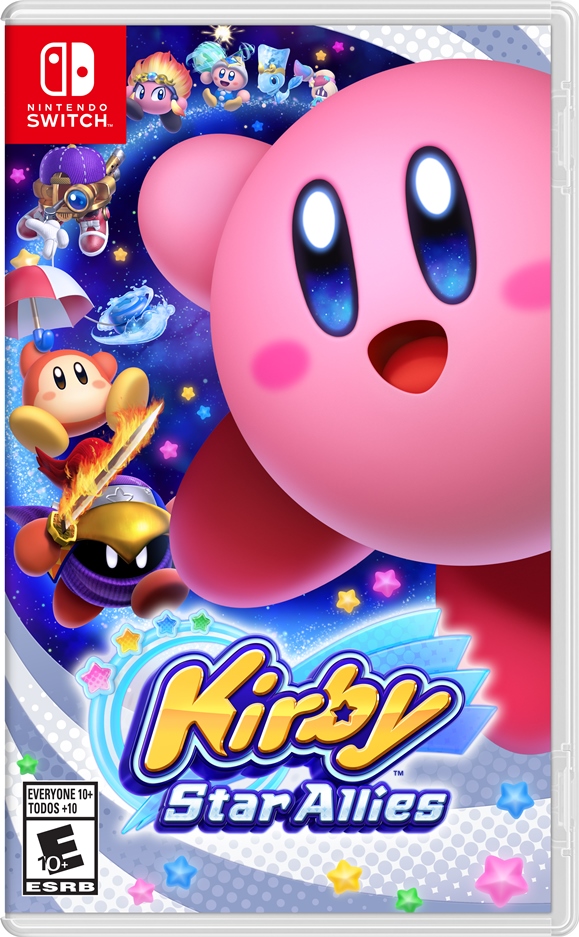
I don't even know what else to say; I'm spent. Admittedly, I do find some enjoyment in the thought of Kirby adopting a "DESTROY THEM ALL!" glee within his shiny new mecha, but a smiling Angry Kirby brings horrid memories of 2011's Mass Attack, and that cover is never a pleasant thing to remember. Besides, why harp on it when Nintendo/HAL have just put the brakes on their terrible plans for homogenization and came to their senses with this joyous cover for Star Allies? Sure, maybe Angry Kirby will be back to his old tricks someday, but his cynical countenance has been repelled, and that is good enough cause for celebration.
And what better way to commend this occasion by talking about how great Kirby: Planet Robobot is? Actually, calling Planet Robobot "great" is doing it a disservice, for I daresay this is one of the finest Kirby adventures hitherto. None of the familiarity found in the otherwise excellent Triple Deluxe or even Return to Dream Land is present, which is all the more shocking considering this is the third consecutive Kirby sharing the same engine. After situating themselves on the 3DS via Triple Deluxe, HAL wisely took the next step by evolving the series in both gameplay and technical craft, resulting in a title just as ambitious as Return to Dream Land.
In other words, Planet Robobot fires on all cylinders from the very beginning, and that's mostly thanks to the Robobot Armor. Leftover mechs from a mechanical fleet's takeover of Popstar, Kirby's new rides imbue Copy Abilities and morph accordingly into radical transformations: Cutter equips massive sawblades, Bomb spawns miniature explosive robots, Mike produces amplified speakers, and Wheel upgrades into Kirby's own personal fortified motorbike.
It goes without saying they're massively fun to unleash, be it plowing through crowds of mechanized Dream Landers or wrecking the massive hazards (giant 8-balls!) that impede Kirby's path, but that's Unlike Return to Dream Land's Super Abilities and Triple Deluxe's Hypernova, the Robobots are constant forces in nearly every level as opposed to being reserved for the climax. No longer are we required to stop and witness the majesty of Kirby's newfound superpowers, either: as Kirby must obviously ride them, his robotic rampages actively engage both the players and the actual levels themselves.
Not that Super Abilities weren't immensely fun, either, but this means the levels continually incorporate Robobots within their actual design: we use them in everything from solving puzzles, engaging in shmup sections, and taking on mini-bosses echoing the grandeur of a Platinum Studios game, and it's never not thrilling. We witnessed Triple Deluxe tackle unique end-of-level mini-bosses as well, but I can't think of anything that was more exciting than the early-game Gigavolt fight, a giant robot flailing its springy arms about as you systemically unscrew its appendages. The Robobots aren't just exciting; they feel natural and organic.
Naturally, this sets the stage for experimentation -- we observe, for instance, the lead-ups to the lab levels involve a dynamic camera we haven't seen since Kirby 64, wrapping about their stairwells to successfully craft tension before reaching the labs' depths. Meanwhile, certain bosses shift the camera about to present pseudo-3D planes, also borrowing from Kirby 64 bosses (albeit pulling more creative tricks -- much as Whispy Woods reinvented his traditional battle there, the two iterations of Clanky Woods awes as much as Triple Deluxe's Flowery Woods in their early-game spectacle). When considering the presence of the Blowout Blast mini-game, it's clear HAL is inching ever-towards the idea of a 3D Kirby. We've been accustomed to Kirby's 2D-only adventures for so long that such an idea seemed like sacrilege, yet HAL's teases are growing ever more enticing...
Meanwhile, collectable stickers -- be they recycled Kirby artwork, crayon-scribbled characters, or even Kanji -- can be adorned upon Robobots. This is yet another evolution from Triple Deluxe, albeit yet in a "wow I never knew I wanted this" kinda way -- yes, chilling to the ever-swaying keychains was a hypnotic endeavor, but did we ever think to take them with us? While sadly the resolution of the 3DS screen obscures their presence a bit, it's still a delightful little touch; personally, I think Kirby would like to draw on the Robobots, so that's why I always went for the scribbles.
Copy Abilities are also largely winners this round. Jet and Mirror return for the first time since Kirby Super Star, and while Mirror more or less feels the same (which is welcome!), there's something about Jet that feels far more intuitive. Easily one of the wonkier abilities in Super Star, its movements feel snappier and more precise, be it the repeatable midair Jet Headbutts or the somersault spectacle of Rocket Dive. While not supplied with all sorts of new tricks in the vein of Stone or Needle, it's always humbling to witness an ancient ability upgraded for more convenient use.
As for new abilities, considering my affinity with EarthBound, it's only natural I jump into ESP first. As the main combos revolve around teleportation and a PK Flash-inspired projectile, it's something that takes time in getting used to (particularly in gauging your teleportation distance), so it's not the most handy Copy Ability for just plowing through. When you just want to wreak havoc, however, you feel like a God as you zap about with your newfound psychic powers, particularly in dodging and countering with PK Insight's massive energy outburst. Given that it's the only new ability that has a Robobot form, it's clearly meant to be the highlight of the three, and is easily the funnest once you get the hang of it.
As expected, Doctor is adorable with its head mirror and glasses, and its inspired duality of the physical (clipboard attack!) and personalized tactics (Science Lab, which can unleash various effects) made me come back to it again and again. Meanwhile, Poison is the easiest to use, yet it's disappointing a number of moves are directly lifted from Return to Dream Land's Water, a Copy Ability cut from the 3DS games. Thankfully there's enough moves to differentiate it -- I enjoy the poison puddles that mini-bosses are so susceptible to -- but I wish it stood out more on its own.
But even if the new copy abilities aren't the most impressive bit about Planet Robobot, the Robobot abilities can certainly make that case, which brings me to the endgame: what begins as a mouth-dropping set-piece of fanservice jet-starts what is by far the most gripping, heart-pounding final boss in all of Kirby. I dare not spoil any of its callbacks or cinematics involved, so I can only claim it is everything Kirby and the Amazing Mirror's half-baked finale desired to be: framing the gameplay in a way that not only plays well, but fuels the narrative context in what may very well be the 3DS's finest technical showpiece.
Enjoy that final boss while you can, though: 100% completion is another matter, for I daresay Planet Robobot is only surpassed by Mass Attack in difficulty for that matter. Searching for all the stickers is no small feat, and I actually can't recall if I ever found the elusive HAL rooms containing the exclusive Smash ability. Still, even those are a cakewalk relative to the wrath of The True Arena: in itself, this may very well be the most difficult endeavor in Kirby history, as never before have spacing, dodging, when to attack have been more cutthroat. It is hair-raisingly difficult, right down to the surprise 1-hit KO of the final encounter, unleashing a never-before-seen string of swears from yours truly. So demoralizing was my experience that I had to write a guide to spare others of my fate, and that it actually aided players gives me great joy.
Thankfully, the rest of the modes aren't as burdening, although not without their own trials. Meta Knightmare Returns comes back as the "what if?" take on the main adventure -- a form of nebulous canon I've adored since its Nightmare in Dream Land debut -- and is home to much of the The True Arena's more aggravating bosses. Perhaps most impressive is how HAL took careful care in applying Meta Knight in what's originally a Robobot-focused campaign: puzzles being skipped or activated via a swing of his sword are nothing new, but that bosses are retooled and that he can still unleash similarly satisfying destruction via his Meta Point abilities perhaps renders it his most successful conquest yet.
Meanwhile, Kirby 3D Rumble ditches the 3D experimentation and alright plops Kirby in 3D as he Star-Spits across isometric environments (which perhaps echoes this cancelled version of what would eventually become Return to Dream Land). While not easy to 100%, its emphasis on combos instill an addictive desire to perfectly plow enemies with Blaster Bullets. Its relative brevity is all too bittersweet, but thankfully Kirby's Blowout Blast is a downloadable thing that exists.
It's only Team Kirby Clash, a take on Japan's beloved Monster Hunter, that may not be so difficult at all, and that's okay: whereas 3D Rumble has to prove its miniature worth through dedicated practice, the meatier of the two focuses on empowering the player through level-ups. Dividing Kirbys into four roles (Sword Hero, Hammer Lord, Doctor Healmore, and Beam Mage), it emphasizes progression through mission-taking: more Kirbys join your party upon reaching levels, and earlier missions. can be replayed for EXP. Obtaining Level 10's ultimate level of strength means the replay value is low, but that's the job of 3D Rumble; here, it's reaching the end of the journey (and, well, there's nothing stopping you from making another file to replay it, or you can just purchase Team Kirby Clash Deluxe, which still keeps me busy even today).
And now we come to the soundtrack, which lies within an...interesting predicament. It's not that series Jun Ishikawa or Hirokazu Ando lost their spark or anything, and yet, despite having
recently obtained the official soundtrack, I have difficulty recalling too much of it. I suspect in their complementing Planet Robobot's central machine theme via techno and chiptunes and all sorts of "mechanical"
sounds, it all kinda blurs together and consequently, it's difficult to mentally sift through individual tracks as standing out. (Canvas Curse took a similar approach as well, but I imagine that game's emphasis on remixes made it easier to remember)
It's a damned shame, too, because what we do have here is nearly just as excellent as Return to Dream Land and Triple Deluxe prior. The subdued adrenaline of the Robobot Armor theme successfully serves as a rousing introduction to its destructive debut (although I'm more fond of the guitar version that plays in the final battle), whereas the various takes on techno and whatnot forge new ground for Kirby: White Office March ominously treads within the inner recesses of Haltmann Company HQ, whereas familiar Kirby themes are retooled for the laboratory levels (the Float Islands remix being by far the best, echoing a desperate pursuit I can't say I've ever encountered in Kirby).
Of course, this is Kirby, so Ando and Ishikawa are careful in channeling Kirby's innocent and playful nature throughout. This is most evident in Lovely Yellow Va-Va-Vrooms, an actively gentle little theme accompanying a city constructed of juice cartons (with sippy straws as their chimpanzees) and Waddle Dees driving about. Meanwhile, the soothing Underwater Quarter accompanies some what's perhaps Planet Robobot's most stunning setpiece in underwater cities and chandeliers resting alongside glass bottle landmarks.
The Haltmann Company Theme -- the in-game main theme for the intergalactic company threatening to take over Pop Star -- is probably Planet Robobot's most well-known song in that it's Kirby's first vocal theme -- although as it's mostly synthesized gibberish, perhaps "sing-along" would be a more fitting take. Regardless, the presence of lyrics such as "Pay and ergonomic seating, give us favors such as these!" give me great joy, and I can't help but wonder if we'll be seeing more such songs for the future.
And that we even ask that is Planet Robobot's greatest strength: any missteps in homogenized music or level pacing don't discourage its identity as not a quick n' dirty title meant to capatalize upon the closing years of 3DS, but one that legitimately pushes Kirby forward in organic level design, technical achievement (seriously, look at the CGI below; Kirby looks like vinyl!), and even world. On top of that, it's the outright funnest title I played in 2016, and as far as Kirby goes, I can't ask for anything more than that.
In
achieving borderline perfection in gameplay, sound design and possibly
the most charming, captivating artstyle of the 16-bit generation, Yoshi's Island is easily one of the greatest games ever made, although you'd hardly know it from its successors. When considering Yoshi's Story's dubious quality and "made-for-kids" identity, the forgotten gimmicks of Yoshi Touch & Go,
and how the awfully lethargic efforts by Artoon/Arzest are best not
spoken about, it was more than a little frustrating Nintendo couldn't
figure out how to forge a proper sequel.
Note the past tense: it's been over two years since Yoshi's Woolly World first graced our Wii Us courtesy of Kirby's Epic Yarn
developer Good-Feel and I can still scarcely believe its success. Not
that I didn't think it wouldn't be a worthy spiritual successor to their
Kirby effort, of course, but that it actually achieves throwing distance within Yoshi's Island's glory is a testament to Good-Feel's talent as a developer. Yes, to say Yoshi's Woolly World is superior to Yoshi's Island would be silly, but it is the first Yoshi sequel
to understand what it means to take that step: Yoshi's saddle does not
need Baby Mario glued 24/7, but it does not need any babyish concessions
ala Yoshi's Story to stand out as an individual entry.
My friends, as you all certainly learned back in 2014, we lost the Angry Kirby war. What you see above is not just the cover for American audiences, but for worldwide consumers; sadly, this includes Kirby's native homeland of Japan. Whether it be HAL's belief that this was the best way to show off the new Hypernova power or them being sick of adjusting the cover nearly every time Kirby leaves his Eastern shores, it proves he's not safe even in his home country. While the above cover is hardly among the worst Angry Kirby offenders -- that it's at least designed from the ground up renders it not nearly as awkward-- what it represents proves it won't be going away anytime soon.
Let it be reminded that Angry Kirby is an aesthetic paradox at odds with the presentation and spirit of Kirby, yet I can't think of any case more true than Kirby: Triple Deluxe, which is such a downright pleasant game that very nearly reaches the heights of Epic Yarn, Dream Land 3 and Rainbow Curse. This is not an exaggeration; every time we start the game, the main menu greets us with an assortment of blue skies, vines hosting collectible keychains of old Kirby sprites dangling accordingly to the 3DS's gyroscope, and a mandolin-accompanied arrangement of the gentle Save Hut theme from Kirby Super Star. Coaxing us into that warm, heart-gooey nostalgia that traps us into reverie, we're immediately at home.
Imagine, if you will, blast processing. Not that any sane individual would be able to define what exactly it meant -- for the uninformed, it was a tacky marketing buzzword to describe the speedy processing of Sega Genesis -- but doesn't it just sound cool as all hell? To the young consumers of the 16-bit era, it was a nebulous term that exuded an impressionable coolness, undoubtedly due to how it rolled off the tongue and was an easy referral to why the Genesis' graphics were so good. Or how its games were so fast. Or whatever. Naturally, the poster boy for this gimmick would also match said coolness; hence Sonic the Hedgehog, featuring a cocky animal mascot of the same name, an acidic blend of colors and backgrounds and, most of all, an emphasis on speed. Billed as the fastest thing alive, Sonic the Hedgehog was designed to surpass Super Mario through lightning-fast running, setting the portly plumber's meticulous platforming to shame via eye-catching movement. On a surface level, the concept is, in retrospect, something only designed to impress a 90's audience through the 90's philosophy of "too cool for school" appeal to kids through eye-bleeding use of 90's aesthetics and character design.
Gaming before Super Mario Bros. was not exclusive to dark backdrops accompanied by blinding neon or an absence of jumping maneuvers, but they were certainly pervasive enough to define what we call the third generation of video games. Games had only begun to invent the likes of parallax scrolling and side-scrolling movement, but to one Shigeru Miyamoto, gaming began to settle a little too comfortably into dark screens and arena-based repetition.
While Nintendo was hardly exempt from these styles of games--look no further than the famous likes of Donkey Kong and Balloon Fight -- Miyamoto refused to be outdone by imitators encroaching upon what he envisioned as his pioneering work; that is, jumping games. His answer was to develop an ultimate swan song to the Japanese Famicom--about to be superseded by the Famicom Disk System-- by combining the philosophies behind Donkey Kong and Mario Bros. (jumping), Excitebike (side-scrolling), Balloon Fight (floating in the air; or in this case, the sea) and Devil World (control of a larger character).
What's ordinary and by-the-book today was set to be revolutionary in 1985: an open, side-scrolling game bursting with color and crossed land, air and sea. Us Americans probably wouldn't know it from the cover -- whereas the original Japanese box art (seen above) was illustrated by Miyamoto himself, the American release disguised its glorious setting via yet another black-themed package (its odd composition also became something of an in-joke: ever stop to think about how Mario's about to fall in lava?)
Perhaps it was for the best; I mean, who could've expected such an explosion of color with a cover like that? Even better, it merely frames how Super Mario Bros.'s innate design resonated immediately with the world at large. The presence of player empowerment and visual feedback is the very same design philosophy that illuminated proto-open world in The Legend of Zelda, or when 1996's Super Mario 64 stunned 2D veterans with the realization that, yes, you can climb that mountain in the distance.
Over thirty years later, Super Mario Bros. remains as much of a masterpiece. We've since seen its ideas improved and expanded upon by the likes of Super Mario Bros. 3, World, and the New Super Mario Bros. series, but its innate sense of pick-up-and-play still enchants newcomers to this day. It's all about the jumping, really; whereas arcade heavy-hitters like Donkey Kong and Mario Bros. may feel clunky today, it's amazing how Super Mario Bros. runs as fluid as it did back in 1985.
Look no further than level 1-1--the famous standard for all opening levels in gaming-- to see why. It's evident from the very first question block you see that Super Mario Bros. is a game that rewards via jumping: you will hit that block, because it's gold and shiny and everything attractive. Out pops a coin; you want more, but a stray Goomba is honing in on you. Jump over that guy (or stomp it flat!) and pop another block; out comes not a coin, but a mushroom, which is meticulously designed to reach you....yet it grants not death, but growth. You can jump higher, and can take one additional hit before reverting back to Small Mario.
Unlike the army of platforming clones that would follow after its release, jumping in Mario feels sublime not because it follows preordained path or is at the mercy of wonky physics, but because it takes everything from acceleration, momentum and weight into account. Jumping after holding the dash button, for example, will send Mario flying into an soaring arc. Tapping the jump button lightly will make him hop an inch. Observant players recognize a necessary balance: you know you won't succeed without the big jump, but you shouldn't use it all the time lest you careless fall into a bottomless pit.
Because the controls feel so perfect, experimentation is inevitable. The player's habit of jumping everywhere may unearth a hidden 1-Up Mushroom. Landing on a Koopa Troopa's shell bowls over enemies. Careful precision and timing with dashing/jumping will land Mario on the flagpole goalpost's very top (and, with very careful consideration to the timer, lead to bonus fireworks!). All of are varying difficulty, but Nintendo's subtle education for what's actually essential is vital. Just look at the block formations below: the first leads leads nowhere so players learn to dash and jump over its ilk, which prepares them for its fatal twin.
This isn't even getting into the other mechanics introduced via the first level: the Warp Pipe, which leads to underground coin-filled hideaways and let you skip half the level; the Fire Flower, which again transforms Mario, but this time into a fireball-spewing visage of orange; the Starman, which renders Mario invincible and demolishes any enemy that dares touch him (not to the mention introducing the famous samba theme).
And underneath all that lies the ultimate question: how do I utilize all this? Will diving underground and skipping half the level just to nab coins really lead to the most points? Will grabbing the Starman interfere with my Koopa Shell-kickin' skills? How do I trigger the fireworks at the end of the level via flagpole? Why not ignore the Super Mushroom and play through the entire level as Small Mario for a challenge? Or, heck, why not the whole game?
Now, such freedom in play and player choice are hardly unique to Super Mario Bros. itself: the likes of open-world games, fighters, shooters, horror survival, life simulators, and strategy games all possesses their unique traits of flexibility and the like. But how many of those are accessible as just running and jumping? What renders Super Mario Bros. so special is its accessibility, and that the first level is this inviting is no coincidence: it was one of the very last made in development, constructed with all the knowledge obtained throughout development.
It's a seamless transition from discovery to play, as echoed in 1-2 (the first Underground Level), yet another captivating case of flexibility via the importance of brick-breaking. We already learned that bricks were breakable via Super Mario's jumps, but now here's a level essentially composed of bricks hiding coins, 1-Up Mushrooms, and even shortcuts leading to the Warp Zone. But moderation is key here; smashing bricks may be fun, but with the timer ticking down, you shouldn't dawdle for long.
And from there it becomes more of a subtle tutorial. Floating, interconnected platforms that respond to your weight are initially placed over towering cliffs, but eventually suspend over no landing points. Castles are armed with spinning firebars that gradually grow in size, complete with perilous mazes. Bullet Bill Cannons are visually introduced before they learn to fire off-screen, the first Hammer Bros. strategically hop up and down from floating brick blocks (could that be used to our advantage?), and yes, it's possible to knock out Lakitu from his cloud the moment he's spotted.
Note how many of the above involve enemies. What's beautiful about Super Mario Bros.'s cast of minions is how they aren't merely obstacles to be dodged, but tools for success. Koopa Troopas and their shells are a favorite secret weapon, but how about stomping on Goombas propelling us to greater heights? Could other enemies be used the same way? And who's to say Bowser's invulnerable to fireballs?
How we tackle all this is up to us. Miyamoto once described as Super Mario Bros. eventually becoming "our game": as muscle memory settles in, we opt for the best routes available for us. We
grow the courage to try new things; accordingly, the game becomes comfortable enough to throw new surprises once the shock of the first level wears off, and so it becomes an engaging learning process for the game's duration.
Easy to learn, hard to master: the creed of difficulty that defines the best of games. As it's an 80's game, it should come as no surprise that Super Mario Bros. is rather tough. The game's experimentation and discovery arises as a response to the game's difficulty, which can't be surmounted easily. There's the underwater levels with bastard Bloopers, for instance, and whereas there is a way to rid of them and their Cheep Cheep cohorts (a certain power-up, perhaps?), that you're at the mercy of swimming physics not only restricts your movement options, but renders Mario all the more vulnerable to losing his only means of defense. Hammer Bros. and the castle mazes are also beatable nightmares, yet they, too, will likely give players a thrashing before a solid, formulated strategy is developed.
But that's okay, because Koji Kondo's music keeps us coming back for more. Perhaps the first famous songs in gaming, Kondo was conscious of the limited sound options for the Famicom/NES--only five channels!--and labored over songs that wouldn't irritate the player. Such songs would not be action-packed techno, but instead colorful songs that would encourage the player and never grow old.
And what gaming song is more immortal than the Main Theme (less commonly known as the Ground Theme)? Infectious from the very first 8-bit note, the Latin-based theme conveys an instinctive rhythm that can't be anything but an explosion of exuberant, light-hearted activity. That it never wracks on our nerves is vital: we're driven to action immediately after Game Over.
But why exactly is that? Perhaps the secret lies in how Kondo actually based the song on Mario's movement. Through the rhythm of player control, the music is the ultimate mastermind behind our enjoyment. From the moment Super Mario Bros. starts, it becomes a song that sets into your bones.
In contrast, the Underground Theme doesn't inspire the same sense of wonder, but its short repetition and comparatively muted nature belies an instant earworm. (That, and, well, it's not as if a dreary underground is supposed to sound all that lively, anyway) While future iterations would install percussion-filled back-beats and the like, the original steady beat hollowed by silent intervals is somehow just as fun to hum along as its jolly counterparts.
Jolly as in the lovely Underwater Theme above. A wondrous waltz that, while perhaps betraying the treacherous waters which it accompanies, frame Mario's underwater movement as if echoing an actual dance. It too channels its Ground Theme counterpart in how they instill that very same player-moving rhythm.
All this grants it an all-too vital identity: that everything is fun. Obviously, this is not to say that previous arcade/video game efforts weren't such, Super Mario Bros. ups the ante by having "fun" be the theme of everything in it. Even putting the controls and gameplay aside, the colors and setting are fun to watch and absorb. The scenario of two plumbers rescuing a princess and her entourage of mushroom-capped retainers from evil turtles is as delightful as it is bizarre. The music is meticulously crafted to keep us engaged and hum along.
There's a reason why Super Mario Bros. saved the industry from the market
crash: it's a game about inviting people. There's no barriers: only a prevailing sense of "I can do it, too," that can be applied any which way you want. Yes, it's challenging, but it possesses a power that makes you want to try one more time. That
it would introduce the world to the denizens and world of the Mushroom
Kingdom is only secondary to its revolution of bringing people back into the world
of gaming.
Even now, I still feel bound to my own direction of playing it. I only grab the first Starman if I time the first Koopa Shell kick just right. The secret coins and 1-Ups in the first underground level are never missed. I never bother with the Warp Zones, choosing to instead gradually accumulate all the coins and 1-Ups coming my way. I still roar in exhilaration as I plow through my favorite level: 2-3, where Mario dashes across a series of bridges while avoiding leaping Cheep Cheeps.
I've only beaten Super Mario Bros. twice in my lifetime, but in all the countless attempts I've made to do so, I've more or less tackled it the same exact way. Perhaps it's time for a change? Even now, when I skip by it on the NES Classic Mini menu, I think to myself, "maybe I can." If only I had the time, I say, but I still hear it calling.
Like its NES counterpart The Legend of Zelda, that I can still find new ways to play more than thirty years after release is nothing less than sheer wizardry. What makes Super Mario Bros. gaming's most well-known masterpiece is not merely for what it defined, not merely because it revived the industry: it's because even after this time, we can still approach it and go, "I can do that."
Our final retrospective brings us to a turbulent 2012. While 3DS never gained its predecessor's sales momentum, its constant, ample support from Nintendo and web of third-parties kept players invested. Masahiro Sakurai's Kid Icarus: Uprising wasn't without its critics, but its dense cohesion, witty script and loving reiminaging of a cult classic rendered it another Sakurai masterpiece. Meanwhile, Fire Emblem: Awakening's Japanese release would set the seeds for the cult-favorite strategy series to finally emerge as a landmark Nintendo franchise; seeds that wouldn't fully blossom until its Western release a year later, but the series' vindication would finally arrive after nearly twenty years and thirteen entries.
But to the surprise of no one who'd been following Nintendo home consoles for the past twenty years, Wii was left in the dust in the advent of Wii U. Stragglers like Rhythm Heaven Fever and Mario Party 9 could only do so much to slow the console's death, and had it not been for the late localizations of Xenoblade Chronicles and The Last Story, America may've shared the even direr release drought of Japan.
Cue the ensuing E3 frustration: yet again, Nintendo fumbled on their Wii U presentation. It had all the trappings of a boring conference: the lack of any attention-grabbing surprises, forced comedy and banter, dreadfully dull, prolonged multiplayer sessions that undermined the title on display (Nintendo Land), and one or two interesting titles quickly swept under the rug (the long-awaited Pikmin 3, which came and went right as the show began). It was an omen of things to come: the Wii U would massively underperform in its November launch, all thanks to poor marketing, the lack of compelling software, and the presence of a screen controller...thing that no one, not even Nintendo themselves, knew what to do with.
But even before that failure became reality, Nintendo had already recognized the detriments of their awkward conferences and began taking countermeasures nearly a year prior. Launched in late 2011 were digital presentations dubbed "Nintendo Directs," designed to present concise information for upcoming releases with none of the fat and potential screw-ups common in live presentations. And what better representative to reach out to the people than the president of Nintendo himself: Satoru Iwata.
The Directs gradually caught on: the exclusive announcements guaranteed fans would tune in, but there was something humbling in how a company president dedicated himself for broadcast, all for the sake of consumers. Watching Iwata's affable, eccentric demeanor introduce and interact with the likes of Shigeru Miyamoto, Reggie Fils-Aim, Bill Trinen and even a bunch of bananas won the hearts of viewers.
One particular antic was a cryptic announcement: in April 2012, Iwata was spotted carrying Kirby plushies and beanbags. Initially considered a hint for a new Kirby game, it wasn't until that month's Direct that the meaning would be unveiled...
It was Kirby's 20th anniversary.
------
To speak about Kirby's Dream Collection: Special Edition without any sort of bias would be impossible; granted, personal subjectivity is the whole point of reviewing, but never before had a game touched my heart this way before its release, and it's vital I bring that into the open
The whole reason I'd started Ten Years of Kirby was to celebrate my own anniversary with the franchise: a series designed so anyone could clear it, but just deep enough that even the most hardened of gamers can enjoy its adventures. Having grown up with 3D platformers, the likes of Super Mario Bros. and Sonic the Hedgehog werefar too difficult for me, great as they were. As opposed to the free-roam nature of three-dimensional movement, their flat planes required precision and accuracy I lacked.
And yet as a series entirely framed within two-dimensional play, Kirby felt custom-made just for me. Never was it patronizing, but instead just demanding and compelling enough for a player learning the ropes: leaps of faith were rendered null due to Kirby's infinite floatiness, and it was never not interesting in seeing what Copy Ability I would command next. As a budding player, I was empowered by how much it respected me; as a young romantic, I was driven to reverie by dreamy visuals and music.
In what I can't assume to be anything but the designs of the cosmos, Kirby's Dream Collection, created to celebrate Kirby's 20th anniversary, was released on my own tenth year with the franchise (2012). An anniversary within an anniversary! It was nothing less than a dream come true, and so what better way to hold my own celebration by reviewing the entire series?
When regarding all that, reviewing the six games contained within Dream Collection--the Kirby's Dream Land trilogy, Kirby's Adventure, Kirby Super Star and Kirby 64: The Crystal Shards-- would prove insufficient; all six games have been reviewed extensively, and I see little value in repeating my opinions here. It's far more imperative that I evaluate Dream Collection on its own merits -- how is the package as a whole? How are the games preserved? Does it pay proper tribute to Kirby? Would a first-time Kirby player feel at home with its offerings?
All reasonable queries, but there is nothing to fear, for Kirby'sDream Collection is one of the very best compilation/re-release packages Nintendo ever produced. Perish the thought of this being anything like the insanely lazy Super Mario All-Stars Limited Edition; HAL decided if this is going to be an anniversary package of Kirby, then it won't just feature the old; after all, the philosophy of jamming Kirby games with content must stand, so new content shall supplement their legacy. This is an anniversary of what rose HAL to stardom, after all, so there's no choice but to celebrate it with the utmost prestige.
Packaged with an anniversary booklet and soundtrack, Kirby's Dream Collection itself is divided into three modes: naturally, the Classic Titles are front and center, but complementing them are Challenge Stages, based off the addictive time trials found in Return to Dream Land just the year prior, and Kirby's History, which takes an interactive tour over the past twenty years of Kirby.
Borrowing the look and feel of 2011's Kirby Return to Dream Land (with a touch of Kirby's Adventure sprites), Kirby's Dream Collection is as plush and delectable as can be. A compilation of this caliber must enforce nostalgia at every corner, and so the luxurious graphics must be accompanied by sound cut from the same cloth.
Hence the intense euphoria greeting our ears upon reaching the menu. Series regulars Jun Ishikawa, Hirokazu Ando and Shogo Sakai contribute to several new tracks across Dream Collection, their highest point being an arrangement of Bubbly Clouds. A veritable lullaby, it is as sugary sweet as the earliest of childhood memories, and I was especially moved they took this much effort to cozy ourselves into our nostalgia. It's impossible not to melt, and they ensure that by seguing it over to the Classic Titles menu.
Diving into six legacy titles is as magical as can be, but a similar effect is found within Kirby's History. Echoing that of a dignified museum, a moderate take on Castle Lololo plays before unexpectedly shifting into the grand Cloudy Park from Kirby's Dream Land 2. A slower reader who isn't clicking on everything in sight may easily stumble upon this, but that it arrives after no less than three loops renders it something of an easter egg. Just like the original song, it envelops you in the awe-encompassing majesty of its setting.
(As a brief aside, it was particularly mystifying as someone who wasn't intimately familiar with Dream Land 2; I knew I recognized it from somewhere, but I couldn't figure it out no matter how hard I racked my brain. While I'd discover its origin shortly afterwards, it turned out the answer lied in a remix from a Kirby doujin album I purchased over a year earlier.)
Kirby's History takes an unexpected direction with how it chronicles our favorite marshmallow. As opposed to just limiting the relevant timeframe within Kirby or even just Nintendo, real-world events are cited alongside the release of Kirby games. Did you ever stop to think about how Kirby's Dream Land came out the same year as Bill Clinton's inauguration into office? How about the world's population reaching six billion the same year Kirby entered Super Smash Bros.? Granted, I'm not sure how my childhood self would've dealt with not one but two Harry Potter references--he had an irrational hatred for the boy wizard, you see--but it's not like the two entities hadn't crossed paths before.
But apparently even Kirby can't let go of an old grudge, as seen above by desecrating this poor Meta Knight statue. One day, we'll move past this hurdle. Someday.
Regardless, Kirby games naturally get top billing. Each makes an appearance through special menus, trailers and 3D models of their respective box art, although the game list varies upon region: for instance, it only makes sense you won't spot the JP-only Kirby Super Star Stacker in the NA release. A shame, but we Americans (and Europeans!) can solace in the fact we have an exclusive spin-of of our own: the Puyo Puyo-inspired Kirby's Avalanche. (Squishy!)
Even peripheral media like the the 2001 anime makes an appearance in its localized Right Back at Ya! state; coincidentally, Dream Collection arrived on the 10th anniversary of that particular adaption. While full thoughts on the anime will be saved for a later date, viewers can witness 4Kids' amateur dubbing practices in all three episodes, not the least which are the embarrassing theme song and clumsy voice editing for Kirby himself. (Sadly, none of the previews for the three manga adaptions made it into the American release. While understandable since they were never localized, it brings back bitter memories of Viz's cancelled license for Hirokazu Hikawa's version.)
.
Kirby's penchant for orchestral performances isn't forgotten, either: at the end of the tour lies behind-the-scenes look for the Gourmet Race to Green Greens chamber orchestral, present on the accompanying soundtrack. Can you spot which of Dream Collection's three composers makes a cameo? The hint lies in how he was involved with orchestras before signing on with HAL...
All delicious, educational treats for even the most diehard of Kirby fans, but how about some actual game? It'd be a waste to simply borrow Return to Dream Land's engine just for a compilation, so why not expand on an addictive component everyone loved? The Challenge Stages return with an even wider variety than before; dare I say they're even harder than what's found in Return to Dream Land?
And perhaps even better? It's the variety that sells it: not only are there different Copy Abilities from last time, but HAL devised new types of Challenge Stages as well: the Magolor Races, which pits Kirby in a time trial against the cloaked troublemaker, and Smash Combat Chambers, where the Smash Ability is unleashed at enemy hordes.
It's the latter that proves HAL's dedication for this compilation. While the rest of the Challenge Stages feature abilities already developed for Return to Dream Land, Smash was built from the ground-up just for an extra mode (complete with its own pause menu instructions: we learn that Kirby's neutral aerial attack--an adorable spinning maneuver--is given the fitting name of "Twinkle Star"). Super Smash Bros. is an extremely vital piece of Kirby's history, so it's only fitting such a tribute was forged.
But as exciting as new content is, the main attraction for the young and the nostalgic are the Classic Titles. The selection is particularly interesting not just for being the first six mainline Kirby titles, but that two directors were responsible for three of each: creator Masahiro Sakurai and level designer Shinichi Shimomura. While Sakurai's efforts are undoubtedly superior, newcomers should delight in highlighting their respective differences: Sakurai's fast-paced, action-packed sugar rushes and Shimomura's slower, leisurely jaunts.
As expected, Dream Collection's games are based on the Virtual Console versions. While switching between the games and Dream Collection is a tad unorthodox (you have to pause and click on Reset), that they include save states--barring Kirby 64--is a blessing.
Games are presented accordingly to match their original size ratio: for instance, the two Game Boy games (Dream Land and Dream Land 2) only take up maybe half the screen, being perfectly squared. Meanwhile, the console games naturally take up a a wider space. While the Kirby's Adventure sprite frames can be turned off, the Game Boy games must have them attached. A fair trade, though they're hardly imposing at all.
Kirby's Dream Land 3 and Kirby 64 (pictured above) are perhaps the best preserved. There's no loss of color in sight, and the size ratio doesn't tamper the display. Both games, alongside Super Star, are particular marvels in that the Wii Remote was incompatible with their downloadable versions, and yet here they fit like a glove.
Dream Land and Dream Land 2 are interesting cases: as mentioned earlier, special care was taken to ensure they match their original, tiny Game Boy displays as closely as possible, so their display is hardly as large as the other games. It's impossible to fully translate a handheld experience into a home console one, so any slight blurs and blown-up sprites and the like are easily forgiven. (Besides, it was the first time Dream Land 2 was officially emulated for American audiences!)
Alas, Kirby's Adventure and Kirby Super Star suffer the most. The nasty darkened filters installed into their Virtual Console versions remain present, and while they're hardly game-ruining, the games' trademark brightness renders their taint a bad aftertaste. Furthermore, they expose Dream Collection's one mark of sloppiness: the preview videos found in Kirby's History are in their original, brightened versions.
For better effect, above is a comparison between the original Kirby's Adventure and its Virtual Console counterpart. They speak for themselves; there's just no getting around the original version serving the game's world infinitely better. Adhering to today's epilepsy measures is a noble cause, but that it's at the cost of game quality leaves a bittersweet taste. When considering they're easily the best games in the package, it's a shame such blemishes left a black mark on not just two of Masahiro Sakurai's masterpieces, but on a glorious celebration of Kirby.
While disappointing, it's hardly enough to dismiss the compilation. And why should it, when it comes with such delightful supplements? The 45-page Collectible Book alone is an amazing treasure trove of concept art, historical context and creator commentary for every Kirby game. Not every title is given the same amount of coverage, but there's enough background development detail to keep things interesting.
With it taking a playful, informal tone throughout, it's an especially fun read. Can you believe that ribbon at the bottom is a game in itself? I consider myself a Kirby superfan, but even some of the trivia questions threw me for a loop, and that's not even considering my shock at some of the cut game content (how about Kirby almost driving a tank in Dream Land 2?). Waddle Dee fans take note: there's a page practically worshiping Nintendo's most adorable goon, and a mention of his ill-fated attempt as a playable character in Kirby 64.
Rounding it out is a beautiful soundtrack comprised of famous songs throughout the series. Much of the selection is expertly picked: Epic Yarn's Green Greens arrangement and Nightmare in Dream Land's Rainbow Resort make for immensely nostalgic choices, while the fan-favorite final boss themes are much appreciated. Only the super-short boss themes stand out as odd choices, although given quantity of songs alongside their lack of loops, it's possible they wanted to conserve space and decided to round things out.
It appears these songs were ripped straight from the source, so as warned in the booklet, the quality varies. While the post-NES console games sound flawless, the 8-bit and handheld games have some audible static fuzziness. Some are better than others: you can hardly detect any air in the Kirby's Adventure tracks, while the muffled filter of Super Star Ultra's Helper's Rest is rather head-scratching when no such thing was present in that game's official soundtrack.
Still, they hardly matter when it comes to the three unique arrangements rounding out the soundtrack. While Gourmet Race to Green Greens once again showcases Kirby's innate talent for orchestra, Dream a New Dream for Tomorrow's piano/recorder medley of ending themes is so profoundly heartfelt, so gently nostalgic you cannot listen to it without a dry eye. With how its rendition of Kirby's Adventure's ending prods at our heartstrings, I cannot think of it as anything but intentional.
The amount of love put into Kirby's Dream Collection renders it one of the most dedicated, genuine titles to be ever released by Nintendo. It's not without its missteps, but that it has not a cynical bone in its body instills it only the purest of joy into the player. It's by no means rushed for that quick buck, but instead an authentic celebration meant for both that longtime fan and that fledgling gamer.
Such a work cannot be produced by anything by developers who not just adore crafting Kirby, but who eagerly wish to share their passion with the world. As Nintendo's final game for Wii, that is the utmost honor.
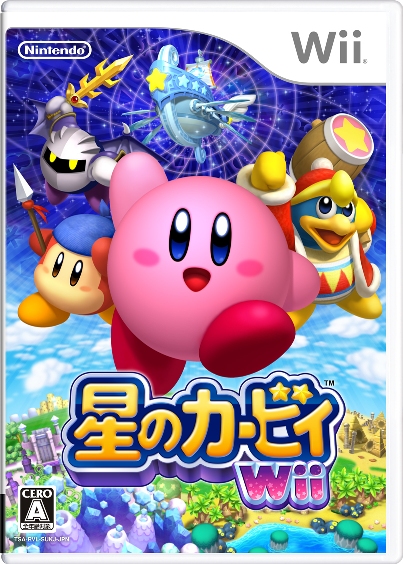
I can't. I just can't. Look at the Japanese box art for this game. Look at that glorious Nippon representation of Kirby, and then look upwards for we got for America. I've never felt more insulted by Angry Kirby, and yet I can't go on anymore. Is there any further point in discussing the fallacy of presenting your adorable pink marshmallow as a super bad-ass despite his being an adorable pink marshmallow instantly rendering him, uh, adorable? And that's not even mentioning how much time he spends in the game either smiling or using blank expressions, as he does roughly 70% of the time in nearly every one of his appearances. It's not fair, but I can't go on. I'm spent. Way to go, NOA.
Anyway, like the rest of the industry in Fall 2011, Nintendo was draining the wallets of hapless gamers with a populated release schedule. From the first semi-new Star Fox game in five years in Star Fox 64 3D to the still-popular Mario Kart 7, it was Nintendo's busiest holiday season in over half a decade...and their most acclaimed, at that.
Let us set aside any "real 3D Mario" arguments and my own dismissal of Zelda: Skyward Sword: every member of their holiday 2011 output was a million-seller, captivating the Nintendo gaming public at large, with Star Fox 64 3D paving the way for a series reboot, Mario Kart 7 set to emulate its DS predecessor's sales records, and Super Mario 3D Land and Skyward Sword sweeping perfect/near-perfect scores across the critical board.
Relative to its peers' praise, Kirby's Return to Dream Land sticks out like a sore thumb. As seen on its Metacritic page, the game was in no shortage of criticism directed its way. This came at the surprise of no one: deviations like Canvas Curse and Epic Yarn have always caught the attention of media and gamers alike, while traditional entries tend to be dismissed as safe, far-too-easy affairs regardless of whether or not they've succeeded in maintaining Masahiro Sakurai's original goal for the series: easy to play, hard to master.
In retrospect, it's a miracle Kirby's Return to Dream Land succeededat this as well as it did; after all, it'd been in development for roughly seven-to-eleven years. Indeed, Return to Dream Land was, more or less, the fabled Kirby GCN game that up and mysteriously disappeared back in 2005, having been relegated to development hell and renovated no less than three different times before HAL Laboratory doubled-down on the final product.
Whatever the reasons were for the games' cancellations (Kirby GCN was vaguely dismissed with an imbalance between solo/multiplayer play), the eleven-year wait for a true-to-form Kirby console game was well worth it, for Kirby's Return to Dream Land was arguably Nintendo's finest 2011 entry.
Such a claim appears heresy in the face of ambitious efforts like Zelda: Skyward Sword, Super Mario 3D Land or even the competition's Elder Scrolls VI: Skyrim, particularly since the game lacks any ambitions of its own.
But that's because it didn't need any, instead staying true to its name by returning to 1996.
-----------------
Let us bask in that title for a moment: Kirby's Return to Dream Land. Doesn't that feel so good? And it's not because it bears any context on the game's narrative; after all, that's just the name exclusive to American audiences. No, it's what it stands for the game itself that matters. For all the ups and downs Kirby had over the past decade, he's given the chance to properly return to his roots. Here, there are no more half-baked gimmicks and level design devaluing the brand, no--however successful--ambitious deviations from the tried-and-true formula, and no retreads on beloved adventures of days past.
In other words, it's a return to the Dream Land created so long ago by Mr. Sakurai. He may've not laid a finger on the game's design, but the philosophies from Kirby's Adventure and Kirby Super Star blossom from every design choice: plush aesthetics framed within dreamy fantasy, a plethora of multi-fledged copy abilities, numerous avenues for multiplayer play and content upon content upon content.
If you're paying attention, you'll recognize several of the aforementioned features were exclusive to either Adventure or Super Star. The beauty of Return to Dream Land is that it's not satisfied with just blending them together; it wants to surpass where Sakurai left off back in 1996. For all its new ideas and embracing of series history, at its core Return to Dream Land feels lifted right from the 90's.
In an era where New Super Mario Bros. Wii sought to bring audiences together and Donkey Kong Country Returns awed players with its level design, this could result as disappointingly safe, and yet it's something of a miracle Return to Dream Land is not that. It strikes a wondrous balance with the old and the new, all the while borrowing the ideas of its sidescrolling peers to translate the Kirby brand for Wii.
This isn't a dig against Kirby's Epic Yarn, by the way; if pressed between the two, I'd pick Good Feel's effort as being the stronger title. And yet, there's just no denying the gradual ascension of excitement that opens Return to Dream Land: we spot this firsthand when we're given control, when game starts out in a Kirby's Adventure-styled hub where players new and experienced can feel out the controls.
But by the first level's end, we're blown away by a whirlwind of new mechanics and design. By shaking the Wii Remote, Kirby's gusty inhale becomes a ferocious cyclone that swallows multiple enemies at once. The Super Abilities, amplified versions of certain Copy Abilities obtained through glowing enemies, rampage through levels in a ferocity never seen before in Kirby. At the end of Kirby's killing spree, we uncover dimensional warpholes that thrust our hero into a mad escape from an ominous anti-matter scrolling screen.
The momentum successfully carries throughout the rest of Cookie Country. For the first time since Kirby's Dream Land, items appear to aid Kirby and co. on their quest. Crackers shoot bombs while the Stomper Boots provide some addictive timing via bouncy acupuncture footwear. Entertaining as they are on their own, all are expertly designed around puzzles to nab the game's collectibles (Energy Spheres).
As opposed to an overhaul of the mechanics ala Epic Yarn, Return for Dream Land opts for building upon the core mechanics. That the showstopping likes of Super Abilities and Dimensional Holes compose the game's organics render it not a Squeak Squad misfire, but allow it to sit comfortably alongside the evolutionary achievements of Adventure and Super Star. Granted, that the game arrives after years of mixed efforts and remakes leaves a stronger impact, but that it's this good is what makes it go above and beyond.
In particular, the evolution of Copy Abilities are on a level not seen since Super Star. The new powers--Water, Leaf, Spear and Whip--all echo that game in their flexibility, be it the delightful excess of Spear/Whip maneuvers or going a step beyond with environmental effects (Water automatically surfs on, well, water). We've seen occasional winners in the years since Super Star-- notably Smash, Missile and Squeak Squad's version of Magic--yet hardly any scratch the depth and personality found here.
Meanwhile, one-trick ponies like Stone or limited efforts like Ninja always stood out in Super Star's plethora of powers, but you'd hardly recognize their transformations here. Stone, Needle, Hi-Jump and Tornado are now fully-fledged behemoths, whereas Ninja is complete with all sorts of ninja tropes. The lengths of HAL's polish know no bounds, for even 1-hit wonders like Mike and Crash or the adorably useless Sleep are supplied with new tricks (Mike being a animation standout solely for the visual of a headbanging Kirby--all the while sporting a 90's mohawk).
With such care given to the Copy Abilities, it's no surprise they don't forget to design the levels around Super Abilities. As fun as it is to scorch landscapes with Monster Flame and slice the opposition with Ultra Sword, the Wii Remote-shaking thrill of Grand Hammer and Snow Bowl render them the most involved, and therefore, the most exciting. The latter in particular recalls the best of the Giant Snowball from Kirby 64 in how it not only absorbs everyone in your path (the hapless Dream Landers!), but with the added bonuses of demolishing giant sandcastles and bowling pins.
This emphasis on environmental destruction breeds new territory for Kirby, one that would be expanded upon in Return to Dream Land's successors. On a thematic level, it places a humorous spotlight on the senseless devastation often sugarcoated by Kirby's dreamy sweetness; on a gameplay level, there's nothing funner, and the way it makes room for even the little things is impressive. The Star Spit, once Kirby's only attack, can be upgraded relative to the number of enemies that fall victim to the Super Inhale. The potential result is a massive star cluster that plows through baddies, blocks and bosses alike; in that sense, I guess they're not little things after all.
I mentioned earlier about Return to Dream Land being a blend of Super Star/Adventure design philosophies, which is best described as the game possessing Super Star gameplay with Adventure level design. While Super Star's gameplay dominates over Adventure, the latter's emphasis on a sole campaign allowed for a consistent level progression aimed for beginner/expert audiences (not that Super Star didn't appeal to the same audience, but the sub-games aren't exactly sequels to one another).
Return to Dream Land takes this design philosophy to heart, even so much as lifting sequences straight from the NES classic, all the while tuning it to the multiplayer experience. Super Star was the first Kirby game to feature multiplayer, but this takes more pages from GBA games, where different-colored Kirbys could join in on the fun. More parallels still can be drawn from its Nintendo Wii contemporaries, where players can hitch a ride via stacking, perhaps screw each other over via Super Inhale, and control unique characters in the form of King Dedede, Meta Knight, and Bandanna Waddle Dee (all of whom had me frothing at the mouth following E3 2011).
Kirby isn't as physics-bound as Super Mario, so it's something that cannot fully mimic the innate hijinks of New Super Mario Bros. Wii; however, that plays into its strengths. Kirby doesn't emphasize platforming perils ala NSMBWii and Donkey Kong Country Returns, so anyone can keep up with the action (and in rare case you can't, you can always count on stacking onto a good player). In addition, the presence of items can either emphasize teamwork or brew chaos depending on their properties.
It's certainly one of the finer examples of Wii's later emphasis on co-op play--the convenience of simply jumping in via Wii Remote puts it a step above most--and yet it doesn't reach the perfection of Super Star's two-player. The one oversight lies in what's carefully crafted for single-player play: Super Abilities. Their function requires one person doing all the work, while the others sit around reduced to trailing behind whoever's a superhero. I imagine mileage on this has varied; it never ruined my couch multiplayer sessions, yet I could feel my companions growing a tad listless as I razed hill after hill.
This isn't a problem with every power--Snow Bowl saves the day by also scooping up players--and Dedede, Meta Knight, and Waddle Dee at least alleviate the problem somewhat in how they perform certain moves that Kirby cannot with their respective weapons (Hammer, Sword, and Spear). So while every not player is treated as an equal, it still remains a great co-op romp; actually some may raise credible arugments that the importance placed upon player one--such as he or she burdening the team's lives--may be beneficial for newer players as well as further emphasizing teamwork to protect that player. To HAL's credit, they were also very open on their struggles with the multiplayer design.
Do the accompanying aesthetics and sound make any missteps of their own? At the very least, I cannot even begin imagining criticizing the former: Dream Land is as plush and delectable as it was in the 90's, with squat, expressive roly-polys hopping about in environments bursting with such delicious, mouth-watering color. Once again, I can safely say I would like to nibble on the world of Kirby.
But it's not all about eye candy. Backgrounds like the enigmatic ice ruins of White Wafers make us want to know more, while Nutty Noon's soaring ribbons and overhead views may be just as cathartic and calming as the best of Sakurai's Kirby. It's perhaps the last of Nintendo's Wii games that maintains not just a consistently vivid look, but builds a compelling world to house it all in.
Which is all the better that Return to Dream Land embraces series lore. It's not that Kirby hasn't ever relied on plot and the like, but this is the first time Dream Land has been granted this level of a "lived-in" world, let alone a canon (this is present in Epic Yarn, but much of it surrounds Patch Land). Be it the pause screen descriptions of bosses or cryptic conversations with the mysterious wayfarer Magolor, it functions not on the level of Zelda world-building, but on a Mario level of "Oh, that's how that works"(or, in the case of the latter, "they're referencing THAT?").
It answers questions, but leaves enough to the imagination for our minds to answer, right down to discovering Meta Knight's favorite past-time: appreciating literature on a fine sunny day. The obvious question is what he's reading, but I personally wonder about the logistics of a Dream Land printing press. Gosh, I sure hope minimum-wage labor is fair to all Waddle Dees, and that's assuming it even exists at all.
Naturally, a return to Dream Land requires the musical presence of Jun Ishikawa and Hirokazu Ando, the original composers who introduced the music of Kirby's dreams to the world. Putting aside their large rate of success here, even if Return to Dream Land wasn't actually designed as Kirby's return, I can't help but feel that theme's reflected through the soundtrack.
I mean, it can't be coincidence it's there right when the game starts, right? This joyous song immediately greets us at the title screen (and later as the hub theme for Cookie Country), while seguing to a parade of trumpets and chimes in The Adventure Begins. It all signals a grand return to the world of Kirby, and as I always take the time to observe game title screens, that this pulled me in straight away was a great sign (and if you don't laugh at Dedede making faces at Kirby...well, there's just no hope for you).
The aforementioned ascension of that first level is effective primarily because of the Super Ability theme: Bring On The Super Ability. An orchestral theme of passionate valor, the way it accompanies Kirby's wrath injects such intense invigoration that it's impossible not to smile when in control. Truly, it operates on a level of incitement never before seen in Kirby.
Which is vaguely echoed by Looming Darkness, which plays during our peek into the realm of the Sphere Doomers. It signals that of desperate survival, urging the player desperately onward with its otherworldly instruments and sounds. It's the perfect complement to the grayscale dimension, full of passing solar systems and constellations.
But let us not forget that Kirby is home to the wistful and the melancholy, and Return to Dream Land turns to those themes in its later stretches. Aurora Area concludes the chilly recesses of White Wafers, bringing a touch of mystery and awe at the ruins. While it may be populated with the likes of Galbos and Chillys, the cold, windy howls of its accompanying theme instill an ever-present lonely ambiance.
However, such melancholy does not hold a candle to the pure joy of my favorite song: Sky Waltz. A mix of recorders and violins greet Nutty Noon as players fly over Dream Land and witness a wondrous view of the landscape below. Borrowing a page from Epic Yarn, it purposely elicits a sense of nostalgia that easily meshes with our wonder, rendering its accompanying level the very best in the entire game (which, when considering it has no Super Abilities or dimensional rifts of any sort, is no small feat).
Really, there's so many strong songs that I feel guilty about not sharing, be it all the rousing boss themes or an especially dreamy take on a Kirby's Adventure song. The entirety of the game's soundtrack successfully hits all the best of what makes Kirby,well, Kirby: orchestral triumphs, techno rhythms and sweet, soft nostalgia.
...which renders it all the more bizarre whenever it misses the mark. There's a number of real average tracks that either border on the overt childishness that Kirby's supposed to avoid (Walking in the Sea, as well as, disappointingly, the level-ending version of the *Kirby Dance theme) or serve to undermine their scenic set-pieces (the Caving song above). These misfires aren't enough to knock the game down from the upper echelons of Kirby soundtracks--let alone diminish its incredible highs--but its lack of consistency makes it miss the very top.
If I must continue harping on flaws--much as it pains me to do so--the lack of Dedede, Meta Knight and Bandanna Waddle Dee in single-player may also be a missed opportunity. While I understand the levels are designed around Kirby, only having them playable in The Arena feels like a waste. I can't help but imagine it could've made for some fun 100% goal completion (a 2D precursor to Super Mario 3D World, perhaps?)
But my hopes for Return to Dream Land weren't about whether or not it could succeed Adventure or Super Star; it all hinged on whether or not it successfully revitalized and built upon the Sakurai-era Kirby games for a modern age. This review should speak to its achievements at doing so, but I cannot speak highly enough at what it does surpass: the multiplayer mini-games, most notably in how Scope Shot far surpasses most console Kirby efforts even on a solo level; the Extra Mode, absolutely the series' most complete, fulfilling and even unpredictable since Kirby's Dream Land; the balance of difficulty for players new and old, as I still haven't obtained all the Platinum Medals for the addictive, hair-raising Challenge Rooms.
As a whole, its cohesion isn't glued as tightly as two of the 90's finest sidescrollers, but its highs in emulating, building upon and sometimes even surpassing what came before deliver a title that, against all odds, mingled successfully in an era of HD-developed products and AAA names. It being a densely-packaged adventure certainly helped, but it proves that time-tested gameplay can continue winning over audiences so long as they stick to not merely to the conventions of a brand, but by daring to improve the design philosophies behind it.
Fellow Kirby megafanJim Sterling once said "video games simply do not get any more pure" than Kirby's Return to Dream Land. How delightful that in a sea of open-worlds and motion-control, HAL Laboratory found it necessary to give us a title that stood up and declared "I am from the 16-bit era." That it has since initiated and set the example for the current Golden Age of Kirby is of the highest honor.
*On the flipside, I should mention the boss version of the Kirby Dance theme more than makes up for the regular one if only because it's clearly based on the GBA games. Ah, the warm scent of 2002's holiday season!