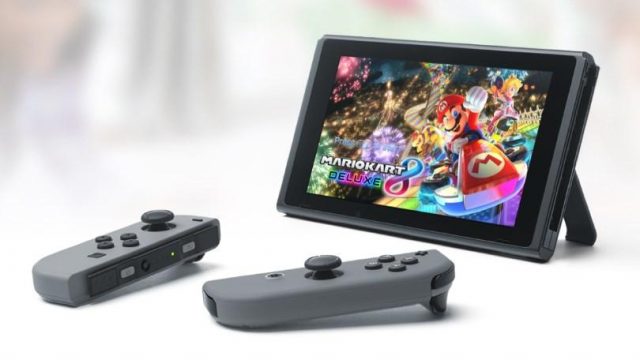
Woops, I've been having so much fun with Mario Kart 8 Deluxe that I forgot to link my OTHER Mario Kart 8-related article from Hey Poor Player! Overall, I've written up more than 5000 words for two separate pieces on the game; naturally, since they were created concurrently, there is some overlap between the articles. Regardless, I hope you enjoy.
Believe it or not, the courses chosen kept shifting even when I was writing this article! Big Blue and Dragon Driftway were this close to making the cut alongside the likes of Shy Guy Falls and Excitbike Arena, but they just missed out on the fun. Of course, the track order was prone to change as well, so it was rather tough.
Everyone, let's all what's possibly the best Mario Kart yet!
Look, let's be real here: the Wii U may have been a complete, utter sales bomb, but that did not stop it from possessing the highest concentration of quality Nintendo games since Super Nintendo. Pikmin 3 and The Legend of Zelda: Breath of the Wild rank among some of the greatest Nintendo games ever created, Splatoon and Super Mario Maker debuted to worldwide acclaim, and many would argue the likes of Super Smash Bros. for Wii U, Donkey Kong Country: Tropical Freeze and Yoshi's Woolly World represent the pinnacle of their respective franchises.
Even Super Mario 3D World, my own reservations aside, isn't exempt from these accolades, what with the insane level of polish and love put into its design. However, this is the second instance in Nintendo history I can think of where a Mario spin-off surpassed mainline entries on a home console; just as how Paper Mario: The Thousand Year Door eclipsed Super Mario Sunshine way back on GameCube, Mario Kart 8 speeds past 3D World, Super Mario Maker and New Super Mario Bros. U to become what I consider to be the finest Mario experience on Nintendo's ill-fated system.
On the contrary, this is not what my previous 8/10 review for the long-deceased Gaming Grunts would imply; there, I argued that as excellent as Mario Kart 8 was, it fell just short of being a racing masterpiece due to the obvious cut corners Nintendo took with the title. Let us make no mistake: said cut corners do limit Mario Kart 8's overall potential as a complete package, but a year's worth of DLC more than made up for it in the area that matters most: the actual racing.
I mean, forget Mario Kart; has there ever been such a wondrous relationship between course design and control? I'm not by any means a racing game connoisseur, yet I imagine many such fans would be hard-pressed to cite any viable contenders. Driving alone has never felt so smooth, and when combined with the awe-inspiring heights reached by the anti-gravity feature and the mechanics re/introduced from Mario Kart 7 (gliding and collectible coins), the game proves itself beyond the visual spectacle and continues to enthrall as a compelling racer. It's the perfect hook for those previously burnt-out on the franchise: come for the dazzling new concept, stay for just how great everything feels
"Feeling," of course, is just one element of gameplay; there's a lot going on in how the game operates: for example, the way tracks curve up the wall or into the skiesis captivating, but it's just subtle enough to never distract the player and learns to fade from our concentration. Of course, the game is smart enough not to implement anti-gravity and the like in every track, lest we grow tired of visual gimmicks; after all, there's nothing wrong with a familiar, grounded test of racing skill (this is mainly the job of the Retro Cups, although as we'll discuss later, they're not afraid to reinvent the wheel).
Meanwhile, coins continue to layer a new form of strategy to preserve our top speed. Scattered across the tracks, these speed-boosting coins are enticingly placed so as to improve our racing game, be it curves instinctively requiring power-sliding or hanging just above an aerial shortcut. Mario Kart 8 not only trains us to follow the Super Mario Bros. rule in collecting coins, but builds upon it: we don't collect coins just because because they're shiny and gold, but in how they're vital to success. When losing coins upon getting smacked with a Red Shell or falling off Rainbow Road, we're driven to get them back. It turns Mario Kart's chaotic racing into a rhythmic process.
Combined with the mix-and-match nature of kart customization (karts, wheels and gliders), and it goes without saying there's quite some depth in all the frenzy. Truth be told, while I do pay attention to kart statistics and the like, I'm more of a "get in there and race!" kinda guy, so the exact specifics between, say, Sponge Tires for Light and Heavy racers is lost on me; typically, I just fashion everything with Slick/Cyber Wheels thanks to their guaranteed sweet spot in speed/handling. I also confess that just like in Mario Kart
Wii, I never quite got the hang of bikes; the inward drifting always felt off to me. Maybe when the Switch version rolls around this Friday...
But never mind that, as we still haven't discussed the courses themselves! Possibly the best Mario Kart tracks in series history, we're wowed from the get-go with how Mario Kart Stadium and Thwomp Ruins bookend the Mushroom Cup with their respective dizzying senses of height and flight. It's a thrill surpassed again and again by the likes of Toad Harbor and Cloudtop Cruise, and even well into the DLC tracks (namely Wild Woods and Dragon Driftway, although the latter focuses more on intense, close-knit loop-de-loops). As mentioned earlier, it's careful not to let anti-gravity be the only star; to my mind, this game's iteration of Bowser's Castle remains my favorite solely for the giant, lava-powered Bowser statue ready to crush anything invading its dual-track home.
Retro courses are also stunning; whereas previous entries either provided 1:1 replicas or stripped-down versions for handhelds, here they're revamped in accordance to their respective roles. For example, the familiar Super Mario World-inspired fields of Donut Plains 3 doesn't require any anti-gravity to still be interesting, as a grounded, rough-n'-tumble race retains Mario Kart's roots and provides a nice breather from all the flashy new mechanics. Meanwhile, the completely reinvented likes of Ribbon Road (Mario Kart: Super Circuit) or Toad's Turnpike (Mario Kart 64) awe in just how much new there is; Toad's Turnpike is a particular stunner thanks to flying off cars and driving on walls. Even setting the aesthetics aside, it's almost a completely different course from the sleepy Nintendo 64 highway.
Mario Kart 8 was easily the best looking game on Wii U at the time of its release, and I'd actually argue that may still be the case. There's none of the low-res leftovers from Pikmin 3 or Super Smash Bros. for Wii U, nor the intrusive slowdowns and the like from Zelda: Breath of the Wild; Mario Kart 8,however, is consistent with its own look and performance (the infamous 59 FPS glitch aside, and I'll be rather honest in saying I've never noticed it), and is always so vivid, clean and just plain delightful to look at.
Look no further than the game's visual stunner: N64 Rainbow Road. A literal explosion of colors, what was originally a nebulous, dreamy raceway decorated with neon-lights is now granted a definite setting that plays into Mario Kart 8's festive atmosphere with fireworks and soaring trains. It must, however, also channel the dreamy nostalgia of the original: the music and the firework callbacks contribute to this, but it's impossible not to be absorbed into the hypnotic nightlights of the city below.
Hailing from an era where 3D World's speck of context and Paper Mario: Sticker Star's homogenization didn't spark our imaginations, it's delightful how there's a real sense of world to everything. The aforementioned reimagination of retro tracks is great enough, but take a look at the signs hinting at world lore: did you know Yoshi Wild Sanctuaries are a thing? According to N64 Yoshi Valley, they do. I never thought of Morton Koopa as being the manager type, so I'd like to see how Morton Construction operates. Maybe he's just the mascot? Even the spectators delight: I've never entertained the thought of Gingerbread People dwelling in the world of Mario, but thanks to Sweet Sweet Canyon, I desire to see a mainline Mario game traverse through their realm. I sure hope they don't run into any, uh, "hunger" issues with what appear to be local Yoshis.
This isn't even going into the actual courses themselves; for example, did you ever stop to think about the familiar geography behind Cloudtop Cruise? And don't get distracted by the bonanza of references in Ribbon Road, as each segment follows a certain theme. Let us not forget the wondrous character animation, either; to tell the truth, I'm actually rather saddened the related memes came and went, because I engage with the highlight reels far more than I care to admit just to watch characters expressions (mainly how they slowwwwly turn their heads when they pass by each other). Angry Luigi is the oft-cited king, but I'm more fond of Donkey Kong's totem-pole expressions and Toad's gleefully murderous joy. (And let us not forget the game's greatest item: Piranha Plant, who comes equipped with its own anti-gravity wheels)
(This is, by the way, the first non-arcade Mario Kart to feature crossover content in the form of Zelda/Animal Crossing characters and courses, alongside familiar locations from F-Zero and Excitebike. Seeing Link interact with the world of Mario is certainly a delightful absurdity, although the elusive context behind Mute City/Big Blue still makes me wonder how it all works. It's certainly more cartoonish than F-Zero, but just out of reach of Mario. Truly, I am gripped in the throes of deepest lore.)
If pressed, however, I would argue Mario Kart 8's greatest asset lies not in how it plays, but in how sounds. The combination of synth and live big-band performances provides the greatest aural Mario Kart experience ever made; be it freestyle brass or track transition, it's the ultimate key to the festive, jubilant atmosphere that complementsMario Kart like never before. The live arrangements are what steal the show: Mario Kart has always lent itself to a fun score that, true to its goal, never grows old, and while Mario Kart 8 certainly represents the best of that, its the aforementioned track transitions that still awe me. Not that Mario Kart hadn't applied music dynamics for progression before, but absolutely none of the previous efforts match the stunning euphoria that is Dolphin Shoals. What starts as a subdued, synthesized underwater theme transforms into a full-blown jazz session when the racers emerge from the depths, instilling an exhilarating, climatic thrill unlike anything else. I could credit the live performers for this little slice of Nirvana, but as the composer was behind Pikmin 3, all that goes to her.
Other songs like Mario Kart Stadium and Mount Wario play well within the Mario Kart-esque archetypes, yet I'm most blown away by the orchestral tracks; Thwomp Ruins and Wild Woods are unlike anything we've heard before in Mario Kart, introducing the likes of Celtic instruments and chorus to the series. They're a touch more active than the dreamier songs we've previously in Mario Kart, and it's a perfect fit for their respective enchanted environments and the "world" they create.
Of course, the retro remixes must be up to par. Rainbow Road 64 is once again the star, the familiar flute seguing us into a new festive jazz version (alongside the aforementioned aesthetic, this is why I consider it to be the game's *real* Rainbow Road). GBA Mario Circuit and Royal Raceway (Mario Kart 64) are great fun callbacks, and I actually happen to prefer the former and its new intro to the somewhat forgettable intro. Meanwhile, SNES Donut Plains 3 and its electric piano emulates its non-amibitous nature, choosing to instead kick back with acoustic and bass guitars.
That this is the first time Zelda and Animal Crossing have been treated to big band music--in the context of video games, anyway -- is a delightful bonus; just listen to how the Animal Crossing track alternates between all four seasonal versions! Can you say, GameCube theme? And as for the F-Zero themes...well, their godly arrangements speak for themselves.
To round things off quality-wise, Mario Kart 8 is perhaps Nintendo's one of Nintendo's finer online experiences, although we must remember that Nintendo being what they are, Mario Kart 8 isn't without it's "Nintenisms" regarding online activity. The lack of friend invites is often cited as one, alongside having to exit games to switch characters and vehicles. Otherwise, the presence of friend rooms and tourneys are, like Mario Kart 7 before it, a great step above Nintendo's normally-passive online efforts; in particular, the flexibility offered in custom rules makes for even more intense races than playing solo, and I found myself turning to NeoGAF rooms rather than improving my VR score. I do imagine, however, online traffic will decrease upon Mario Kart 8 Deluxe's release.
All this would be enough to dethrone Mario Kart DS as the series masterpiece, but alas, those dang cut corners are what get in the way. Case in point: the battle mode. Whereas previous iterations offered specialized arenas for duking it out, Mario Kart 8 simply opts for reusing the racing courses. While there can still be fun mined from it, having to brake and turn around in such confined spaces quickly grows repetitive, and the alternative option (simply lapping around the courses and attacking whoever passes by) makes one feel like on autopilot. They're simply not designed at all for balloon battles, and it makes for the weakest Battle Mode since 2003's Double Dash!!.
The common defense for this is "well, Battle Mode was never good, anyway." Yes, perhaps...for you, which does not represent the Mario Kart population that disagrees. Furthermore, it's simply a shocking detriment when considering just how polished rest of the game is. Even when considering the DLC, it's what contributed to the unfortunate "bare-bones" label, as there's not much else for the game to fall back upon. It's thoroughly a rushed afterthought, and it shows.
Said rushed quality is noticeable in other areas: while the addition of the dastardly Koopalings is fantastic (Iggy fan, here!), they don't leave a lot of room for other newcomers, and Nintendo didn't exactly tap into their imaginations when it came to rounding out rest of the roster (Pink Gold Peach? Seriously?). Meanwhile, the lack of Expert Time Trials means we're stuck with the default time trials, and outside of a couple DLC outliers, hardly any put up a decent challenge.
There are other missteps it makes on its own: the Coin item continues to be a mistake, as it punishes the winning player by leaving them defenseless, especially if they've already filled their coin meter. 200cc is a delightful experiment courtesy of DLC, yet I can't help but feel certain tracks weren't designed with it in mind (*cough* Dragon Driftway *cough*). Also, obligatory "derp the gamepad only has a horn feature" complaint here, but I suppose it's best GamePad wackiness didn't end up interfering with the core game.
And despite all that, what a core game it is. Like Pikmin 3 before it, Mario Kart 8 is a delicious rush of feel-good magic akin to guzzling the finest of fruit juice. Even with my own preferences of Pikmin and Smash aside, this is perhaps the best-playing out of all of Nintendo's Wii U offerings: it's an insanely-polished feast that backs up its ambitions not only by being a pure joy to play, but what's possibly the funnest sense of atmosphere and flavor the company has ever produced.
And now, with Mario Kart 8 Deluxe for Switch ready to fix all of its flaws, we'll finally see its full potential ready to be unleashed upon the world. It's been a long three years; go take the crown, buddy.
Origin: Kirby's Adventure Plays In: Various levels in Grape Garden and Rainbow Resort Status: Composition
Composed By: Hirokazu Ando, Jun Ishikawa
It's Kirby's 25th Anniversary!!! Well, in Japan, anyway, but it's not like we can't join the fun a little early.
Back in 2002, I couldn't get over what a coincidence it was that I'd gotten into Kirby not only on his tenth anniversary, but on the cusp of his upcoming popularity. The anime was coming out to America, a new game was releasing for Game Boy Advance, and best of all, a fall media blitz was scheduled to turn Kirby into the next Pikachu! How lucky I was, I thought, to join this fandom just as he was about to hit the big time.
As we all know, things didn't exactly pan out like that. The Kirby: Right Back At Ya! cartoon debuted to minor success (and was dubbed to dubious quality by 4Kids), the media "blitz" only amounted to a Wendy's fast-food toy promotional a year later, and Nintendo of America sorta forgot to tell consumers Kirby: Nightmare in Dream Land was a remake of 1993's Kirby's Adventure. Woops.
And yet, that 10-year-old me realized it the summer before release made my connection to Kirby all the more personal. When I discovered Kirby's Adventure in the wintry depths of December 2001, it was stunning how it felt tailor-made just for me. Whereas Mario and Sonic's 2D adventures felt too difficult, Kirby hit a delicious sweet spot of never being too patronizing, but never being too tough.
To this day, while Kirby's never afraid to get difficult when it needs to be, the philosophy of "anyone can reach the ending" still beats at its core. Haven't you ever stopped to think how delightful it is how so many of our favorite game franchises are still around? The likes of Mario and Zelda being alive and well in 2002 may've been something I took for granted, but now we've passed their 30th anniversaries, and it's all thanks to just how much Nintendo nurtured and preserved their values from day one.
Aside from being irresistibly cute, it's that exact design philosophy for why Kirby is still around 25 years later. Somewhere out there, right now, there's a kid in awe how he can beat Triple Deluxe and Planet Robobot without any help from his parents or siblings. He and his friends all regularly gather to play Team Kirby Clash Deluxe and Super Smash Bros. for Wii U; naturally, his character of choice for the latter is Kirby.
But what he cherishes most isn't how fun they are; it's how every time he enters the first level of Nutty Noon in Kirby's Return to Dream Land, his heart swells at the Sky Waltz music and the sight of ribbon-like sky patterns floating across Dream Land. It's the same gooey euphoria he encountered in Kirby's Dream Collection, where the tinny chiptune songs of Kirby's Adventure, the hypnotic, beautiful backgrounds of Kirby Super Star and the Bubbly Clouds remix of the main menu swallowed him whole with love.
He has become a young romantic, cherishing not merely the fun mined from
the series but from the magic that has set his heart and mind aflame. It's a secret he keeps close to his
heart: a young child discovering the nostalgia he's heard whispers of. He can do nothing but sigh at the thought of mysterious island house from Kirby's Dream Land 3 and grin with joy at the Butter Building remix in Kirby 64's sky level.
Was nostalgia really the right word? It had to be; after all, it was salvaging murky memories long lost. The forests of Spring Breeze recalled the mysterious, abandoned playhouse just around the corner from his cousin's house. Grape Garden's music and Rainbow Resort's setting reminding him of sleepy car rides when he was very young, where warm Christmas lights decorated the streets. The silent cheering of Kirby's Adventure's arenas unearthing the hazy, mute mornings as a 4-year-old when no one else was awake in the house. The credits of Milky Way Wishes recalling his just looking out the window and into the skies and clouds beyond.
"Did the kids who played this back in 1996 do this?", he wondered.
So long as anyone can reach the ending, this gooey nostalgia will make Kirby live forever.
Final Thoughts: Actually, Grape Garden was one of the songs in the Kirby's Adventure medley at the Kirby 25th Anniversary Orchestra Concert. Augh, I need a CD release so bad it hurts!
Hey all, sorry for the two-week absence; been juggling through several reviews/Hey Poor Player stuff as I've been perfecting the balance between my work/writing/reading/gaming schedules or what not. I'd like to think I've finally about to hit a sweet spot, but we'll see in the coming months.
In any case, I've finally been wrapping up the post tags for much of my earlier stuff. All that's left is for posts from the end of 2014 to mid-2015, and we should be good to go for that. I've also taken the liberty of updating my reviews with "score" tags, so you don't have to click all the way to the archives to discover my verdict.
Unfortunately, a lot of music videos and the like have been taken down over the past few years, I'm not sure when I'll have time to fix all that, but I am aware of the issue. Until then, please be patient.
(Funny story: in the process, one of my earlier E3 posts somehow got pushed up to being published today! Got fixed, but no idea how that happened!)
...so, how about that Kirby concert, eh? Truth be told, while most of the translation work was done by my friend at Source Gaming, I took the liberty of translating the above setlist as well as a couple other details. My Japanese skills are still growing, and I can't wait for them to become a reliable asset for Hey Poor Player!
And yes, I'm still biting at the bit for confirmation of a CD/DVD release! As mentioned in the article, the Fire Emblem and Zelda 20th anniversary shows got their own respective soundtracks, so I'm thinking it's likely Kirby will get its own!
In the meantime, a Japanese show-goer took the liberty of uploading the show setlist as according to the original versions of the songs. (To reiterate, these aren't the actual orchestrations) If you're like me and just can't wait until a CD release, I highly recommend checking it out.
Gotta say, that's an incredibly solid song list, although I'm saddened Rainbow Resort and Kirby's Epic Yarn didn't make the cut...
Anyway, I've been hard at work getting Leave Luck to Heaven active again by next week, so get ready for some serious review/Biweekly Music Wednesday time soon!
I certainly wasn't expecting to play this so soon! Sudden review copies are funny like that. Just to reiterate, this is the PS4 version.
I'm not too sure if we'll get an in-depth review on Snake Pass here, as I think I covered pretty much everything necessary over at HPP. However, I'll admit this review did take longer than expected as I wasn't happy with my drafts throughout most of the process, so who knows!
What, you think March's been a dry month means I've just laying around playing Zelda on Switch? Well...you'd be right!
However, obviously my time with the platform renders it ripe for opinion articles, like my Hey Poor Player piece for the week. As I say in the article, I look forward not to features coming to Switch, but good executions of them. Is a filterless Virtual Console too much to ask, Nintendo?!?
...that said, what's up with that troll comment? Will console wars ever be over?
Finally...FINALLY!!! After two months of drafting, asking, translating and waiting upon
waiting for clearance, my interview with game composer Tomoya Tomita is
finally up!!! I can't believe it!!
Again, I AM SO SORRY THIS TOOK SO LONG! To reiterate, this was not a case of my typical procrastination: it was on-track to arrive by the end of January when Tomita-san suddenly informed us he needed clearance from Nintendo, and unfortunately that was going to take some time. But now, it's finally here: my very first interview with a Nintendo developer! A former one, but who cares?!?
I can't be happier enough with his answers; in fact, I highly recommend you pay attention to his Kirby's Epic Yarn answers, as there's some never-before-seen info regarding the game's development! And by the way, a certain accepted fan theory regarding Smash Bros. and Wario may not be the case after all...
As stated in the interview, this would not have been possible without my translator buddy Masked Man (Matt). I already told you this on Twitter, but you are truly "the man."
And of course, to Tomita-san himself....ありがとうございます!!!
Look at the size of it! I had no intention of making this review Leave Luck to Heaven-sized, but somehow what was originally planned to be a 1500+ word review ended up being a 2000! Wowza. And I thought I was surprised when The Wind Waker achieved 3000+! (For comparison, both my Ocarina of Time/Majora's Mask reviews reached 2500/2400, respectively).
Of course, Breath of the Wild is a game that deserves no less. Finally, after seventeen years of waiting, another masterpiece has graced the Zelda name! (A Link Between Worlds did come awful close, though!) Naturally, you can expect an actual Leave Luck to Heaven review later this year; one that will undoubtedly be even bigger.
Finally, after years of waiting...The Legend of Zelda: Breath of Wild launches alongside Nintendo's latest console: the Switch! Given how perfect the game apparently is, it's a taaaad likely things may be slow here for this month, as I'll naturally be pouring time into everything our new Nintendo baby has to offer.
As for the 3D Zelda reviews...well, I made it to three out of the five games before the new title's launch. That's pretty impressive for my standards, eh? While Twilight Princess and Skyward Sword are still coming, we'll be "switching" the focus on two other relevant titles for this month to celebrate Switch's launch, one of which happens to be Zelda-related! Please look forward to them.
I'm also planning a number of Switch-related articles for Hey Poor Player, as well as contributing to an upcoming HUGE feature on Nintendojo, so please look out for those as well!
In retrospect, that the initial reception to The Legend of Zelda: The Wind Waker -- once branded as "Celda" by embittered fans -- has all but evaporated is rather stunning. Witnessing the shift from the realistic Spaceworld 2000 demo into this brought upon much hellfire; I still remember several of my Zelda-loving friends hating the crap out of it and refusing to do anything with it (a promise that was eventually rescinded; personally, while I loved Majora's Mask and casually enjoyed Link's Awakening, I wasn't invested enough in Zelda to really care). While we could certainly chalk up the switch to poor foresight and communication on Nintendo's part, the shift into cartoonish cel-shaded graphics highlighted the number one complaint of the GameCube days: Nintendo was too childish, too alienating in their kid-oriented direction of Toon Links and the latest Mario game being dubbed Super Mario Sunshine.
Those days are now behind us, yet somehow in the fourteen-plus years since The Wind Waker's release, criticism remains intertwined with the game's identity. This isn't to say the game's not surrounded by a sizeable, adoring fanbase -- you'll find it commonly cited as a series favorite, in fact -- but it remained so dogged by harsh critique that would continue to split the fanbase not just in itself, but pave the road for future titles' division. It's too easy, perhaps too short, and the game's central mechanic of sailing took too long for many.
Most damnably of all, however, was the obvious evidence of it being rushed out to market: there are cut dungeons, abrupt sequences, and an infamous endgame fetch quest that amounts to nothing more than padding. One could even say said padding was the genesis for its plaguing future mainline entries, yet for as much as Twilight Princess and Skyward Sword would be inundated with handholding and bloat, neither possess this glaring, crippling flaw.
One that somehow flew over me when I first played it; it is a video game I have much reverence for, as The Wind Waker was the entry responsible for finally captivating me into the world of Zelda. It's one of my childhood favorites, in fact, taking the No. 4 spot in my "Holy Nintendo Five" alongside the likes of EarthBound, Super Smash Bros. Melee, Super Mario 64 and Kirby Super Star. For a child awakened to nostalgia, it was everything I looked for in a game: a vibrant world possessing that ever-so-rare euphoric warmth in its beauty, setting the imagination aflame of universes beyond our own. So gripping was its atmosphere that I envisioned myself as an explorer who seeped through dimensions, canvassing the musty depths of temples and seas alike.
These days, it's a little different. The Wind Waker is still something I'm very fond of, but time has rendered its flaws unavoidable; being such an ambitious project, those black marks of clumsy, shore-horned segments and stripped elements are only all the more apparent. And yet as I had once done on Nintendojo, even now I'm compelled to defend most of those same flaws. Yes, it is a game that misses opportunities and doesn't build upon them, but I adore so much of what it tries to do that I cannot help but raise an objection to those, well, objections.
Take the game's central context and mechanic: sailing on the wide open sea. The Wind Waker takes place in The Great Sea, divided into island-dotted sectors with all sorts of treasures, secrets and locals waiting for you. Grand as that may seem, many claim it to be a tedious exercise: even with the later aid of warping, sailing from one island to another takes an awful lot of time, and it's been accused of exploiting that for padding purposes via fetch quests. I, for one, cannot get enough of it; you could point to certain stretches of emptiness, but witnessing the game's various weather patterns and hearing The King of Red Lions' soft rocking within silent nights provides a soothing catharsis not found anywhere else in Zelda; as a matter of fact, I've yet to spot any other vehicular transport emulate this level of calm anywhere else.
Much of this has to do with how it perfectly fits into the exploratory heart of Zelda. The gradual process of a distant speck morphing into an island isn't just met with anticipation; it's perhaps the first moment Zelda had an open world-esque inkling of "you can go there." Indeed, The Wind Waker was perhaps the most "open" 3D Zelda in this closing pre-Breath of the Wild era: you won't be choosing dungeons in any which order, but it's not too long until The Great Sea is yours to explore. And perhaps it's not so empty after all: the careful
player will notice, for instance, that the treasure-filled Light Circles only appear
in certain sectors at night.
Not that The Great Sea doesn't forget to include some thrills; even when you're being chased by carnivorous Gyorgs and the helicopter-sounding Peahats, haven't you ever decided to just climb up that watchtower and knock over some Bokoblins? For all its aforementioned catharsis, the adrenaline of combating maritime monsters and bombing enemy battleships within the confines of your tiny boat is just as satisfying (not the least of which are the Big Octos, one of my many water-based phobias in youth).
Which reminds me: the combat has also been derided for undeveloped concepts (you can pick up enemy weapons like spears and longswords, but there's not much to do with them) or overtly-lenient shortcuts (A-button parries against Darknuts, otherwise known as "press A-to-win!"). While there's certainly a case for the former, it's enough for me that I've always found hilarity in the juxtaposition between Toon Link and the oversized weapons, while the latter looks especially cool and has great feedback in control/weight. That they don't detract from the combat in itself is a blessing.
Not exactly the best defense, I know, but to this day, The Wind Waker still possesses my favorite sense of Zelda sword-slicing: a punchy, rhythmical force of impact that conveys not the distinct sword slices of the past two 3D Zeldas, but whaling an enemy in a manner not entirely unlike boxing. It feels wonderful to execute, heightened by "strike" beats in the accompanying music. This isn't even factoring in the other weapons: I can't be the only one who's unable to resist constantly bashing in Moblin heads with a boomerang, right?
I ask that because it's one one of the many, many reasons why the visuals remain The Wind Waker's finest achievement. As mentioned earlier, you'll barely find a trace of graphics complaints to be found, and that's because The Wind Waker's cel-shaded aestheticis the definition of timeless: fourteen years later, you can hardly spot any limitations found in the animation, texture-work and graphics involved. It is a cartoon truly come to life, with the obvious Asian influences granting it a foreign mystique and enchantment not completely unlike Capcom's Okami.
It goes without saying it still has the most beautiful setpieces in all of Zelda, and while Breath of the Wild seems poised to dethrone it in this area, I can't imagine my breath ever ceasing to stop at some of The Wind Waker's best cases of art direction. Is there anything more beautiful on the GameCube than the Fairy Fountains, with their azure colors, nautical-based formations and luminescent walls providing the game's most soothing, jaw-dropping locale? Even the Great Fairies themselves are a mystifying visual treat; no longer are we treated to screeching, scantily-clad nymphs, but graceful multi-limbed deities comprised of petals and spiral cut paper.
When compounded upon by the chorus-filled heaven that is the Fairy Fountain theme -- said chorus being enough to render it the very best version of that classic theme -- they amount to nothing less than spellbinding scenery with an irresistible pull. Not one visit comes to mind where I hadn't just sat there and watched the crowd of ever-rising sprites ascend into the ether, and they're certainly not the only location with such a hypnosis.
So great are The Wind Waker's visuals that I'd even claim they come to aid anytime the gameplay may be lacking;
some rag on the dungeons, for instance, for being too linear. The best
Zelda dungeons provide an organic flavor of continually traversing
across their depths, so perhaps there's a point there. But why should I
care when the setpieces involved express the other very best factor of
dungeons: making me feel like I'm really there? All five of the game's dungeons excel at this: even now, I cannot help but be pulled in by the chilling, shadowy haze of the Earth Temple or the crowds of spores and writhing, squirming plants in the Forbidden Woods.
The last three -- Tower of the Gods, Earth Temple and Wind Temple -- are probably the best in how appropriately huge they feel: intertwined with the plot, the trio must invoke a grand, majestic aura to convey themselves as appropriately sacred. The Tower of the Gods is my particular favorite, its holographic rainbow bridges and rising water levels expressing a prestigious air echoed by its placement in the game's plot: its ascendance from the ocean after centuries' worth of sleep provokes a musty, ancient feel.
Again, the music is imperative: Tower of the Gods with its powerful chorus is easily the best dungeon theme, but the Wind Temple evokes the more common usage of atmospheric sound: Pikmin-esque instruments introduce the temple (perhaps the biggest hint that Hajime Wakai, one of the game's four composers, was behind this song?) as they segue into a lone, melancholic guitar, perhaps reflecting the solitary slumber of the moss-filled temple itself.
Naturally, The Wind Waker wants to show all this off with clever manipulations of the camera. Bosses have never been this huge before in Zelda,
for example, which gives ample excuse to draw the camera out during
each and every battle. Every instance is meant to emphasize Toon Link's
relative tininess to everything around him, be it the massive jaws of
the sand serpent Molgera or the vast ocean surrounding each of the three
Triangle Isles. It's a powerful effect adjusted to one's liking via
C-stick, and even now, I can't help but be absorbed by how huge
everything is.
And as expected for a game passing itself as a cartoon, the animation is wonderful; the dynamic expressions of Toon Link are commonly cited, but I'm especially taken with the game's horde of enemies. Watching the Moblin's antics (light their arses on fire!) or the armorless, weaponless Darknuts make do with their fists or stray Moblin spear lying around is greatly entertaining, and I've made it a hobby of mine to experiment with Toon Link's various weapons to gauge their reactions. Case in point: smacking Miniblins off the Forsaken Fortress's upper reaches with the Skull Hammer, as watching their puny little bodies launch into a watery grave is not unlike the awe of a soaring golf ball.
It's a good thing the character animation succeeds in its goals, as the story -- perhaps tied with Majora's Mask as being the strongest within Zelda's history -- wouldn't nearly be as good without them. Taking place as something of an alternate sequel to Ocarina of Time, its setting up of a mystery within an entirely new setting --- The Great Sea -- provides a fascinating juxtaposition: we desire to learn the fate of familiar kingdom we learn about in the intro -- a gripping sequence depicted in hieroglyph-esque woodblock prints -- but we're having too much fun with the new world's pirates and bird people and wood spirits for our curiosity to linger too long.
The Wind Waker is different from the previous two games in that strikes a mid-road: the themes and character moments involved aren't nearly as raw, but they ain't exactly subtle. The aforementioned "mystery" introduces a wealth of gravity and import to this new realm, yet even moments like Prince Komali's one-sided affection for Medli echo its biting themes of loss and moving on; in that respect, watching series villain Ganondorf earn his first touch of
character is a thing of beauty, and remains the most tantalizing moment of humanization in Zelda history. As a grown man who's watched his cherished
childhood slip away, it identifies with me more with each passing year.
So much of what makes this new setting so foreign is in the score: helmed by a four-man team (Kenta Negata, Hajime Wakai, Toru Minegishi and Koji Kondo in his first supervisory role), The Wind Waker brims with Celtic-influences and instruments, namely in the very first song we hear. Best described as the game's main theme, the playful Irish arrangement that is the Title Theme is reverberated throughout The Wind Waker as not just a clever recurring motif, but in tone: we find its whimsy shared in other compelling themes as well (namely the castanet-filled Dragon Roost Island). Personaly, I've always thought of it as a fairy-tale opening.
But it's not Zelda without the adventurous backdrops, which we find in the wonderful ocean theme. Both intrepid and marvelous, The Great Sea encapsulates the very essence of "adventure" in its entire duration, never failing to inspire the swelling need for discovery and the unknown. Everything from climbing Bokoblin watchtowers to watching seagulls fly alongside The King of Red Lions is heightened by this one song.
The Wind Waker is notable for being the first Zelda to establish unique theme for each boss, and while they are spectacular (Molgera and Helmaroc King being the standouts), the recurring mini-boss theme remains my favorite. Making a triumphant first impression through its chiming of bells, the way this valor is carried through the light-hearted whimsy of whistles is nothing less than infectious.
I should highlight one more positive while we're on the subject of sound: the conduction of the Wind Waker itself. I could elaborate on how much I cherish the game's sound effects, but it is one of the most ethereal moments of sound in Zelda, as even simply standing there graces our ears with a celestial air. This isn't even getting into the ascending chimes of the three conduction times, all accompanied by stunning choirs. The baton may not be as functionally deep as the Ocarina, but the sound reverie is enough to render it my favorite Zelda instrument.
All this and more is enough to propel The Wind Waker into the upper echelons of Zelda...but alas, for all its ambitions, it misses the very top. Everything to do with this relates to its rushed status: this is something not immediately apparent, but by end of the game's first act (roughly by the third dungeon), it becomes undeniably evident this ambitious title did not fully achieve its vision. Such a failure is not uncommon in the industry, but when it sinks to levels of wasting the player's time, it becomes a major detriment.
Case in point: the cut dungeons. After the game's opening stages, the story makes a point of collecting three magical pearls after completing the early dungeons. The first two are acquired in this matter without a hitch, but after a protracted dash to nab Nayru's Pearl, it's suddenly handed to you by the water spirit Jabun. The aforementioned Nintendojo article does have a defense for this -- that the "water" dungeon role may've been filled by the Tower of the Gods, which immediately follows -- but there's just no getting around how abrupt the Jabun sequence is.
One can't also help but wonder if the "mini-dungeons" -- Fire Mountain and Ice-Ring Isle, used to obtain certain equipment -- were the two cut dungeons, and yet they're so short even the term "mini-dungeon" does them a disservice (aside from a cool secret in the latter). This isn't to say they're terrible in themselves -- they actually fit relatively seamlessly into the progression -- but one also cannot help but imagine if these dungeons were tied into the game's mid-game twist: one I shall not spoil for those who have yet to plunder The Wind Waker's depths, but it's a gripping possibility that would've opened up the game's already massive world two-fold.
Of course, the elephant in the room is the Triforce Hunt: a blatant case of padding that would set the example for bloated, uneventful events that would later plague the series. This is the one area my article faltered in defending, as it not only abruptly shoehorns itself into the narrative but its repetitive lazy cycle speaks for itself: you sail all over The Great Sea to find a Triforce Chart, hand it over to Tingle to translate for hundreds of rupees, and then go off to recover the Triforce piece.
This is a process repeated seven times, and to make matters worse, it gets thoroughly openly lazy. Practically every one of them jams in enemy brawls, homogenizing even its rare inspirations into an endless, tiring cascade of swordplay. Take the chart involving the Ghost Ship: it's a perfect concept for a game set on the high seas, with the set-up involving an elaborate quest to obtain an ocean villa, discover a zombie-infested basement within and acquire the bewitched Ghost Ship Chart. All riveting stuff, especially when the ship itself greets itself in the night, its demonic chanting alerting us to its presence...only to end up being yet another enemy horde.
While The Wind Waker is not as shockingly amateurish as its Mario GameCube contemporary (Super Mario Sunshine) in compensating for rushed development, its failure stings a bit more in that it's this close to achieving masterwork status...only to slip up in Nintendo's drive to meet the Japanese holiday season. It is a game I still fervently defend and regard as superior to the mediocre 3D efforts over the next decade, but that simple fact undermines not just any arguments I push forward, but a rare betrayal to Nintendo's values and work ethic regarding development.
To my mind, I can imagine a Wind Waker that stands up with the very best of Zelda. It is absolutely a visual masterpiece, one that will certainly be held up as one of the finest applications of aesthetics found in a Nintendo game. But I cannot claim the same as an actual game; visuals will only get you so far, after all, and between the likes of its lack of unique mini-bosses and the undeveloped enemy weapon system and once again doing the "Ganon's Tower is a hodgepodge of previous dungeon concepts" endgame shtick, there's the sense it's just not trying hard enough. By itself, it's a betrayal to its graphical ambitions; as a Zelda game, it's perhaps the most disappointing thing of all.
And yet to me, it doesn't really matter. Do I still lament The Wind Waker doesn't achieve its dreams? On some days. Do I lament we never got the planned sequel? Definitely, and that's because I love so much of what it earnestly tries to accomplish that it still sets a reputable bar. It's an even rarer example of a game where I don't care it has flaws, I don't care it makes missteps; above all, its infatuating sense of catharsis is enough to lull me into sweet, sweet rapture, one where another world is active and awake.
Even now, that is still everything I'm looking for. The Wind Waker is not the best Zelda, but it is the Zelda that still speaks to me the most as an adult with its brilliant themes and meaty exploration; to my inner child with whimsy nostalgia and a warm, beating heart. For that alone, it remains my favorite Zelda.