Sunday, July 31, 2016

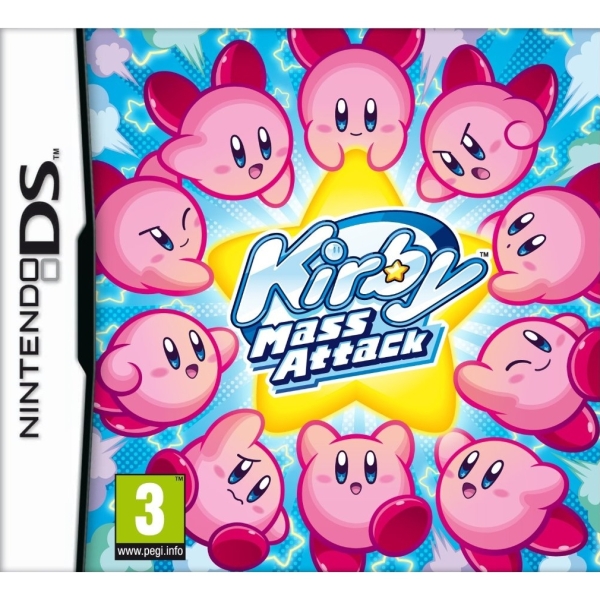
Ten Years of Kirby ~Reverie 15~ Kirby Mass Attack


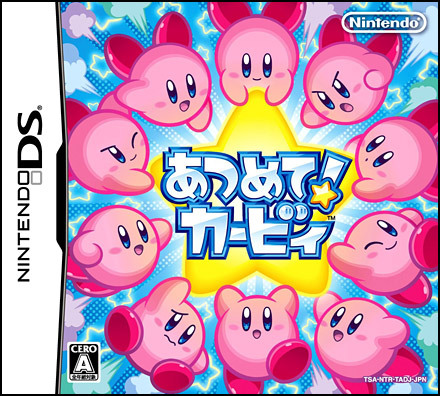
2011, where--No. NO. NOOOOOOOO. Oh, real funny NOA; way to build me up and knock me down with a dreadful one-two Angry Kirby combo. I mean, good god, this is easily the worst offender yet; just look at Kirby's uncharacteristic expression. I'd say this is one of this rare instances where the Japanese cover probably wouldn't gel with Western shelves, yet Europe seemed to deal just fine with it. Granted, they also got Freshly Picked Tingle's Rosy Rupeeland, so I suppose us Yanks have to deal with our violence-appealing culture and Kirby's attempts at the DreamWorks eyebrow.

But I digress. Anyway, 2011 brought the first of many problems that would plague Nintendo over the next half-decade: how to properly promote their new hardware. In this instance, the 3DS's March release was diluted by the annual iterations of the DS and DSi; unfortunately, this meant consumers couldn't tell it was actually a brand new console (that, and why would parents buy a new handheld when their kids received a DSi XL the previous Christmas?). Combined with how it was clearly rushed for launch--mainly with the weak launch line-up alongside the unavailability of the eShop--and the impending threat of mobile gaming, it was a rough start for the successor of the world's greatest-selling handheld.

Cue the following summer, which brought more confusing announcements in the form of Wii U and what is perhaps the quickest turnaround apology in video game history. Apologizing profusely for the 3DS's slow sales, president Satoru Iwata announced a price-cut that would not only halve his salary, but would offer twenty free downloadable games from NES and GBA libraries for those who had already bought the handheld. Alas, it would prove not to be the last of Iwata's miscalculations, and one thing was coming clear: Nintendo's dominance over the casual market was starting to wane.

Let it be known that while 3DS is undoubtedly yours truly's favorite handheld console of all time, the DS was in no rush to be replaced in early 2011. Pokémon Black and White was released just before the successor's release in all territories, and our favorite pink puffball wasn't ready to make the jump, either. The DS had served him quite well, and while HAL suggested otherwise, perhaps he felt it owed the handheld one last hurrah.

The ensuing title, Kirby Mass Attack, is something of an anomaly. It was the first mainline Kirby game to completely abandon the series' trademark Copy Ability in favor of an entirely new mechanic, one that transforms the game into something hardly resembling Kirby at all. We can trace elements of more offbeat entries like Epic Yarn and Canvas Curse back to the source material, but Mass Attack operates on a completely different scale barring its 2D gameplay. This, along with how more eyes were on Wii's Kirby's Return to Dream Land--which would release only a month later in most territories--led to Mass Attack having a muted launch...or did it?

As we'll learn in the next Reverie, fall 2011 was a jam-packed season for games, with The Legend of Zelda Skyward Sword and The Elder Scrolls V: Skyrim leading the pack. However, just like 2002's miraculous one-two Metroid revival, two back-to-back Kirby games somehow survived unscathed with a million copies under their respective belts. The new era of Kirby kickstarted by Super Star Ultra was about to transform again, and it would take one final push from this experimental title to launch it.

---
 
If you're not familiar with Kirby Mass Attack, you've probably guessed that the related horde of Kirbys running around is why the game functions so differently. After being split into ten bodies by the nefarious Necrodeus, only one escapes his wrath to stumble upon the star-shaped embodiment of the original Kirby's heart. The heart is what the player controls via stylus, as the Kirbys--who grow in number by collecting food--follow wherever it goes.

Needless to say, it's an innately adorable concept that gels perfectly with the cuddly-cute image of Kirby. The enigma of Kirby's sweetness cancelling out its basely horrifying concept--a pink blob swallowing everything in sight--is channeled properly here, as the ten Kirbys rampage about in their efforts to put themselves back together. Its execution brims with ideas, hardly any of them having much to do with Kirby's original concepts. Mechanics like the Copy Ability and Kirby's infinite floatiness were designed primarily to help anyone reach the goal, and with those stripped away, there's no crutch for beginners to rely on. It takes raw skill to overcome its trials.


The implications are clear in that Kirby Mass Attack is the hardest game in series history. We've had rough patches in outliers like Kirby's Dream Land 2, but none have demanded such constant focus and demand as managing up to ten separate Kirbys at once. Even the generous compensations it makes for the series' intended audience aren't easy hurdles; for instance, take the way it handles damage/revival. Each Kirby can take two hits before it floats up to the afterlife, but a carefully-aimed Kirby fling via touch screen will send the soul crashing down to earth fully revived.

A fair enough trade, but not one that's guaranteed. As the game progresses, the Kirbys will be inundated with projectiles, enemy hordes and moving screens of death to the extent where it's nearly impossible to multitask. That's not a mark on the game; after all, it's the only way the game can raise the stakes. Mass Attack is not overtly difficult by itself, but I can certainly imagine a child struggling with the concept far more than the likes of Kirby's Adventure or Kirby's Epic Yarn, and it's in an entirely different league should you aim for 100% completion. This should go against the very grain of the series--and as explained with the difficulty, it does--but it's actually quite fascinating to witness how far HAL's willing to stretch the series' goals and conventions via such an oddball concept.

Let us not mince words: much like the days of Shinichi Shimomura, Mass Attack is a B-Team effort made by HAL's B-Team. Unlike Mr. Shimomura's works, however, I struggle in pinpointing any specific design flaws in Mass Attack. I mean, I guess I could, but most of its drawbacks result from the more overt shortcomings of its producers than anything else. I say this with no offense whatsoever; I'm more than willing to be lenient with an experimental Kirby (I mean, it's hardly the first), and that I cannot pick apart specific flaws as a functioning game speaks to Mass Attack's quality.


Really, I guess what I'm trying to say is...well, let's just start with the gameplay. Naturally, the first question that arises from such a concept is that "Is it hard to control?". Not at all, and considering the disorderly Kirby horde I'm actually surprised the touch controls register so smoothly. Most, if not all, of the Kirbys were felled due to my error as a player, not from any misguided controls or slacking AI. They quickly react to the stylus and loyally follow the star wherever it goes.
 
That, and it's great fun. Copy Abilities may be sitting out again, but who cares when you have an army of Kirbys ready to swarm and piledrive everything in sight? Be it meticulously aiming for airborne enemies or simply swarming helpless Beanbons, Mass Attack operates with such vigorous, calculated chaos that could very well be the side-scrolling lovechild of Kirby and Pikmin. (In fact, I'd even say for fans of the latter like me, it leaves us wondering how a 2D Pikmin would operate...)

Adjectives like "meticulous" are interesting here since they provide such an intriguing contrast to Kirby's core. Make no mistake: this is just as much of a sugar-rush as the rest of the series, but that it's underscored by constant micromanagement provides not just a gripping challenge, but a different level of engagement we've never seen before from Kirby. For instance, levels are gated according to the number of Kirbys you possess, so letting KO'd Kirbys go or passing by food is not an option.

Furthermore, the concept demands objective-based level design, and Mass Attack delivers. As mentioned previously, where Mass Attack does succeed is its progressive ascension. Simply observe how the game is bookended: the opening levels have the Kirbys working together to pull out giant radishes to scrambling around an alien spaceship for blueprints of their extraterrestrial vehicle by the game's end. The latter concept is particularly inspired by how open-ended it is: you don't have to get all the blueprints if you don't want to, but you'll hardly have enough manpower for the inspired shoot-em'-up section at the end (not to mention your chances for earning medals).


Generally, Kirby Mass Attack is at its best when it foregoes sidescrolling conventions and does its own thing. Just take my favorite level courtesy of Sandy Canyon: 2-5, where the Kirbys ride in the Balloon Bobbleship--a basket hung by a plethora of balloons--as they dodge incoming spiky Gordos who threaten to pop the balloons. The vessel is sensitive to movement, as while it's steered from left to right by guiding the Kirby crowd from one side to the other, the rickety movement can send any one of them flying off without notice. It's exciting, heartpounding, and challenging all in one.

It's not that the instances of semi-regular sidescrolling greatly pale in comparison or anything, but the problem is that there's an awful lot of it. Levels tend to go on far longer than they should, and unless they break convention like the aforementioned UFO level, the game gets a little long in the tooth. This is especially troubling considering Mass Attack's abnormally large level-to-world ratio: each typically features 11 stages, and with only four worlds to venture--with a final one that's essentially a boss rush--the presentation of a confined, yet bloated context paves the way for some troubling flaws.


As already mentioned, the game does succeed in building upon ideas as it goes: Dedede Resort is a boon of mini-games and some great ice-related levels, and I dare not spoil the rest of Volcano Valley's surprises. No, Mass Attack's issues lie in how they're all framed. The "B-team" qualities are never stronger than they are in the accompanying visuals and sound, which rank among the lowest in the Kirby canon. They're hardly enough to cripple the game on its own terms, mind, but that they're this forgettable is a betrayal to the game's wondrous concept.


Case in point: the backgrounds. It's worth reminding 2D Kirby games have blended sprites and CGI in their backgrounds for a decade prior to Mass Attack. Here, the entirety of Mass Attack is sprite-based, with not a speck of pre-rendered models to be found. I can only imagine this was done in regards to the game's overabundance of sprites, hence the relative lack of detail.

The problem is that Mass Attack's world is that for all its color, it's uniformly boring. Whereas the likes of Nightmare in Dream Land, Squeak Squad and Super Star Ultra had their occasional misstep in aesthetic stinkers, nearly every one of Mass Attack's backgrounds lies in a safe model I have no use for. This is not the plush, dreamy reveries we've come to love from Kirby, but rather generic stock fantasy that you'd maybe spot on a Easter Bunny chocolate wrapper.


About the only inspired setpieces lie in the Dedede Resort, home to fun imagery consisting of pineapple islands and puzzle-piece domes. Not pictured are the Dedede-shaped funhouses, which always delight in their signalling of an upcoming mini-game (and further displaying the narcissistic ego of everyone's favorite royal penguin).


I must also call attention to the world map, which has never made an ounce of sense to me. For the uninitiated, Pop Star is supposed to be yellow, as stars typically are in children's properties; here, it's blue. I can only assume they're emphasizing the ocean surrounding the Popopo Islands, but it's rendered all the more bizarre since you witness Pop Star in all its yellow brightness during the ending.

For the record, I can't say I attribute Mass Attack's aesthetic issues entirely within its sprite-based confines; after all, the sprite animation works just fine (just watch the idle Kirbys!) with plush characters that easily fit within the world of Kirby. It's really more the art style that disappoints, as its limited detail cannot pick up the slack of the low world count. The game tries to subvert this by cramming numerous environmental tropes within each one, but even the likes of haunted graveyards and icy caverns beg the question if they didn't deserve worlds of their own.

Then there's the matter of music, which does break my heat a little. Look, let's be absolutely reasonable here: Shogo Sakai is not, in any way, a B-level composer, as attested by his work on Mother 3 (his masterpiece), Kirby Air Ride and the Smash Bros. series. Unfortunately, his first solitary Kirby work in Mass Attack is up there with his Squeak Squad collaboration as the weakest of his Nintendo output. While thankfully there's not a trace of GBA recycling to be found, the soundtrack's something of a mystifying mixed bag.


Which is all the more disappointing when considering how the game's main themes initially promise great things. Kirby Collecting is a joyously bombastic mix of percussion and vocals that greets the player at the title screen, instantly guaranteeing earworm hell over the ensuing week. The in-game variation, Meadow Breeze, carries the title's momentum with a lighter tone, as banjos and accordions come together to encapsulate the game's active energy.

An energy that, sadly, isn't consistently carried throughout the soundtrack. It's not so much terrible as it is forgettable; so forgettable, in fact, I struggle in highlighting any one weak track over the rest (and I have the game's Sound Player right in front of me!). It comes across as Sakai recognizing the concept calls for overtly-peppy, vigorous tracks that rouse the player into action, but fears of treading too much on that line in the event of carbo-loaded burnout.


This isn't to say there aren't such tracks in Mass Attack's repertoire, and as expected, they're the soundtrack's standouts. There are excellent Kirby Air Ride cameos, for one, but we must not lose focus of what's actually new. Snowy Zone and Ruins Ahead, the former as featured above, are genuinely spirited representations of their respective environments, and Fetching Fruit is undeniably the driving force of what makes its respective sections so fun.

The problem here lies in balance. Such fun bombast is far too few and between, and when that a) directly correlates with the theme behind the game and b) is drowned by tracks that don't stir much emotion at all (let alone evocative of Kirby), that's something of a shame.

But let us not be too harsh on Mass Attack. Any failures in visuals or sound cannot override its solid foundation in gameplay, and I ultimately forgive its missteps thanks to its one upholding of a certain Kirby creed:  it remembers that Kirby games must be stuffed full of content; specifically, the mini-games. Mass Attack presents no less than six of the little buggers, and even then I pause at labeling them all as "little".


To the point, the volume of function and eye candy found in the likes of Kirby Brawlball (Kirby's second take at a pinball venture), Strato Patrol EOS (a multi-pronged shoot-em'-up) and Kirby Quest (a pseudo-RPG filled to the brim with fanservice) are particularly impressive. Much like how Kirby Triple Deluxe's sub-games would go on to be eShop purchases, it's very easy to see these three games polished up for digital release, and that's not even getting into how the latter two expertly weave the main game's ten Kirbys mechanic into their own domain.

This is not to sweep the other three mini-games under the rug; as a matter of fact, I appreciate Kirby Curtain Call's hilarious efforts to screw over the player (think about it: why does it have peaches mingling with the crowd?) as well as Field Frenzy's difficulty options offering a compelling crutch for its simple concept. It's an incredibly well-rounded selection of extras, enough to possibly render it the strongest mini-game collection in Kirby history.

No small feat for an experimental Kirby title, you understand, and perhaps that's where my forgiveness with Mass Attack's flubs stand. This is not a Kirby game that paves the way for the series' future, but is instead yet another attempt to see how far the series' elasticity can stretch. Some elements do not pick up the slack in doing so (the visuals and music), but everything else from the execution and creativity of its main campaign, its wonderful selection of mini-games and time-wasters and being the first and only Kirby game with an achievement system render it not only a success, but as one of the last great DS titles.


Tuesday, July 26, 2016

Interview with Josh Bone-Christian, Co-Director of Mother to Earth (GameSkinny)


My very first gaming interview! Wow.

As you all know, I'm incredibly passionate about the EarthBound (Mother) series, so I put my all into this interview. Hard to believe we have not one but TWO EarthBound-related documentaries coming up, even if they're centered around different games!

At any rate, it's a super fun and fascinating read about Mother to Earth's background, so I highly suggest checking it out!

Wednesday, July 20, 2016

Biweekly Music Wednesday! No. 38 ~Forest of Hope~ (Pikmin)


Origin: Pikmin
Plays In: The Forest of Hope
Status: Original Composition
Composed by: Hajime Wakai

Whenever I hear the Forest of Hope, I'm there. I'm there in the sunbaked Japanese countryside I dreamed of as a little boy, swallowed by trees and creeks. They whisper endlessly, their shaded bases and sunken pebbles holding as much allure as Kirby Super Star's backgrounds, as much gravity and significance as the greatest of Super Mario's battles and the fainted nostalgia of EarthBound's streets.

But I cannot relax for long, as a memory calls for me.

I'm walking down an obscured dirt path, the leaves crunching beneath me as I sink further into a tunnel of trees. The road is endless, the sun shining through the mass overarching of leaves no matter how long I walk. What I seek is here, but it slips further and further out of my grasp. I can feel it: the knowing prodding from the deepest recesses of my memory growing ever more quiet. I stop and observe my surroundings, absorbing the futility of it all.


Do I even remember what I'm looking for?

Just as I'm about to take another step, movement catches my eye. Emerging underneath from a decayed leaf arrives a lone Yellow Pikmin, hopping excitedly at my presence. As I crouch down to meet its level, it dashes over and gibbers in its alien language. With a sideways glance, it points giddily to a nearby crowd of shrubbery and runs off, making motions for me to follow.

Has it been waiting for me?

Letting it take the lead, I watch as it's swallowed in a sea of green before taking cautious steps forward. Am I afraid I'll squish my new friend in the mess of flora, or am I simply not ready for what I'm about to find? I quiver in fright until the shrubs shake, the Pikmin protruding its head and motioning to me again before diving back in.

I hesitantly step into the brush, and then I remember.

Long ago, just outside of my cousins' backyard lied an urban dirt road. To the right lied a small patch of woods by the neighbors, and within was a small playhouse. It was homemade, wooden with chipped, white paint and a red roof. It hadn't been used in a long time: strewn inside were dusty chairs, tables and windows, and Daddy-Long-Leg spiders hid within the cracks of the walls.

What was it doing in Japan? I don't know, but maybe it was there all along.

I keep walking. Pushing aside branch after branch and leaf after leaf, the memories gradually piece themselves together. How I walked out of my cousins' house without a word, opening the gate to leave and find my hidden playhouse. How I always wondered who it belonged to, who played within its tiny confines, how no one ever noticed my silent occupation inside.

How, someday, I never managed to find it again.

And then, there it lies.

Situated just outside a spacious clearing, the playhouse is bathed in a ray of light. A side window is host to a fallen tree branch, and perched on-top is the Yellow Pikmin. It waves silently before hopping through the empty pane,

Holding my breath, I stride over, crouch down slightly to meet the door size, and walk inside.

It is just as I remember it, dust and all. But a gentle aroma fills the air; two warm cups of ocha tea sit on the old table, one much smaller than the other. The Yellow Pikmin sits opposite of the cup and, turning to face me, points to its larger counterpart. Another gift. I make my way over to a chair and wrap my fingers around the cup handle, lifting it to gently clink our glasses together.

We sip from our cups and turn to watch the sun set over the clearing. The euphoria settles within both of us, words not needed as what we've waited our entire for lives sinks in. The reminder that so many other abandoned memories remain unsolved prods in my brain, yet for now, the catharsis of salvaging this one moment rises above all.

But it's not for long, because it is already time for bed.

Final Thoughts: If the above narrative hadn't implied it, this is one of my gaming comfort songs. What are some of yours?

Friday, July 15, 2016

How to beat The True Arena in Kirby: Planet Robobot (GameSkinny)


My first ever guide! Writing this was just as tough as completing the actual mode; I actually had it nearly finished over a week ago, but a browser blunder ended up deleting the whole thing! ARGH! It happened very much the same way as the last boss's final phase, too.

Planet Robobot is definitely one of the tougher Kirby games out there, so I hope this guide will hope those struggling with the mode. Remember: use Stone!

Nintendo Classic Mini - NES coming November 11th (GameSkinny)


I typically don't link to my news pieces, but this was such exciting news that I couldn't help but share it. Talk about a smart way to circumvent the absence of new hardware!

I'm surprised it wasn't shown off via trailer, as we're a bit in the dark as to how it works. What's the menu for selecting from the 30 pre-installed games like? Are the games enhanced through HD? Regardless, it's an especially solid list of games (Kirby's Adventure!) and I'm already looking forward to playing famous titles I've never tried before (Bubble Bobble and Castlevania).

If there's only one concern...are these going to have the nasty black filter found on Virtual Console? While I understand safety concerns, it's especially gross on colorful games like Kirby's Adventure and I believe preserving the games in their original lighting would best emulate the original experience. People have pointed out the Mini's inclusion of a HDMI cable may point to an all-new form of emulation, so let's keep our fingers crossed.

Saturday, July 9, 2016

Can The Next Sonic Game Break the Sonic Cycle? (GameSkinny)


Here's another assigned piece where I had to to discuss what the next Sonic game will be like...an impossible task, especially if I have to defend it! As I delved deeper into the subject, though, I did note some glimpses of hope that may prove Sega is taking the next title very seriously. How? Read the article and find out!

Update (12/26/2017): Welp, looks like I got egg on my face. Uh, needless to say, I was very, very wrong on what happened with Sonic Forces. Sorry, Sonic fans!

Monday, June 27, 2016

Nintendo's Five Failed Hardware Launches


This is my attempt at what GameSkinny calls an "evergreen listicle", which is basically a list article with a long shelf-life. The mystery of the NX remains a hot topic, and with how everyone wondering how it'll learn from the Wii U's failure, I wanted to juxtapose that with Nintendo's other failed hardware launches. I wasn't sure if I hit the mark, but my editors loved it.

By the way, if the wording/grammatical structure feels off to you, it's because this received more edits than any of my previous GameSkinny articles. Do you think it still sounds like me? Editing is weird like that.

Sunday, June 26, 2016

8 PS2 games that need the PS4 upgrade treatment


And while we're at it, here's an example of an assigned article. As you can probaly guess, this was much easier than the Zelda article, but it was fun to select fan-favorite titles that still haven't made the jump to PS4's online store.

Oh, and just so you know...most of these titles are scheduled for Worldly Weekend within a year's time, so stay tuned!

Everything you need to know about Zelda: Breath of the Wild (GameSkinny)


Article Here

In case you haven't been keeping up with my GameSkinny contributions, here's one I'd highly recommend. This Leave Luck to Heaven-sized article took an amazing amount of research and effort on my part. Since Nintendo's E3 largely centered around this one game, I figured I'd forego my annual thoughts and put my all in this one piece.

Personally, I can't wait for this game! Breath of the Wild is everything I've been wanting from Zelda, and I can't remember the last time I've been this hyped for a new installment. The delay is certainly worth it.

Tuesday, June 21, 2016

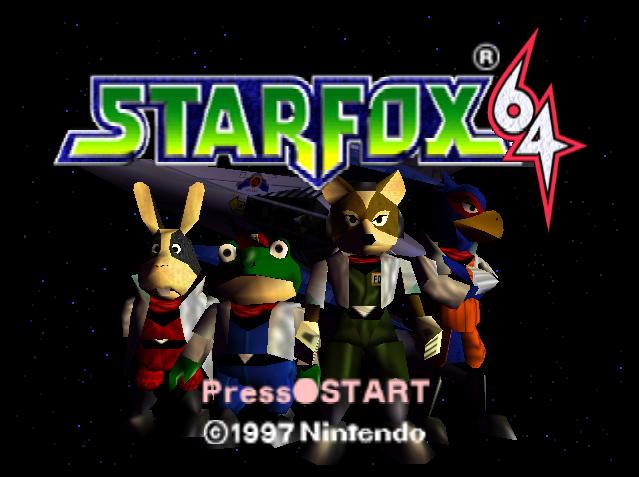
Star Fox 64


Star Fox 64 belongs to a genre I've hardly dabbled in, yet remain fascinated by: shoot-'em-ups. What was once a popular, omnipresent form of play has since been relegated to a niche following, overshadowed by the likes of AAA development and online gaming. Yet while people just aren't willing to put down money in the face of bigger, meatier experiences, shoot-'em-ups and rail shooters remain as intense as ever for those dedicated to the genre.

And yet despite my limited experience, would it be so bold if I were to claim Star Fox 64 is the greatest of them all? Perhaps it's just my bias speaking, and I'd be lying if the air-shooting sections in Kid Icarus: Uprising hadn't already surpassed it in both difficulty and design, but nearly twenty years of endlessly replaying this game will do that to you. It is, at the very least, one of the very best "pick up and play" games I have ever encountered: every run ends in less than a hour, I regularly shift routes in every playthrough, and I've practically memorized every line of dialogue, be it the cries of hapless wingmate Slippy Toad or the crusty train driver of Macbeth.


Even today, it has yet to grow old, but why? Like Super Mario 64 before it, Star Fox 64 is a full-fledged showcase of what the N64 can do. Oh, yes, I could point out the seams in the skyboxes, and maybe the Rumble Pak lacks the same thrilling punch it had back in 1997, but that the gameplay still holds up to this day is what matters. Beyond its bullet point of being the first Nintendo game to feature extensive voice acting, the likes of an elaborate scoring system that depends not just on your mastery of the shooting system's intricacies, but of the routes you embark on is endlessly fascinating to me. No longer are we limited to a route based our choice of difficulty (as per the original Star Fox for Super Nintendo), but we're encouraged to chart courses of mingling toughness.

This isn't done by the mere press of a button, either; you must work for it. Hidden trails and warps for your Arwing fighter to soar through are strewn across the planets of the Lylat System, and while they're not always thoroughly hidden, there's always a sense of accomplishment in that you, as a player, had successfully guided the Star Fox team into another course. For instance, the game doesn't always rely on extra passageways: if you fail to defend the bases at Katina or Fortuna, you can forget about heading to Solar.


You can, of course, retry, and while it prods at our egos that we do so, we're ever more grateful it allows such an option rather than committing an even worse sin: wasting our time. There's a delicious freedom to it all, and while it sadly lacks the option to replay any mission you'd like (a feature added to its 2011 3DS remake), it doesn't really matter when the entire game's great fun, or even that long. If anything, I find the anticipation of reaching certain planets only heightens their experiences. In particular, there's Macbeth, where you gradually destroy The Forever Train while piloting the Landmaster Tank; Zoness, a toxic ocean that requires swift destruction of incoming search lights, and Sector Y, an armada-filled battleground with shogun robots and one very obvious (but fun!) A New Hope reference. If the careful player plays their cards correctly, they can reach all three in one playthrough.

Naturally, there's more to Star Fox 64 than routes. For one, there's shooting. Lots of shooting. Good shoot-'em-ups provide countless options to rack up the highest score, and Star Fox 64 is no exception. Even now I juggle my split-second decisions in the opening level of Corneria: naturally, I know the hidden route achieved by flying under the stone arches leads to a higher score (and Sector Y, should I choose to go there), but what about everything else before then? Catching more than one enemy fighter in a charge shot acquires more points, so even now I aim my shots towards land-based units just as an air-bound one swoops down from the sky. It's harder than it sounds, but I know it's doable.


This is not to say Star Fox 64 is an overly difficult campaign in itself; really, any retro shoot-'em-up can give it a run for its money in that area, as I can practically storm through it on autopilot. It's how I choose to play that provides an enticing challenge, as I can either aim for a new total high score or improve a kill count for any single planet (and even then, there's an unlockable Extra Mode if I desire a tougher challenge. Venom is just nasty).

I could go on, such as how every enemy is expertly telegraphed, the intensity of the Star Wolf dogfights and  how much fun it is to bomb things, but it'd all just feed into my ultimate point of how some of Nintendo's best games deeply respect the creed of "easy to learn, hard to master", and Star Fox 64 is among their company. However, while I still to this day aim for bigger and better scores, I am hardly any such example of said creed. Really, I suspect that it's framed just perfectly enough within its presentation that ultimately appeals to me. The story and world operate like a distilled Star Wars (albeit with an anthromorphic population), never intruding upon gameplay progression but instead as a form of accompaniment. Being distilled Star Wars means it's presented with typical camp and cheese, yet it's never bloated to the point where I can't take it seriously.


Case in point: the voice acting, which is largely comprised of local, unknown talent. Not "bad" talent, mind, but mainly actors you'd see in your downtown theater or whose voice talents are largely reserved for radio, audiobooks and commercials. Perfect for the short, memorable quips of Mario and his friends, but let it be known voice direction has always been the NOA Treehouse's Achilles' heel, and that can prove to be largely disastrous in dialogue-heavy games. Later examples like Metroid: Other M and Fire Emblem: Path of Radiance attest to this, but in what's nothing less than a miracle, you'd hardly know it from Star Fox 64.

See, it'd be all too easy to cite nostalgia as the reason why, but it wasn't until the game's 3DS remake that I realized the secret sauce: it's all performed genuinely. This isn't a case of the directors and voice actors obnoxiously doubling down on the camp present in the game's script, nor is it a case of the latter coming in to deliver half-hearted performances for what they--and perhaps the directors involved-- perceive to be another dinky children's computer game. No, this is the result of a circle of individuals who came together to produce a living, breathing sci-fi adventure, who understand that this is a world that requires a delicate balance in tone; it's not nearly as raw as Metroid or Fire Emblem, but not nearly as squeaky clean as Super Mario or Kirby. A world where a fox seeks to avenge his father, a falcon can be brash and cocky, a hare gives sagely advice, and a frog can be endearingly clumsy.


Fox McCloud (Mike West), the team leader, is oddly the member with the least number of lines, but that's no excuse for West to get sloppy; he's played as the youthful leader, but he's performed seriously enough so that lines like "Let's rock and roll!" don't come across as overly comic. Meanwhile, through some careful guidance from the Japanese development team, Falco Lombardi (Bill Johns) is successfully played as the Han Solo to Fox's Luke Skywalker: quick to bark at Fox for his mistakes, but sets his sass aside for moments of true camaraderie...even if it's bitter sarcasm ("Gee, I've been saved by Fox, how swell").

Of course, the real star is Rick May's Peppy Hare, and I'm not just saying that because his words of wisdom ("Do a barrel roll!") have been repeated on internet forums everywhere since 1997. Even with a slight Southern accent, he's portrayed as the most grounded character (as it should be, considering he's the veteran who laid witness to Fox's father's death). I said earlier that Star Fox 64 never gets raw, yet it's amazing how his passionate cries for help tiptoe on that line; check out how he screams "What's taking you so long, Fox?!?" when chased by an enemy fighter.

The villains are no slouch, either: the delicious British accents for Jock Blaney's Wolf  and Jay Green's Leon are easily the highlight of the opposing Star Wolf team, although I'm particularly fond of Pigma Dengar's  whiny jackassery. Meanwhile, the delicious cheese of the various bosses are infinitely quotable in themselves, particularly Sector Y's Shogun ("COCKY LITTLE FREAKS!") and the Macbeth train driver ("Step on da gas!"). There's also Andross (Rick May), the big bad whose synthesized voice continues to haunt me with one line: the echo of his thundering giggle that pervades the final battle.

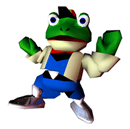
 The only weak link I can spot is Lyssa Browne's Slippy Toad, and it's not that she does the job poorly as it that she's, well, miscast. A recent all-cast interview reveals she was directed to channel the voice of a boy, but that's clearly not what we have here: it's a voice very much that of a woman, and it's caused no shortage of gender confusion (for the record, Slippy is male). And yet, I cannot bring myself to hate her performance. She's miscast, yes, but nostalgia be damned! Her performance is just as genuine as the rest, and it's become just as much a cherished part of Star Fox 64 as anything else.


Let's not forget the music, either. Legendary game composer Koji Kondo, who did sound effects for the original Star Fox, promotes himself to composing the game's peripheral pieces (as in, the opening/title themes, menu, game over, etc.). The main theme--a recurring motif which became the series theme from hereon--is more of a military march than the grand orchestra of Star Fox's SNES days. While it's a song that's proven its compatibility for orchestra in future appearances, that it hues closer to a Saturday Morning action cartoon is what reigns in the game's tonal balance.


We see the motif repeat in the ending theme, but though the (also great) Level Clear theme takes most of the spotlight, it's actually host to one of my favorite Nintendo ending/credits sequences. Yes, the awkward dialogue between Fox and General Pepper is hilariously abrupt, but it never interrupts the catharsis of the final two scenes: the Star Fox Team triumphantly sprinting across rocky terrain as the Great Fox mothership slowly soars into the setting sun, ending the credits with a percussion-filled choir. Be for it for the purposes of a nostalgic revisit, the thrill of a high-score run or simply playing for pleasure, I'm hard-pressed to think of many game endings this rewarding. (As an aside, I've found it's grown ever more powerful since former Nintendo president Hiroshi Yamauchi, whose credit as Executive Producer covers the sun right as the choir kicks in, passed away in 2013).


This isn't necessarily a surprising direction, as such prestige rolls back to the Menu Theme, a favorite of mine which I've written about before. Echoing that of a museum, it's one of my favorite Nintendo menu themes in that it always compels me to sit down and reflect on a journey I've taken hundreds of times. Be it before I've even started a new campaign or when I'm entering a new score at the end, it successfully frames Star Fox 64 as the vindicated sci-fi tale it wants to be, as evidenced by how it segues into the "military briefing" style of the Prologue/Map theme.

But let us not heap all the praise on Kondo, for Hajime Wakai is the game's leading composer. His debut work for Nintendo, Wakai helms the game's levels to varying success. That's not to knock on his composition skills; everything from the Fortuna/Sector Z theme to the dream-like Warp zones expertly capture dogfight battlegrounds and the mystery of space. No, it's the sound quality where things tend to slip a little. I'm not sure why it's mainly just on Wakai's end while Kondo's pieces are stronger in this area (especially when Kondo had similar fumbles in Zelda: Ocarina of Time), but regardless, it's worth an  analysis.


Corneria is a great example in showing Star Fox 64's instrumentation falters in one area: percussion. Not the booming ones from the aforementioned credits, but the lighter kind meant to accompany the main tune. It's pitifully tinny, and it's particularly dreadful when there's no actual tune to mask it. One can also spot this in the fast-paced Star Wolf theme.


Here's the good news, though: much of this weakness are in the beginning percussion, and you tend to forget about as the main tune kicks in. What's actually bizarre is that I hardly notice this when playing it, as it's drowned out by the Arwing engines and the superb voice work before I have a chance to notice. Here, examples like the theme for Sector Y and Solar, where the percussion briefly carries the opening segment, are obscured by the onscreen action.


Of course, this isn't a problem for themes like Venom where it springs out the gate with a different instrument. Percussion's vital here too, but the other instruments at work ensure the song--a nightmare-ish dive into the world that killed Fox's father--capture the player instantly. For the record, even though this plays in the route that leads to the false ending, this song alone is why I actually prefer this version of Venom to the hard path one.

Really, if I must name one flaw from a design standpoint, it's the multiplayer. There can be some fun mined from it, sure, but there's no getting around that it's woefully barebones. I could certainly envision a multiplayer mode with Star Fox 64's engine being a grand ol' time, but certainly not with only two stages and the barest of environmental interaction. Not even the novelty of opting to have your character walk around with bazookas can salvage it from mediocrity.

But let us not tarry on such blemishes. Let it be known that while I enjoyed the divisive follow-ups to the Star Fox brand (barring Rare's adventure-based turd), none of them have a patch on what I, once again, personally deem to be the very finest of its genre. There's no half-baked gimmicks jumbling out a mess of ideas; no repetitive concepts overshadowing a tried-and-true gameplay model. It's simply Star Fox 64: a game with lightning-fast pacing confined to an afternoon's delight. It remains not just one of the Nintendo 64's best, but an exemplary standard of the aerial combat fighter.