This is my attempt at what GameSkinny calls an "evergreen listicle", which is basically a list article with a long shelf-life. The mystery of the NX remains a hot topic, and with how everyone wondering how it'll learn from the Wii U's failure, I wanted to juxtapose that with Nintendo's other failed hardware launches. I wasn't sure if I hit the mark, but my editors loved it.
By the way, if the wording/grammatical structure feels off to you, it's because this received more edits than any of my previous GameSkinny articles. Do you think it still sounds like me? Editing is weird like that.
And while we're at it, here's an example of an assigned article. As you can probaly guess, this was much easier than the Zelda article, but it was fun to select fan-favorite titles that still haven't made the jump to PS4's online store.
Oh, and just so you know...most of these titles are scheduled for Worldly Weekend within a year's time, so stay tuned!
In case you haven't been keeping up with my GameSkinny contributions, here's one I'd highly recommend. This Leave Luck to Heaven-sized article took an amazing amount of research and effort on my part. Since Nintendo's E3 largely centered around this one game, I figured I'd forego my annual thoughts and put my all in this one piece.
Personally, I can't wait for this game! Breath of the Wild is everything I've been wanting from Zelda, and I can't remember the last time I've been this hyped for a new installment. The delay is certainly worth it.
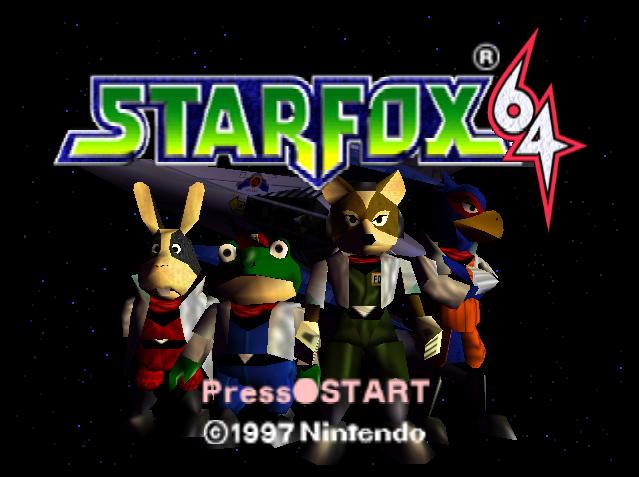
Star Fox 64 belongs to a genre I've hardly dabbled in, yet remain fascinated by: shoot-'em-ups. What was once a popular, omnipresent form of play has since been relegated to a niche following, overshadowed by the likes of AAA development and online gaming. Yet while people just aren't willing to put down money in the face of bigger, meatier experiences, shoot-'em-ups and rail shooters remain as intense as ever for those dedicated to the genre.
And yet despite my limited experience, would it be so bold if I were to claim Star Fox 64 is the greatest of them all? Perhaps it's just my bias speaking, and I'd be lying if the air-shooting sections in Kid Icarus: Uprising hadn't already surpassed it in both difficulty and design, but nearly twenty years of endlessly replaying this game will do that to you. It is, at the very least, one of the very best "pick up and play" games I have ever encountered: every run ends in less than a hour, I regularly shift routes in every playthrough, and I've practically memorized every line of dialogue, be it the cries of hapless wingmate Slippy Toad or the crusty train driver of Macbeth.
Even today, it has yet to grow old, but why? Like Super Mario 64 before it, Star Fox 64 is a full-fledged showcase of what the N64 can do. Oh, yes, I could point out the seams in the skyboxes, and maybe the Rumble Pak lacks the same thrilling punch it had back in 1997, but that the gameplay still holds up to this day is what matters. Beyond its bullet point of being the first Nintendo game to feature extensive voice acting, the likes of an elaborate scoring system that depends not just on your mastery of the shooting system's intricacies, but of the routes you embark on is endlessly fascinating to me. No longer are we limited to a route based our choice of difficulty (as per the original Star Fox for Super Nintendo), but we're encouraged to chart courses of mingling toughness.
This isn't done by the mere press of a button, either; you must work for it. Hidden trails and warps for your Arwing fighter to soar through are strewn across the planets of the Lylat System, and while they're not always thoroughly hidden, there's always a sense of accomplishment in that you, as a player, had successfully guided the Star Fox team into another course. For instance, the game doesn't always rely on extra passageways: if you fail to defend the bases at Katina or Fortuna, you can forget about heading to Solar.
You can, of course, retry, and while it prods at our egos that we do so, we're ever more grateful it allows such an option rather than committing an even worse sin: wasting our time. There's a delicious freedom to it all, and while it sadly lacks the option to replay any mission you'd like (a feature added to its 2011 3DS remake), it doesn't really matter when the entire game's great fun, or even that long. If anything, I find the anticipation of reaching certain planets only heightens their experiences. In particular, there's Macbeth, where you gradually destroy The Forever Train while piloting the Landmaster Tank; Zoness, a toxic ocean that requires swift destruction of incoming search lights, and Sector Y, an armada-filled battleground with shogun robots and one very obvious (but fun!) A New Hope reference. If the careful player plays their cards correctly, they can reach all three in one playthrough.
Naturally, there's more to Star Fox 64 than routes. For one, there's shooting. Lots of shooting. Good shoot-'em-ups provide countless options to rack up the highest score, and Star Fox 64 is no exception. Even now I juggle my split-second decisions in the opening level of Corneria: naturally, I know the hidden route achieved by flying under the stone arches leads to a higher score (and Sector Y, should I choose to go there), but what about everything else before then? Catching more than one enemy fighter in a charge shot acquires more points, so even now I aim my shots towards land-based units just as an air-bound one swoops down from the sky. It's harder than it sounds, but I know it's doable.
This is not to say Star Fox 64 is an overly difficult campaign in itself; really, any retro shoot-'em-up can give it a run for its money in that area, as I can practically storm through it on autopilot. It's how I choose to play that provides an enticing challenge, as I can either aim for a new total high score or improve a kill count for any single planet (and even then, there's an unlockable Extra Mode if I desire a tougher challenge. Venom is just nasty).
I could go on, such as how every enemy is expertly
telegraphed, the intensity of the Star Wolf dogfights and how much fun it is to bomb things, but it'd all just
feed into my ultimate point of how some of Nintendo's best games deeply
respect the creed of "easy to learn, hard to master", and Star Fox 64
is among their company. However, while I still to this day aim for
bigger and better scores, I am hardly any such example of said creed.
Really, I suspect that it's framed just perfectly enough within its
presentation that ultimately appeals to me. The story and world operate
like a distilled Star Wars (albeit with an anthromorphic
population), never intruding upon gameplay progression but instead as a
form of accompaniment. Being distilled Star Wars means it's presented with typical camp and cheese, yet it's never bloated to the point where I can't take it seriously.
Case
in point: the voice acting, which is largely comprised of local,
unknown talent. Not "bad" talent, mind, but mainly actors you'd see in
your downtown theater or whose voice talents are largely reserved for
radio, audiobooks and commercials. Perfect for the short, memorable
quips of Mario and his friends, but let it be known voice direction has
always been the NOA Treehouse's Achilles' heel, and that can prove to be
largely disastrous in dialogue-heavy games. Later examples like Metroid: Other M and Fire Emblem: Path of Radiance attest to this, but in what's nothing less than a miracle, you'd hardly know it from Star Fox 64.
See,
it'd be all too easy to cite nostalgia as the reason why, but it wasn't
until the game's 3DS remake that I realized the secret sauce: it's all
performed genuinely. This isn't a case of the directors and voice actors
obnoxiously doubling down on the camp present in the game's script, nor
is it a case of the latter coming in to deliver half-hearted
performances for what they--and perhaps the directors involved--
perceive to be another dinky children's computer game. No, this is the
result of a circle of individuals who came together to produce a living,
breathing sci-fi adventure, who understand that this is a world that
requires a delicate balance in tone; it's not nearly as raw as Metroid or Fire Emblem, but not nearly as squeaky clean as Super Mario or Kirby.
A world where a fox seeks to avenge his father, a falcon can be brash
and cocky, a hare gives sagely advice, and a frog can be endearingly
clumsy.
Fox McCloud (Mike West), the team leader, is
oddly the member with the least number of lines, but that's no excuse
for West to get sloppy; he's played as the youthful leader, but he's performed seriously enough so that lines like "Let's rock and roll!" don't come across as overly comic. Meanwhile, through some careful guidance from the Japanese development team, Falco Lombardi (Bill Johns) is successfully played as the Han Solo to Fox's Luke Skywalker: quick to bark at Fox for his mistakes, but sets his sass aside for moments of true camaraderie...even if it's bitter sarcasm ("Gee, I've been saved by Fox, how swell").
Of course, the real star is Rick May's Peppy Hare, and I'm not just saying that because his words of wisdom ("Do a barrel roll!")
have been repeated on internet forums everywhere since 1997. Even with a slight Southern accent, he's portrayed as the most grounded character (as it should be, considering he's the veteran who laid witness to Fox's father's death). I said earlier that Star Fox 64 never gets raw, yet it's amazing how his passionate cries for help tiptoe on that line; check out how he screams "What's taking you so long, Fox?!?" when chased by an enemy fighter.
The
villains are no slouch, either: the delicious British accents for Jock Blaney's Wolf and Jay Green's Leon are easily the highlight of the
opposing Star Wolf team, although I'm particularly fond of Pigma
Dengar's whiny jackassery. Meanwhile, the delicious cheese
of the various bosses are infinitely quotable in themselves,
particularly Sector Y's Shogun ("COCKY LITTLE FREAKS!") and the Macbeth train driver ("Step on da gas!"). There's also Andross (Rick May), the big bad whose synthesized voice continues to haunt me with one line: the echo of his thundering giggle that pervades the final battle.
The
only weak link I can spot is Lyssa Browne's Slippy Toad, and it's not
that she does the job poorly as it that she's, well, miscast. A recent all-cast interview reveals she was directed to channel the voice of a
boy, but that's clearly not what we have here: it's a voice very much
that of a woman, and it's caused no shortage of gender confusion (for
the record, Slippy is male). And yet, I cannot bring myself to hate her
performance. She's miscast, yes, but nostalgia be damned! Her performance is just as genuine as the rest, and it's become just as much a cherished part of Star Fox 64 as anything else.
Let's not forget the music, either. Legendary game composer Koji Kondo, who did sound effects for the original Star Fox,
promotes himself to composing the game's peripheral pieces (as in, the
opening/title themes, menu, game over, etc.). The main theme--a
recurring motif which became the series theme from hereon--is more of a
military march than the grand orchestra of Star Fox's SNES days.
While it's a song that's proven its compatibility for orchestra in
future appearances, that it hues closer to a Saturday Morning action
cartoon is what reigns in the game's tonal balance.
We
see the motif repeat in the ending theme, but though the (also great) Level Clear theme takes most of the spotlight, it's actually host to one of
my favorite Nintendo ending/credits sequences. Yes, the awkward dialogue between Fox and General Pepper is hilariously abrupt, but it never interrupts the catharsis of the final two scenes: the Star Fox Team triumphantly sprinting across rocky terrain as the Great Fox mothership slowly soars into the setting sun, ending the credits with a percussion-filled choir. Be for it for the purposes of a nostalgic revisit, the thrill of a high-score run or simply playing for pleasure, I'm hard-pressed to think of many game endings this rewarding. (As an aside, I've found it's grown ever more powerful since former Nintendo president Hiroshi Yamauchi, whose credit as Executive Producer covers the sun right as the choir kicks in, passed away in 2013).
This isn't necessarily a surprising direction, as such prestige rolls back to the Menu Theme, a favorite of mine which I've written about before. Echoing that of a museum, it's one of my favorite Nintendo menu themes in that it always compels me to sit down and reflect on a journey I've taken hundreds of times. Be it before I've even started a new campaign or when I'm entering a new score at the end, it successfully frames Star Fox 64 as the vindicated sci-fi tale it wants to be, as evidenced by how it segues into the "military briefing" style of the Prologue/Map theme.
But let us not heap all the praise on Kondo, for Hajime Wakai is the game's leading composer. His debut work for Nintendo, Wakai helms the game's levels to varying success. That's not to knock on his composition skills; everything from the Fortuna/Sector Z theme to the dream-like Warp zones expertly capture dogfight battlegrounds and the mystery of space. No, it's the sound quality where things tend to slip a little. I'm not sure why it's mainly just on Wakai's end while Kondo's pieces are stronger in this area (especially when Kondo had similar fumbles in Zelda: Ocarina of Time), but regardless, it's worth an analysis.
Corneria is a great example in showing Star Fox 64's instrumentation falters in one area: percussion. Not the booming ones from the aforementioned credits, but the lighter kind meant to accompany the main tune. It's pitifully tinny, and it's particularly dreadful when there's no actual tune to mask it. One can also spot this in the fast-paced Star Wolf theme.
Here's the good news, though: much of this weakness are in the beginning percussion, and you tend to forget about as the main tune kicks in. What's actually bizarre is that I hardly notice this when playing it, as it's drowned out by the Arwing engines and the superb voice work before I have a chance to notice. Here, examples like the theme for Sector Y and Solar, where the percussion briefly carries the opening segment, are obscured by the onscreen action.
Of course, this isn't a problem for themes like Venom where it springs out the gate with a different instrument. Percussion's vital here too, but the other instruments at work ensure the song--a nightmare-ish dive into the world that killed Fox's father--capture the player instantly. For the record, even though this plays in the route that leads to the false ending, this song alone is why I actually prefer this version of Venom to the hard path one.
Really, if
I must name one flaw from a design standpoint, it's the multiplayer.
There can be some fun mined from it, sure, but there's no getting around that it's woefully barebones. I could certainly envision a multiplayer mode with Star Fox 64's engine being a grand ol' time, but certainly not with only two stages and the barest of environmental interaction. Not even the novelty of opting to have your
character walk around with bazookas can salvage it from mediocrity.
But let us not tarry on such blemishes. Let it be known that while I enjoyed the divisive follow-ups to the Star Fox brand
(barring Rare's adventure-based turd), none of them have a patch on
what I, once again, personally deem to be the very finest of its genre.
There's no half-baked gimmicks jumbling out a mess of ideas; no
repetitive concepts overshadowing a tried-and-true gameplay model. It's
simply Star Fox 64: a game with lightning-fast pacing confined to an afternoon's delight. It remains not just one of the Nintendo 64's best, but an exemplary standard of the aerial combat fighter.
Plays In: Gourmet Race courses 1 and 3 Status: Original Composition Composed by: Jun Ishikawa, Dan Miyakawa
Now here's something I don't understand in the least. In Kirby Super Star, there's a mode called Gourmet Race, where Kirby and King Dedede dash along three courses while grabbing as much food as possible. Contrary to the name, it's something of a side-dish mode; not quite the appetizers Samurai Kirby and Megaton Punch are, but not nearly as filling as Revenge of Meta Knight or The Great Cave Offensive.
And yet, it somehow gave birth to one of the most notable series elements that even non-Kirby fans recognize: the music. A fast-paced frenzy of chaos, Gourmet Race instantly springs the player into action as King Dedede looms behind them. It's a great song, yet it was never one of my Super Star favorites; in fact, I only recognize its greatness in retrospect. Why is that?
Well, here's where things get interesting. In the year of Kirby Super Star's release (1996), the final installment of Japan's annual Orchestral Game Concert was held, and there was a suite inspired from Kirby Super Star! With how orchestral that game's soundtrack is, that's a great idea! What would be the song chosen: the orchestra take on Green Greens found in The Great Cave Offensive? Any of the thrilling pieces from Revenge of Meta Knight? The nightmare that is Marx's Theme? The tear-inducing credits of Milky Way Wishes?
The answer: none of them. It ended up being Gourmet Race; as in, the happy, upbeat song probably least suited to an orchestra.
...or so you would think. While joined by the Mine Cart theme and Kirby's Triumphal Return, the Gourmet Race opener steals the show. This arrangement doesn't just turn the song into a masterpiece; it's transformed what could very well be a completely different song altogether. What was once a race for dessert is now a legendary battle for glory among the stars of Dream Land, setting the stage for one of Kirby's greatest final battles.
And it didn't stop there. What truly propelled Gourmet Race into stardom was its representation in the Smash Bros. series, particularly in the first two games. For the N64 iteration, every other series was represented by their respective main themes, yet Kirby's Dream Land stage was given the theme from what was essentially a mini-game...yet even today, it's everyone's favorite arrangement from the game. The case is also the same for Melee, where Tadashi Ikegami's sweeping orchestral that is The Fountain of Dreams owes more than a little to the Orchestral Game Concert version.
Let's not forget Kirby itself, for the song naturally began to proliferate in the source material. It was a stage theme in Dream Land 3, featured in a Kirby 64racing mini-game, and, in my personal favorite twist, replaced the boss theme for Nightmare in Dream Land's King Dedede fightwith The Fountain of Dreams arrangement. Since then, its etched itself into the hallowed halls of great recurring Kirby themes, joining the likes of Green Greens and King Dedede's Theme.
And to think, this all emerged from a little racing game. How truly bizarre. This would be completely understandable if Gourmet Race had been within one of Super Star's main adventures, yet I can't think of anywhere else where it'd be an acceptable substitute. Were the folks behind Orchestral Game Concert interested in the challenge of adapting a more light-hearted piece into an epic score? Does it have anything to do with the mysterious Dan Miyakawa? Was Sakurai just really fond of the theme?
Am I reading too much into it? Probably, but I simply can't get over the song's humble origins. It's up there with Dan Miyakawa as one of Kirby Super Star's greatest mysteries, and with that game's enchanting prowess, I suppose I shouldn't be surprised it launched such a song into the gaming public consciousness.
Final Thoughts: Oh, that reminds me. You remember how I said in my Super Star review how the game throws something new at me every time I play it? Here's one such example: I'd always blown through the second Gourmet Race level so quickly that I never listened to its accompanying theme in full. Needless to say, it kinda blew my mind when I left it paused one day and heard the second half.
My first article at GameSkinny! I've done numerous news pieces, but this is the first full-blown article for the site. As for the subject matter, well...don't judge me. It was a ton of fun to write, and it's been doing quite well for itself.
By the way, my editor was really impressed with my news report on the Yooka-Laylee delay. What do you think?
When it rains, it pours. Over the past month, the circumstances regarding my job have only gotten from bad to worse, and it's been affecting me deeply. I won't get into the gritty details, but it's been a maelstrom of miscommunication, finger-pointing and radio silence that's wearing me down. Not good, not good.
I try my hardest to be a resilient human being. I've had a countless amount of challenges and hardships to overcome in my lifetime, yet every struggle ends the same: I slowly rise back up to face whatever comes next. At the end of the day, I have my dreams to live for, and there's people who love me that count on my existence. So far, it seems this case will be no different, as there's plenty of opportunities to look forward to. For instance, I'll be starting my JTP with GameSkinny next week, so I probably won't be completely jobless in the near feature. And I've excelled in my self-studying of Japanese (I was able to translate some of the 1st One Piece volume today!), so there's that.
And yet, this situation is still immensely disappointing to me. That I was able to make a difference in a district I spent over decade loving and hating as a foolish adolescent was both cathartic and monumental to me, and now that may not be the case soon. Not that neither side is completely faultless in the ordeal, mind, but I'd rather be honest over the ordeal rather than hearing, well, nothing.
At the heart of the matter is something I've slowly grown to fear over the past couple years: social skills, cues and conveniences I cannot glean due to having Asperger's. I still cannot comb my hair properly. My rate of speech is still too fast, and I cannot properly gauge the volume and tone of my voice. I unconsciously pace around. I hate using it as an excuse--at the end of the day, we're all human beings no matter what we do--and yet it's who I am. What's an Aspie to do?
It's not that I hate myself for having the syndrome; in fact, I'm proud I came this far as a member of the spectrum. But it's that fear that no matter where or what I'm doing, it always ends up being socially unacceptable or wrong. This is despite the fact I'm on the high-functioning end of the spectrum: I still know the difference between right and wrong, and what's sensitive and insensitive. But there's always going to be a blind spot in areas I continue to fail in, and neurotypicals will, without fail, pick up on that.
This isn't the struggle I imagined myself back in 5th Grade, where math problems were the bane of my existence and I was struggling with the reality that I was falling for my best friend. I've always known I was different and people were going to have difficulty accepting who I am, most of all myself. Funny how I always paint my childhood with rosy innocence, and yet I wonder if my hardships back then were just as poignant.
Does my choice of an Animal Crossing theme--one that happens to be one of my favorite rain themes in gaming history--strike as fitting? It's not particularly gloomy, given that it's from Animal Crossing and all, yet it's something I always turn to whenever I'm pondering myself. I usually walk away content, yet today is different. Am I searching for a piece of childhood that's calling out to me, refusing to be buried in the mists of time? Am I just looking for catharsis? I don't know, and yet I'm just staring at the storm.
Just what am I missing? What am I missing?
Final Thoughts: By the way, this is the first time I've done a second music column on a single game, hasn't it?
Hey, all! My deepest apologies for the super-dry May; unfortunately, there's been a bit of a crisis regarding my IRL job that remains unsolved, and it's been requiring my attention. To make up for it, we'll get back to Biweekly Music Wednesday! tomorrow and finally pump out a review by the end of the week. How's that sound?
But first, I have exciting news! As I've been on the prowl for more game journalism opportunities over the past half-year, I've found myself participating within GameSkinny's Journalist Training Program! That means I'll be writing for the site under the guidance of their editors up 'till July, where I can continue writing for the site as my first paying online job. Wow, cool!
Lauded as my works are on Nintendojo, I still desire to improve my abilities as a writer, a critic, and as a game journalist who's still on the furthest fringes of the industry. There's still a lot of ins and outs, do's and don't of the profession that I'm unaware of, and I felt GameSkinny was the perfect choice to hone my craft. Unlike Nintendojo, you can expect to see me there on a consistent weekly basis in everything from news to feature articles.
And if you've enjoyed my works on Nintendojo, don't worry. I've been given special permission to continue writing there on a monthly basis. You won't be seeing any crossposting between the two sites, so I'll be working extra hard on my exclusive content there.
My JTP will begin next Monday, so be sure to check GameSkinny around then!
Note: While I try to be as vague as possible, spoilers can be easily gleaned throughout the review. Playing the game isn't required to enjoy the review, but reader discretion is advised.
When copywriter Shigesato Itoi developed the original Mother--EarthBound Beginnings--he wanted to make a title that would break the mold of RPGs. It wouldn't be a tale of swords and sorcery, but instead children in 80's America fighting aliens and collecting melodies of love. It was an ambitious deconstruction of gameplay, tropes and story all in one Famicom (NES) cartridge, but while it captivated a Japanese audience, it wasn't immune to criticism: maps were too broad, the random encounters were too difficult, and maybe it deconstructed things a little too much, what with its lack of bosses and awkward story beats.
In that sense, Mother 2--EarthBound--is what he set out to accomplish all along. Both games revolved around similar plots, starred a mute boy wearing a red cap, and deconstructed RPG tropes and American culture in a comedic context. The 16-bit console was the perfect template for the series' minimalist vision, but it was no easy task: EarthBound's labored development took five years, with it gradually climbing up the megabit ladder (8 to 24--a huge leap for those days), implementing the overworld's oblique projection was gruelingly difficult, and the game was on the verge of cancellation numerous times...until the late Nintendo president Satoru Iwata--then a top programmer for HAL Laboratory--approached Itoi and offered two choices: he could fix the game as it was now, or reboot it and make it even better.
That Itoi chose the latter was undeniably a difficult decision, but thankfully, it was also the correct one: where Beginnings was something of an enchanting rough draft, EarthBound ended up being the Super Nintendo's masterpiece. One of many for that particular console, you understand, yet the game's nebulous quality spoke to fans in a way Yoshi's Island, Chrono Trigger or Super Metroid did not. Every other top-shelf work on the system excelled in their gameplay, yet EarthBound invited the player in and encouraged them to interpret its world as they saw fit. It was a video game that celebrated the player's interaction, with its themes of memories, nostalgia and even weirdness permeating themselves into what's probably gaming's most devoted, loudest fanbase.
But though he finally accomplished his vision on the Super Nintendo, Mr. Itoi wasn't done just yet. So excited was he on the concept of a third Mother game that he'd already begun brainstorming on Mother 3 before EarthBound was even finished (much to the chagrin of his co-workers, who blankly told him to focus on the game he was still working on). And yet, in the eleven-year span it took from its ill-fated inception on the Nintendo 64 to its 2006 release on Game Boy Advance, there was something clearly different about this final entry. Whereas the first two games focused on parodying America and embracing the nostalgia of youth, Mother 3 features cowboys, dinosaurs, an army of pig-garbed soldiers, and a nature vs. technology narrative.
This is not to say Mother 3 is for the worse for this sudden thematic shift; in fact, it's the only possible way it could compete with EarthBound. If the outsider's perfect vision had already been achieved, why iterate upon it again? The only way to match up people's expectations would be to go against conventions lest it be too familiar, and so what we have here is a finale that takes place in something entirely different: a backwater town on conjoined islands in the middle of nowhere (hence the name "Nowhere Islands").
Bear in mind that Mother 3 does not strip itself entirely of Mother conventions: the game is still framed within Itoi's trademark absurdist humor, JRPG deconstruction, minimalist character design/ battle encounters, and heartfelt messages. But that is where the similarities end. The game is not a grand, globetrotting narrative, but an episodic one divided into eight chapters, most of which center around the gradual transformation of an idealistic, yet naive village. There is no eye-catching oblique projection, but instead the standard top-down perspective commonly found in retro RPGs. There are no chosen children guided by fate, but people of all ages and even animals brought together by tragic circumstance.
And therein lies the biggest shift of all: if EarthBound was a game about crafting and cherishing memories, Mother 3 is a grounded reality. The tale of Lucas, the younger of twin brothers whose family is torn apart, is perhaps the most heartbreaking story ever told in the video game medium. It's not actively harrowing, and there's still plenty of supernatural elements to go around, but the game's themes of love, loss and change are so achingly genuine and sincere you cannot play through it with a dry eye.
There's so many reasons for why it tugs at our heartstrings, be it the evolution of the series' trademark minimalist aesthetic or Shogo Sakai's beautifully fluent score (which, as of ten years later, remains his masterpiece), but I personally cannot get enough of how Mother 3 is a deconstruction of Mother itself. We see this right from the excellent transition from the prologue to Chapter 1. There may not be any America-inspired towns around, but Lucas's last day of vacation at his grandfather's still feels like home. Just like in EarthBound, there's animals with quippy inner dialogue, a sudden encounter with a talking bug, and slice-of-life moments with his mother and sibling.
Cue Chapter 1: things are not so well back in the village of Tazmily, with the surrounding forest mysteriously erupting into flames, and the native animals emerging as freak hybrids and cyborgs. Lucas's father, Flint, takes it upon himself to solve the crisis, but a sudden rainfall arrives with the most chilling of news: his family never returned home.
We're approaching spoiler territory, but the following scene is infamous for hooking players into Mother 3's world. The first of many tragedies is revealed from the blacksmith Bronson, who drops the news in the most tactless way possible: "I've got good news and bad news."
If the Game Boy Advance was tethered to any limitations relative to the Super Nintendo, you wouldn't be able to tell from Mother 3's character animation. The minimalist Mother designs are now fluid in expression, with the campfire scene being the cream of the crop. Everyone suddenly reeling back in shock, Flint hopelessly pounding the ground in despair, and the act of rage you see above. I'm hard-pressed to think of any other example of sprite animation expressing such raw anger (and bear in mind, this is only the first half: how it ends depicts fear and violence just as intense).
I could go on peeling layers form this one scene. How Shogo Sakai's song of choice, a heartrending piano piece, is aptly named Confusion. What were the exact circumstances as to what made Bronson blurt out what he said (we see this later with Flint's in-law Alec, who despite sharing the same grief and is racing against the clock to help Flint save his grandson, decides now is the time to cheer up his son-in-law with wildly inappropriate fart jokes). How the repercussions of Flint's actions begin to unravel Tazmily at the seams, beginning with his prestigious honor of being the first person locked up in Tazmily Jail.
However, the most important takeaway from this scene is that these are real people. Whereas we were free to inject ourselves into the protagonists of the first two games, these are defined characters with active thoughts and development that reflect human nature in the real world. Hardly a first for video games, and it's not like there weren't already great characters in EarthBound's world, but Mother 3's wonderful balance in presenting this cast can't be stated enough. So much of this has to do with the denizens of Tazmily, who are introduced as a money-less, carefree society where no one knows the concept of sadness.
But when the likes of Yokuba and the Pig Mask Army instill the values of capitalism and vague conceptions of "happiness," we begin to wonder if their varied transformations would be right at home in EarthBound's modern-day world. Abbot and Abbey, once a sweet, young couple, selfishly believe the other villagers are jealous of their newfound happiness and fear what lies beyond the borders of their town. Jonel, a nature-loving man who worships in the nearby Sanctuary, comforts Flint with the reminder that he has friends...only to distance himself when he and Lucas refuse to adhere to the town's new regulations, informing the latter that his father is "awkward." (I imagine that his Tyrolean hat hides a pair of hair-formed devil horns is no coincidence) His wife, Brenda, descends into full-on nastiness towards the ostracized Lucas: "Your father is still looking for your brother in the mountains? You should tell him it's hopeless and give up."
Even before Tazmily's transformation, we begin to realize it's not the utopia it appears, as seen when the outsider Nana ponders about why hardly any of Tazmily's relatives resemble each other. Their naivete is just as tragic as their brainwashing, and the journey of Lucas and his band of outcasts becomes ever more poignant as you recognize you're not just taking on an invading dictatorship: you're against the only world you've ever known.
Needless to say, it's an emotionally heavy game, but never one that's overtly sappy or constantly fishing for your tear ducts. It's more somber than the other two Mother games, but what's amazing is like how EarthBound wasn't cynical in deconstructing the JRPG model, Mother 3 isn't necessarily cynical in the journey its characters embark. True to the game's tagline ("Funny, strange, heartrending"), there are just as many dark moments as there are lighthearted. It is every bit a sad story as it is an empowering tale about growing up. It may not be a globetrotting adventure, but it is one that changes the world itself.
As mentioned before, this is still a game framed within Mother's most valued conventions. If this is a world that must possesses nasty characters, then there must be characters that stay pleasant through it all. (Hey, isn't that like real life?) And if there is such pleasantness to parallel sad moments, then there must be moments that render you a convulsing, laughing mess on the floor. Itoi's writing is as wonderfully charismatic as ever, be it moments that ape series tropes (the animals' inner dialogue, including a pig who wants to see a pig seeing the ocean) or ripping on RPG conventions (there are two dungeons that consist of, respectively, a mole cricket society and a toilet/restroom maze. Do I dare spoil the enemy of choice for the latter?).
However, Mother 3's emphasis on character animation brings a new sort of humor that Mother was largely unable to capitalize upon before. This is not to diminish the quality of the humourous writing (you don't see the best of the DCMC band outside of their dialogue, for example), but there's a far bigger emphasis of such writing working in tandem with aesthetics. Fans would be quick to point out the infamous dance sequence, but I'm particularly fond of the measures Lucas takes to sneak his dog Boney into Club Titiboo.
And yet despite being so vivid in animation, it's amazing how Mother 3 continues to channel theseries' most compelling asset: letting the player fill in the blanks. The minimalist approach to sprite design and battle encounters are just as integral as they were before. For example, how exactly does Duster kick in battle despite his limping leg? You can tell right from his sprite model that he has a bad hip--quite inconvenient for an aspiring thief-who-doesn't-steal-anything--and yet he deals some mighty damage; in fact, he's built as a primarily offensive character. Itoi offers some suggestions in this Nintendo Dream interview, but since the game borrows EarthBound's minimalist battle system (more on that later), he leaves it up to the player's imagination.
Even the actual story works into this. We had this in the first two games, too, but the active symbolism and character motivations grip at us long after the game's completion. What
makes Yokuba such a despicable, evil man despite his late-game
revelation? What's the deal with the doorknob we hear whispers of? Is the Negative Man really just a joke enemy? Can we even begin to fathom the depths of the tragic villain, whose callous, childish disregard for all life gradually unveils itself throughout the story's progression? Their roles and more are so tantalizing, beating just underneath the surface, that we can't help but speculate. To cite Shigesatoi Itoi himself:
"My personal feelings steer me to want to affirm everything the player thinks about the game. I wanted to make Mother 3 like a mirror. One that reflects the heart of the player off of the screen...Mother 3 is a playground with plenty of room for your imagination to run free. The more you think about it, the greater Mother 3 will become. The more you feel it, the deeper it will become. The more fun you have, the more you'll grow."
Ah yes, that reminds me: this is also a game! Despite being more linear than the first two, there's quite a bit more "game" here. I could go upon about how are more sequences resembling sidequests--particularly with hidden enemies and bosses in places you wouldn't normally think to look--but remember how EarthBound was a game past its time with elements like onscreen enemies and a rolling HP meter. Mother 3 doesn't necessarily introduce ground-breaking in that regard, but chooses to instead build upon where its predecessor left off. Where previous protagonists may've moved a tad too slow, there's now a run button. Whereas inventory may've been a tad too confining and cumbersome to manage before, there's plenty of space now that there's a separate pocket for important items.
And then there's the rhythm combos. The sole strength of Mother's combat was that it let you be the star: how the parties of Ness and Ninten fought off Giygas's forces was entirely up to you. Well-suited for players seeking immersive gaming, mind, but not particularly compelling for those looking for deep battle systems. As mentioned previously, this immersion is alive and well in Mother 3, but it decides to include a combo system to make things more interesting. Tap the A button to the rhythm of the battle music, and you can perform up to a 16-hit attack. Considering how there's over fifty battle themes in the game courtesy of Shogo Sakai, it's a lot harder than it sounds. Some are repeats, but those throw in off-tempo beats calculated just perfectly to trip you up. Of course, you don't have to master it if you don't want to--you can win any and all fights just fine without them; after all, most of the additional hits largely deal minuscule damage. Those hits can rack up, however, and the feeling accomplished combo unleashes a deserved audience cheer can't be understated. Think of it as an "every little bit helps" sort of thing.
And you can certainly think of it as capitalizing upon some of the best battle themes in JRPG history. Above is one of my favorite boss themes, Unfounded Revenge. It's a fast-paced, trumpet-heavy frenzy that will test your button-tapping reflexes not just in memorizing the beat, but in that the related battles themselves are notoriously difficult (so don't neglect your HP meter in favor of keeping with the beat). Since it's reserved for repeat encounters, it doesn't just pave the road for off-tempo screw-ups: it serves as the game's theme for rivalry.
However, there will be times where rhythm combos will be the least of your concern, for the story's themes certainly work their way into certain battles. Fight Against Mecha Drago, which concludes the the first chapter, is the beginning of the end of the initial Mother deconstruction. Previous Mother games had never sounded this raw barring maybe their respective final battles, yet here early on we're treated to a track so dangerous it immediately removes any sense of security that things will turn okay. Without going into the details, they don't, and it's superseded by the heartbreaking Long Shadow closer only brings this point home.
But let us not forget how wonderful the music outside the battle system. It really is amazing how much Shogo Sakai gets the story's themes (and he should, considering he even contributed to how certain scenes unfolded), as seen for the shifting music themes of Tazmily. What's interesting is that while they're all based on the same song, we can never pinpoint which one is its "real" theme. The very first time we hear it, Sorrowful Tazmily, plays when the town is in mourning, and we know it can't define what was the town was before. Happy Town?, the version above, is probably the closest to an actual main theme, but the title raises a good point: is this industrialized renovation of the town really the right direction?
I'm also a fan of how Sakai handles the supernatural. The Magypsies are some of the game's most flamboyant characters, but they're embedded deep into the game's mythology, and so their homes are granted the above theme of mystery and reflection. The like of aliens are nowhere to be found, but how Mother 3 instead focuses on the world's history makes it seem that much more real. Speaking of ancient history, perhaps their shell-shaped homes recall the series' one other instance of magic and mystery...
I mentioned the presence of a nature vs. technology/modernism narrative. This isn't to say the game full-out promotes tree-hugging or the like, but you can easily point to themes representing each. For the latter, the march of the Pig Masks you can hear above was actually the original main theme for Mother 3, and it seeps into numerous facets of the game. At times a comedic fanfare and others a majestic song of triumph, the way the ultimately childish His Highness's Theme bookends the game is nothing sort of genius.
Which renders the background behind the Mother 3 Love Theme all the more a miracle. It's a song that wasn't composed until the very final stretches of development, and despite being just as simple and short as both iterations of Eight Melodies, for it to turn out so poignant, so beautiful and full of hope in its accompanying themes of family, acceptance and moving on is just flawless. (It's highly implied in the aforementioned Itoi interview he already had the song thought up before he was even asked; perhaps it being the basis of the early Mom's Hometown theme was the inspiration...?) If neither of the two versions here can make you cry, the haunting chorus found in the final battle will.
I could cheap out and just say something cliche like how it's the greatest song Shogo Sakai ever composed (which is true!), but it's something that means so much to me on a personal level. The game's own tragedies very much mirror the ones I had to personally overcome, and while the song itself always has me on the verge of tears. the lessons I continue to derive from it give me the strength every day to pursue my dreams, live on for the memory of those who've departed from my life, and to continue loving and appreciating everyone I hold dear. For that alone, I'm eternally grateful for the series to have touched my life.
Despite what the provided screenshots have implied, Mother 3 is a Japan-only game. There's a variety of factors to why it never came out westward: it came out too late in the Game Boy Advance's life cycle to justify localization costs, the underwhelming sales for EarthBound, and the story themes were probably too problematic for a 2006 America. (The poor Magypsies!) We do, however, have access to a wonderful fan translation courtesy of Clyde Mandelin and several other Mother superfans. It reads with all the flow of a legitimate game localization (and it should, considering Mr. Mandelin has localized quite a number of games and anime himself), and has been celebrated as one of the most polished fan efforts in the game industry.
As a Mother superfan myself, I own the original Japanese cartridge. (And by the way, I'm not ashamed to admit I still pull it out just to listen to the Sound Player) What Reid Young pointed out in the Do-It-Yourself Devotion project announcement is true: you won't be able to perceive every story detail and character interaction if you're Japanese-illiterate, but most of what you really need to know is conveyed through the masterful context of sprite animation and the like. It's eerie just how far they went to do this: you almost always know where to go and every single item has a little graphic next to its description.
Will the game ever come out in America? If the recent deluge of inside rumors saying it finally will this year, it might. Us Mother fans are notorious for our resilient optimism, and if it took right up to the game's 10th anniversary for us to be right (and right off the heels of the original Mother's surprise launch last year, no less!), then that makes it all the more magical.
Maybe I could cite moments where Mother 3 falters in going through the motions, and maybe its advances in minimalist design just miss the heights of how EarthBound came full circle for me, but such trivialities mean little in the fact that it's one of gaming's greatest treasures. As a self-contained narrative, it's thought-provoking and powerful. As the finale to a beloved trilogy, it's cathartic and even hopeful. It's the Game Boy Advance's masterwork swan song, and ten years later, I'm still hearing it.
Origin:The Legend of Zelda: Twilight Princess Plays in: Various cutscenes
Status: Original Composition
Composer: Toru Minegishi
They say that whenever Nintendo holds a stockholder's meeting or the like, you should always expect the worst and hope for the best. Predictably, the results have lately been falling upon the former, and today's bombs are no exception. The nebulous NX console won't be arriving this year as most expected, but instead March 2017 so as to ensure a strong launch line-up. The next Zelda title has once again been delayed, as it'll launch alongside the NX next March. What this means is that Nintendo will once again have to ride its current money-making waves from amiibo figures and their mobile ventures, as the Wii U's paltry lineup will hardly sustain another Christmas season.
I've largely come down from the disappointment this morning, but there's no denying things are looking bleaker than ever for Nintendo. 2015 was already one of their roughest years despite their high-quality output, and the ways thing are going, 2016 looks to be even worse. We still have no idea what exactly the NX is, and outside of Pokemon Sun and Moon, who knows what else they'll have scheduled for this fall.