Showing posts with label bad game. Show all posts

Sunday, March 13, 2016

Worldly Weekend: Tales of Zestiria (PS3)


The gradual decline of Tales over the past decade has been heavily disputed, with its journey into HD at the heart of the matter. Any potential brought forward by Vesperia was quickly snuffed in favor of rushed products and randomly adapting to AAA-standards. Namco clearly didn't have the budget to elevate Tales to Final Fantasy production values, and it showed in the mediocrity that were the Xillia games, what with the banal fields that stretched on forever and various cut corners (not the least of which were the limitless assets reuse; how many identical, music-less port towns were in the game, again?). Aimless stories and Motoi Sakuraba's homogenized score only cemented the notion that Tales games had grown creatively bankrupt.

When I reviewed Tales of Xillia 2, I dismissed the game as being the latest in a series of JRPG junk food because, really, that's what the series had become: an assembly line of fast food that barely scratch that RPG itch. That analogy is inapplicable as of Tales of Zestiria, a complete failure in everything from level design, pacing and progression, modern graphical standards and proper storytelling. I can't claim to have played every Tales game of the past nine years, but I remain confident in stating it's the absolute worst since the abominable Tales of Symphonia: Dawn of the New World (and what a coincidence that they're from the same series; I can't think of any game I've hated as much since).

I mean, Jesus Christ. I knew during pre-release the game was likely to continue the series stagnation, as the previews showed little evidence of Namco learning from Xillia's missteps. It's not that I believed such a tone-deaf game would reinvigorate the series (not to mention the controversy surrounding the Alisha character, which signaled alarm bells rivaling that of Xillia 2's debt system), so I walked into Zestiria thinking it'd be the latest batch of sub-par takeout that I'd maybe write about.

Boy, oh boy, was I not ready. I wish I could say the game's return to swords and sorcery was as base as its overall presentation; in particular, the latter is just a stunning display of laziness and inadequacy. I mean, where do I even begin? The inconsistent character framerate? The empty dungeon design? The terrible facial animation? The pathetic pop-in and draw distance? The pixelated tree shadows? The sound glitches that plagued the PC release? That one scene where two characters not only talked over each other when they were clearly not supposed to, but the dialogue didn't even match the subtitles? How some of the anime cutscenes output sound with all the glory of a 240p stream video, including the very first one you see?


Needless to say, I'm beyond shocked production values have fallen below even that of the Xillia games. The framerate particularly caught my attention; it's not like Zestiria looks even that different from those games, but apparently Namco spent a couple years developing a new graphics engine that can't produce 60 FPS for an overworld monster unless you're standing less than five feet away from it. With how ghastly their movements carry even into battle, I wonder if 30 FPS would be pushing it.


Not even the in-game cutscenes are exempt from this, as it's not rare for characters to fluctuate in frame animation and slowdown from the most minor of movement. On top of how the rocky character animation itself, you can hardly take them seriously regardless of context. Above is an example of the blank facial animation: here, the character is supposed to be shellshocked at a betrayal, but the way her mouth morphs into a near-smile renders the scene almost comical. Oh, and just to clarify, that GIF is from the Playstation 4 version. Let that sink in for a moment.


To top it off even further, Xillia's dry color scheme and static field designs are alive and well. I mean, the former was at least kinda acceptable before considering the new setting, but there's just no excuse for the latter anymore. The Tales team is clearly ill-equipped in adapting the series to an "open-world" environment and it shows in everything from the needlessly broad overworld maps to the boring mazes. It's gotten to the point where I have to ask what's the point in suddenly pretending Tales an AAA effort when all the obvious cut corners immediately dispel such fantasy.

The dungeons are the perfect example here. No matter how bombastic Go Shiina's music may be, the level design never lives up to any such standard no matter how much the context wills it to be. Rooms are designed with bare minimum effort, devoid of any aesthetic value or interesting features besides enemy/treasure chest placement and whatever half-baked gimmick each respective dungeon decides to throw at you (the most torturous of all being the water dungeon, a convoluted maze which zaps you back to the entrance whenever you come across a sentry's line of sight.)

So how on earth did Zestiria end up being this cheap? With the Tales Studio being laid-off/absorbed into Namco and other huge internal projects developed within the same timeframe (notably Super Smash Bros. for 3DS and Wii U, which borrowed a portion of Tales staff), Namco had no choice but to rely on heavy outsourcing; more than any Tales game before, in fact. While it's unfair to say outsourcing is solely for conserving money, that the game required such a ridiculous extent and still looked this terrible proves just how limited the game's budget was (the convoluted web of external assets likely contributed to the mess).

And what was it all for, really? It only serves as a detriment to the actual gameplay, as already seen in the worthless dungeon and field design, but what about the combat? For the first time in Tales, Zestiria opts for seguing battles into the overworld rather than transitioning to specialized battlefields. See, there's a neat idea for evolving the series...had the overworld been competently designed and the characters/battle camera didn't get stuck behind walls and pillars (seriously, just watch this).


It's actually pretty funny how much it falls into the pitfalls as Xillia 2. Just like Xillia 2, the impact of attacking monsters feels as dull as pounding on a wet paper bag. And just like Xillia 2, it's only worth using the characters gifted with super cool awesome Plot Powers (in this case, Sorey and Rose's Armatization, where they combine with one of their element-coded Seraph friends). And hey, just like Xillia 2, they try to make you work for those via combos, but unlike Xillia 2, there's no limit or penalty to how long you can use Armatization. Consequently, battles just boil down to pounding down on enemy weaknesses, and the inclusion of Graces' CC combo system does little to ease the tedium.

The second point is particularly interesting, considering how just like Xillia 2, the whole game is a vehicle for a plot not worth a damn. Of course, that's how JRPGs work, but everything from the overworld to the combat just renders Zestiria a slow, terrible slog to wade through, one that not even the fast travel option can fix (something you actually have to pay Gald for!). That, and...well, JUST LIKE XILLIA 2, it decides to piss me off with horrible, horrible padding. I was not at all happy to discover I was being gated off from continuing at one point until I gathered all the Iris Gems, which magically project the disposable backstory of the generic villain.

Rare is the Tales game that actually has a well-rounded story (that would be Tales of the Abyss), but it's especially bad here since in recent years, Tales has fallen into a bad rut with goody two-shoes protagonists and characters who join your party just because. Not once am I given a reason to care about Sorey (who falls squarely into the "Chosen One" trope right down to pulling the generic sword from the generic stone) and his band of Seraphs and squires, as Zestiria frequently screws around with natural foreshadowing and player expectations.


Just take the character Edna. The diminutive, snarky Seraph only joins Sorey's gang in the faint hopes of reverting her brother back from being a dragon, yet apparently the developers had the bright idea of relegating that subplot to a sidequest. As far as the main plot is concerned, not once do Sorey's idealistic dreams of curing dragons from malevolence ever become important, and not once does Edna ever embark on a character arc, remaining static in her snarky ways of harassing party members. Other party members fall in similar traps, but she's the most striking example.

On top of out-of-whack story beats and base "twists", there is no reason for investment in anything that goes on. A character turns into a monster? That other one betrays me? Someone dies? I don't care because the game won't let me care, because it refuses to properly foreshadow, engage in proper pacing or, y'know, develop its characters. As to why, a good chunk of this can be chalked up to the elephant in the room: a shift in party members so nonsensical in concept I'm beyond baffled it was actually executed.

I'm talking, of course, about the Alisha bait-and-switch. Yes, we can bring up her gradual absence in pre-release material or producer Hideo Baba claiming they never said she was the heroine despite her being the very first female character they introduced, but how it happens in-game is ultimately what's important. There's just no getting around how jarring it is, as the character is the catalyst for Sorey leaving his village of Seraphim and fulfilling his destiny of becoming The Shepard. While there's nothing particularly nuanced about her character, her role as Sorey's squire sets one of the game's few fathomable themes in stone: two people with entirely separate backgrounds helping the world in ways the other cannot (in this case, an idealistic country orphan and a troubled princess knight).


That is, until said role randomly causes Sorey to temporarily grow blind and she decides to up and leave six, maybe seven hours in. It's as random as it sounds, and what makes it even worse is that her replacement (Rose) is later thrust into the role despite being casually introduced as a NPC (some have defended this saying it plays into the revelation of her spoiler-related job, but, well, she's right on the box. Every other Tales party member has had an elaborate introduction).

I'll refrain from citing any of the vague *conspiracy theories regarding the situation, but regardless, it's just so easy to frame the contextual reason as "well, Alisha wasn't working out for whatever reason, so here's another character that works better just because!" It's not even as if Rose brings anything to the party that Alisha couldn't aside from having a foul mouth and her relationship with Dezel, a Seraph whose endearing traits are being reclusive and getting pissed off at everybody. (This isn't even getting into how poorly Rose takes over Alisha's role; heck, her fellow guildmates don't even acknowledge her absence!)

In attempting to have Alisha take care of Zestiria's events by holding the fort back at her kingdom, all it does is invalidate her character. Rather than sharing a dual role, any appearances from then on are fleeting, and she possesses absolutely zero involvement with the climax. As it is, it's the biggest screw-up in an indecisive tale right down to the context of the "surprised" GIF: a delayed reaction to a twist we already knew and don't care about since she's become superfluous; at that point, we've gotten so used to Rose cementing over her role that Alisha may as well have been that background character.

Can I say anything positive about Zestiria? It has a solid localization with solid voice acting (despite that aforementioned "speaking over each other" goof-up), and there's some sidequest meat to chew on. Sidequests I chose not to partake, but they exist in case you enjoy the contemptible thing. Oh, and being able to customize flair and costumes for characters. Having Sorey wearing giant sunglasses and Mikleo being stalked by a floating Yuri Lowell doll was the only thing that dulled my pain (aside from South Park episodes playing on my tablet. "Suck my b-b-balls, PC Principal!").

Is that it? I don't know, and honestly, I don't care anymore. Between this, the fiasco that was the Tales of Symphonia Steam port (and to a lesser extent, its PS3 "remaster"), a separate Namco development team being unable to tell who Zestiria's main heroine is (look up the controversy surrounding the Tales of Asteria mobile game), and the upcoming Tales of Berseria being a prequel to this game, I've given up hope Namco and the Tales team can provide a quality experience for the series in this age. They're clearly unable to manage quality control across the board, and so any aspirations for evolving a niche RPG series remain futile.


The days of relatable characters and fun battle systems are over. Tales is dead.

*Which reminds me, there's nothing in the main plot that even remotely hints at a homosexual relationship between Sorey and his BFF Mikleo. Sorry, Fanfiction.net!

Saturday, September 5, 2015

Worldly Weekend: J-Stars Victory Vs.+ (PS3)


And now, to geek out a little.

2015 marks the 10th anniversary of when I first began reading manga; you know, those silly backwards Japanese comic books you might've spotted at Borders before its untimely demise (may it and its holy smell rest in peace). As an undergraduate with an English major, the fact that manga has constituted the majority of my reading since '05 is rather embarrassing to admit, but as my precious comics got me through a brother's drug addiction, the gloomy terror of high school and recovering from reconstructive foot surgery, it's a medium I'm much thankful for. So much did I love manga that I treated my Dragon Ball volumes like they were the New Testaments, that the poems at the beginning of every Bleach volume were considered as the finest heights of literature (stop laughing), and even requested my parents for a massive bookshelf to house all my manga in.


Today, things are a tad different. Much as I still (still!) love Dragon Ball, its flaws are far easier to discern now. I don't read Naruto or Bleach anymore, having been crushingly disappointed by their future story directions. That bookcase still stands in my room, but I've gradually recognized its position renders my volumes vulnerable to sun damage (my poor Case Closed volumes!).

But I still love manga. Even if I'm less-than-pleased with Viz's translations, I still purchase their volumes for One Piece (my favorite manga for the past eight years) and Case Closed. I dearly wish that new volumes of SGT Frog will hit our shores and that Vinland Saga will survive in America. One of the reasons I'm taking Japanese courses this fall is to collect manga that remain unlocalized (Sket Dance), were dropped midway (Gintama), or have unsatisfactory changes (Shaman King).

If you haven't picked up on it by now, I love the shonen (young boy) manga genre; to be precise, those featured in the famous Weekly Shonen Jump magazine. I guess a guy my age (23) should be focusing on seinen (young adult) manga, but, well, I already read Yotsuba&! and Vinland Saga, so cut me some slack. Just goes to show I'll always be a big kid.

Anyway, so strong is my love for shonen manga that J-Stars Victory Vs.+ actually kickstarted my shonen marathon over the past year and the half, long before it even came out in Japan. I mean, I knew the game wasn't going to be that great (after all, it's by Spike Chunsoft, the king of phoned-in anime tie-ins), but I figured it was finally time to check out classics I missed (Rurouni Kenshin) or enigmas I didn't recognize from the game's roster (Medaka Box). Just for fun, here's a ranked list of what I've read as according to the blog's ratings (albeit on more of a subjective scale):

Masterpiece
Rurouni Kenshin
Shaman King

Near-Masterpiece
Sket Dance
Kinnikuman

Really Great
Jojo's Bizarre Adventure Parts 1/2 
Rokudenashi Blues
Medaka Box
Bobobo-bo Bo-bobo

Slam Dunk
Sakigake!! Otokojuku 

Great
Pyuu to Fuku! Jaguar
Yu Yu Hakusho
Toriko

Okay/Mediocre
Beelzebub

Pretty solid list, eh? There's some opinions that differ from the norm; for example, I did enjoy Yu Yu Hakusho, but I didn't think the storytelling quality was all that cohesive (and as opposed to the famed Dark Tournament, I hail the Chapter Black arc as the series's highpoint). Slam Dunk was pretty damn great, but as a sports manga, it never reached the highs of Eyeshield 21 for me. I probably love Bobobo and Shaman King more than I should, but I have a huge soft-spot for goofy-ass random humor (Bobobo, that is) and the way the latter subverts the typical "defeat the final bad guy in epic fight while protagonist achieves dream" trope is nothing less than brilliant and even heartwarming.

But opinions are opinions. One Piece, Dragon Ball, Eyeshield 21, Gintama and Rurouni Kenshin remain the five Weekly Shonen Jump kings for me, yet I wonder if anything else can join their ranks. Next up on the list is Fist of the North Star and the rest of Jojo, both of which I can't wait to start after I finish rereading Dragon Ball.


Wait, what was the point of this article again? Right, J-Stars Victory Vs.+. The whole reason why it fueled that marathon was because the game itself was inspired by Jump's 45th anniversary. And what better way to celebrate that with a video game featuring all the famous Jump manga heroes and villains beating the snot out of each other? You have the Jump heroes of yore (Dragon Ball's Goku, Rurouni Kenshin, Dr. Slump's Arale, Yu Yu Hakusho's Yusuke) culled together with the biggest heroes of the 2000s (Naruto, One Piece's Luffy, Bleach's Ichigo) and...well, a lot of new guys (Kuroko the basketball player, the enigmatic Koro-Sensei from Assassination Classroom, and the tsundere romance of Nisekoi's Chitoge)

Like any Spike-Chunsoft game, the catch with J-Stars Victory Vs.+ is it's only enjoyable on a "turn-your-brain-off" level. Is it bad? Well, so long as you dive in without any expectations for the battle system, then it's pretty fun as a mindless button masher. But aside from the shiny character models, it's evident from the get-go that Spike, once again, rushed the game out to market with minimal budget.


And it kinda stings here. I mean, this is supposed to be a celebration of Jump! That the game is mediocre isn't the problem; it's how one of the most famous, prestigious sources of Japanese entertainment gets this dream video game crossover and yet that doesn't really get its due here aside from the customary fanservice. Just look at the opening intro: yeah, the fight in Naruto's Hidden Leaf Village is kinda cool, but that it's preceded by all the PS2-quality models running around in the beginning already sets the stage for disappointment.


Then there's the matter of the story mode. Man, would you look at those talking stills! Yeah, I know this isn't the first anime game to do this (there's the wonderful Dragon Ball Z Budokai 3, for one), but what's with that insanely cheesy rock music blaring endlessly in the background? Why do the cameo characters from Rurouni Kenshin and Dr. Slump have such huge eyes? Why do the Nisekoi and Assassination Classroom character conversations lack backgrounds?

I got my answer after finishing one of the four "arcs", which starred the lovable Luffy, his brother Ace and the titular protagonist of Saint Seiya. It was a huge slog as it was, and it had a story or something, concluding with boring-ass ghost versions of the three heroes and the mysterious voice (which remained anonymous) showering them with sprites of chicken dinner. I went over to start Naruto's story only to quickly recognize I was following the same exact story beats, with the same exact quests, with the same exact scripted encounters. I imagine the remaining two arcs follow the same pattern, so I can only chalk all that up to good ol' laziness. And what a goddamn shame that is.

Oh, how silly, I haven't even discussed how the game actually plays yet. Like Spike's earlier efforts with Dragon Ball, J-Stars is a 3D arena fighter divided into team play. There's assists to be summoned, and directions for your AI partner to follow (they call each other by name, so if you've ever wanted to hear Vegeta say Kenshin's name, here ya go). As said before, it qualifies for a mindless pastime so long as you invest nothing into it. It's clunky, and it always devolves into button-mashing, but the attacks register enough oomph and there's enough destructible terrain to go around. The real enemy's the camera, which tends to flip and flop around on its own will and never has a firm grasp on your player character. Consequently, it's not difficult to lose track of the overall action (perhaps this is why the support characters feel so non-existent?).

And check out that roster. J-Stars clocks in at 59 characters, providing a decent representation of Jump's history. While it succeeds in balancing out the usual suspects (Dragon Ball, One Piece, Naruto) with some relatively minor hits (Hell Teacher Nube, Tottemo! Luckyman), that emphasizes so many newer properties is rather...yeah. Okay, having Nisekoi's Chitoge as an assist is pretty cute and playing as Koro-Sensei is pretty amazing, but when legends like Slam Dunk's Sakuragi are axed in favor of the hot new basketball series, you know there's a problem (let alone how this even seeps into older IPs like Jojo; you could argue the inclusion of Jonathan and Joseph is a fresh take as opposed to Jotaro and Dio--and it is--but there's no getting around that they're in there to advertise the recent anime adaptions of Part 1 and 2).


Granted, is it that big of a deal? Dividing roster space from 45 years of history is certainly no easy task, particularly in regards to series expected to have more than one character (Dragon Ball, One Piece, Yu Yu Hakusho...the big boys, really), so I guess I'm not surprised stuff like Shaman King just missed the boat. But even then there's questionable selections; for example, while the effort to represent One Piece's massive diversity in character is appreciated, is Boa Hancock really all-star material? On the other side of the spectrum, what should be an impeccable selection of villains (Freeza, Shishio, Younger Toguro) are marred by absolute shitstains like Naruto's Madara Uchiha. I mean, I'm not surprised Naruto has three playable characters, but that what's quite possibly the most boring villain in Jump history gets to join an all-star celebration leaves me more than a little salty (and considering how he ended up being steamrolled by an even more boring villain after the fact, it stings even more). At least I'm given the option to never unlock him or Bleach's Sosuke Aizen.

This isn't even considering potential licensing issues or the presence of Jump's more mediocre franchises (specifically, Katekyo Hitman Reborn! and Beelzebub), but I digress. What is impressive is that despite Spike never working with most of the properties before, they certainly did their homework. You know that one Dragon Ball/KochiKame crossover oneshot where Ryotsu arrests Freeza for parking violations? That's referenced in here. You remember that one fight from Sakigake!! Otokojuku where the opposing schools had all the non-combatants shoved into two cages, with one doomed to fall off the mountain should their representative lose in battle? That's a stage in here. You know how people love shitting on Yamcha from Dragon Ball? You'll get a kick out of Gintoki's death pose. Actually, you'll get huge laughs out of Gin and Bobobo in general.


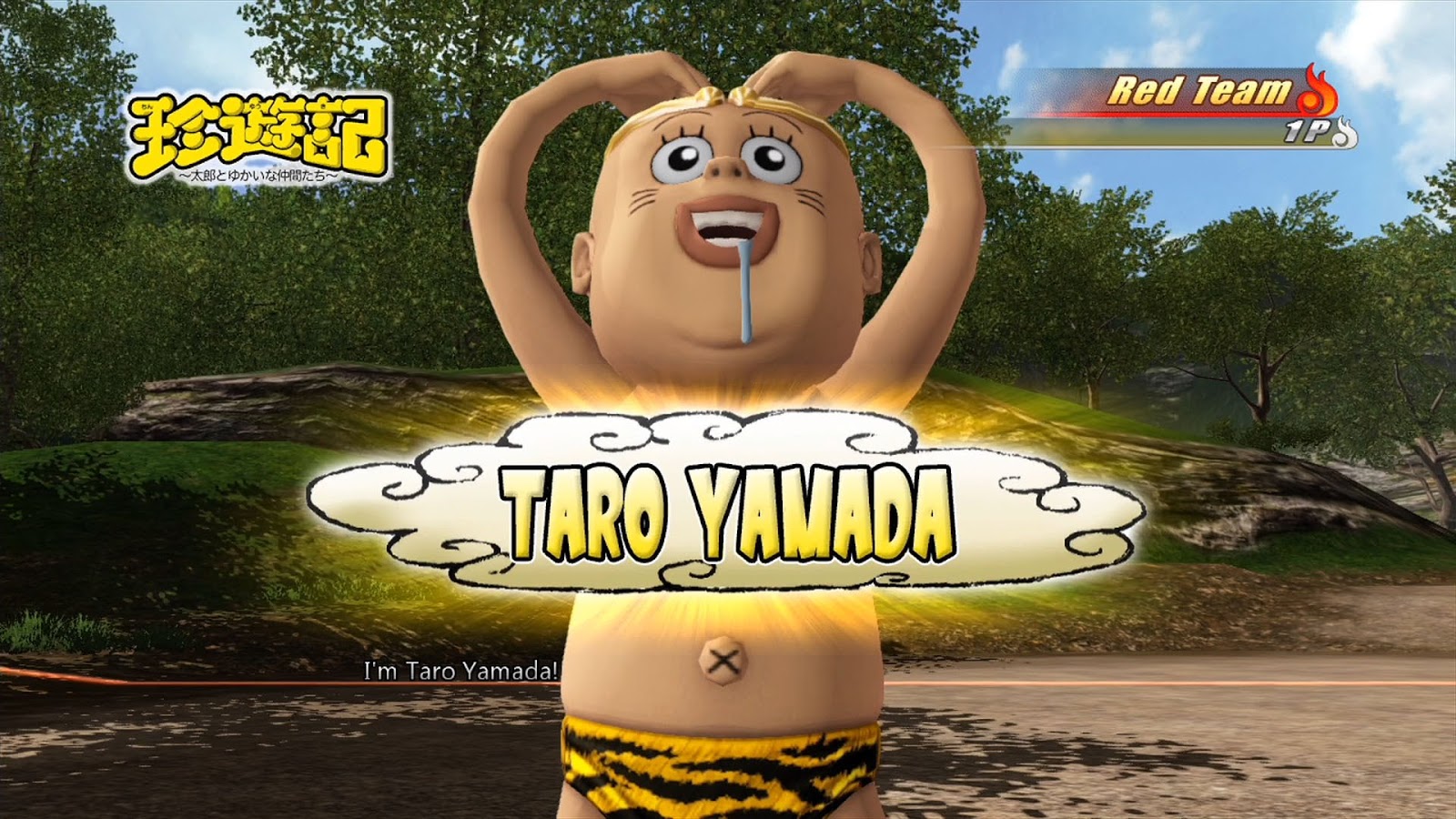
And this guy, too. The inclusion of Yamada Taro, the protagonist of Chinyuki: Taro To Yukaina Nakama Tachi, generally pissed off the English-speaking world for being gross and annoying. That it's near-impossible to find anything about the series on the English web likely didn't help, but from what I can gather he's an assassin cursed into the body of a baby/monkey hybrid after defecating on people's graves. Apparently the series got cancelled because it disturbed Jump's audience, and given how utterly bizarre his ultimate attack is (seriously, words do it no justice. Go look it up), I'm willing to believe in my new savior. Color me intrigued!

Oh, and the voices are all in Japanese with English subtitles. Given how a) publishing this game in America must've been a licensing nightmare unto itself and b) it's by and large the preferred language option by hardcore anime fans, which just so happen to be this game's audience, it's more than an acceptable compromise. Unfortunately, it's already been used as a springboard for people to hate on Goku's Japanese voice, who for for the uninitiated is performed by an old woman and American fans often mistake her performance as sounding like such. We'll discuss this in detail within a future Worldy Weekend, but as she's able to fluctuate between all three male members of the Son family (Goku, Gohan and Goten), these people are wrong and should feel bad.

But it's not like that'll matter for long, because the sloppy-ass localization courtesy of Namco-Bandai will immediately capture everyone's attention. Anyone familiar with the rush-jobs on the One Piece: Pirate Warriors series won't be surprised to see the same flood of grammatical errors and out-of-character dialogue. I'd be more lenient for the latter since I'm not expecting the average American localizer to know the quirks of every Saiki Kusuo no Psi-nan character, but apparently they still haven't gotten the hang of One Piece and Bleach characters they've worked with for years. You have Ichigo yelling "I am victorious!", Luffy possessing an expanded vocabulary ("specimen" comes to mind), and, my personal favorite, mistranslating the Skypiea island from One Piece as "Sky Pier".

Be it mistranslations ruining fun character dialogue (see if you can make any sense of the conversation between Goku and Gintoki, which was originally one of the best) or, you know, leaving over half the credits in Japanese, it's seriously shocking how little care and effort was put into this localization. Not even the series logos are translated or shifted to their American counterparts, and regardless of any rights issues involving that, when considering how roughly half of the game's cast are complete unknowns to even America's anime fanbase (let alone the general public), the character gallery alone can't settle English-speaking newcomers into this mess.


And that's what really sums J-Stars Victory Vs.+ up. For every labor of love it forges, it's all buried within a mess of design that fails to hook players for longer than a week. Be it how the fighting system lacks any sense of direction or cohesion (let alone a proper camera...), its gross excuse for a splitscreen UI in multiplayer, or the outright laziness of it's "story," it's a game completely undeserving of its brands, serving only quick laughs and things to smash. J-Stars Victory Vs.+ should not be anime game junk food, not when Shinpachi breaks the fourth wall within Gintoki's presence or when the the opening singers for Dragon Ball Z, One Piece, and Toriko collaborate to write the game's awesome theme. But it is, and that only its accompanying brands can't even salvage it into the depths of mediocrity is just, well, depressing.


Oh well, at least there's always Jump Ultimate Stars.

---

Man, to think I'd start out Worldly Weekend with two stinkers! The next game will be of much higher quality, I promise.

Sunday, July 19, 2015

Worldly Weekend: Sonic Adventure DX: Director's Cut (GameCube)


There was a time where, for me, the Sonic Adventure games were Sonic. It was the same era where any 2D platformer that wasn't Kirby was far too hard for me, and Sonic the Hedgehog's Genesis classics were no exception. Sure, I could play Sonic Advance just fine, but hardcore Sonic fans on message boards far and wide kept dismissing them in favor of the old Genesis games.

Being a kid, I didn't really get that, much like how the same crowd held no love for the Sonic Adventure games birthed on the ill-fated Dreamcast (and eventually ported to GameCube, as seen in the cover above). The opening levels of each game had Sonic escaping from a killer whale and running over cars with a snowboard, respectively. I didn't care for rock music, yet Sonic made it cool with the likes of Live and Learn and Open Your Heart. If I was asked to describe the games with one-word answers as a kid, I would probably respond with words like "awesome," "kickass", and "deep". Yes, deep, likely in response to what I perceived as AAA-storytelling in the form of Gerald Robotnik's execution video and, in the case of the game I'm reviewing today, witnessing the poor plight of Tikal, an ancient echidna, attempting to prevent the slaughter and burning of the cuddly Chao creatures.

All wildly out of place in a Sonic game, you understand. And as we all know, it took Sega some time to learn from that. The rise and fall of Sonic the Hedgehog, all thanks to the likes of gun-toting edgy hedgehogs and woman-on-hedgehog smooching and werewolf hedgehogs and sword-wielding hedgehogs, has been widely maligned and joked about for years and years now. And yet the Sonic fanbase, chaotic as it is, can never decide whether or not it all started with Sonic's entry into 3D (or, in some deluded circles, argued to have never happened at all).

And now here we are, well over a decade since the original Sonic Adventure was ported to GameCube in the DX: Director's Cut edition, four years after its initial release in 1999. Coincidentally, that happens to be the last time I played it (2003, that is).

My friends, as those of us who've revisited our childhoods should know, there comes a time where we're forced to accept the bitter reality about what we once loved. That is why I am here today to inform you that Sonic Adventure DX sucks ass.


And I say that with zero malice whatsoever, for Sonic Adventure DX falls squarely into "so bad it's good" territory by taking all the wrong lessons from Super Mario 64 (and late-90's 3D game design in general). The result? A lovable abomination of hodgepodge game design, the worst camera ever devised, and glitches upon glitches upon glitches. Also, butt rock.

To put this all into context, Sonic Adventure DX splits the campaign into six characters: Sonic the Hedgehog, Miles "Tails" Prower, Knuckles the Echidna, Amy Goddamn Rose, E-102 the Boring-Ass Robot, and Big the Fuckin' Cat. They all take place within the same story, so the purpose is to put the pieces together from each perspective. Not that it's even remotely interesting today, mind you, but we'll get to that later. The real issue is that I'm really not kidding when I say that Sega took the opportunity to throw in every concept they could think of, be it speedy platforming, racing, chase sequences, treasure hunting, shooting, bumper cars, casino games, and, yes, fishing.

Now, are any of these actually fun? Maybe, but credit can hardly be granted to Sega and the folks at Sonic Team. See, Sonic Adventure DX makes design mistakes so elementary that it doesn't matter which character you pick, as all of their respective campaigns are riddled with pacing flaws, pointless/confusing decoration, and accompanied by some of the slipperiest controls and cameras known to man. Also, glitches.

Sonic takes most of the story meat and represents just about every level, so it's best to use him as a model. Many Adventure critics point to his campaign as being the only enjoyable one on a functional level; this argument may've held up roughly a decade ago when the game's flaws weren't nearly as apparent today, but that's definitely not the case now. The seams in nearly all the jaw-dropping set pieces (including the famous Emerald Coast whale chase) have long since eroded, and whatever remains entertaining (such as Lost World's tunnels and gravitational wall panels) is surrounded in a sea of mediocrity.


These are all meant to illustrate how fast Sonic is, but the problem is how Sonic's speed is set far too fast. This wasn't so bad in the Genesis titles considering the multi-faceted level design (that, and the speed was far more, well, measured), but the pit-ridden 3D planes of Sonic Adventure DX simply can't handle the inoperable speed of Sonic. Consequently, Sonic tends to either fall off pits, fall through glitch-ridden slopes, or dash across walls and ceilings. The last one's an intentional cool-looking mechanic, mind you, but one that's hardly useful; in fact, you'll often find yourself running into walls instead.


Actually, just about every character runs too fast. While they vary in speed, they're unable to camouflage two fatal flaws within Sonic Adventure DX's design, the first one being level structure that continually betrays player decisions and expectations. This can range from springs that often send players spiraling into an abyss (despite being intended to launch 'em up to platforms, rings, or...nothing) to sudden sequences introduced with zero context. To step away from Sonic for a moment, above is an example from one of the similarly-designed Tails levels, where a rush of air propels him upwards. As seen above, Tails tends to crash into various structures and the like, but he'll also fall back down for no apparent reason. Naturally, the player's response to press a button to get him flying again, but that'll actually accelerate his descent. Bear in mind this is within a race setting!


Problem number two is all about the camera. Put simply, the camera cannot keep up with the characters' speeds and flings about in the most nonsensical perspectives to capture them. Some of its most common habits include freezing in place as a character zooms away, attempting and failing to capture everything relevant to the character's actions/placement, or just freaking the hell out. Above is an example of the second variety: Sonic has just left a room in Casinopolis, but the camera wants to be mindful of his AI partner (Tails), so it awkwardly situates itself behind the room's glass paneling so it can display both characters at once (as opposed to where it should be: around Sonic).

In any other 3D action game, this would compel any player to toss their controller at the wall. But bad 3D Sonic games have this mysterious fascination with clunking up every area imaginable with glitches galore; in the case of Sonic Adventure DX, there's so much what-the-fuckery going on in setting/context, collision detection, and AI movement happening every 20-30 seconds. I don't know what's the nebulous secret behind why Sonic derpin' out is so damn funny , but regardless, I took the liberty of capturing some of my favorite moments.


Yes, that's Sonic showering within the bathrooms of Casinopolis, and he has a visitor! Tails had been hopping about until colliding into the wall and freezing in that walking animation, leading to the hilarious shot above. Truth be told, this actually happened just before the glass paneling camera shot, setting a scenario where Tails watches sadly as his lover moves on. I wonder how much filthy fanfiction I just inspired?


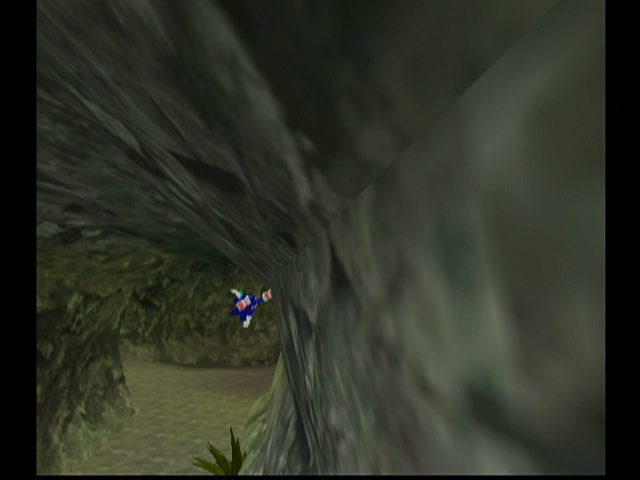
Here's Knuckles climbing the non-existent space beyond one of the Egg Carrier doors! Yes, even the game's three central hubs are hilariously glitch-ridden. Did I mention the hubs are easily the worst of the inspirations borrowed from Mario 64? I'm still not sure if you're supposed to walk on top of the trees of Mystic Ruins' jungle; I mean, me falling through every three seconds should be a clue, but anything goes with Sonic Team. Anyway, it's far preferable than getting lost in that unnavigable maze of a forest, so I don't mind.
Now, I'm told that Sonic Adventure DX brought its own share of glitches and errors during the porting process, allegedly making the game worse than it actually is. However, the idea of the level design, controls and the camera all magically turning to shit when transferred to GameCube is a hard pill to swallow, especially since some of these very complaints existed back upon its Dreamcast release. If anything, I really can't help but appreciate DX's efforts in at least making the game look pretty. Just take a look below.

Sonic Adventure
Sonic Adventure DX


I mean, both are all kinds of terrible, but for vastly different reasons. Sonic Adventure needs no explanation, as I'm certain I wouldn't be to sit through even one cutscene without collapsing in laughter. Meanwhile, Sonic Adventure DX takes the time to freshen the models to an acceptable 2003 standard, polishing 'em off with a shiny sheen. Unfortunately, they neglected to update the mouth animations, so everyone speaks with all the grace of a cow chewing cud. In case you're wondering, that's why Sonic's tongue is sticking out like that (also, why does Sonic have fangs?).

Yes, at the very least, I can't imagine the Dreamcast version excusing the very worst of Sonic Adventure. There's the voicing and scripting, for one. Like, holy shit. I knew revisiting an era where they casted unknowns to voice hackneyed dialogue wasn't going to be pretty, and I knew even as a kid there were some weak lines ("Tails! Watch out! You're going to crash! AhhHHHhH!"), but this is just on another level. You know things are bad when the entire cast of bad 90's dubbing tropes are here: the overacting ninnies (Sonic and Knuckles), the obnoxious body-type casting (E-102 and Big the Fuckin' Cat), "Good Voice, Bad Acting" (Tails' child actor), and The Actors Who Simply Don't Give A Shit (whoever they grabbed around the office to cheer Sonic's name before the final boss).

All are unintentionally hilarious. Granted, the late Deem Bristow brings some deliciously evil cheese to Dr. Eggman (one that he struggles to maintain, unfortunately, but points for effort), but this is all married to the following:

a) the aforementioned horrific attempts at lip-synching.
b) tuned to a boilerplate "ancient evil" script that attempts to be far more serious than it actually is ("THIS IS BEGINNING TO BLOW MY MIND," yells Knuckles after witnessing a mysterious vision).
c) characters constantly speaking over each others' lines.
d) the loud, blaring music constantly drowning out dialogue

Naturally, the results can't be anything but tear-inducing hilarity. You haven't lived until you've heard Tails's speech about the power of friendship.


The scripting even bleeds over to the silent human NPCs, all of who are concerned with burgers, archaeology, train station strikes, and finding love in pizza restauraunts. I'm the type that walks up to every NPC in sight, so naturally the blocky residents of Station Square and their insipid affairs fascinated me to no end. The love story moved me to tears, really.

And then there's Big the Cat. Big the Fuckin' Cat, whose only purpose is to fumble around and fish for his pet frog. This naturally begs the question  "why the hell am I doing this?" as most Sonic games have done in the past decade and a half. Sega's response? "Well, because we already implemented a fishing program for some reason."  Now, I just so happen to have an unhealthy obsession with cats, so I supposed I'd be willing to play ball with whatever the fuck Sega wanted me to do.

And I'm glad I did, because otherwise I never would've discovered the most beautiful level in all of gaming: Big's version of the Ice Cap segment. To clarify, the rest of his levels consist of just a pond to fish in, as they should be. No point in propping up those sections with fluff, right? For reasons I cannot even begin to decipher, the gang at Sonic Team decided to transform the Ice Cap fishing level into a labyrinth of springs, slopes, spike traps, and deep, deep water tunnels. As expected of an ice level, it's all very slippery, and I should also mention Big the Cat is ill-equipped to handle any platforming (he runs fast, but is offset by his poor jumping ability).

I spent roughly half an hour transitioning from mild curiosity to convulsing around the floor in laughter attempting to figure this level out. You're supposed to throw a boulder at one of the frozen ponds to find Froggy, but like me, if you don't bother to immediately seek the advice of Tikal, nothing in this level is immediately apparent. What ensued was a pattern of me briefly scoping out the bottom level, then climbing up down slopes and watching Big the Fuckin' Cat's fat ass falling all the way back down, springing over to completely irrelevant crevices and water pools (barring finding a hidden lure, but hardly worth all this fluff), and watching helplessly as the camera zoomed up at the ceilings of incredibly cramped underwater tunnels. I took the time to craft GIFs of my Ice Cap escapades, for words alone cannot capture the beauty of Ice Cap.


The last one's actually in the Mystic Ruins, but you see how Big just kinda fidgets in place for a bit? That didn't actually happen in-game. If you follow this link, you'll witness the true power of Big's spinning, gravity-defying powers, which no GIF converter could properly emulate.

Case in point, Sonic Adventure DX--nay, Sonic Adventure was the true beginning of a long, long era for Sonic, one often complemented by a never-ending series of "Why?" Why, exactly, am I doing all this? Why has the setting for Sonic suddenly changed to one populated with humans? Why did this game end up being so riddled with glitches? Why does Tails have to suddenly stop and inform me that I'm at the entrance to the Sky Deck, especially since this never happens for any other level? Why does the cutscene of Sonic falling from the sky really just consist of his running animation accompanied by an exaggerated slide whistle? Why am I fishing for frogs?

I won't lie and say Sonic Adventure DX is devoid of any redeeming factors, because it does, but boy do you have to endure a lot of shit to get to those points. Granted, it's all shit that made me laugh hard, and Sonic had yet to fall lower than this, but it's all still shit that made me ask why. I gradually learned to ignore all of it, but you also realize that you can't really escape it.


Even the soundtrack isn't safe -- with the very distinct exception of Sonic Chronicles, if there's one thing to count on in a Bad Sonic Game, it's almost guaranteed to have a damn good soundtrack. Above are two of my favorites: the theme for the Red Mountain level and E-102's theme. Note how both make excellent use of the piano despite being on opposite ends of the Sonic Adventure spectrum.


Then you have to endure butt rock; or in the example I've provided above, butt rap, assuming that is an actual term. Sung entirely from the perspective of Knuckles, his special rap claims that unlike Sonic, he "doesn't chuckle" and is something of a "bloat thrower".

In a different time, I would've argued that Sonic should follow its Saturday Morning Cartoon roots and focus on feel-good songs in the vein of Sonic R and even Tails's own theme for this game (something I've always had a guilty affection for). But in the end, Sonic's bad boy attitude won out.  All still in good fun, mind; why else would I still get nostalgic chills from Live and Learn? But then I listen to that rap and I wonder if it's really worth it.

In a way, I'm still wrestling with my feelings on Sonic Adventure DX. Make no mistake: it's really bad and I thoroughly enjoyed learning why, but in more of a "my soul's been punched" kinda way. Much as I laughed at Big the Fuckin' Cat, that half-hour is not only one I'm never going to get back, but I've spent far more time wondering "why?" and so I can't even visit side stuff like raising Chao and the Mission Mode in fear I'll have the same reaction. Maybe next summer; I need time to heal.

I now fear the worst for Sonic Adventure 2: Battle, which I'll be revisiting very shortly. If you excuse me, I'm going to drown my sorrows in Welch's White Grape Juice. Maybe it'll bring my childhood back, I dunno. Anything to make Sonic cool again.

---
You may've noticed some of the screenshots varied in quality. If you hadn't guessed, all the stuff with the black borders were from my recordings. I hear there's some programs out there that can take 'em out, so you can expect that for the next game I record (Kirby's Epic Yarn, maybe?).